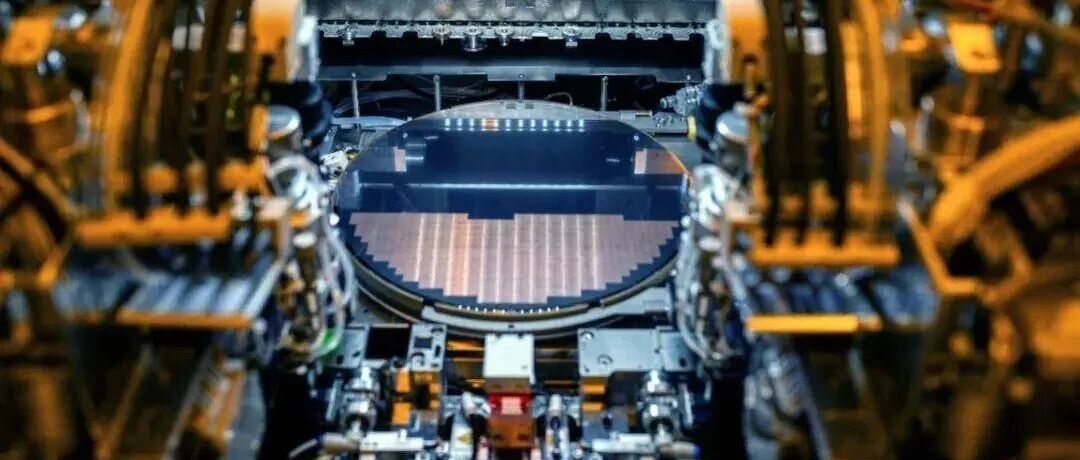
DDR4内存

Search documents
内存条崩盘?“消费者用不起了”,但“AI需求依旧炸裂”
硬AI· 2026-03-31 09:04
Core Viewpoint - The recent sharp decline in DDR5 memory spot prices, driven by concerns over reduced demand due to Google's TurboQuant algorithm, primarily affects the consumer retail market, which constitutes a small fraction of the overall market. In contrast, the demand for server-driven AI applications remains robust, indicating a stable industry fundamental despite the current market volatility [2][3][4]. Group 1: Price Decline - DDR5 memory module spot prices have dropped nearly 30% in a month, with reports from Chinese wholesalers describing the situation as a "price collapse." This decline is attributed to fears of reduced AI memory demand and a sell-off of previously accumulated inventory [3][6]. - The retail market's price drop is significant, with the price of a 32GB DDR5 module on Amazon falling from $490 to $379.99, and in China, the price of a mainstream 16GB DDR5 module dropping from 1,000 RMB to around 700 RMB. Sales have decreased by over 60% compared to November of the previous year due to high prices discouraging non-essential purchases [6][8]. - Goldman Sachs noted that the current price correction was inevitable, as the previous premiums on spot prices were significantly high, with DDR5 and DDR4 spot prices exceeding contract prices by 25% and 111%, respectively [6][11]. Group 2: Server Demand - The demand from the server segment remains strong and is the true driver of storage semiconductor profitability. The retail market, primarily composed of PC and consumer electronics, represents only a small percentage of total market transactions [8][9]. - Data from Goldman Sachs indicates that revenue from Taiwanese server ODM manufacturers grew by 84% year-over-year in February, driven by a surge in AI server shipments. This growth trend has been consistent for four months, reflecting strong demand for AI infrastructure [9][11]. - A major cloud service provider's decision to procure server DDR4 at a premium price further underscores the ongoing robust demand in the server market, despite concerns about weakening overall demand [9][11]. Group 3: Systemic Risks - The real systemic risks facing the storage sector stem from rising energy costs due to the Middle East conflict and the rapid accumulation of debt within the AI industry. These factors create a complex web of vulnerabilities that could lead to significant economic pressures [4][14][16]. - The conflict has led to a 40% increase in Brent crude oil prices and a doubling of helium prices, which are critical for chip manufacturing. The reliance on the Middle East for essential resources poses a risk to the AI supply chain [14][15]. - The rapid debt accumulation in the AI sector, with major companies investing nearly $700 billion annually, raises concerns about financial stability and the potential for a systemic crisis if vulnerabilities in the supply chain are triggered [15][16].


内存条价格跳水,内存股集体下跌,内存超级周期见顶了?
华尔街见闻· 2026-03-30 06:43
Core Viewpoint - The memory price decline raises concerns about the peak of the memory cycle, with significant price drops observed in both the U.S. and domestic markets, leading to a divergence in market outlook regarding the memory industry's future [4][5][9]. Group 1: Price Trends and Market Reactions - In the U.S. market, DDR5 memory prices have dropped significantly, with some models seeing reductions of up to $100, such as the Corsair VENGEANCE series [4]. - Domestic markets are experiencing similar price declines, with reports of mainstream 16GB memory prices dropping over 100 yuan in a single day, reflecting a drastic fall from previous highs [5]. - The price surge in memory products has led to a 60% drop in sales volume compared to the previous year, as consumers are now hesitant to purchase non-essential items [6]. Group 2: Impact of Technological Developments - Google's new compression algorithm "TurboQuant" is expected to reduce memory usage for large language models by at least 60%, leading to a perceived decrease in memory demand and a subsequent drop in stock prices for major memory companies [7][19]. - The market reacted negatively, with Micron Technology's stock falling over 24% and Western Digital dropping nearly 21% from recent highs, resulting in a loss of nearly $100 billion in market capitalization for the memory chip sector [7][9]. Group 3: Diverging Market Perspectives - Some investors believe the traditional memory "pig cycle" has peaked, while others, including HSBC, argue that current concerns are overstated and that the market is in the middle of an AI-driven memory supercycle [9][19]. - Analysts highlight that the recent price drops are not solely due to Google's algorithm but also because certain smartphone memory chip prices have stopped rising, indicating a potential market peak [10][11]. Group 4: Structural Changes in the Memory Industry - The memory industry is undergoing a transformation, with major companies like Samsung and SK Hynix shifting towards a more restrained capacity expansion model, focusing on securing advance payments and long-term demand visibility [16][19]. - Analysts suggest that the operational strategies of memory companies are evolving, moving away from blind capacity expansion to a more calculated approach to production [16][19]. Group 5: Long-term Outlook and Investment Sentiment - Investment banks maintain a positive long-term outlook for the memory industry, asserting that current market fears are exaggerated and that the AI-driven supercycle will continue to support demand for memory products [19][21]. - The report anticipates a significant increase in AI server shipments by 28% year-on-year by 2026, with enterprise SSDs expected to capture a growing share of NAND demand, driven by AI applications [20][22].
四大巨头,重金投向这家DRAM厂
半导体行业观察· 2026-03-26 00:36
Core Viewpoint - Nanya Technology announced a private placement of 351.578 million shares, raising a total of NT$78.718 billion, with participation from major players in the DRAM and NAND flash memory sectors, indicating strong confidence in the long-term prospects of the DRAM market [1][2]. Group 1: Private Placement Details - The pricing for the private placement was set at NT$223.9 per share, reflecting a discount of only 1.15% compared to the closing price of NT$226.5, showcasing the optimism of the subscribing companies regarding the DRAM market [2]. - The specific subscription amounts from the four companies are as follows: Kioxia 70 million shares, SanDisk 138.685 million shares, Solidigm 71.393 million shares, and Cisco 71.5 million shares, corresponding to ownership stakes of 2%, 4%, 2%, and 2% respectively [2]. Group 2: Market Outlook and Strategic Initiatives - Despite some market discrepancies regarding DDR4 memory pricing, Nanya expects memory prices to continue to rise steadily throughout the year [2]. - The company is advancing new technologies such as Wafer on Wafer to meet the growing computational demands of edge AI applications, anticipating that the demand for memory in various terminal devices will continue to increase as AI applications extend from cloud to edge [2].
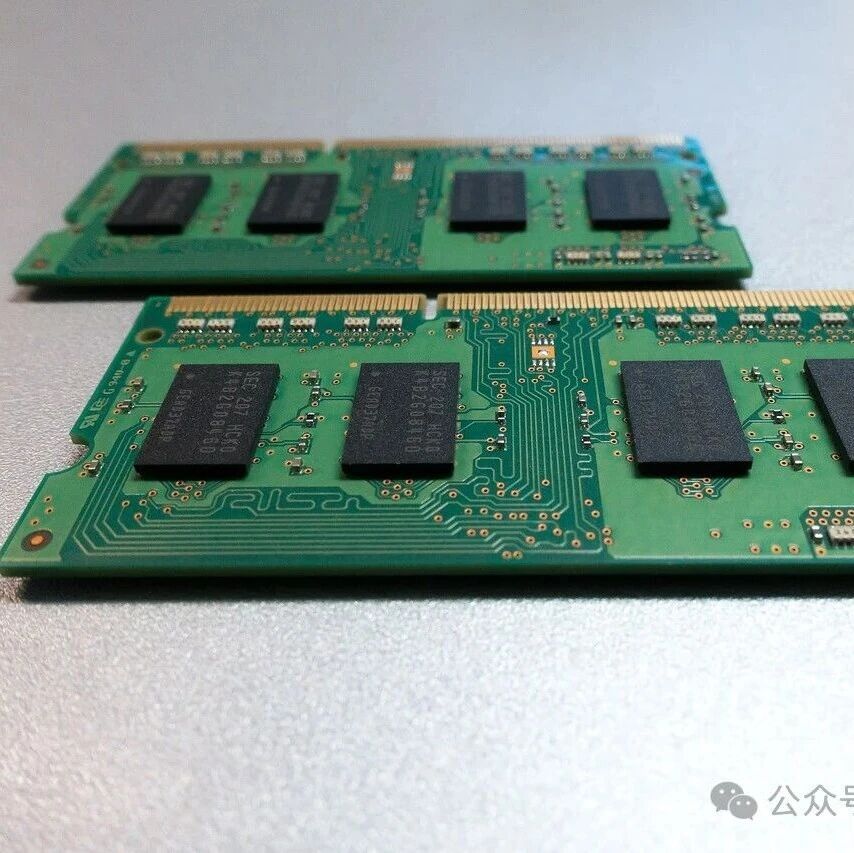
美光:未来汽车将需要300GB的内存
芯世相· 2026-03-23 06:34
Core Insights - Micron's CEO Sanjay Mehrotra highlighted that with the introduction of L4 autonomous vehicles, the demand for RAM will exceed 300GB, driven by the strong demand for high-end HBM chips from AI cloud providers [3] - Micron reported a significant revenue increase of 200%, reaching $23.86 billion in Q2 2023, primarily due to AI infrastructure and structural supply constraints [3] - The company plans to build multiple fabs in Japan, Singapore, and New York, aiming for a 20% capacity increase by 2026 to alleviate supply-side pressures [3] Group 1: Automotive Memory and Processing Needs - The surge in data from advanced driver-assistance systems (ADAS) and autonomous driving sensors is creating unprecedented demands on automotive memory and storage systems [5] - As vehicles become more electronic and intelligent, the challenges faced in automotive systems are increasingly similar to those in large data centers [6] - The integration of high-priority data functions necessitates faster data transmission speeds between processing units and memory [6] Group 2: System Architecture and Design - The shift towards software-defined vehicles allows for modular design, enabling better bandwidth and memory capacity management [10] - Centralized architectures are being favored over distributed ECUs to handle the large volumes of real-time data from multiple sensors [10] - The design of vehicles is evolving to incorporate various processing units and memory types, focusing on performance where it is most needed [8] Group 3: Memory Technology Trends - LPDDR memory is gaining traction due to its higher bandwidth and lower power consumption, with LPDDR6 achieving 14.4Gb/s [12] - The automotive sector is increasingly utilizing DRAM for computation and NAND for data storage, with a focus on balancing performance and cost [14] - Emerging memory types like MRAM and RRAM are being explored for their low power and high-density storage capabilities [18] Group 4: Future Directions and Challenges - The complexity of future vehicles will require a layered memory and storage architecture to ensure performance and safety [11] - As the industry moves towards L4 and L5 autonomous driving, the need for higher memory capacity and bandwidth will become critical [13] - The automotive memory market is highly concentrated, with a few leading manufacturers dominating, making it essential for OEMs to understand the storage industry dynamics [14]

内存大幅涨价,电视品牌面临获利压力
WitsView睿智显示· 2026-03-21 01:07
Core Insights - The global television industry is facing an unprecedented "cost black swan" event in Q1 2023 due to a surge in demand for memory from AI servers, leading to a dramatic increase in DDR4 memory prices, which have risen 6 to 7 times compared to the same period last year [2] - The production cost (BOM cost) for televisions has spiraled out of control, with the cost of 1.5GB DDR4 memory skyrocketing from $2.95 to $21.00, a staggering increase of 612% [2] - Brands that previously relied on low-price strategies to boost sales are now in a crisis, as the cost of memory components in a 32-inch TV has surged from 6% of total cost in Q1 2025 to 25% currently, resulting in a 28% year-over-year increase in production costs [2] Group 1 - The 55-inch television segment has become a major loss area, with a selling price of $228 in the North American market resulting in a loss of $40 per unit and a gross margin of -15% [5] - In contrast, the 75-inch television segment has experienced a smaller cost increase of about 8%, making it a key battleground for brands to transfer profit pressure and maintain revenue [5] Group 2 - The impact of rising memory prices varies by television size, with smaller TVs being more affected due to a higher proportion of memory costs, while larger TVs are less impacted and can introduce higher-spec models like QLED and Mini LED to mitigate the effects [6] - It is anticipated that by the second half of 2026, television brands will focus promotions on larger models (65 inches and above) due to their lower sensitivity to memory price increases [6] - Platform providers are offering rebates to television brands to encourage the use of their platforms, which may help offset the rising costs of smaller TVs, but the extent of these rebates remains to be seen [6] Group 3 - Television brands are unable to maintain previous low-price promotional strategies due to reduced profitability, leading to a market shift towards higher-spec models like QLED and Mini LED [7] - The future of "low-price televisions" may become a thing of the past, with a focus on increasing shipment value through larger sizes and enhancing internet service revenue being crucial for survival in 2026 [7]

DDR 5,开始降价了
半导体行业观察· 2026-03-17 02:27
Core Viewpoint - The DDR5 memory market is experiencing fluctuations, with recent data indicating a significant price drop after a prolonged period of increases, raising questions about future price trends [2][6]. Price Trends - DDR5 memory prices have shown a notable decline in March, marking the first monthly decrease after six months of price increases, with an average price drop of 7.2% [6][7]. - The average price of DDR5 memory is currently about 4.1 times higher than the benchmark price from July 2025, although it has decreased from a peak of 440% above the benchmark to 408% [6][7]. - Specific DDR5 memory kits, such as the 2x32GB DDR5/6000 CL28, saw a price reduction of 19%, dropping from €999 to €805 [6][7]. Historical Price Changes - From July 2025 to March 2026, DDR5 memory prices have increased significantly, with some kits experiencing price hikes of over 300% compared to the benchmark [5][6]. - For instance, the price of the 8GB DDR5/5600 kit rose from €24 in July to €120 in January, reflecting a staggering increase of 350% [5]. - In contrast, older memory standards like DDR3 and DDR4 have remained relatively stable, with only a slight increase of 0.8% in March 2026, while still being 237% higher than the July 2025 benchmark [7]. Market Dynamics - The memory crisis that began in the fall of 2025 has shown signs of resistance in the German retail market, with some key product categories, including DDR5, starting to see price corrections [6]. - Despite the decline in DDR5 prices, the overall market for memory products remains high, with average prices still significantly above pre-crisis levels [6][7]. - The SSD market is experiencing price increases, while HDD prices remain stable, indicating a divergence in trends within the storage market [7].
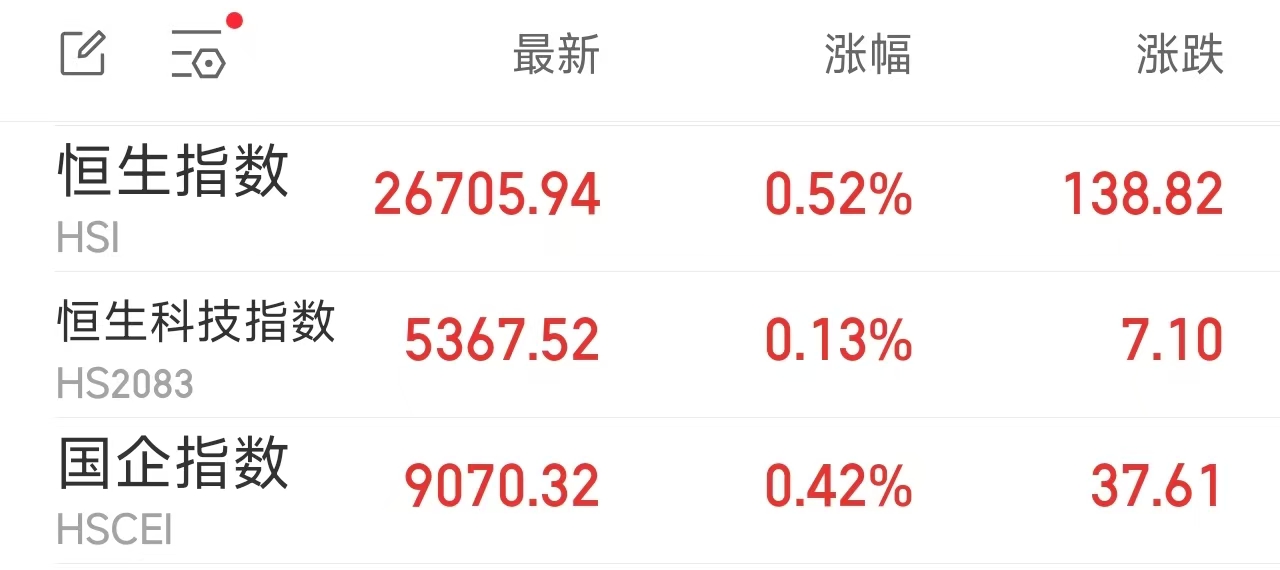
港股蛇年收官:三大指数低开高走,恒指收涨0.52%全年累涨超32%,恒生科指涨0.13%盘中一度跌近2%,港股“AI双雄”齐创新高
Jin Rong Jie· 2026-02-16 05:05
Market Performance - The Hong Kong stock market experienced a half-day trading session on February 16, with the Hang Seng Index closing up 0.52% at 26,705.94 points, the Hang Seng Tech Index up 0.13% at 5,367.52 points, and the National Enterprises Index up 0.42% at 9,070.32 points [1][2] - For the year of the Snake, the Hang Seng Index has increased by over 32%, the Hang Seng Tech Index by over 13%, and the National Enterprises Index by over 23% [1] Sector Performance - The precious metals, semiconductor, and oil & petrochemical sectors showed strength, while defense, consumer discretionary, and hardware equipment sectors underperformed [2] - Notable movements among major tech stocks included Alibaba down 0.26%, Tencent up 0.47%, JD.com down 2.26%, Xiaomi down 0.16%, NetEase up 2.32%, Meituan up 0.43%, Kuaishou up 0.15%, and Bilibili up 0.67% [2] AI Sector Developments - AI application stocks saw significant gains, with Hong Kong's AI leaders, Zhizhu and MiniMax-WP, reaching new highs, with Zhizhu up 4.74% and MiniMax-WP up 24.26% [4] - Zhizhu launched its flagship model GLM-5, which has gained popularity overseas, and announced a price increase for its AI programming subscription plan [5] Semiconductor Sector Insights - The semiconductor sector showed strength, with stocks like Zhaoyi Innovation and Lanke Technology rising over 17%, closing at increases of 9.78% and 14.05% respectively [7] - A price increase trend in storage chips is emerging, with Kioxia expected to raise average selling prices by approximately 50% starting Q1 2026, which is anticipated to significantly improve profitability in the NAND industry [9][10] Precious Metals Market - The precious metals sector is experiencing a surge, with companies like Luoyang Molybdenum rising over 5% and others like Zijin Mining and Ganfeng Lithium also seeing gains of over 4% [6] - Analysts from ANZ have raised their Q2 gold price forecast from $5,400 to $5,800 per ounce, citing ongoing structural drivers despite recent price corrections [6]
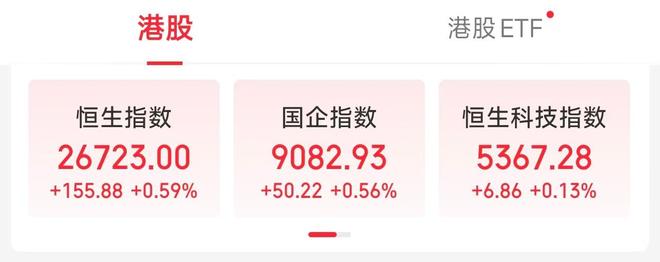
港股蛇年收官:三大指数收红, 恒指涨0.59%全年累涨超32%,恒生科指涨0.13%盘中一度跌近2%,港股“AI双雄”齐创新高
Jin Rong Jie· 2026-02-16 04:28
Market Performance - The Hong Kong stock market experienced a half-day trading session on February 16, with the Hang Seng Index rising by 0.59% to close at 26,723 points, while the Hang Seng Tech Index increased by 0.13% to 5,367.28 points, and the National Enterprises Index rose by 0.56% to 9,082.93 points [1] - For the year of the Snake, the Hang Seng Index has accumulated a gain of over 32%, the Hang Seng Tech Index has risen over 13%, and the National Enterprises Index has increased by over 23% [1] Sector Performance - The precious metals, semiconductor, and oil sectors showed strength, while defense, consumer discretionary, and hardware sectors underperformed [3] - Major technology stocks saw declines, with Alibaba down 0.26%, JD.com down 2.26%, and Xiaomi down 0.16%, while NetEase and Meituan saw gains of 2.32% and 0.43%, respectively [3] AI Sector Developments - AI application stocks surged, with Hong Kong's "AI twins" Zhizhu and MiniMax-W reaching new highs, with Zhizhu rising by 4.74% and MiniMax-W increasing by 24.26% [4] - Zhizhu launched its new flagship model GLM-5, which has gained popularity overseas, and announced a price increase for its AI programming subscription plan by at least 30% [6][7] Semiconductor Sector Insights - The semiconductor sector showed localized strength, with stocks like Zhaoyi Innovation and Lanke Technology rising by over 17% [9] - A price increase trend for storage chips is emerging, with Kioxia expected to implement a pricing policy that will raise average selling prices by approximately 50% starting in Q1 2026 [12] Precious Metals Market - The precious metals sector is performing strongly, with companies like Luoyang Molybdenum and Zijin Mining seeing gains of over 5% [8] - Analysts from ANZ have raised their Q2 gold price forecast from $5,400 to $5,800 per ounce, citing ongoing structural drivers despite recent price corrections [8]
港股半导体板块,全线爆发!
Xin Lang Cai Jing· 2026-02-16 03:36
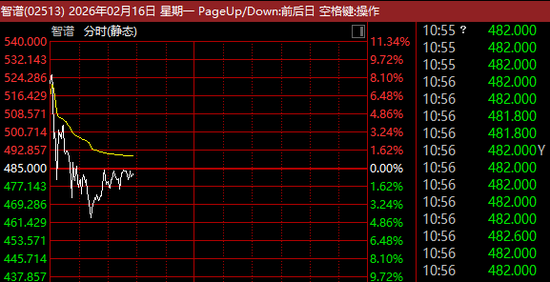
Market Overview - On February 16, the Hong Kong stock market opened slightly lower, with the Hang Seng Index down 0.25% and the Hang Seng Tech Index down 1.14% [1] - The market saw strength in sectors such as precious metals, semiconductors, and oil, while sectors like defense, consumer discretionary, and hardware struggled [1] Technology Sector - The Hang Seng Tech Index has experienced significant declines recently, creating potential value for investors [9] - Recent market volatility is attributed to liquidity shocks, and the current situation is compared to market conditions in November 2025 [10] - Analysts recommend buying on dips and holding stocks through the holiday season [10] AI Application Stocks - AI application stocks in Hong Kong saw gains, with Zhiyu (智谱) opening up over 7% and later experiencing fluctuations [11] - Zhiyu's stock price has increased by 130% since February, with a total market capitalization exceeding 230 billion HKD [11] IPO Developments - Zhiyu has withdrawn its IPO guidance submitted in April 2025 and is now pursuing a new listing on the Sci-Tech Innovation Board [13] - The company has changed its IPO advisory firms to Guotai Junan Securities and China International Capital Corporation [13] Semiconductor Sector - The semiconductor sector showed strength, with stocks like Zhaoyi Innovation (兆易创新) rising over 17% [16] - A price increase in storage chips is expected, with Kioxia planning to raise average selling prices by approximately 50% starting in Q1 2026 [17] - Analysts predict significant improvements in profitability for the NAND industry, with Samsung's NAND business operating margin expected to rise to 37% and SK Hynix to 42% in Q1 2026 [18] Precious Metals Market - The precious metals sector is experiencing a boost, with gold prices expected to rise due to seasonal demand and investment interest [14] - ANZ analysts have raised their gold price forecast for Q2 from $5,400 to $5,800 per ounce [14]
暴跌!DDR4价格单日闪崩近20%!
是说芯语· 2026-02-13 00:30
Core Viewpoint - The DDR4 memory price has experienced a rare flash crash, with a single-day drop nearing 20%, primarily driven by panic selling in the Shenzhen Huaqiangbei market, rather than a global trend in original factory contract prices [2][3]. Price Fluctuations - Since the beginning of the month, DDR4 prices have shown significant downward volatility, with 8GB specifications dropping from 260-270 RMB to 180-190 RMB, and 16GB specifications falling from 800 RMB to around 650 RMB [3]. - The flash crash is attributed to panic selling by channel vendors, indicating a return to market value rather than a collapse of the entire DDR4 industry chain [3]. Market Dynamics - The recent surge in DDR4 prices began in 2025, driven by AI computing demand and market speculation, with DRAM prices increasing by 386% over the past year [4]. - Major manufacturers like Samsung and SK Hynix reduced DDR4 production to focus on higher-margin HBM orders, leading to a misinterpretation of long-term shortages and subsequent panic buying [4]. Demand and Supply Trends - By the end of 2025, DDR5 penetration in PCs and servers is expected to reach 70%-80%, while DDR4's market share will drop below 30%, indicating a shift in demand towards DDR5 [5]. - Domestic manufacturers like Changxin are gradually increasing DDR4 production capacity, countering the narrative of shortages, although they are also shifting focus towards DDR5 and LPDDR5 markets [5]. Flash Crash Catalysts - The pressure for cash recovery before the 2026 Spring Festival has led to a concentrated sell-off by channel vendors, breaking the fragile speculative system and resulting in the near 20% drop in DDR4 prices [6]. - The abandonment of DDR4 in mainstream applications is seen as a natural outcome, with manufacturers intentionally reallocating production capacity to more profitable products [6].