
化妆品零售

Search documents
卓悦控股公布中期业绩 净亏损6884.8万港元 同比收窄48.81%
Zhi Tong Cai Jing· 2026-02-27 13:59
Core Viewpoint - 卓悦控股 reported a significant decline in revenue while managing to reduce its net loss, indicating resilience in a challenging retail environment through cost management and operational efficiency [1] Financial Performance - Revenue for the six months ending December 31, 2025, was HKD 12.324 million, a decrease of 50.4% year-on-year [1] - The net loss narrowed to HKD 68.848 million, reflecting a reduction of 48.81% compared to the previous year [1] - Earnings per share reported a loss of HKD 0.06 [1] Operational Insights - The company emphasized its ability to maintain operational efficiency and rigorous cost management despite ongoing challenges in the retail sector [1] - Continued investment in digital infrastructure was noted as a key strategy during this period [1]
卓悦控股(00653)完成发行1.09亿股认购股份 净筹约1130万港元
智通财经网· 2026-02-23 11:17
Core Viewpoint - 卓悦控股 has successfully completed its subscription agreement, issuing a total of 109 million shares at a subscription price of HKD 0.105 per share, with net proceeds estimated at approximately HKD 11.3 million for general working capital [1] Group 1: Subscription Details - The subscription agreement conditions have been fully met, and the subscription was completed on February 23, 2026 [1] - A total of 109 million shares were issued under the general authorization at a price of HKD 0.105 per share [1] Group 2: Use of Proceeds - The estimated net proceeds of approximately HKD 11.3 million will be allocated as follows: - Approximately HKD 5.3 million for general working capital to support business development plans, including facilitating product expansion into overseas markets through online channels and related support services [1] - Approximately HKD 3.5 million for employee costs, including salaries, mandatory provident fund contributions, and related benefits [1] - Approximately HKD 2.5 million for rental expenses [1]
贵州年货新风景,集市直通全球购
Sou Hu Cai Jing· 2026-02-11 10:24
Core Insights - The "Good Goods Selection and New Year Goods Festival" in Guiyang Comprehensive Bonded Zone has successfully attracted a large number of visitors, showcasing a variety of products from local specialties to international imports [1][3] Group 1: Event Overview - The shopping festival features over 10 quality trading companies and hundreds of product categories, with more than 60% of the goods being imported [3] - The event emphasizes the "bonded import" attribute, allowing consumers to experience a new shopping model of "buying global at their doorstep" [3] Group 2: Consumer Experience - Local residents have expressed satisfaction with the pricing, noting that some items are significantly cheaper compared to supermarkets, enhancing the convenience of shopping [3] - Popular products include Danish cookies, Italian chocolates, and Vietnamese dried fruits, with sales exceeding 10,000 yuan within the first two hours of the event [5] Group 3: Local Products - Local flavors are also in high demand, with products like spicy potato chips and Guizhou-style pork attracting considerable attention from shoppers [5] - The event allows local businesses to expand their sales channels while providing consumers with a wide range of quality goods [7] Group 4: Government and Business Collaboration - The shopping festival is a practical implementation of the Guiyang Comprehensive Bonded Zone's policy advantages, aimed at boosting domestic demand and benefiting the public [7] - The initiative is characterized by a "government platform, business performance" approach, facilitating a one-stop shopping experience for consumers while supporting local enterprises [7]

特朗普四处“兴风作浪”,欧洲富豪开始"逃离"美国资产
Hua Er Jie Jian Wen· 2026-01-23 02:05
Core Viewpoint - The unpredictable actions of Trump regarding geopolitical issues, such as the Greenland sovereignty dispute and tariff threats, are prompting some European wealthy individuals to consider reducing their exposure to U.S. assets and diversifying their investments geographically [1]. Group 1: European Wealthy Individuals' Investment Strategies - A Danish pension fund has begun to exit U.S. Treasury investments, partly due to Trump's comments on Greenland [2]. - Ray Dalio, founder of Bridgewater Associates, noted that there is a trend of funds diversifying away from the U.S. [2]. - Swiss private bank Edmond de Rothschild is contemplating tactical adjustments to its overweight positions in U.S. stocks based on Trump's policies regarding Greenland [2]. - European clients are particularly anxious about becoming targets of potential retaliation from Trump [2]. Group 2: Historical Context of European Investments in the U.S. - Historically, the close ties between Europe and the U.S. have allowed global elites to easily invest across the Atlantic, facilitating wealth diversification [2]. - Notable European investors include Amancio Ortega, who rents properties to companies like Amazon, and the Wertheimer family, who manage investments in U.S. cosmetics retailer Ulta Beauty Inc. [3]. - Richard Branson sold over $1 billion in shares of Virgin Galactic during the pandemic to support his business empire [3]. - A number of American billionaires have acquired sports teams across Europe over the past two decades [3]. Group 3: Challenges in Reducing U.S. Investment Exposure - Despite the reassessment of U.S. holdings by European wealthy individuals and institutional investors, the sheer size and scale of the U.S. economy make it extremely difficult to completely avoid investing in the country [4]. - Sergio Ermotti, CEO of UBS Group, warned that weaponizing U.S. Treasury holdings is a "dangerous gamble" [5]. - Trump indicated that significant retaliation would occur if European nations sold U.S. assets due to tariff threats related to Greenland, suggesting that any withdrawal strategy may focus on reducing concentration and hedging tail risks rather than a large-scale exit [5].
美妆线下零售,迎来关键时刻
3 6 Ke· 2026-01-15 09:38
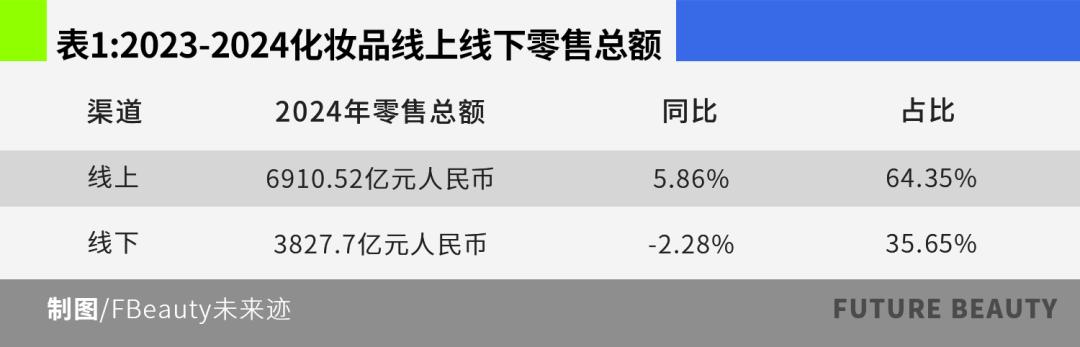
Key Insights - The offline cosmetics retail market in China is projected to reach 382.77 billion RMB in 2024, reflecting a year-on-year decline of 2.28% and accounting for 35.65% of the total cosmetics retail market [1][2] - The online cosmetics retail market is expected to grow to 691.05 billion RMB in 2024, with a year-on-year increase of 5.86%, representing 64.35% of the total market [2] Offline Channel Overview - The retail total for department stores and shopping centers is projected to be 147.18 billion RMB in 2024, down 8.8% year-on-year, while supermarkets are expected to see a retail total of 69.84 billion RMB, up 7% [3][4] - The cosmetics store channel is expected to generate 144.16 billion RMB, down 1.91%, and OTC pharmacy channels are projected to reach 2.17 billion RMB, down 4.4% [3][4] Market Share Trends - The market share of department stores and shopping centers in the total cosmetics retail market decreased from 15.41% in 2023 to 13.71% in 2024, while the cosmetics store channel remains stable at 13.42% [5][6] - The number of counters in department stores has sharply decreased from approximately 15,415 in 2019 to 9,502 in 2023, a reduction of 5,913 [6] Brand Performance - High-end brands dominate the department store channel, accounting for 86% of sales in 2023, while mass brands represent only 0.0037% [10][11] - The market share of European and American brands in department stores increased from 66.8% in 2021 to 74.3% in 2023, while Japanese and Korean brands have seen declines [12] Growth Drivers - The growth in department store cosmetics retail sales is primarily driven by lower-tier markets, with luxury brands opening counters in second and third-tier cities [13] Consumer Behavior Changes - The traditional cosmetics store model is facing challenges due to the rise of e-commerce, leading to a significant decline in foot traffic and sales [19] - Cross-industry retailing, such as clothing and accessory stores expanding into cosmetics, is becoming more prevalent, with some stores generating nearly 50% of their revenue from cosmetics [21] Future Trends - The cosmetics retail landscape is undergoing structural changes, with department stores focusing on high-end products while cosmetics stores innovate through light beauty services and new business models [46] - The OTC pharmacy channel is expected to grow, particularly for functional skincare products, as consumer trust in these products increases [40][42]
深度 | 美妆线下零售,迎来关键时刻
FBeauty未来迹· 2026-01-14 15:13
Core Viewpoint - The offline cosmetics retail market in China is experiencing a decline, with a total retail value of 382.77 billion yuan in 2024, down 2.28% year-on-year, while online sales continue to grow, reaching 691.05 billion yuan, an increase of 5.86% [2][3]. Group 1: Current Status - The market share of department stores and shopping centers in the cosmetics retail sector decreased from approximately 15.41% in 2023 to 13.71% in 2024, while the cosmetics store channel maintained a share of 13.42% [6]. - The number of cosmetics counters in department stores has sharply decreased from 15,415 in 2019 to 9,502 in 2023, a reduction of 5,913 counters [7]. - High-end brands dominate the department store channel, accounting for 86% of sales in 2023, while mass brands represent only 0.0037% [10]. Group 2: Trends - The "Matthew Effect" is becoming more pronounced, with leading department stores like Yintai becoming the largest offline cosmetics retailers, hosting numerous top-selling brands [16]. - The overall sales in department stores have declined from 518.46 billion yuan in 2019 to 473.13 billion yuan in 2023, while the average product price surged by 86.38% from 344.71 yuan to 642.46 yuan [18][19]. - The growth in cosmetics retail in department stores is primarily driven by lower-tier markets, with luxury brands opening new counters in cities like Nanchang and Kunming [14]. Group 3: Channel Dynamics - Supermarkets and hypermarkets, once dominant in cosmetics sales, have seen their market share plummet to 6.5% by 2024, overtaken by e-commerce and department stores [40][41]. - The OTC pharmacy channel is gaining attention, with brands like Winona achieving over 1 billion yuan in sales, indicating potential growth in this sector [44][46]. - The trend of integrating cosmetics sales into clothing and accessory stores is rising, with brands like Sanfu Fashion Department Store reporting that cosmetics account for nearly 50% of their total revenue [24]. Group 4: Future Strategies - The recovery of offline channels will rely on three core strategies: prioritizing experiential services, focusing on lower-tier market needs, and leveraging technology for enhanced customer engagement [56]. - The shift in consumer behavior towards convenience and lifestyle over traditional shopping norms is reshaping the retail landscape, necessitating a re-evaluation of store locations and product offerings [39].

中短期增长动能被低估 高盛重申Ulta Beauty(ULTA.US)“买入”评级
智通财经网· 2025-12-31 07:03
Group 1 - Goldman Sachs reaffirms a "Buy" rating for Ulta Beauty (ULTA.US) with a target price of $642, believing the market underestimates Ulta's growth potential and sustainability, which is expected to continue through 2026 [1] - Analysis of various data sources indicates positive momentum for Ulta in the current quarter, with Google search volume increasing, high Net Promoter Score (NPS) year-over-year, and positive trends in Bloomberg data and foot traffic [1] - Ulta's same-store sales acceleration is attributed to a healthy beauty industry and the company's strong execution, with investments in marketing, labor, and services translating into market share growth [1] Group 2 - Circana data shows that during Black Friday and Cyber Monday, demand in all retail categories, except for high-end beauty, fell short of expectations, leading Goldman Sachs to view Ulta's management guidance for FY2025 revenue growth of 4.4%-4.7% as conservative [2] - Goldman Sachs anticipates that the growth drivers from 2025 will persist into 2026, benefiting from a healthier industry environment and improved execution [2] - The management is focused on controlling selling, general, and administrative expenses (SG&A) to further enhance operating margins [2]

莎莎国际将没收未领取的股息
Zhi Tong Cai Jing· 2025-12-30 08:56
Core Viewpoint - Sasa International (00178) announced that the unclaimed dividend will be forfeited and returned to the company on January 29, 2026, specifically the final dividend of HKD 0.09 per share declared on June 20, 2019 [1] Group 1 - The company has a specific deadline for unclaimed dividends, which is set for January 29, 2026 [1] - The unclaimed dividend amount is HKD 0.09 per share, which was declared on June 20, 2019 [1]
莎莎国际(00178)将没收未领取的股息
Zhi Tong Cai Jing· 2025-12-30 08:55
Core Viewpoint - Sasa International (00178) announced that unclaimed dividends will be forfeited and returned to the company on January 29, 2026, specifically the final dividend of HKD 0.09 per share declared on June 20, 2019 [1] Group 1 - The company will forfeit unclaimed dividends on January 29, 2026 [1] - The specific unclaimed dividend is HKD 0.09 per share [1] - The dividend was originally declared on June 20, 2019 [1]
呷哺呷哺、西贝,给员工们分钱救市丨消费参考
2 1 Shi Ji Jing Ji Bao Dao· 2025-12-23 04:49
Core Insights - The core focus of the articles is on the strategies employed by restaurant companies, particularly Xibei and Xiaobai Xiaobai, to enhance employee motivation and operational efficiency through partnership programs and profit-sharing initiatives. Group 1: Employee Engagement Strategies - Xiaobai Xiaobai has launched its "Feng Huan Chao" partner program, aiming to transform employees from "workers" to "partners" by offering profit-sharing opportunities [1][2] - The first batch of partner stores has seen revenue growth exceeding 30% year-on-year, with profit margins above 30% since the program's initiation [2] - Xibei is also implementing similar strategies, increasing labor costs to enhance employee income and improve customer experience through higher employee satisfaction [3] Group 2: Industry Challenges - The restaurant industry is facing significant growth pressures, with many national brands reporting revenue declines and operational difficulties [4] - Xiaobai Xiaobai's revenue fell by 18.88% year-on-year to 1.942 billion yuan, with a net loss of 84 million yuan [4] - Xibei's revenue is projected to remain in a declining range until May 2025, exacerbated by previous public relations issues [4] Group 3: Operational Improvements - The transition of employees to partners has led to increased work motivation, resulting in extended operating hours and better resource management to reduce waste [2] - The overall trend in the Chinese restaurant market is moving towards refined corporate governance, which is seen as beneficial for long-term industry development [6]
