国际教育

Search documents
法拉古特首摘剑桥录取
Xin Lang Cai Jing· 2026-02-03 22:56
Core Insights - Tianjin Faragut School achieved a historic milestone by securing its first-ever offer from the University of Cambridge for a student in the Computer Science program, marking a significant accomplishment in the school's history [1] - The school has now completed its "Oxbridge Double Offer" by also having students admitted to both Oxford and Cambridge, achieving a full sweep of the UK G5 elite universities [1] - The school's innovative dual mentorship system and the establishment of a "Top Talent Development Center" have been instrumental in its success, providing personalized course planning and support for international competitions [1] Summary by Sections - **Achievements**: The school has successfully gained admission offers from Oxford University for two consecutive years and now adds Cambridge to its list, achieving a full set of admissions from the UK G5 institutions [1][2] - **Educational Strategy**: Faragut School has been deeply engaged in international education for over a decade, covering top institutions globally, including Ivy League schools and the National University of Singapore, with a total scholarship amount exceeding 14.48 million yuan in 2025 [1] - **Future Plans**: The school aims to continue optimizing its educational framework to support more students in their pursuit of international education, contributing to the high-quality development of China's international education sector [2]
海南自贸港的“十四五”:GDP连跨3个千亿级台阶
Zhong Guo Xin Wen Wang· 2026-01-27 08:23
Core Insights - During the "14th Five-Year Plan" period, Hainan Free Trade Port's economic strength has significantly improved, with the province's GDP crossing three thresholds of 1 trillion yuan [1][2]. Economic Growth - By 2025, Hainan's GDP is projected to reach 810.885 billion yuan, reflecting a 4.0% increase from the previous year [2]. - The average annual economic growth rate for Hainan during the "14th Five-Year Plan" is expected to be 5.7%, which is 0.3 percentage points higher than the national average [2]. Industrial Development - The added value of Hainan's industrial enterprises above designated size is anticipated to grow by 9.9%, ranking second nationally [2]. - The contribution of the four leading industries—tourism, modern services, high-tech industries, and tropical agriculture—to GDP has increased by approximately 14 percentage points compared to 2020 [2]. Tourism and Services - Hainan's tourism sector is projected to receive over 100 million visitors, with a comprehensive contribution rate to GDP of 33.4% [2]. - The opening of the world's largest single-duty-free shop has led to duty-free sales accounting for over 8% of the global duty-free market [5]. Healthcare and Education - The Boao Lecheng International Medical Tourism Pilot Zone has become a hub for advanced medical technologies, with 540 licensed medical products and 39 medical institutions established [5]. - The Lingshui Li'an International Education Innovation Pilot Zone has signed agreements with 26 renowned domestic and international universities, with a total of 10,000 teachers and students [5]. Infrastructure and Logistics - Hainan has accelerated its energy transition, with significant developments in offshore wind power, marine engineering, and new energy vehicles [5]. - By 2025, Hainan is expected to operate 75 container shipping routes and 99 international air cargo routes, with express delivery volume growing at an annual rate of over 21% [5]. Industrial Clusters - Over the past five years, Hainan has successfully established three industrial clusters with a value exceeding 100 billion yuan each, including petrochemical new materials and modern finance [6]. - The revenue of 13 key free trade port parks is projected to exceed 2.5 trillion yuan by 2025 [6].

国际校校长施华:一场始于“母亲”身份的教育探索|我们的四分之一世纪
经济观察报· 2025-12-31 12:00
Core Viewpoint - The article emphasizes the importance of integrating traditional Chinese education with Western educational practices in international schools, highlighting the unique approach of Qingmiao International School in fostering a bilingual and bicultural educational environment [2][4]. Group 1: Background and Development of Qingmiao - Qingmiao International School, founded by Shi Hua, has evolved from a private international kindergarten established in 1998 to a comprehensive educational institution with 19 campuses across China, covering all educational stages from kindergarten to high school [4][8]. - The new campus in Shunyi, set to open in 2025, will feature a 74,000 square meter educational space with modern facilities, aiming to provide 2,000 student places [4][8]. - Shi Hua's journey began with a personal quest for quality education for her son, leading her to create a school that emphasizes the fusion of Chinese and Western educational philosophies [3][9]. Group 2: Educational Philosophy and Curriculum - Qingmiao's educational model initially faced challenges in balancing Chinese and English instruction, leading to several adjustments in teaching methods, ultimately settling on a structure that prioritizes core subjects in the morning and arts in the afternoon [11][20]. - The school incorporates the International Baccalaureate (IB) curriculum, which emphasizes understanding cultural differences and developing critical thinking skills, marking a significant shift in the educational landscape in China [14][22]. - The introduction of a dual-track system in 2021 allows students to choose between a traditional Chinese high school route or an international curriculum, reflecting the school's commitment to providing diverse educational pathways [20][21]. Group 3: Future Aspirations and Industry Trends - Qingmiao aims to establish itself firmly in first-tier cities while continuing to innovate in bilingual education, resisting pressures to commercialize or go public [4][22]. - The international school sector is experiencing rapid growth, particularly in second-tier cities, with increasing competition and regulatory scrutiny prompting many institutions to adopt dual-track models [16][20]. - Shi Hua believes that education should empower students to make informed choices about their futures, integrating both local and global perspectives [20][22].

国际校校长施华:一场始于“母亲”身份的教育探索|我们的四分之一世纪
Jing Ji Guan Cha Bao· 2025-12-26 05:18
Core Insights - The article highlights the journey of Qingmiao International School and its founder, Shi Hua, who initiated a significant exploration in education driven by her identity as a mother [1][2] - Qingmiao has evolved from a single international kindergarten to a network of 19 schools across China, covering all educational stages from kindergarten to high school [2][9] - The school aims to integrate Chinese and Western educational philosophies, emphasizing the importance of cultural understanding alongside language acquisition [5][11] Group 1: School Development and Expansion - In 1998, Qingmiao's precursor was established during a pivotal time of state-owned enterprise reform, with fewer than 100 international schools in China at that time [2][3] - By 2025, Qingmiao plans to open a new campus in the Shunyi Tianzhu area, featuring a 74,000 square meter educational space with 2,000 student capacity [2][10] - The school has resisted temptations from real estate investments and public listing, focusing instead on solidifying its presence in first-tier cities [2][10] Group 2: Educational Philosophy and Curriculum - Shi Hua's vision for Qingmiao was to create a bilingual education model that does not merely replicate Western education but integrates traditional Chinese values [5][8] - The school initially experimented with various teaching models, ultimately settling on a structure that prioritizes core subjects in the morning and arts in the afternoon [6][11] - Qingmiao has adopted the International Baccalaureate (IB) framework, which has become a hallmark of its educational approach, promoting a comprehensive understanding of different cultures [7][8] Group 3: Market Trends and Challenges - The international school sector in China experienced rapid growth post-2001, with a significant increase in the number of international schools and students [3][4] - By 2021, the industry faced intensified competition and regulatory scrutiny, prompting many schools, including Qingmiao, to adopt a dual-track system offering both international and domestic educational pathways [9][10] - Qingmiao's dual-track system allows students to choose between pursuing international qualifications or traditional Chinese high school diplomas, catering to diverse student needs [11]
海南正式封关:既是红利,也有风险
虎嗅APP· 2025-12-22 11:08
Core Viewpoint - The article discusses the implications of Hainan's recent closure and its potential as a free trade zone, highlighting both opportunities and risks associated with this transition [4][5][7]. Group 1: Economic Opportunities - Hainan's closure represents a significant leap towards a higher level of openness, offering a unique environment characterized by "zero tariffs, low tax rates, and simplified tax systems" [5][7]. - The potential for Hainan to become a new Singapore and the heart of the RCEP (Regional Comprehensive Economic Partnership) is emphasized, contingent on overcoming development bottlenecks [8]. - The introduction of the policy allowing "30% value-added processing to be exempt from tariffs" is seen as a key to reshaping the real economy in Hainan [17]. Group 2: Industrial Challenges - Hainan's economic structure is described as "dumbbell-shaped," with a weak industrial base, relying heavily on agriculture and low-end tourism [9][10]. - The risk of falling into "industrial hollowing" is highlighted, where the economy could become overly reliant on service sectors without a solid manufacturing foundation [11][14]. - Historical examples suggest that economies lacking a robust industrial backbone ultimately face challenges in employment and income stability [14][15]. Group 3: Strategic Development Areas - Three key sectors for development are identified: luxury goods assembly, biomedicine, and future technologies like aerospace and deep-sea industries [19][22][25]. - The luxury goods sector can benefit from a model where high-value assembly occurs in Hainan, leveraging its tariff exemptions [20][21]. - The biomedicine sector can utilize special policies in Boao Lecheng to import and assemble advanced medical devices, enhancing local capabilities [22][24]. Group 4: Logistics and Connectivity - Hainan's geographical isolation poses challenges for becoming a global shipping hub, as it is not located on major shipping routes [28][30]. - The article suggests that Hainan should focus on creating a "functional platform" rather than merely competing on logistics speed [34]. - Strategies include leveraging "seventh freedom rights" for air travel and establishing a competitive fuel pricing model to attract international shipping [35][41]. Group 5: Unique Selling Propositions - Hainan's potential lies in offering unique privileges that cannot be found elsewhere in China, particularly in healthcare, education, data access, airspace, and culture [52][53]. - The establishment of international medical facilities and educational institutions can attract both domestic and international students, capturing significant educational spending [57][59]. - The development of a "digital nomad zone" with unrestricted internet access aims to attract global talent, enhancing Hainan's appeal as a destination for professionals [61]. Group 6: Future Challenges - The article outlines a "triangle dilemma" that Hainan must navigate: overcoming geographical disadvantages, avoiding industrial homogenization, and preventing economic hollowing [64]. - The success of Hainan will depend on integrating high-level open policies with unique local resources to create a vibrant economic ecosystem [65].
海南封关政策红利全解析:零关税、低个税、投资准入放宽……
Mei Ri Jing Ji Xin Wen· 2025-12-17 22:54
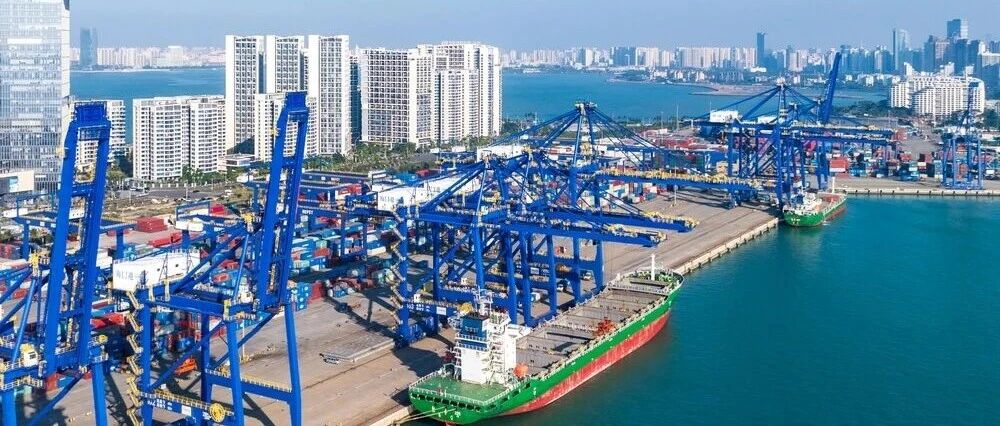
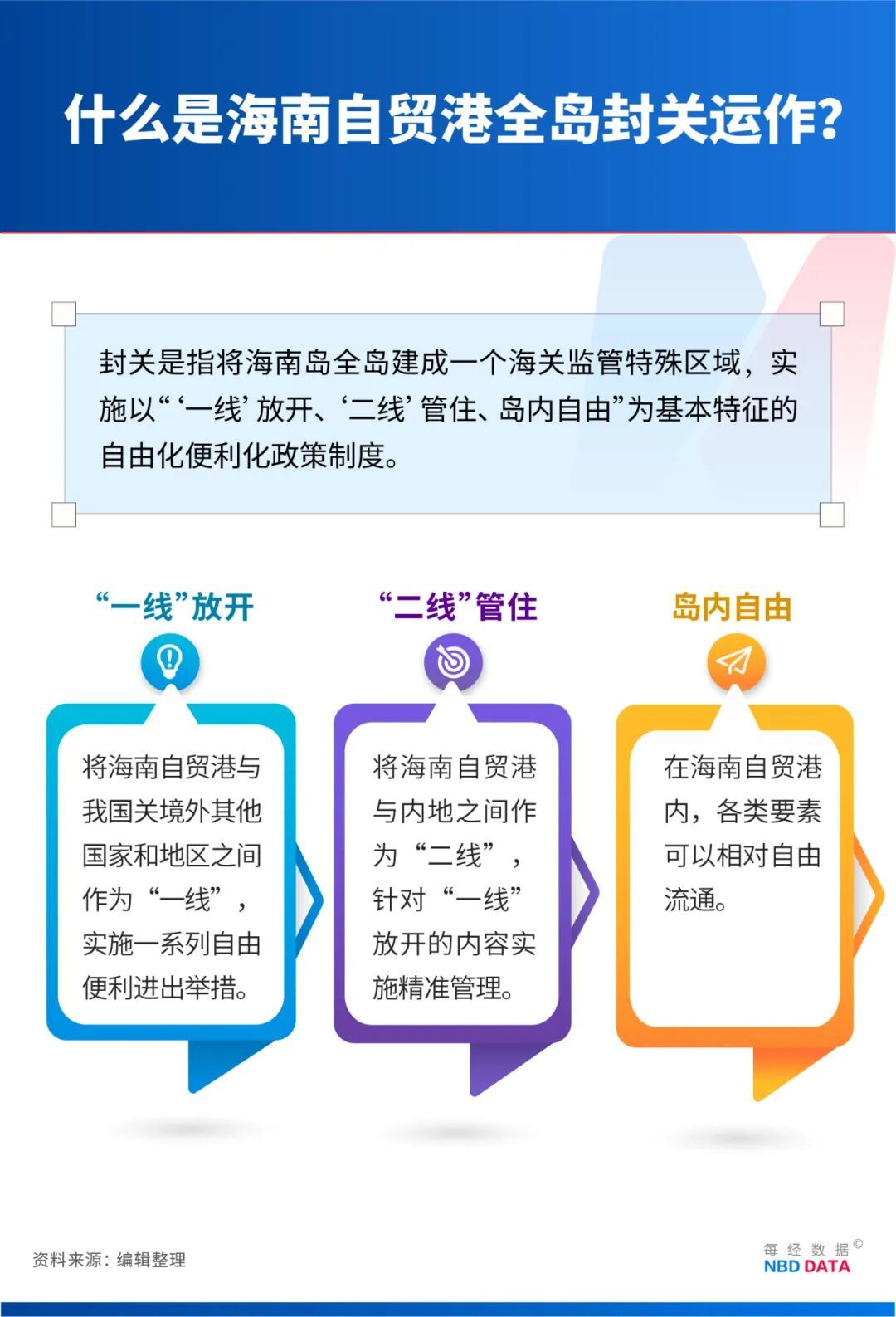
Core Viewpoint - The Hainan Free Trade Port will officially start its full island closure operation on December 18, 2025, marking a significant milestone in China's reform and opening-up process, with a focus on higher levels of openness to the world [1] Group 1: Policy Changes - The closure operation is not merely a policy adjustment but a comprehensive upgrade in the system, significantly enhancing the "zero tariff" level, optimizing processing and value-added tax exemptions, improving the investment environment, and facilitating entry and exit from Hainan [1][24] - The scope of "zero tariff" products will expand from 1,900 tax items to approximately 6,600 tax items, covering about 74% of all product tax items, an increase of nearly 53 percentage points compared to before the closure [7][11] - The beneficiaries of the "zero tariff" policy will broaden, allowing various enterprises and institutions with actual import needs to enjoy the benefits, rather than being limited to registered independent legal entities [7][11] Group 2: Tax Incentives - The low tax rate policy, known as the "two 15%" policy, will reduce corporate income tax to 15% for eligible enterprises, significantly lowering operational costs [12][24] - Individuals classified as high-end or urgently needed talents working in Hainan will have their personal income tax burden exceeding 15% exempted, providing a substantial incentive for talent retention [17][21] Group 3: Industry Focus - The Hainan Free Trade Port will prioritize the development of tourism, modern services, high-tech industries, and tropical characteristic efficient agriculture, aiming to create a modern industrial system with Hainan's unique characteristics [26][27] - The digital economy is expected to become a key industry, supported by robust infrastructure such as the Hainan-Hong Kong international submarine cable and the largest single data center in Hainan, enhancing data storage and processing capabilities for enterprises [28][29] Group 4: Comparison with Other Free Trade Ports - Unlike other international free trade ports, Hainan remains within China's customs territory, allowing for domestic circulation of goods and easier access for mainland residents [23][24] - Hainan's unique advantage lies in its access to China's vast domestic market, enabling it to better utilize both international and domestic resources [25]
海南自贸港封关“说明书”三:码住!来海南体验学业乐土和购物天堂
人民网-国际频道 原创稿· 2025-12-17 07:30
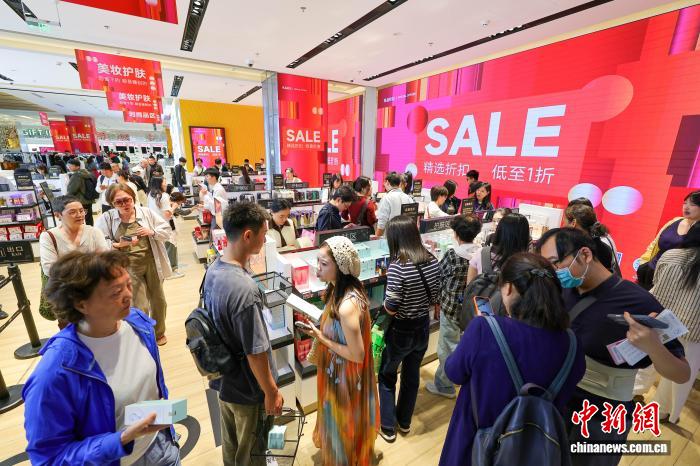
Core Viewpoint - Hainan Free Trade Port is attracting global attention with its diverse offerings, providing a more open and convenient environment for shopping, education, and entrepreneurship [2] Group 1: Shopping - The international duty-free shopping city in Sanya is a key attraction for consumers seeking fashion and quality [2] - Hainan is continuously creating new opportunities in the shopping sector [2] Group 2: Education - The establishment of the international education experimental base in Lingshui Li'an aims to cater to students desiring diverse educational experiences [2] - Hainan is positioning itself as a hub for innovative educational opportunities [2] Group 3: Entrepreneurship - The free trade port environment is designed to facilitate entrepreneurship, making it easier for businesses to operate [2] - Hainan is fostering a climate that encourages new business ventures and innovation [2]
共话中国经济新机遇丨美国学者:海南自贸港封关运作是中国制度型开放的生动例证
Xin Hua Wang· 2025-12-16 10:38
Group 1 - The core viewpoint is that the Hainan Free Trade Port's upcoming full island closure operation signifies China's commitment to high-level opening-up and the construction of an open world economy, presenting new development opportunities for enterprises, including those from the United States [1][2] - The Hainan Free Trade Port is expected to enhance its attractiveness for foreign investment, particularly in logistics and supply chain sectors, following the closure operation [1] - The initiative will also draw more international talent, elevating Hainan's status in the global education industry, exemplified by the recent collaboration between Arizona State University and Hainan University to offer dual degree programs [1] Group 2 - The construction progress of the Hainan Free Trade Port is highlighted as a vivid example of China's institutional opening-up, allowing more countries to share in development outcomes and contributing to global trade stability [2] - Hainan's strategic location at the crossroads of the Pacific and Indian Oceans will enable it to combine China's manufacturing and logistics advantages, increasing its importance in the global economic landscape [1] - The Hainan Free Trade Port is positioned to attract foreign investment while facilitating Chinese enterprises' global expansion, serving as a crucial gateway for industrial and supply chains [1]
30万变3万!那些曾经的“高端国际教育”家长,正在疯狂寻找“平替”
Sou Hu Cai Jing· 2025-12-15 09:41
Group 1 - The core phenomenon observed in the international education sector is a significant shift in consumer behavior, with families moving from high-budget private schooling in the U.S. to more affordable online education options, reflecting a broader trend of consumption downgrade [1][3] - Parents who previously inquired about budgets of 500,000 RMB (approximately 75,000 USD) for private high schools are now seeking online programs costing between 10,000 to 30,000 RMB (approximately 1,500 to 4,500 USD) per year [1][3] - The drastic change in spending reflects a 6-7 times reduction in educational expenditure, indicating a severe economic strain on middle-class families [3][5] Group 2 - The shift in demand is also evident in the content produced by educational influencers, who have transitioned from promoting high-end international schools to advocating for low-cost study abroad options and online high school programs [3][5] - The affordability of online American high schools has increased due to the closure of many traditional institutions, leading to a competitive pricing structure where online tuition can be as low as 1/10th of in-person schooling [5][7] - The legitimacy of online programs is bolstered by accreditation from recognized bodies such as Cognia and WASC, ensuring that diplomas from these institutions hold the same value as traditional ones [5][7] Group 3 - Despite the appeal of lower-cost education options, there are significant risks associated with choosing online programs, including the necessity of verifying accreditation, the quality of teaching staff, and the level of student support services [7][9] - Parents are advised to conduct thorough research on the accreditation status of online schools to avoid investing in programs that may not be recognized by universities [7][9] - The current trend of educational consumption downgrade may prompt families to reassess the true value of education, questioning the necessity of high tuition fees for traditional schooling environments [9][10]
我眼中的海南自贸港|共享发展红利 推动经济繁荣
人民网-国际频道 原创稿· 2025-12-15 08:29
Group 1: Hainan Free Trade Port Overview - Hainan's geographical proximity to Thailand attracts Southeast Asian investors, particularly from Thailand, to invest in the region [1] - The implementation of the closure policy in Hainan is seen as a significant and effective government initiative, embraced by various sectors [1] Group 2: Boao Lecheng International Medical Tourism Pilot Zone - Boao Lecheng is one of the 13 key parks in Hainan Free Trade Port, featuring 4 public hospitals and 35 private hospitals [2] - The zone has expedited the approval process for innovative international drugs and medical devices, reducing the approval time from 6 months to 3-5 working days, thus making essential medications more accessible and affordable for patients [2] Group 3: Lingshui Li'an International Education Innovation Pilot Zone - The zone hosts 6 renowned universities, including the University of Glasgow and Beijing Language University, sharing resources and facilities [3] - The favorable visa conversion mechanism allows international students to seek employment in Hainan post-graduation, enhancing the attractiveness of the educational environment [3] Group 4: Tourism and Duty-Free Shopping - Hainan offers visa-free entry for tourists from 85 countries, with convenient transportation options available [6] - The duty-free policy, effective from November 1, expands the categories of duty-free goods from 45 to 47, including new technology products, positioning Hainan as a premier international shopping destination [6] Group 5: Product Processing and Cultural Industries - The collaboration between Thai enterprises and local government in the coffee industry exemplifies successful foreign investment, enhancing local agricultural development while preserving cultural heritage [7] - The Lingshui Haifeng International Film and Television Base attracts Thai film crews due to favorable tax rates, promoting the region as a filming destination [7] - Companies like Haikou Yiyou Network Technology are benefiting from the closure policy, improving cross-border operational efficiency through better infrastructure and simplified foreign exchange management [7] Group 6: Economic Impact and Future Outlook - The closure policy is expected to enhance market openness, attract foreign investment, and promote economic prosperity in Hainan, positioning it as a key gateway for foreign investors into mainland China [9] - The overall development strategy aims to support high-quality growth and exemplify a higher level of openness to the outside world [9]