摄像头

Search documents
清华博士烧掉几十亿,靠手写的二百页文档做出百亿芯片巨头丨36氪专访
36氪· 2026-01-21 10:01
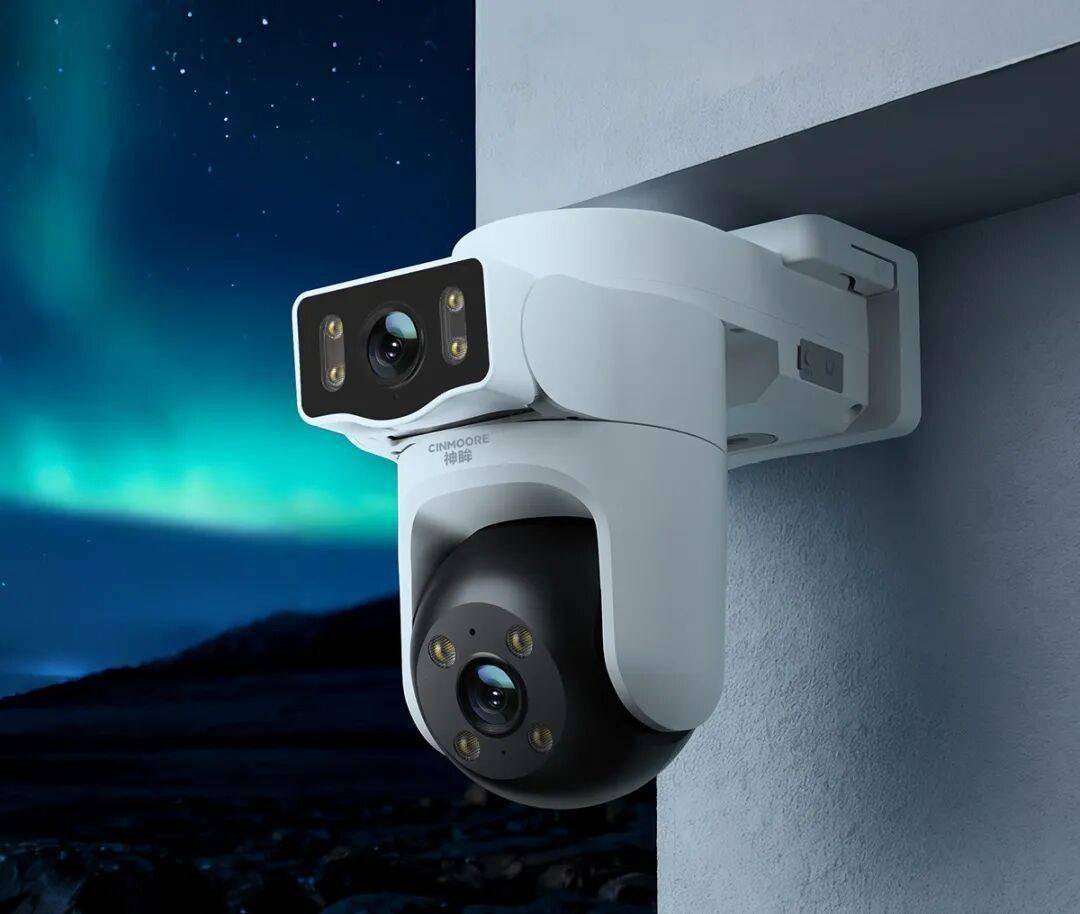
Core Viewpoint - The article discusses the journey and vision of Yang Zuoxing, founder of Bit Micro, focusing on his innovative approach to AI chip design and the development of low-power, wireless AI cameras under the brand "CINMOORE" [5][10][15]. Group 1: Company Background and Development - Yang Zuoxing, a PhD graduate from Tsinghua University, transitioned from a microelectronics designer to a successful entrepreneur in the chip industry, notably contributing to the design of Bitcoin mining chips [6][11][13]. - After leaving Bitmain due to equity disputes, Yang founded Bit Micro, achieving sales of 1.3 billion yuan within two years with a team of over 50 people [13][14]. - Yang's ambition to create AI chips led to the establishment of Yanjing Microelectronics in 2020, with an investment plan of 5 billion yuan, of which 2.2 billion yuan has already been spent [15][25]. Group 2: Product Innovation and Market Strategy - The main product, CINMOORE, features low-power AI cameras that eliminate the need for power cables, significantly reducing installation costs and complexity [16][25]. - The company aims to revolutionize the security camera market, predicting that if wireless cameras reach a 90% market share, the industry could grow from a hundred billion to a trillion yuan market [16][39]. - Yang emphasizes the importance of reducing power consumption to enable AI functionalities in edge devices, achieving a performance of 40-50T of computing power per watt, compared to competitors' several T per watt [22][23]. Group 3: Competitive Landscape and Future Outlook - Despite facing competition from established giants like Hikvision and Dahua, Yang believes in differentiating through innovation rather than direct confrontation [32][39]. - The company has set ambitious growth targets, aiming for a tenfold increase in sales annually, with expectations of reaching a market share of around 5% by 2025 [44][37]. - Yang's vision includes expanding into B2B markets after establishing a strong presence in the consumer sector, leveraging the advantages of low-cost, wireless solutions [42][36].


独家对话研极微创始人:80人做到近100亿营收后,要把AI摄像头插到田间地头
Sou Hu Cai Jing· 2026-01-21 01:05
Core Insights - The article highlights the journey of Yang Zuoxing, founder of Bit Micro, who transitioned from a chip designer to an entrepreneur focused on AI chips and low-power camera technology [9][10][12]. Company Overview - Bit Micro, founded by Yang Zuoxing, has achieved significant sales growth, reaching 1.3 billion yuan in sales within two years of its establishment [9]. - The company aims to disrupt the traditional camera market by developing wireless, low-power AI cameras that eliminate the need for power cables [12][21]. Technology and Innovation - The core technology of Bit Micro is the "fully customized chip design methodology," which allows for extreme energy efficiency tailored to specific needs [12][13]. - The company has successfully migrated this methodology to develop low-power chips for AI applications, achieving a performance of 40 to 50 teraflops per watt [16][18]. Market Position and Strategy - Bit Micro's product, the "CINMOORE" AI camera, has become a market leader in the battery camera category within a year of its e-commerce launch [12]. - The company anticipates that the market for wireless cameras could grow from a billion-level to a trillion-level market by 2035, with a projected annual shipment of 10 billion units [12][28]. Financial Performance - Despite significant sales growth, Bit Micro is currently experiencing strategic losses, with an expected loss of over 700 million yuan in 2025, which is seen as necessary for ongoing investment in chip development [34]. - The company aims to narrow losses to 300-400 million yuan by 2026 and achieve breakeven by 2027 [34]. Competitive Landscape - Bit Micro faces competition from established players like Hikvision and Dahua, but aims to differentiate through innovative features and pricing strategies [24][28]. - The company plans to expand its market presence by focusing on user-friendly installation and leveraging its unique technology to capture market share [21][32]. Future Outlook - The company is committed to continuous innovation and aims for a tenfold increase in sales annually, with a focus on both consumer and business markets [33][34]. - Bit Micro is also exploring international markets, with a strategy to adapt products to local needs and regulations [27].
3D摄像头板块领跌,下跌2.91%
Mei Ri Jing Ji Xin Wen· 2026-01-07 06:04
Group 1 - The 3D camera sector experienced a decline, falling by 2.91% [1] - Lixun Precision dropped by 4.05%, indicating significant downward pressure on the company [1] - Crystal Optoelectronics decreased by 2.87%, reflecting a broader trend in the sector [1] - O-Film Technology saw a decline of 1.81%, contributing to the overall downturn in the 3D camera industry [1]



1000元以下的激光雷达?马斯克嗤笑,那是技术落后的雷达罢了!
Sou Hu Cai Jing· 2026-01-03 15:48
Core Viewpoint - The rapid decline in the cost of lidar technology in China is primarily due to the technological advancements and obsolescence of older products, rather than the efforts of automotive companies [1][5]. Group 1: Lidar Technology and Pricing - Domestic lidar prices have dropped below 1000 yuan, significantly lower than the previous price of 200 USD, indicating a shift towards outdated products [1]. - The price reduction of lidar is similar to that of chips, where older models see significant price drops as new technology is introduced [3]. - The advancement in lidar technology has led to various models, such as 64-line, 192-line, and 520-line, with the 64-line model being outdated and thus experiencing a steep price decline [3]. Group 2: Market Dynamics and Competition - The price drop of lidar is a result of rapid technological iteration within lidar companies, rather than automotive companies pushing for lower prices [5]. - The high cost of advanced lidar, such as the 520-line model priced over 4000 yuan, remains a barrier for many automotive companies, leading to a preference for the more affordable 192-line model [5]. - The integration of lidar technology with visual recognition is challenging, and advancements in camera technology are allowing for longer detection ranges, diminishing lidar's competitive edge [5][7]. Group 3: Industry Trends and Future Outlook - The number of companies supporting lidar technology is decreasing, with many opting for dual solutions or purely visual recognition systems [7]. - Automotive companies are increasingly viewing intelligent driving as a secondary feature, focusing on cost control, which negatively impacts the demand for expensive lidar systems [7]. - The claim of significant price drops in lidar technology is misleading, as it primarily reflects the reduced demand for outdated 64-line models, while mainstream lidar technologies remain costly [7].

制造业出海,不能缺“服务腿”,从东南亚到美国的布局困局与破局
Sou Hu Cai Jing· 2025-12-18 10:18
Core Insights - The integration of service and manufacturing sectors is essential for high-quality development in China's economy, as highlighted in a recent forum discussing strategies for addressing shortcomings in service industries [1][2] - Despite statistics suggesting low service revenue in manufacturing, deeper analysis reveals that many manufacturing companies are increasingly relying on service components, which are often not reflected in traditional revenue metrics [3][7] Group 1: Service and Manufacturing Integration - The traditional view of manufacturing as purely product-based is evolving, with service components becoming integral to business models [5][27] - A case study of a gear company illustrates that significant expenditures on outsourced services are often categorized as costs rather than service revenue, indicating a shift in how manufacturing firms operate [7][10] - Companies like Beijing Jingdiao have successfully enhanced their market competitiveness by offering tailored services, such as prototyping and training, which have allowed them to capture market share from established foreign competitors [10][12] Group 2: Challenges and Opportunities - The service landscape in China is uneven, with small and medium enterprises facing challenges in accessing quality services, particularly in less developed regions [20][22] - There is a risk that companies may overemphasize service at the expense of their core manufacturing capabilities, which could undermine long-term competitiveness [18][27] - The potential for global expansion is significant, but companies must ensure that their service infrastructure keeps pace with their manufacturing growth to maintain competitiveness in international markets [20][28] Group 3: Market Dynamics - The shift towards service-oriented business models is changing competitive dynamics, where companies must now compete on service quality as well as product performance [8][14] - Successful examples of service innovation in manufacturing demonstrate that understanding customer needs and providing tailored solutions can lead to significant business growth [12][25] - The integration of digital technologies in service offerings can enhance efficiency and effectiveness, further solidifying the role of services in the manufacturing sector [27]

3D摄像头板块领跌,下跌2.33%
Mei Ri Jing Ji Xin Wen· 2025-12-15 02:43
Group 1 - The 3D camera sector experienced a decline, falling by 2.33% [1] - Lixun Precision dropped by 3.38% [1] - Obi Optical fell by 2.83% [1] - Crystal Optoelectronics decreased by 2.26% [1]

芯报丨AI巨头Anthropic拟最早2026年IPO,估值或超3000亿美元
Xin Lang Cai Jing· 2025-12-03 13:20
Group 1 - Shanghai Buchou Quantum Technology Co., Ltd. completed angel round financing of several tens of millions of RMB, led by Zhongke Chuangxing, with funds aimed at building low-noise ultra-clean rooms and accelerating quantum computing core technology development and industrialization [1][1] - Wuhan Wanjie Technology Co., Ltd. plans to introduce strategic investors, raising 55 million RMB to enhance its laser radar business layout and market competitiveness [2][2] - Chip manufacturer Xinsaiwei joined the Shenzhen Camera Industry Association (SCIA), marking its commitment to building a domestic visual ecosystem and collaborating with industry partners [2][2] Group 2 - Anke Innovation Technology Co., Ltd. submitted a listing application to the Hong Kong Stock Exchange, with sponsorship from CICC, Goldman Sachs, and JPMorgan, indicating its expansion into the capital market [2][2] - AI startup Anthropic is preparing for a potential IPO as early as 2026, with a valuation possibly exceeding 300 billion USD, having engaged Wilson Sonsini law firm for the process [2][2]

全球份额调查:中国企业在15个品类下滑
日经中文网· 2025-09-03 02:54
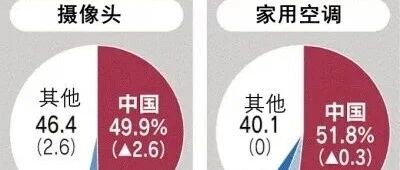
Core Insights - The article highlights the competitive landscape of global markets, indicating that the U.S. leads in 27 product categories, while China leads in 18 categories, an increase from 17 the previous year [2][7] - Despite some categories showing a decline in market share for Chinese companies, there are 24 categories where they have expanded their share, up from 21 the previous year [6] Group 1: Market Share Trends - In 2024, Chinese companies saw a reduction in market share across 15 categories, an increase from 13 categories in 2023 [4] - The market share of Chinese companies in the camera segment decreased from 52.5% to 49.9%, with Hikvision's share dropping by 1.8 percentage points [4] - The cloud services sector, previously growing, is now showing signs of decline, with Alibaba's share down by 0.7 percentage points [6] Group 2: Economic Impact - The ongoing real estate downturn in China, exacerbated by the crisis of Evergrande Group, has led to a sluggish domestic demand, impacting sectors like home appliances [6] - The real estate and related industries are estimated to account for 30% of China's GDP, contributing to economic stagnation and poor sales in home-related products [6] - The beer market also reflects this trend, with China Resources Beer’s market share declining by 0.2 percentage points to 5.2% [6] Group 3: Competitive Landscape - In the electric vehicle (EV) sector, Tesla's market share decreased by 2.3 percentage points to 16.1%, while the combined market share of Chinese companies like BYD exceeds 30% [6] - In the smartphone market, companies like Xiaomi and Transsion are gaining traction, particularly in emerging markets [7] - The U.S. government continues to exert pressure on Chinese companies through tariffs and regulations, which is expected to prolong the stagnation of the Chinese economy [7]