新能源车制造业

Search documents
2025年我国制造业智能化绿色化加快发展
Yang Shi Wang· 2026-01-22 11:47
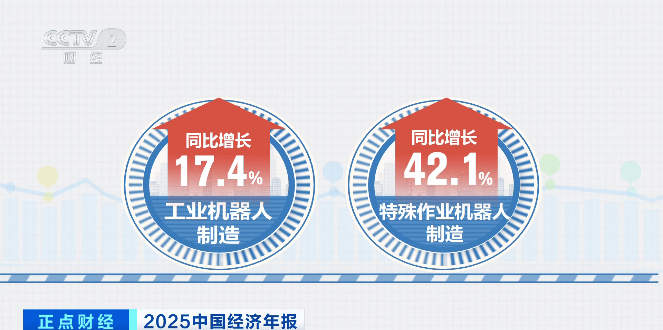
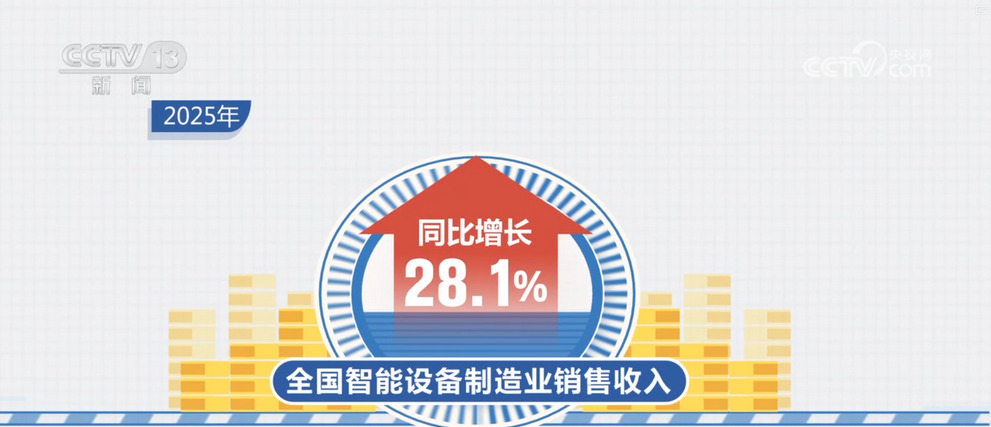
Core Insights - The latest data from the National Taxation Administration indicates that by 2025, the intelligent upgrade process in China's manufacturing industry will accelerate, with a more than 10% increase in the amount spent on automated and digital equipment by manufacturing enterprises [1] Group 1: Intelligent Equipment Manufacturing - Sales revenue in the intelligent equipment manufacturing sector is expected to grow by 28.1% year-on-year, with industrial robots and special operation robots seeing year-on-year growth of 17.4% and 42.1%, respectively [1] Group 2: Digital Integration - The sales revenue of the digital product manufacturing industry is projected to increase by 9.4% year-on-year by 2025, while the amount spent by manufacturing enterprises on digital technologies is expected to rise by 10.4%, accelerating by 3.5 percentage points compared to the previous year [1] Group 3: Green Transformation - The amount spent by manufacturing enterprises on environmental governance services is anticipated to grow by 7.3% year-on-year, indicating an increase in green governance investments [1] - The sales revenue of high-energy-consuming manufacturing industries will decrease by 1.1 percentage points compared to the previous year, reflecting ongoing optimization of the industrial structure [1] Group 4: New Energy Industries - The sales revenue of the new energy vehicle manufacturing industry is expected to grow by 14.3% year-on-year, while the lithium-ion battery manufacturing sector is projected to see a year-on-year increase of 25.1% [1]
中国制造业智能化、绿色化、融合化加快
Ren Min Ri Bao Hai Wai Ban· 2026-01-22 04:38
Core Insights - The manufacturing sector in China is projected to see a sales revenue growth rate that exceeds the national average by 1.7 percentage points by 2025, with its share of total national sales increasing to 29.7%, up by 0.5 percentage points from the previous year [1] Group 1: Intelligent Upgrading - The acceleration of intelligent upgrades in the manufacturing sector is evident, with the purchase of automation and digital equipment increasing by 11.3% and 10% year-on-year, respectively [1] - The sales revenue of the intelligent equipment manufacturing industry has grown by 28.1% year-on-year, with industrial robots and special operation robots seeing increases of 17.4% and 42.1%, respectively [1] Group 2: Green Transformation - The share of high-energy-consuming manufacturing sales revenue within the manufacturing sector has decreased by 1.1 percentage points compared to the previous year, indicating ongoing structural optimization [1] - The amount spent by manufacturing enterprises on environmental governance services has increased by 7.3% year-on-year, with high-energy-consuming sectors seeing a 14.6% increase in spending [1] - Sales revenue in the new energy vehicle manufacturing sector and lithium-ion battery manufacturing sector has grown by 14.3% and 25.1% year-on-year, respectively [1] Group 3: Digital Integration - The sales revenue of the digital product manufacturing sector is expected to grow by 9.4% year-on-year by 2025, with manufacturing enterprises' spending on digital technology increasing by 10.4%, a 3.5 percentage point acceleration from the previous year [2] - The automotive manufacturing sector and computer communication equipment manufacturing sector have seen year-on-year increases in digital technology procurement of 24.5% and 11.8%, respectively [2]
智能化、绿色化、融合化步伐加快 制造业“压舱石”作用更加凸显
Zhong Guo Zheng Quan Bao· 2026-01-22 00:21
Core Insights - The analysis by the National Taxation Administration indicates that by 2025, the sales revenue of China's manufacturing industry will grow 1.7 percentage points faster than the overall national sales growth rate, with manufacturing accounting for 29.7% of total sales, an increase of 0.5 percentage points from the previous year [1][2] Group 1: Intelligent Upgrading - The implementation of the "Artificial Intelligence + Manufacturing" initiative is accelerating, with manufacturing enterprises expected to increase their purchases of automation and digital equipment by 11.3% and 10% year-on-year, respectively, by 2025 [1] - The intelligent transformation and digital upgrade of the manufacturing sector are driving the development of related industries, with sales revenue in the intelligent equipment manufacturing sector projected to grow by 28.1% year-on-year, including a 17.4% increase in industrial robots and a 42.1% increase in special operation robots [1] Group 2: Green Transformation - The sales revenue of high-energy-consuming manufacturing industries is expected to decrease by 1.1 percentage points as a proportion of total manufacturing revenue, indicating ongoing optimization of the industrial structure [2] - Manufacturing enterprises are increasing their investment in environmental governance services, with a year-on-year growth of 7.3%, and high-energy-consuming sectors seeing a 14.6% increase in such expenditures [2] - The renewable energy sector is rapidly developing, with sales revenue in the new energy vehicle manufacturing and lithium-ion battery manufacturing industries expected to grow by 14.3% and 25.1% year-on-year, respectively [2] Group 3: Digital Integration - The sales revenue of digital product manufacturing is projected to grow by 9.4% year-on-year, with manufacturing enterprises increasing their procurement of digital technologies by 10.4%, an acceleration of 3.5 percentage points compared to the previous year [2] - Specific sectors such as automotive manufacturing and computer communication equipment manufacturing are expected to see significant increases in digital technology procurement, with year-on-year growth rates of 24.5% and 11.8%, respectively [2]
制造业“压舱石”作用更加凸显
Zhong Guo Zheng Quan Bao· 2026-01-21 21:08
Group 1 - The core viewpoint of the articles indicates that China's manufacturing industry is expected to see a sales revenue growth rate that exceeds the national average by 1.7 percentage points by 2025, with manufacturing accounting for 29.7% of total sales, an increase of 0.5 percentage points from the previous year [1][2] Group 2 - The acceleration of intelligent upgrades in manufacturing is highlighted, with a projected year-on-year increase of 11.3% in the purchase of automation equipment and 10% in digital equipment by 2025, indicating a faster pace of intelligent transformation and digital renovation [1] - The sales revenue of the intelligent equipment manufacturing sector is expected to grow by 28.1% year-on-year, with industrial robots and special operation robots seeing increases of 17.4% and 42.1% respectively [1] Group 3 - The ongoing green transformation is noted, with high-energy-consuming manufacturing's sales revenue share decreasing by 1.1 percentage points, reflecting an optimization of the industrial structure [2] - The amount spent by manufacturing enterprises on environmental governance services is projected to increase by 7.3% year-on-year, with high-energy-consuming sectors seeing a 14.6% increase [2] - The sales revenue of the new energy vehicle manufacturing sector and lithium-ion battery manufacturing sector is expected to grow by 14.3% and 25.1% respectively [2] Group 4 - The deepening digital integration is emphasized, with a projected 9.4% year-on-year growth in sales revenue for digital product manufacturing and a 10.4% increase in the purchase of digital technologies by manufacturing enterprises, which is 3.5 percentage points faster than the previous year [2] - The automotive manufacturing and computer communication equipment manufacturing sectors are expected to see year-on-year increases of 24.5% and 11.8% in their purchases of digital technologies [2] Group 5 - The tax authorities are committed to implementing policies that support the transformation and upgrading of the manufacturing sector, ensuring that tax benefits reach enterprises effectively to contribute to high-quality development in manufacturing [2]
中国经济年报丨国家税务总局:2025年我国制造业智能化 绿色化加快发展
Sou Hu Cai Jing· 2026-01-21 13:38
Group 1 - The core viewpoint of the article highlights the accelerated development of intelligent and green transformation in China's manufacturing industry by 2025, with steady increases in sales revenue from intelligent equipment, new energy vehicles, and digital products [1][5]. Group 2 - In 2025, the sales revenue of the intelligent equipment manufacturing industry nationwide is expected to grow by 28.1% year-on-year, with industrial robots and special operation robots increasing by 17.4% and 42.1% respectively [3]. - The transition towards intelligent and digital transformation in manufacturing is accelerating, with expenditures on automation and digital equipment rising by 11.3% and 10% year-on-year respectively [3]. Group 3 - The green transformation in manufacturing is also progressing, with the sales revenue of high-energy-consuming manufacturing industries decreasing by 1.1 percentage points compared to the previous year, indicating an optimization of the industrial structure [5]. - Expenditures on environmental governance services by manufacturing enterprises increased by 7.3% year-on-year, reflecting a growing investment in green governance [5]. - The new energy-related industries are rapidly developing, with sales revenue from new energy vehicle manufacturing and lithium-ion battery manufacturing increasing by 14.3% and 25.1% year-on-year respectively [5]. Group 4 - The integration of the digital economy with the real economy is deepening, with sales revenue from the digital product manufacturing industry growing by 9.4% year-on-year [7]. - Manufacturing enterprises' expenditures on digital technology increased by 10.4% year-on-year, with a growth rate that accelerated by 3.5 percentage points compared to the previous year, particularly in the automotive manufacturing and computer communication equipment manufacturing sectors, which saw increases of 24.5% and 11.8% respectively [7].

税收数据视角下的2025年制造业发展亮点:智能化、绿色化步伐加快
Yang Shi Wang· 2026-01-21 08:41
Group 1 - The core viewpoint of the articles indicates that by 2025, China's manufacturing industry will accelerate its development in terms of intelligence and greenness, with steady increases in sales revenue from intelligent equipment, new energy vehicles, and digital products [1][3][4] Group 2 - In 2025, the sales revenue of high-energy-consuming manufacturing industries will decrease by 1.1 percentage points compared to the previous year, reflecting an optimization in industrial structure [3] - The amount spent by manufacturing enterprises on environmental governance services will increase by 7.3% year-on-year, indicating a growing investment in green governance [3] - The sales revenue of the new energy vehicle manufacturing industry and lithium-ion battery manufacturing will grow by 14.3% and 25.1% year-on-year, respectively [3] Group 3 - The sales revenue of the intelligent equipment manufacturing industry will increase by 28.1% year-on-year in 2025, with industrial robots and special operation robots growing by 17.4% and 42.1% respectively [4] - The procurement of automation and digital equipment by manufacturing enterprises will increase by 11.3% and 10% year-on-year, respectively [4] Group 4 - The sales revenue of the digital product manufacturing industry will grow by 9.4% year-on-year in 2025, with the procurement of digital technology by manufacturing enterprises increasing by 10.4%, an acceleration of 3.5 percentage points compared to the previous year [6] - In the automotive manufacturing and computer communication equipment manufacturing sectors, the procurement of digital technology will increase by 24.5% and 11.8% year-on-year, respectively [6]
税收数据显示:中国制造业智能化、绿色化、融合化步伐加快
Zhong Guo Xin Wen Wang· 2026-01-21 07:42
Group 1 - The core viewpoint of the article highlights the accelerated pace of intelligent, green, and integrated development in China's manufacturing industry, with manufacturing sales revenue expected to grow faster than the national average by 1.7 percentage points by 2025 [1] - The manufacturing sector's share of total national sales is projected to reach 29.7% in 2025, an increase of 0.5 percentage points from the previous year, underscoring its role as an economic stabilizer [1] - The implementation of the "Artificial Intelligence + Manufacturing" initiative is driving significant growth in the procurement of automation and digital equipment, with year-on-year increases of 11.3% and 10% respectively [1] Group 2 - The sales revenue of high-energy-consuming manufacturing industries is expected to decrease by 1.1 percentage points compared to the previous year, indicating ongoing optimization of the industrial structure [2] - Investment in environmental governance services by manufacturing enterprises has increased by 7.3%, with high-energy-consuming sectors seeing a 14.6% rise in spending on such services, reflecting a commitment to green governance [2] - The sales revenue of the new energy vehicle manufacturing industry and lithium-ion battery manufacturing is projected to grow by 14.3% and 25.1% respectively, highlighting the rapid development of related industries [2] Group 3 - The sales revenue of digital product manufacturing is expected to grow by 9.4%, with manufacturing enterprises increasing their procurement of digital technologies by 10.4%, a 3.5 percentage point acceleration from the previous year [2] - The automotive manufacturing and computer communication equipment manufacturing sectors are leading in digital technology procurement, with increases of 24.5% and 11.8% respectively, indicating a deepening integration of the digital economy with the real economy [2] - The National Taxation Administration emphasizes the importance of implementing tax and fee incentives to support the transformation and upgrading of the manufacturing sector, ensuring that policy benefits reach enterprises effectively [2]
半两财经|2025年税收数据显示:数字产品制造业销售收入同比增9.4%
Sou Hu Cai Jing· 2026-01-21 06:42
Group 1 - The core viewpoint of the articles indicates that by 2025, China's manufacturing industry is expected to see a sales revenue growth rate that exceeds the national average by 1.7 percentage points, with manufacturing accounting for 29.7% of total national sales, an increase of 0.5 percentage points from the previous year [1][2] Group 2 - The acceleration of intelligent upgrades in manufacturing is highlighted, with a projected year-on-year increase of 11.3% in the purchase of automation equipment and 10% in digital equipment by manufacturing enterprises in 2025. This transformation is expected to drive related industries, with intelligent equipment manufacturing sales projected to grow by 28.1% [1] - The green transformation is also emphasized, with high-energy-consuming manufacturing sales revenue expected to decrease by 1.1 percentage points in proportion to total manufacturing. Investments in environmental governance services are projected to increase by 7.3%, with high-energy-consuming sectors seeing a 14.6% increase [1] - The deepening of digital integration is noted, with digital product manufacturing sales expected to grow by 9.4% and the procurement of digital technologies by manufacturing enterprises projected to increase by 10.4%, with notable growth in the automotive and computer communication equipment sectors [2] - The tax authority plans to optimize tax and fee services to ensure that policy benefits reach enterprises effectively, contributing to the high-quality development of the manufacturing sector [2]
税收数据显示:2025年我国制造业智能化、绿色化、融合化加快发展“十五五”
Zhong Guo Jing Ji Wang· 2026-01-21 02:52
Group 1 - The core viewpoint of the articles emphasizes the importance of focusing on the real economy, particularly in manufacturing, while accelerating the transition towards intelligent, green, and integrated development [1][2] Group 2 - By 2025, manufacturing sales revenue in China is projected to grow 1.7 percentage points faster than the overall national sales growth, reaching a share of 29.7% of total sales, an increase of 0.5 percentage points from the previous year [1] - The intelligent upgrade of manufacturing is accelerating, with a projected year-on-year increase of 11.3% in the purchase of automation equipment and 10% in digital equipment by manufacturing enterprises [1] - The sales revenue of the intelligent equipment manufacturing industry is expected to grow by 28.1% year-on-year, with industrial robots and special operation robots seeing increases of 17.4% and 42.1% respectively [1] Group 3 - The green transformation is ongoing, with high-energy-consuming manufacturing sales revenue decreasing by 1.1 percentage points, indicating an optimization of the industrial structure [2] - The purchase of environmental governance services by manufacturing enterprises is expected to increase by 7.3% year-on-year, with high-energy-consuming sectors seeing a 14.6% increase [2] - Sales revenue in the new energy vehicle manufacturing and lithium-ion battery manufacturing sectors is projected to grow by 14.3% and 25.1% year-on-year, respectively [2] Group 4 - The digital integration within manufacturing is deepening, with digital product manufacturing sales revenue expected to grow by 9.4% year-on-year and the purchase of digital technology by manufacturing enterprises increasing by 10.4% [2] - The growth rate of digital technology purchases is accelerating by 3.5 percentage points compared to the previous year, with the automotive manufacturing and computer communication equipment manufacturing sectors seeing increases of 24.5% and 11.8% respectively [2] Group 5 - The tax authorities are committed to implementing policies that support the transformation and upgrading of the manufacturing sector, ensuring that tax benefits reach enterprises effectively to contribute to high-quality development [2]
核心CPI显著回升——3月物价数据解读【财通宏观•陈兴团队】
陈兴宏观研究· 2025-04-10 09:21
Core Viewpoint - The article discusses the recent trends in Consumer Price Index (CPI) and Producer Price Index (PPI), highlighting a recovery in CPI year-on-year growth and an expansion in the year-on-year decline of PPI, influenced by various seasonal and input factors [1][2][4]. CPI Analysis - In March, the CPI year-on-year decline narrowed to -0.1%, a decrease of 0.6 percentage points from the previous month, while the core CPI significantly rebounded to 0.5% [1][4]. - The main drag on the CPI was food prices, which fell by 1.4% month-on-month, contributing approximately 60% to the total CPI decline [6][4]. - Seasonal factors, such as warmer weather leading to increased fresh food supply, and a tourism off-season causing a drop in travel-related prices, were significant contributors to the CPI's month-on-month decline [1][6]. - Excluding food and energy, the core CPI showed improvement, with a year-on-year increase of 0.5%, indicating a potential positive impact from consumption-boosting policies [1][4]. PPI Analysis - The PPI year-on-year decline expanded to -2.5% in March, an increase of 0.3 percentage points from the previous month, with production materials experiencing a decline of -2.8% [9][10]. - Input factors, including falling international oil prices and weakened domestic demand, significantly influenced the PPI's month-on-month and year-on-year performance [2][10]. - Specific industries, such as coal mining and oil extraction, saw notable price declines, with coal mining prices dropping by 14.9% [9][10]. - Despite the overall decline, some high-tech industries showed price improvements, with educational and pharmaceutical equipment prices increasing by 7.6% and 6.1%, respectively [9][10].