
旅行服务等

Search documents
外贸发展韧性如何延续?丨落实会议部署 问答中国经济
Zheng Quan Shi Bao· 2025-12-30 06:34
Core Viewpoint - China's merchandise trade exports have shown a surprising year-on-year growth of 6.2% in the first 11 months of this year, exceeding initial expectations despite high tariffs imposed by certain countries, reflecting the resilience brought by the long-term transformation and upgrading of the manufacturing sector and diversification of trade partners [1][2]. Group 1: Export Growth and Structure - The export structure of China has improved, with intermediate goods and capital goods showing significant growth rates of 9.7% and 6% respectively in the first 10 months, contributing 5.6 percentage points to overall export growth [1]. - Intermediate goods accounted for 47.4% of total exports in the first three quarters, an increase of 2 percentage points compared to the end of last year, indicating a shift towards a more favorable export structure [1]. Group 2: Trade Partner Diversification - Exports to the U.S. have decreased by 18.3%, but exports to non-U.S. markets such as Africa, ASEAN, India, the EU, the UK, Latin America, and Australia have maintained high growth, effectively offsetting the decline in exports to the U.S. [2]. - The long-term advantages of manufacturing transformation and market diversification are expected to continue, with a generally optimistic outlook for foreign trade in the coming year [2]. Group 3: Future Strategies - Continued promotion of manufacturing transformation and upgrading is essential, with a focus on integrating technological and industrial innovation to enhance the self-sufficiency of the industrial chain [3]. - The service sector's export potential is significant, with service trade exports growing by 14.3% in the first 10 months, including a 52.5% increase in travel service exports [3]. Group 4: Multilateral Trade System - China has actively supported the multilateral trade system, proposing measures to stabilize and develop the World Trade Organization (WTO) framework, which has garnered widespread support [4]. - Plans for gradual institutional opening and the signing of more regional and bilateral trade agreements are underway, aimed at promoting the free flow of goods, services, and investments [4].
贸易顺差超过1万亿美元,为何体感不明显?
Sou Hu Cai Jing· 2025-12-26 13:16
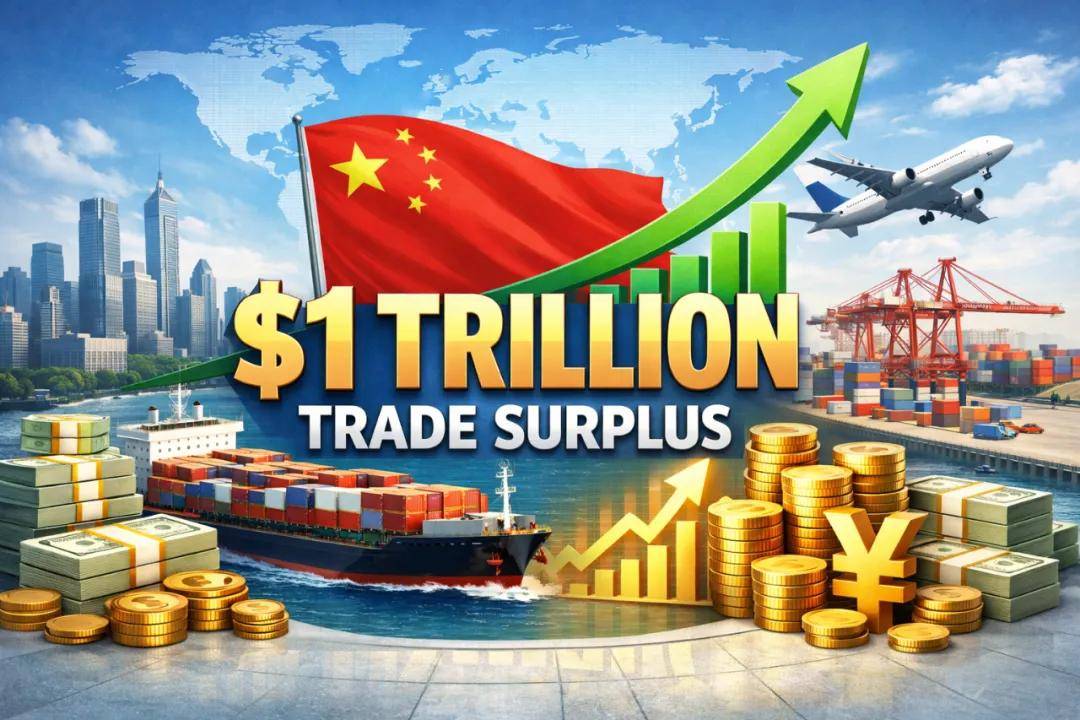
Group 1: Trade Surplus Overview - In the first 11 months of 2025, China's goods trade surplus reached $1.08 trillion, marking the first time any country has surpassed the $1 trillion mark in trade surplus [2] - The strong export performance is driven by key categories such as electromechanical products, which account for approximately 59% of total exports, and new growth areas like electric vehicles and lithium batteries, which continue to see double-digit growth despite overseas tariff pressures [3][4] Group 2: Export and Import Dynamics - The import demand in 2025 is weak, with nearly zero growth (0.2%), contributing to the maximum trade surplus [4] - Many export enterprises are holding onto foreign currency earnings instead of converting them into RMB, leading to a "funds external circulation" phenomenon [5] - A portion of profits from manufacturing is being used to pay off debts rather than being reinvested domestically, indicating a trend towards deleveraging [5] Group 3: Industry-Specific Insights - The automotive sector is highlighted as a profitable industry, with significant profits from exports that can cover costs associated with tariffs and logistics [5] - The distribution of wealth from the trade surplus is concentrated among leading technology firms and automated factories, contrasting with the declining value of real estate, which affects the perceived wealth of ordinary citizens [7] Group 4: Service Trade Developments - China's service trade has historically shown a significant deficit, but in 2025, the deficit narrowed to approximately $108 billion, a reduction of about 26% year-on-year [12][13] - Knowledge-intensive service trade constitutes about 38% of the total, with rapid growth in exports driven by international travel demand and foreign tourists spending in China [13] Group 5: Future Outlook - The trade surplus reflects the efficiency of the production system and external structures rather than a direct increase in resident income [14] - As trade tensions stabilize and high-tech breakthroughs occur, the surplus is expected to gradually benefit the domestic economy and convert into disposable wealth for the population [14]

激发服务消费新增量 更多新举措在路上
Jing Ji Wang· 2025-09-05 07:30
Core Viewpoint - The main issue in China's service consumption is the insufficient supply of high-quality services, prompting the Ministry of Commerce to introduce policies to enhance service supply capacity and stimulate new service consumption growth [1][2]. Policy Optimization - The Ministry of Commerce aims to increase high-quality service supply through "opening up externally and loosening restrictions internally," focusing on expanding pilot programs in telecommunications, healthcare, and education [2][3]. - Financial and tax support is identified as a crucial factor for boosting service exports, with a reported 12.2% year-on-year growth in service exports in Q1 2025, and a significant increase in knowledge-intensive service exports [2][3]. International Market Expansion - Service trade is becoming increasingly important, with service exports accounting for 11.5% of total exports in the first half of 2025, indicating a shift from being a "world factory" to a "world service provider" [4]. - The upcoming service trade fair in Beijing will showcase over 190 key achievements in service trade, aiming to enhance the quality of service imports and meet diverse consumer demands [4]. Service Consumption Growth - From 2020 to 2024, China's service consumption has grown rapidly, with per capita service consumption expenditure increasing by an average of 9.6% annually, contributing significantly to overall consumer spending [6]. - Service consumption is seen as a key area for boosting overall consumption, with potential to enhance the quality of life through increased spending in sectors like healthcare and elder care [6][7]. New Consumption Models - The Ministry of Commerce plans to support the development of new consumption models and scenarios, promoting activities that integrate commerce, tourism, culture, and sports to stimulate service consumption [5][6]. - By including various service sectors in subsidy systems, the government aims to alleviate consumer cost pressures and stimulate demand, thereby enhancing service supply and expanding the market [7].
曲江文旅: 曲江文旅2024年年度股东大会会议资料
Zheng Quan Zhi Xing· 2025-06-22 08:19
Core Viewpoint - Xi'an Qujiang Cultural Tourism Co., Ltd. is focusing on enhancing its competitive advantages and operational efficiency through strategic reforms and integrated management in the cultural tourism sector [2][4][6]. Group 1: Shareholder Meeting Procedures - Shareholders have the right to speak, inquire, and vote during the annual general meeting, with prior registration required for speaking [1]. - Voting will be conducted through a combination of on-site and online methods, with shareholders allowed to choose only one voting method [1][2]. - The meeting will be monitored by a team consisting of lawyers, shareholder representatives, and supervisors [2]. Group 2: Business Performance and Strategy - The company reported that its tourism scenic area operation management business accounts for 52% of its revenue, with key attractions including the "Daming Palace National Heritage Park" and "Datang Furong Garden" [7]. - The company aims to enhance its cultural tourism offerings by integrating various services such as hotel management, travel services, and cultural performances [6][8]. - The company plans to achieve approximately 1 billion yuan in revenue for the fiscal year 2025, with cost control measures in place [17]. Group 3: Competitive Advantages and Challenges - The company has received several honors, including recognition for its historical parks and cultural performances, which strengthen its market position [4][6]. - Challenges include the need to revitalize underperforming assets and transition towards a more integrated cultural and tourism model [6][8]. - The company is focusing on the development of cultural IP and enhancing the integration of tourism and cultural heritage [16]. Group 4: Corporate Governance and Compliance - The company adheres to legal regulations and continuously improves its corporate governance structure to protect shareholder interests [17][28]. - A comprehensive internal control system has been established to ensure effective management and compliance with regulatory requirements [28][29]. - The company has implemented a plan for investor relations management to enhance communication with stakeholders [26].
