沙产业

Search documents
沙海也是发展“蓝海”
Jing Ji Ri Bao· 2026-01-05 22:06
Core Viewpoint - China is one of the countries with the largest desertification area in the world, and strengthening comprehensive prevention and control of desertification is crucial for ecological security and long-term stability [1] Group 1: Ecological and Economic Benefits - The ecological status of the Inner Mongolia desert area has seen a historic transformation, achieving overall improvement and accelerated enhancement of desert ecosystem functions [1] - The development of desert tourism and desert planting industries is on the rise, turning deserts into valuable resources that can drive regional economic development [1] Group 2: Systematic Governance and Resource Management - Implementation of stricter grazing bans and a balance between livestock and grassland is necessary, along with expanding the scope of grazing prohibition areas [2] - Enhancing the ecological compensation standards for grazing prohibition areas is essential to improve the ecological balance [2] Group 3: Supporting Farmers and Sustainable Development - Promoting the integration of desert ecological tourism and low-altitude economy can lead to job creation and increased income for farmers and herders [2] - Encouraging farmers to cultivate drought-resistant crops and exploring the carbon sink value of grasslands can enhance participation in desertification control and achieve a win-win situation for both environmental protection and economic benefits [2]
大漠戈壁中的坚守
Xin Lang Cai Jing· 2025-12-27 04:16
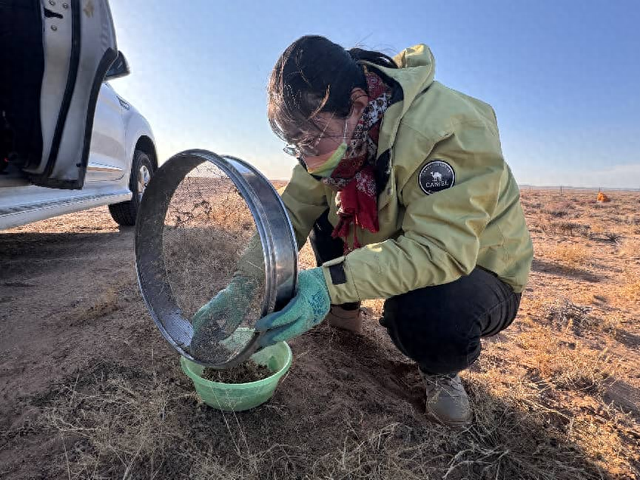
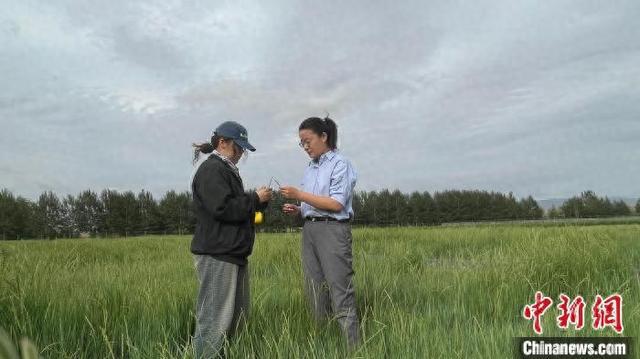
Core Viewpoint - The article highlights the significant contributions of Wang Wenshu and her team in the field of ecological restoration and sustainable agriculture in the Inner Mongolia region, particularly focusing on desert and saline-alkali land management through innovative research and practical applications [3][4][5]. Group 1: Research and Contributions - Wang Wenshu, a senior engineer at the Alxa League Forestry and Grassland Research Institute, has led extensive field investigations and experiments on the distribution of Haloxylon species and artificial breeding techniques [3]. - The team has successfully cultivated 200 acres of Haloxylon and inoculated 60 acres of Cistanche, improving the ecological environment and providing economic benefits to local herders [3]. - Over the years, Wang has published over 20 papers, authored 3 monographs, and developed 11 local standards, along with 2 invention patents and 5 utility model patents [3][4]. Group 2: Ecological Impact and Community Engagement - Wang's work has facilitated the establishment of 6 demonstration sites for Haloxylon planting and 9 sites for Cistanche inoculation, covering a total area of 2,300 acres [3]. - The research conducted by Wang and her team has provided crucial scientific evidence for vegetation restoration in the Alxa League's desert ecosystem [4]. - Wang emphasizes the importance of involving local herders in ecological civilization construction to promote both environmental and economic development [5].

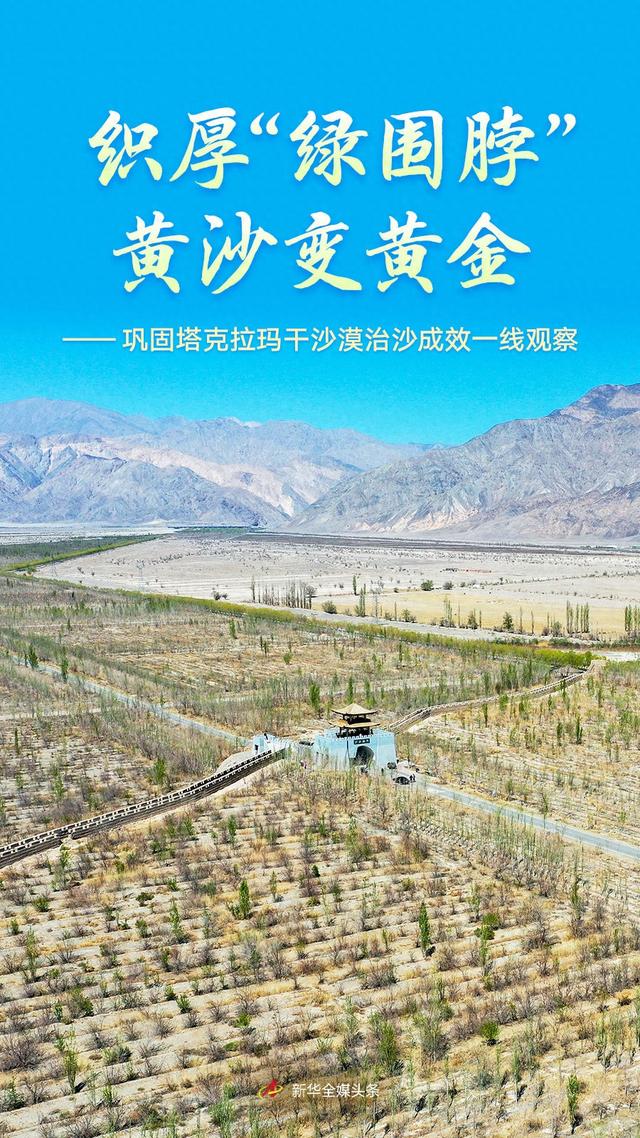
织厚“绿围脖” 黄沙变黄金——巩固塔克拉玛干沙漠治沙成效一线观察
Bei Jing Ri Bao Ke Hu Duan· 2025-11-30 04:13
Core Viewpoint - The article highlights the ongoing efforts in Xinjiang to combat desertification around the Taklamakan Desert through a comprehensive "green collar" initiative, which includes afforestation, community involvement, and innovative agricultural practices [2][18]. Group 1: Desertification Control Efforts - The Taklamakan Desert's "lock edge" project, completed on November 28, 2024, spans 3,046 kilometers and has transitioned to a new phase of expansion and solidification [2][3]. - In 2025, Xinjiang has achieved a cumulative expansion of 936.17 million acres of green coverage, increasing the width of the green protective belt by 110 meters to 7,500 meters [9][18]. - The "green collar" initiative is supported by various policies, including ecological water use and land rights, facilitating diverse desertification control methods [13][14]. Group 2: Community Involvement and Economic Development - Local farmers are actively participating in desertification control, with 6.18 million acres of land treated in Hetian County, involving 69 villages and 1,278 households [7][18]. - The rise of the "sand industry" is evident, with the cultivation of medicinal herbs and flowers like Cistanche and roses, significantly boosting local economies and providing employment opportunities [18][21]. - The integration of ecological and economic benefits is emphasized, with over 1,083.41 million acres of economic crops planted on desertified land, generating a total output value of 28.975 billion yuan [21]. Group 3: Technological Innovations - Innovative practices such as "interval desertification control" and "photovoltaic water extraction" are being implemented to enhance the efficiency and effectiveness of desertification control efforts [14][16]. - The use of modern agricultural techniques and machinery has improved operational efficiency and increased the survival rate of planted vegetation [13][14]. Group 4: Sustainable Development - The article underscores the importance of sustainable development, where ecological restoration and economic growth are interlinked, creating a cycle of environmental and economic benefits [18][21]. - The ongoing projects aim to establish a robust ecological barrier while simultaneously fostering local economic growth, demonstrating a model for sustainable development in arid regions [21].
草原向绿
Jing Ji Ri Bao· 2025-08-13 00:20
Group 1: Historical Context - The Daqingshan area played a strategic role during the Anti-Japanese War, becoming a target for Japanese forces due to its connection between North and Northwest China [1] - The Eighth Route Army established the Daqingshan detachment, conducting guerrilla warfare under extreme conditions, with over 1,000 soldiers sacrificing their lives [1] - The Wugongba ambush in September 1938 resulted in the annihilation of over 80 Japanese troops, significantly boosting local morale and encouraging youth to join the resistance [1] Group 2: Current Industry Development - Inner Mongolia is experiencing robust industrial growth, leveraging its rich energy resources and geographical advantages to support national digital transformation [1] - The cities of Hohhot and Ulanqab have seen a rise in computing power industries, with 46 data centers established in China Cloud Valley and Linhe New District, achieving a total computing power scale of 101,000 P [1] - Inner Mongolia leads the nation in milk production, with major dairy companies like Yili and Mengniu developing a complete and advanced industrial chain from pasture planting to dairy processing [1] Group 3: Emerging Industries - The photovoltaic industry is expanding across the vast grasslands and deserts, with clean energy installed capacity increasing steadily [2] - The cultural tourism industry is enhancing the appeal of the region by showcasing its grassland culture and revolutionary history, attracting numerous visitors [2] - The sand industry is promoting green pathways through desertification control, transforming barren land into "golden beaches" [2]
大漠逐光人:让科技开出生态之花
Huan Qiu Wang Zi Xun· 2025-06-07 13:46
Core Viewpoint - The article highlights the significant role of technology in ecological restoration and sustainable development in the Alxa region, showcasing successful collaborations between academia and industry to address local challenges [1][3]. Group 1: Technological Innovation and Collaboration - The establishment of various innovation platforms, including four academic workstations and scientific observation stations, has helped overcome technical bottlenecks in desert plant domestication and ecological restoration [3]. - A total of 77 ongoing technology projects have secured funding of 60.18 million yuan from Inner Mongolia's "reveal the list and take the lead" initiative, which has stimulated corporate R&D investment of 530 million yuan [5]. - The collaboration between enterprises and research institutions has led to a 30% increase in the extraction rate of polysaccharides from the herb Cistanche, significantly enhancing product value [5]. Group 2: Talent Attraction and Public Engagement - The Alxa region has established partnerships with over 40 institutions and organized 17 industry-academia-research matchmaking events to attract technology talent [5]. - Eight science popularization demonstration bases have been established, conducting over 1,000 science activities annually, benefiting around 300,000 people [6]. - The innovative "immersive exhibition + interactive experience" model during the Inner Mongolia Science and Technology Week allows the public to engage directly with technology, showcasing the connection between technology and daily life [6].
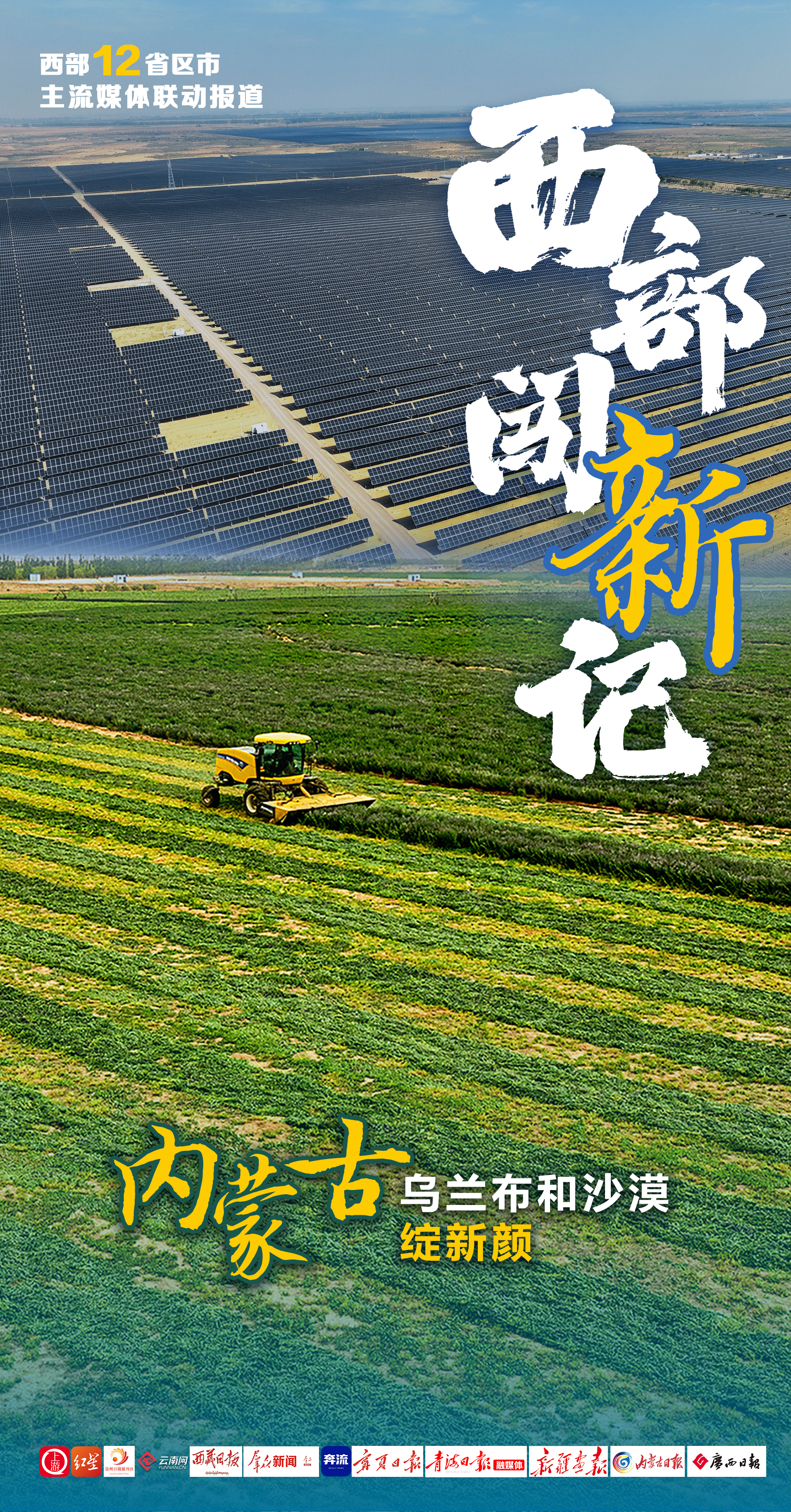
西部闯“新”记丨内蒙古:乌兰布和沙漠绽新颜
Nei Meng Gu Ri Bao· 2025-04-23 00:03
Core Viewpoint - The Chinese government emphasizes the importance of high-quality development in the western regions, aiming to enhance overall regional strength and sustainable development capabilities, as articulated by President Xi Jinping during a meeting in Chongqing [1] Group 1: Policy and Development Initiatives - The meeting highlighted the need for consistent implementation of policies promoting western development, focusing on large-scale protection, openness, and high-quality growth [1] - The western regions are encouraged to leverage their resource endowments and address key areas for improvement to create a new development pattern [1] Group 2: Regional Achievements and Innovations - Over the past year, the 12 western provinces have made significant strides in high-quality development, showcasing vibrant and dynamic growth [1] - A collaborative media initiative titled "New Journey in the West" was launched to highlight typical cases in industries, ecology, and energy, reflecting the region's efforts to forge new paths [1] Group 3: Environmental and Technological Advances - The "磴口模式" (Tengkou Model) in Inner Mongolia has contributed to desertification control, achieving a forest coverage increase from 0.04% to 39.1% and reducing sediment flow into the Yellow River by 94.7% [9] - Modern technologies such as drones, remote sensing, and big data analysis are being utilized in desertification control practices, leading to innovative agricultural models that combine solar energy with desert vegetation [8][9]