
科创金融

Search documents
力挺民营经济!福州“政策大礼包”来了!含26项政策265条举措!
Sou Hu Cai Jing· 2026-02-25 17:02
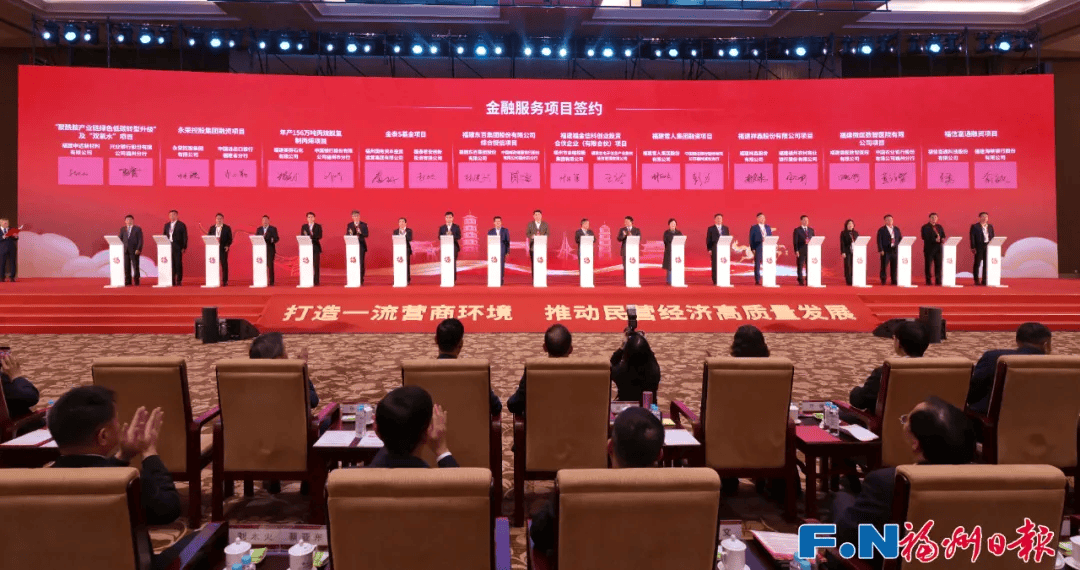
Core Viewpoint Fuzhou is implementing a comprehensive set of policies to support the development of the private economy, focusing on industrial upgrades, technological innovation, talent support, financial services, legal environment, and consumer stimulation. Group 1: Industrial Upgrades - Fuzhou is advancing new industrialization by constructing a "358X" industrial cluster to promote high-quality manufacturing development and has introduced a "1+N" policy system to support enterprises [3][4] - Measures include providing a 3% subsidy for project investments, with a maximum of 5 million yuan, and offering 2-year loans with a 2% interest subsidy for technological upgrades [3] - The city is also promoting modern agriculture and supporting the development of digital smart agriculture and the establishment of research and development bases [3] Group 2: Technological Innovation - Fuzhou encourages collaboration between enterprises and research institutions to tackle key technologies, offering subsidies up to 500,000 yuan for joint development projects [4] - Support is provided for enterprises purchasing technology achievements from universities, with subsidies based on the transaction amount, capped at 2 million yuan per year [4] Group 3: Talent Support - A talent housing system is being established, offering free accommodation for job seekers for up to one year and providing 15,000 hotel-style apartments along with home purchase subsidies up to 1.8 million yuan [6] - Different policies are tailored for various talent levels, with postdoctoral researchers eligible for rewards up to 240,000 yuan and high-level talents receiving substantial housing subsidies [7] Group 4: Financial Services - Fuzhou is providing financial support for specialized private enterprises with a yearly quota of 20 billion yuan in subsidized loans, with a 1% annual interest subsidy from provincial finance [8] - The city is also promoting intellectual property pledge financing, offering rewards for enterprises that register and finance their intellectual property [8][9] Group 5: Legal Environment - Fuzhou has introduced measures to stabilize development expectations through legal frameworks, including the establishment of a "亲清法企会商厅" platform for business-legal consultations [11] - Initiatives include the creation of a bankruptcy court and a focus on improving administrative dispute resolution mechanisms to enhance the business environment [11] Group 6: Consumer Stimulation - The city is implementing measures to boost consumption, including incentives for new commercial brands and a six-month rent-free period for new entrants [13] - Fuzhou has innovated the "payment upon invoicing" service, which automates invoice issuance post-transaction, enhancing consumer experience [17] Group 7: Innovation - Fuzhou is actively supporting the construction of innovation laboratories and a comprehensive innovation system from basic research to industrialization [18] - The city is also focusing on patent conversion initiatives, with successful cases recognized at the national level [18]

济南市万人有效发明专利拥有量87.2件,增长17.8%
Qi Lu Wan Bao· 2026-01-19 01:46
Core Insights - The government report highlights the continuous improvement in innovation and development levels in Jinan, emphasizing efforts in ecological preservation, talent attraction, and industrial strength [3] Group 1: Economic Development - Jinan registered 179,800 new business entities last year, with the number of technology-based small and medium enterprises reaching 9,404 [3] - The total transaction value of technology contracts in the city reached 102.5 billion yuan, marking a 10.7% increase [3] - The number of valid invention patents per ten thousand people was 87.2, reflecting a growth of 17.8% [3] Group 2: Innovation Achievements - The city successfully launched innovative drugs such as "Ruilintang" and "Mailisheng," and achieved the world's first mass production of synthetic biology royal jelly acid [3] - The first domestically produced steam compression machine for the boron recovery system of a third-generation pressurized water reactor was officially completed [3] - The global first commercial supercritical carbon dioxide power generation unit, operated by Jinan Steel Group, commenced successful operations [3] Group 3: Talent Attraction and Policies - Jinan implemented the "Haiyou Talent" plan, resulting in the addition of 137 provincial-level key talents and over 160,000 young talents [4] - The city hosted the third "Haiyou Talent Festival" and two high-level talent recruitment conferences, enhancing its talent policies with the "Double 30 Measures" [4] - The talent work experience was recognized as one of the "2025 National Talent Work Innovation Best Cases" [4] Group 4: Financial Initiatives - Jinan is advancing the construction of a science and technology innovation financial reform pilot zone, initiating pilot projects for mergers and acquisitions loans for tech companies [3] - The issuance of science and technology innovation bonds by quality enterprises reached 28.1 billion yuan, ranking first in the province [3] - The balance of loans for science and technology enterprises exceeded 300 billion yuan [3]

深度参与全国统一大市场建设
Jing Ji Ri Bao· 2026-01-17 22:43
Core Viewpoint - The article emphasizes the strategic importance of building a unified national market in China, highlighting the efforts made by Anhui province to contribute to this goal through various reforms and initiatives aimed at enhancing market efficiency and integration [1][8]. Group 1: Market Infrastructure and Logistics - Anhui is focusing on unifying market infrastructure to enhance logistics, capital flow, and information flow, with social logistics costs at 13.1% of GDP, which is 0.9 percentage points lower than the national average [2]. - The province is improving transportation infrastructure, achieving a high-speed rail mileage of 2,971 kilometers and over 7,000 kilometers of highways, facilitating better connectivity with the Yangtze River Delta [2]. Group 2: Market Regulation and Government Behavior - Anhui is standardizing government behavior to ensure effective market operations, focusing on preventing government interference that distorts market mechanisms [3]. - The province has implemented measures to curb low-price competition and enhance regulatory practices, including the establishment of an AI-based bidding system to reduce human intervention in procurement processes [3][5]. Group 3: Resource Market and Factor Flow - Anhui is advancing market-oriented reforms in resource allocation, with significant progress in land use and capital market development, including a total transaction amount of 199.52 billion yuan from land sales since June 2025 [6]. - The province is also enhancing its labor market, with a reported increase of 4.07 million employed persons, marking a 29.8% growth, which is the highest in the country [6]. Group 4: Domestic and International Opening - Anhui is expanding its internal and external openness, with a focus on integrating into the Yangtze River Delta and enhancing international trade, achieving an export volume of over 1 million vehicles for the first time [7]. - The province aims to reach a total import and export volume of 10,135.6 billion yuan by 2025, positioning itself as a leading player in the central region of China [7].
上海:“股贷债保担”联动,助科创企业跃升
Ke Ji Ri Bao· 2026-01-14 04:58
Core Viewpoint - Shanghai's "Equity-Loan-Debt-Guarantee" linkage mechanism is a comprehensive financial service system aimed at addressing the financing challenges faced by technology and small to medium-sized enterprises, facilitating their growth and innovation [1][2][4]. Group 1: Mechanism Overview - The "Equity-Loan-Debt-Guarantee" mechanism integrates five financial tools: equity financing, loans, bonds, insurance, and guarantees, to effectively address the financing bottlenecks for enterprises at different stages of development [1][2]. - The Shanghai Science and Technology Financial Alliance was established to implement this mechanism, collaborating with various stakeholders to provide tailored financial services throughout the entire lifecycle of technology enterprises [2][3]. Group 2: Financial Support and Impact - Over the past two years, the Shanghai Science and Technology Financial Alliance has facilitated financing exceeding 1 trillion yuan for technology enterprises, covering various innovative entities such as specialized and new enterprises [4]. - Financial institutions have developed customized service plans to meet the unique funding needs of technology enterprises, resulting in a collaborative financial service matrix that supports innovation [5][6]. Group 3: Specific Initiatives and Collaborations - The introduction of the "New Power Loan" has increased credit guarantee limits for small and medium enterprises to a maximum of 20 million yuan, addressing the issues of high financing costs [3][6]. - Various banks, such as CITIC Bank and Bank of China, have implemented collaborative financing models that combine equity and loan services, enabling technology companies to secure necessary funding for their growth [6][7]. Group 4: Future Directions - Shanghai aims to enhance information sharing and resource complementarity among financial institutions, further deepening the "Equity-Loan-Debt-Guarantee" linkage mechanism to explore new financial products and services for technology innovation [9].
李俊成:拓展科创金融改革试验区建设成果
Xin Lang Cai Jing· 2026-01-11 00:40
Core Viewpoint - China has intensified financial support for technological innovation by establishing multiple pilot zones for financial reform in science and technology, aiming to reduce financing costs for innovative enterprises and optimize the allocation of financial resources [1][2]. Group 1: Establishment of Pilot Zones - The first pilot zone for financial reform in science and technology was approved in Jinan, aiming to create a comprehensive financial service system for technological innovation within approximately five years [2]. - Other cities, including Shanghai, Nanjing, Hangzhou, Hefei, and Jiaxing, have also been designated as pilot zones, with similar five-year goals to develop into demonstration areas for financial cooperation and innovation [2]. - By 2023, Beijing's Zhongguancun area aims to establish a financial service system that effectively supports technological innovation, aligning with international standards [2]. Group 2: Institutional Innovation and Development Paths - Pilot zones are focusing on institutional design and development paths tailored to local industries and financial resources, creating unique development models [3]. - Hefei has injected over 220 billion yuan of state capital, leading to investments exceeding 840 billion yuan and the establishment of 13 major investment projects, enhancing the regional economic level [3]. Group 3: Credit Evaluation and Risk Management - Nanjing has launched a specialized financial service platform for intellectual property, improving credit assessment accuracy through big data modeling [4]. - Hangzhou's "Hangchuan E-Station" analyzes various aspects of enterprises to facilitate the conversion of data value into financing capital [4]. - Pilot zones are developing incentive and accountability mechanisms to encourage financial institutions to invest in technological innovation, with various cities implementing differentiated performance plans and risk tolerance measures [4]. Group 4: Challenges and Future Directions - There are still shortcomings in the construction of pilot zones, such as the need for better synergy between policy support and market mechanisms, and the lack of a robust system for valuing and transferring intellectual property [5]. - Future efforts should focus on enhancing the compatibility of "policy guidance + market-driven" mechanisms, promoting data connectivity, and improving the intellectual property assessment and trading system [5][6].
为科创金融改革保驾护航 浙江嘉兴市出台《科创金融促进条例》
Jin Rong Shi Bao· 2025-11-20 02:05
Core Viewpoint - The implementation of the "Jiaxing City Science and Technology Innovation Financial Promotion Regulations" marks a significant step in addressing the financing challenges faced by science and technology enterprises, establishing a comprehensive financial service system for innovation [1][2]. Legislative Background: Reform Experiment Drives Legal Assurance - Jiaxing's legislative practice in science and technology finance is rooted in national strategic responsibilities, being included in the Yangtze River Delta's financial reform pilot zone [2]. - The regulations were developed through extensive public consultation, including over 20 discussion sessions to gather insights, resulting in a law that reflects both reform and local characteristics [2]. Core Framework: Three-Dimensional Efforts to Break Financing Bottlenecks - The regulations establish a financial service system through three key strategies that align with enterprise needs [3]. Strengthening Government Guidance: Building a Policy Support System - The regulations mandate local governments to incorporate science and technology finance into development plans and establish cross-departmental collaboration mechanisms [4]. - A fund system covering the entire lifecycle of enterprises is created, including a provincial and municipal cooperative science and technology mother fund of 5 billion, accounting for 45.5% of the provincial total [4]. Optimizing Financial Supply: Activating Market Entity Vitality - The regulations support the establishment of specialized branches in banks and departments in insurance institutions to better serve science and technology enterprises [5]. - Over 120 exclusive financial products have been developed, including "data asset loans" with a maximum credit of 30 million based on data resource ownership [5]. Improving Guarantee Mechanisms: Bridging the "Last Mile" of Service - Innovative systems have been introduced, such as a compliance exemption mechanism for venture capital investments and a digital application system for financial services [6]. - A service center for science and technology finance in the Yangtze River Delta has been established, providing listing planning services to 235 enterprises since 2024 [6]. Innovative Highlights: Demonstrating Jiaxing's Unique Institutional Breakthroughs - The regulations establish a collaborative model of "finance + credit + funds + insurance," with loan interest subsidies up to 40% and insurance premium subsidies up to 90% [7]. - A financial commissioner system is implemented to ensure service quality through annual evaluations across ten dimensions [7]. Implementation Results: Financial Support Empowering Innovation Development - As of now, the loan balance for science and technology enterprises in Jiaxing has reached 342.137 billion, with national high-tech enterprises accounting for 15.59% [8]. - A total of 1,188 instances of private equity investment exceeding 126.866 billion have been recorded, demonstrating the regulations' effectiveness in optimizing financial supply [8]. Legislative Significance: Legal Framework Leading to Innovation Ecosystem Upgrade - The introduction of these regulations is a key practice in fulfilling the central government's requirements for enhancing technology finance [9]. - The regulations provide a stable financial environment for local science and technology enterprises and serve as a model for national innovation in the financial sector [9].
从黄河之滨到天山脚下 豫哈民企共赴“发展之约”
He Nan Ri Bao· 2025-09-21 23:43
Core Insights - The event "豫见哈密民企共赢" held in Hami on September 16 aims to deepen cooperation between Henan and Hami, focusing on new development opportunities for private enterprises from both regions [1][2] - The collaboration is seen as a practical step towards enhancing regional coordination and promoting economic integration between the two areas [1][2] Group 1: Event Overview - The event featured representatives from numerous private enterprises in Henan and Hami, discussing potential collaborations and development opportunities [1] - Key companies participating included major players like Yutong, Yidian, Longbai, and Longcheng Group, as well as specialized high-tech firms [1] Group 2: Government Support and Objectives - Hami's government officials emphasized the region's resource advantages and expressed a desire for deeper industrial cooperation and project implementation [2] - The Henan Development and Reform Commission highlighted the importance of the event in promoting understanding of Hami's advantages and facilitating investment from Henan enterprises [2] Group 3: Investment Intentions and Areas of Focus - A list of investment intentions from 31 selected Henan private enterprises was released, covering sectors such as equipment manufacturing, energy, agriculture, and artificial intelligence [2] - Companies expressed interest in sectors like coal chemical, smart grid, and agricultural branding, indicating a proactive approach to investment in Hami [3] Group 4: Future Collaboration and Support - The event marked the beginning of cooperation, with plans for one-on-one follow-up services to convert intentions into concrete projects [3] - Local government representatives provided insights into Hami's economic development and investment policies, aiming to attract more Henan enterprises [3]


长三角一体化示范区一批重点项目签约揭牌
Yang Shi Xin Wen· 2025-08-21 09:30
Core Insights - The 2025 Yangtze River Delta Ecological Green Integrated Development Demonstration Zone Developer Conference held on August 21 resulted in the signing and unveiling of several key projects, with the developer alliance now comprising 88 members [1][2]. Group 1: Key Projects - Nine key projects were signed at the conference, including six industrial projects with a total investment of 8.722 billion yuan, focusing on sectors such as semiconductors, intelligent manufacturing, high-end equipment, and new materials [1]. - Three strategic cooperation projects were also signed, including the establishment of a cross-provincial high-skilled digital talent training base in the Yangtze River Delta [1]. Group 2: Project Unveiling - Three key projects were unveiled, including the Shanghai Jiao Tong University Technology Transfer Center (Hongqiao) branch, which aims to provide market-oriented technology transfer services through various cooperation models [1]. - The Jiangsu Province Artificial Intelligence Academy will focus on talent cultivation, platform construction, curriculum innovation, and teaching reform to develop top innovative talents in line with national needs [1]. - The Zhejiang Province Engineering Research Center for Flexible Intelligent Manufacturing in Food will leverage AI to create a competitive digital food industry cluster [1]. Group 3: Development Lists - The demonstration zone released four high-quality development lists covering government demands, enterprise collaboration needs, enterprise capabilities, and talent requirements [2].
中新网:中国光谷启动科创金融“伙伴工程”助企融资
Zhong Guo Xin Wen Wang· 2025-06-11 03:35
Core Viewpoint - Wuhan East Lake High-tech Zone has launched the "Innovation Financial Partner Program" to address financing challenges faced by startup technology companies, aiming to support technological innovation and achievement transformation [1][2]. Group 1: Program Overview - The "Innovation Financial Partner Program" focuses on the financing pain points of technology enterprises in the "0-1" stage, establishing a database of technology seedling enterprises with technological and intellectual property value [1]. - The program aims to encourage financial institutions to lend by implementing a layered risk-sharing mechanism and a return on investment design [1][2]. Group 2: Targeted Support - The program specifically supports three types of "hardcore" entities: talent enterprises founded by research teams from universities and research institutes, future unicorns with disruptive technologies and clear industrialization paths, and pioneers in technology achievement transformation through deep integration of industry, academia, and research [1]. - The initiative aims to provide precise financial support to high-risk, light-asset technology seedlings, facilitating their growth [1]. Group 3: Financial Mechanisms - The program will create a nurturing system for seedling enterprises, selecting 400 initial technology startups for a "seedling enterprise database" and launching a dedicated credit product called "Seedling Partner Loan + Equity Subscription" [1]. - A priority credit channel for seedling technology enterprises will be established, ensuring a 100% response rate to credit applications, with an annual financing amount of no less than 600 million yuan [1]. Group 4: Risk Compensation and Sustainability - A special risk compensation fund will be set up to achieve layered risk compensation, forming a sustainable operational loop of "financial support - enterprise growth - return on investment" [2]. - The program promotes risk-sharing and profit-sharing among cooperating partners, enhancing collaboration within the ecosystem [2]. Group 5: Historical Context and Achievements - Since its establishment, the East Lake High-tech Zone has nurtured 158,000 innovative enterprises, 5,821 high-tech enterprises, and 549 gazelle enterprises, becoming the first national demonstration zone for technology insurance innovation [2]. - The zone has attracted over 1,100 technology financial institutions, including technology banks, securities, insurance, and funds, establishing a comprehensive equity and bond financing chain covering the entire lifecycle of technology enterprises [2].
化解初创科技型企业“融资难”问题 东湖高新区发布科创金融“伙伴工程”
Jing Ji Guan Cha Wang· 2025-06-06 22:59
Core Viewpoint - The "Partner Project" launched by Wuhan East Lake High-tech Zone aims to address the financing difficulties faced by startup technology companies, facilitating their innovation and achievement transformation [1][2]. Group 1: Financing Solutions - The "Partner Project" focuses on the financing pain points of technology companies in the "0-1" stage, leveraging the policy effects of knowledge value credit loans for technology enterprises in Hubei Province [1]. - The project will establish a "seed enterprise library" that values technological and intellectual property assets, encouraging financial institutions to lend [1][2]. - A total of 400 high-potential startup technology companies will be selected to form the "seed enterprise library" [2]. Group 2: Financial Products and Mechanisms - The project will introduce a specialized credit product called "Seed Partner Loan + Equity Option," ensuring a 100% response rate for credit applications from registered companies, with an annual financing amount of no less than 600 million [2]. - A risk compensation fund will be established to provide layered risk compensation, creating a sustainable cycle of "financial support - enterprise growth - revenue compensation" [2]. Group 3: Ecosystem and Collaboration - The initiative represents an upgrade in the innovation ecosystem, shifting credit resources from merely enhancing existing capabilities to providing essential support for innovation [3]. - The East Lake High-tech Zone will enhance coordination and set up special risk compensation funds to ensure resources reach their intended targets [3]. - The project aims to deepen government-bank-enterprise cooperation, expanding partnerships and innovating service models and financial products [3].
