美容仪

Search documents
牧原食品拟启动招股;薇塔贝尔吸引黑石等竞购
Sou Hu Cai Jing· 2026-02-02 06:57
IPO Dynamics - Muyuan Foods plans to launch its Hong Kong IPO as early as January 29, aiming to raise up to $1.5 billion (approximately HKD 11.7 billion) and is expected to list on February 6 [3] - The funds raised will be used for overseas expansion, smart farming R&D, and debt repayment, potentially creating an "A+H" dual financing platform to strengthen capital during the pig cycle downturn [3] Acquisitions & Sales - JBB Builders is in discussions to acquire 100% equity of Chengdu Jianfu Convenience Store Management Co., which operates 65 direct stores and 30 franchised stores, aiming to enter the rapidly growing Chinese retail market [5] - Unilever has signed an agreement to sell its home care business in Colombia and Ecuador to Alicorp, which includes established local brands like Fab and 3D [8] - General Mills announced the sale of its Muir Glen organic tomato brand to Violet Foods, allowing General Mills to focus on core brands like Cheerios and Progresso [12] - Vitabiotics, a UK vitamin company, is attracting bids from private equity firms including Bain Capital and Blackstone, with a potential valuation of around £900 million (approximately RMB 8.6 billion) [15] Corporate Restructuring - MTG Corporation announced the dissolution of its wholly-owned subsidiary in Shanghai, which has been operating since 2013 and responsible for sales in the Chinese market, due to continuous losses [18][19] - On (昂跑) appointed Frank Sluis as the new CFO, expected to drive sales growth of at least 34% year-on-year for the fiscal year 2025 [21] - BVLGARI appointed Domenico Giampà as the director of its fragrance business, focusing on commercial strategy and growth in high-end fragrance segments [24] - L'OCCITANE appointed Mark Edington as the general manager for travel retail in EMEA and the Americas, leveraging his extensive experience to boost travel retail performance [27] - A2 Milk Company expanded the responsibilities of its Greater China CEO, allowing for better local management of market strategies [30]



李亚鹏直播带货成总榜第一;理想汽车:批量闭店、裁员均为不实信息;马斯克称特斯拉FSD中国获批最快下个月?特斯拉中国回应丨邦早报
创业邦· 2026-01-24 01:10
Group 1 - Tesla's Full Self-Driving (FSD) system is expected to be approved in China as early as next month, according to CEO Elon Musk, although Tesla China has not confirmed this information [3] - Li Auto has denied rumors of mass store closures and layoffs, stating that only a few low-efficiency stores will be shut down this year, with a total of 548 retail centers planned by the end of 2025 [5] - The "Did You Die?" app's developer has been listed in the business anomaly directory due to being unreachable at their registered address, which the founder attributed to remote work [8] Group 2 - Suzuki plans to sell its vehicle manufacturing plant in Thailand to Ford, with the sale amount undisclosed, as Suzuki is set to withdraw from local production by 2024 [12] - MTG, the parent company of ReFa, announced the dissolution of its subsidiary in China due to continuous losses, despite the brand's online presence remaining operational [13] - The global humanoid robot market is projected to see explosive growth, with an estimated shipment of 18,000 units by 2025, marking a 508% year-on-year increase [21]



思摩尔国际的电子烟“熄火”后,岚至的“美容故事”行不行?
Sou Hu Cai Jing· 2026-01-02 05:32
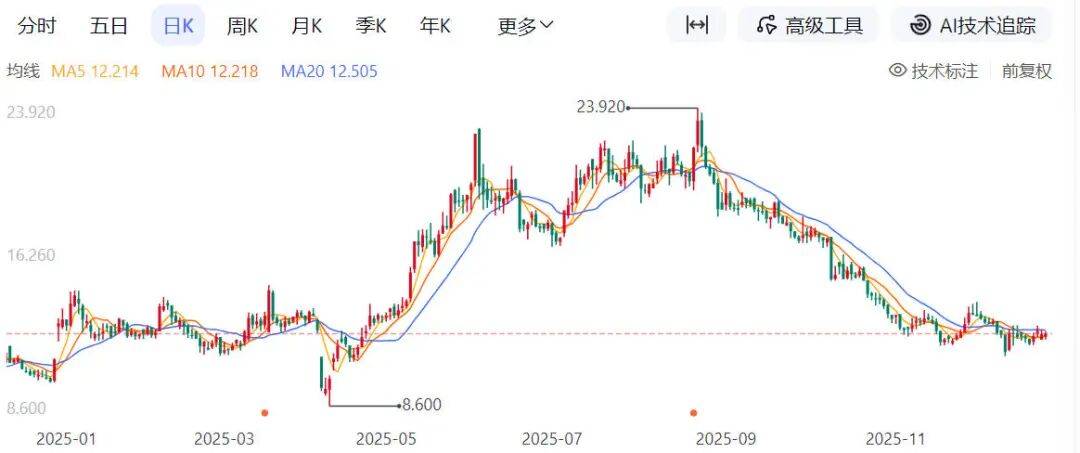
Core Viewpoint - Smoore International, known as the "first stock of electronic cigarettes," is facing significant challenges, including a declining stock price and market value, attributed to regulatory pressures, stagnant profits despite revenue growth, and changing market sentiment [1][6][25] Financial Performance - In Q3 2025, Smoore's revenue reached 10.21 billion RMB, a year-on-year increase of 21.8%, with Q3 revenue hitting a record high of 4.197 billion RMB, growing over 27% year-on-year and quarter-on-quarter [4] - However, net profit for the first three quarters of 2025 was 809 million RMB, down 23.8% year-on-year, with a Q3 net profit of 317 million RMB, a decrease of 16.4% [4] - The company's net profit margin has plummeted from 38.44% in 2021 to 7.92% in the first three quarters of 2025 [4] Market Challenges - Smoore's revenue from mainland China dropped by 92.7% in 2023 due to stringent regulations, with its revenue share falling from approximately 18.5% to about 1.5% [6] - Increased sales and distribution expenses, which rose by 31.2% to 491 million RMB in the first half of 2025, have further pressured profitability [6] - The company's gross margin has decreased from 53.6% in 2021 to 37.3% in the first half of 2025, indicating a decline in the quality of revenue growth [7] Strategic Shift - Smoore is attempting to diversify its business by launching the "Lanzhi" beauty brand, which utilizes TPS (Transdermal Permeation System) technology, aiming to create a "second growth curve" [1][13] - The Lanzhi brand generated sales of 30.61 million RMB in the first half of 2025, but its contribution to overall revenue remains minimal [12][23] - The beauty market is seen as a high-margin opportunity, with Smoore hoping to replicate its electronic cigarette success in this new sector [13] Competitive Landscape - The beauty device market is highly competitive, with established international brands dominating the high-end segment and local brands capturing the mid-to-low end [16] - Lanzhi faces challenges such as low brand recognition, insufficient distribution channels, and competition from other beauty companies [16][24] - The effectiveness and safety of the TPS technology remain under scrutiny, with concerns about its ability to deliver active ingredients effectively and safely [18][19] Regulatory Environment - The regulatory landscape for beauty aerosol products is still evolving, with uncertainties regarding specific regulations for aerosol beauty technology [21] - Smoore's transition into the beauty sector may not provide immediate relief from its current profitability issues, as the Lanzhi brand's profitability may take up to two years to materialize [23][25]
谁将是lululemon新CEO?
2 1 Shi Ji Jing Ji Bao Dao· 2025-12-23 03:48
Group 1 - Lululemon's CEO is set to leave, with Jane Nielsen, former COO of Ralph Lauren, being proposed as the successor by Elliott Management, which holds over $1 billion in Lululemon shares [2][1] - Following the announcement, Lululemon's stock price rose nearly 8% in early trading on December 18, closing at $215.11, with a market capitalization of $25.51 billion, despite a 42.19% decline over the past year [2][1] - Elliott Management is actively engaging with industry executives to influence leadership changes in companies like Lululemon [2] Group 2 - Sequoia China announced the acquisition of a controlling stake in Golden Goose, with Temasek participating as a minority investor; Golden Goose's revenue grew from €266 million in 2020 to €655 million in the fiscal year 2024 [3] - The acquisition reflects a trend where Chinese fashion brands are attracting significant investment, indicating a need for strategic guidance rather than just capital [3] Group 3 - Louis Vuitton opened a new flagship store in Beijing's Sanlitun, designed by architect Jun Aoki, featuring a unique façade made of 315 custom glass pieces [4] - The store's design incorporates elements from both Eastern and Western cultures, becoming a new landmark in Beijing [4] Group 4 - ETRO announced a change in ownership structure, with an investment alliance acquiring minority stakes previously held by the ETRO family, while L Catterton remains the controlling shareholder [6] - This move is aimed at strengthening ETRO's market position and reflects investor confidence in the brand's future potential [6] Group 5 - Kering plans a phased acquisition of Italian jewelry manufacturer Raselli Franco Group, aiming for full ownership by 2032, starting with a 20% stake for €115 million [7] - Raselli Franco is a major player in the luxury jewelry market and has been a long-term partner of Kering [7] Group 6 - Mannings announced the cessation of its operations in mainland China, with all stores closing by January 15, 2026, and online sales ending on December 26, 2023 [8][9] - This marks the end of Mannings' retail presence in mainland China, which began in 2004 [9] Group 7 - Kering launched the "Kering CRAFT Creative Residency" program to support emerging creative talents in China, aiming to foster local brands and enhance their global presence [11] - The program includes a year-long immersive experience across major cities, focusing on craftsmanship, design, and innovation [11] Group 8 - Japanese beauty device brand YA-MAN reported a net sales figure of ¥11.511 billion (approximately ¥523 million) for the second quarter of fiscal 2025, a 9.5% decline year-on-year [12] - The company experienced significant losses, with all profit metrics turning negative, attributed to a major restructuring of its domestic business and strategic investments for future growth [12]

业绩持续下滑,拿下认证的雅萌能否扭转颓势
Bei Jing Shang Bao· 2025-12-21 14:04
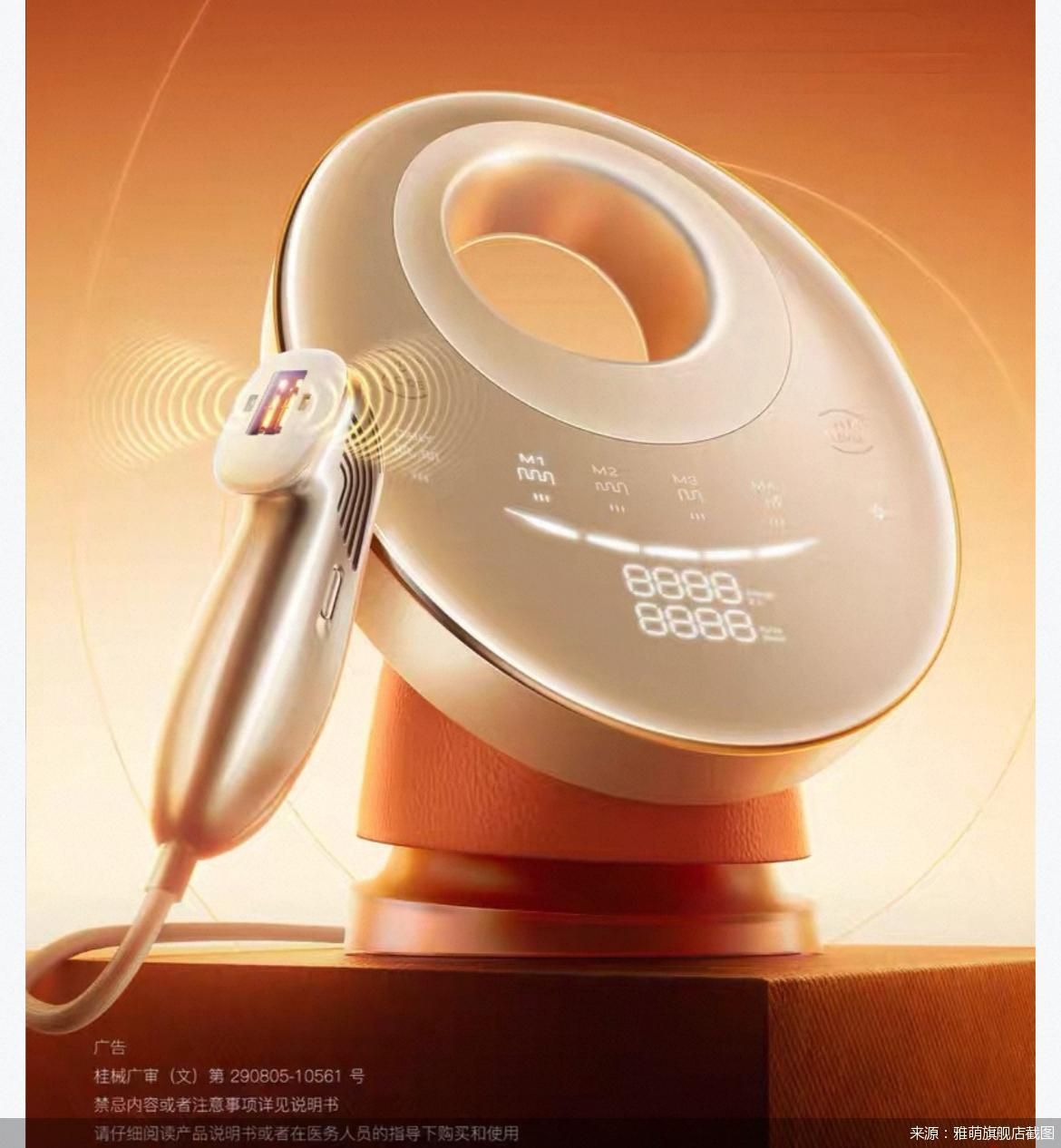
Core Viewpoint - YAMANE's financial performance in the first half of FY2025 shows a significant decline, with net sales down 9.5% and a net loss of 1.196 billion yen, indicating ongoing challenges despite hopes for long-term profitability through strategic investments and product approvals [1][3]. Financial Performance - In the first half of FY2025, YAMANE reported net sales of 115.11 billion yen, a decrease of 9.5% year-on-year, and a net loss of 1.196 billion yen [3]. - The decline in performance is attributed to rising prices, global economic instability due to U.S. tariffs, and other uncertainties [3]. - Sales through home shopping and store channels fell by 46.1% and 20.5%, respectively, with profits down 50.3% and 61.5% [3]. - Direct sales increased by 4.9%, but profits decreased by 41.8% [3]. - Overseas sales amounted to 31.02 billion yen, up 3.9%, but profits dropped by 99.3% to 7 million yen [3][4]. Market Challenges - YAMANE faces significant challenges in the domestic market, with a major restructuring of its profitability model underway [5]. - The Japanese economy is experiencing mild recovery, but uncertainties such as rising global resource prices and consumer confidence fluctuations negatively impact performance [5]. - The beauty device industry is undergoing structural changes, with increased regulatory scrutiny leading to a shift from price competition to compliance and efficacy [5]. Strategic Initiatives - YAMANE is focusing on expanding its overseas market presence, with a mid-term plan to achieve annual revenues of 50 billion yen by April 2025 and 70 billion yen by April 2028 [7]. - The company has launched professional facial care products in Vietnam and opened stores in Ho Chi Minh City, as well as initiated sales in Saudi Arabia [7]. - In the Chinese market, YAMANE plans to enhance marketing efforts and optimize sales channels to improve performance [8]. Regulatory Developments - YAMANE received approval for its RF skin treatment device as a Class III medical device, which is seen as a significant opportunity for the brand [9][10]. - This certification allows YAMANE to regain market access and potentially enhance brand value, although actual sales recovery will depend on effective market strategies [10]. Future Outlook - YAMANE is in a transitional phase, focusing on structural reforms to its domestic profitability model while investing for future growth [10]. - The company anticipates temporary declines in revenue and profit due to these strategic investments, viewing current losses as a short-term phenomenon [10].
2026-2032年中国美容仪市场全景调查与投资前景预测报告
Sou Hu Cai Jing· 2025-12-16 06:47
Core Insights - The report titled "2026-2032 China Beauty Device Market Panorama Survey and Investment Prospect Forecast" provides a comprehensive analysis of the beauty device industry in China, covering market development, competitive landscape, and investment opportunities [2]. Group 1: Industry Overview - The beauty device industry includes various products aimed at improving skin and body conditions, such as whitening, skin rejuvenation, and hair removal [2]. - The report outlines the current operational status of the beauty device market in China, including major product classifications and the industry's characteristics [3]. Group 2: Market Trends and Predictions - The report forecasts the development trends of the beauty device industry from 2026 to 2032, including market size predictions and application trends [3]. - It emphasizes the importance of understanding the competitive landscape and key players in the beauty device market for potential investors [2]. Group 3: Economic and Policy Environment - The report analyzes the economic development environment, including GDP growth, industrial economic conditions, and consumer spending trends, which are crucial for the beauty device industry's growth [3]. - It also discusses the regulatory framework and policies affecting the beauty device industry, including upstream and downstream industry impacts [3]. Group 4: Supply and Demand Analysis - The report provides insights into the supply and demand situation of the beauty device industry, including production capacity and market demand analysis from 2021 to 2025 [4]. - It predicts the supply-demand balance trends for the beauty device industry from 2026 to 2032 [4]. Group 5: Competitive Landscape - The competitive structure of the beauty device industry is analyzed, including existing competition, potential entrants, and the threat of substitutes [6]. - The report includes a SWOT analysis of the beauty device industry, highlighting strengths, weaknesses, opportunities, and threats [6]. Group 6: Key Players - The report features detailed profiles of major companies in the beauty device industry, including their market positioning, competitive advantages, and product offerings [7][8]. - Companies such as L'Oréal, Philips, and Panasonic are highlighted for their significant roles in the market [7][8]. Group 7: Future Development Strategies - The report outlines strategic recommendations for beauty device companies, focusing on market positioning, technology development, and customer relationship management [10]. - It emphasizes the need for companies to adapt to changing market conditions and consumer preferences to sustain growth [10].

功效护肤进入“信任重构期”:从成分崇拜到医学循证
Jiang Nan Shi Bao· 2025-12-10 08:27
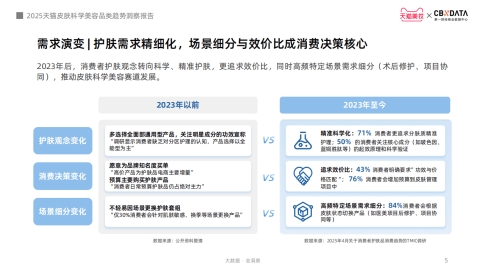
Group 1 - The skincare industry is transitioning from "concept marketing" to a "scientific evidence" phase, driven by changing consumer demands for more precise and scientifically validated skincare solutions [1] - A report indicates that 71% of consumers seek targeted skincare based on skin type, and 50% are interested in the active ingredients' mechanisms and scientific validation, reflecting a more professional understanding of skincare products [1] Group 2 - The shift from "trend-based ingredients" to "logical inquiry" is fundamentally altering product development and market competition in the home skincare industry, ushering in a new era of skin science [2] - The launch of the IPL CLEAR SHOT device by the company exemplifies the home application of medical-grade technology, utilizing IPL technology that has been clinically validated for decades [2] - The device's selective photothermal action targets the root of pigmentation issues, effectively extending professional beauty experiences into home settings and broadening the value of home beauty devices [2] Group 3 - The IPL CLEAR SHOT has received a Class II medical device registration certificate, which signifies rigorous safety and efficacy evaluations by the National Medical Products Administration (NMPA), addressing industry skepticism regarding "intelligent tax" claims [3] Group 4 - The company's exploration reflects broader industry growth trends, with the online skincare market exceeding 100 billion, and the skin science beauty segment growing at 9%, outpacing the overall industry growth of 6% [4] - The company has a 47-year history in the beauty device sector, pioneering the home beauty device market and achieving significant breakthroughs in scientific skincare [4] - It is the only international beauty device brand to complete dual clinical trials and has published the first clinical efficacy paper on home beauty devices in a domestic SCI journal, showcasing its commitment to evidence-based medicine [4] - The future of the home skincare market is expected to see more innovative products that combine safety and efficacy, marking the onset of a new industry cycle centered on empirical evidence [4]
消费前查黑猫投诉,让你的每一分钱都花得明白
Xin Lang Cai Jing· 2025-09-23 05:44
Core Viewpoint - The article emphasizes the importance of using the Black Cat Complaint platform as a proactive tool for consumers to identify potential risks before making purchases, thereby enhancing consumer protection and informed decision-making [1][2][3]. Group 1: Consumer Protection - Black Cat Complaint serves as a "consumer sentinel," aggregating real consumer complaints that reflect the true performance of businesses in terms of product quality and after-sales service [1][2]. - The platform provides a comprehensive view of consumer experiences, allowing users to see not only the complaints but also how businesses respond to them, which can indicate the reliability of the brand [2][3]. Group 2: Application and Usage - Consumers can efficiently utilize the Black Cat Complaint platform by searching for specific brands or products to access relevant complaint information, focusing on complaint types, business responses, and resolution outcomes [3]. - The platform covers a wide range of consumer sectors, from low-cost daily necessities to high-value items like home appliances and financial services, making it a versatile tool for various purchasing decisions [2]. Group 3: Real-Time Data - The data on Black Cat Complaint is updated in real-time, allowing consumers to stay informed about the latest consumer risk information, such as sudden increases in complaints against a business [2]. - A high complaint volume with low response rates from a business may signal declining service quality, while businesses with fewer complaints and effective resolutions are generally more trustworthy [2].
新华网×魔镜洞察:美容仪打响技术战,肤感痛点待破局
FBeauty未来迹· 2025-09-16 11:29
Core Viewpoint - The article discusses the transformation of the beauty device industry in China, emphasizing the shift from aggressive marketing to compliance and technology competition following the inclusion of radio frequency beauty devices in Class III medical device management. The market is experiencing a slowdown in growth, with a focus on product certification and consumer trust as key factors for success [4][5][31]. Group 1: Industry Evolution - The beauty device industry has undergone four stages: introduction, growth, maturity, and restructuring, with compliance becoming a critical turning point [5]. - The introduction phase saw foreign brands entering the market, while the growth phase was marked by increased investment and the emergence of domestic brands [5]. - The restructuring phase began in 2022 with tighter regulations, leading to the exit of smaller brands and a focus on R&D among leading companies [5][31]. Group 2: Market Dynamics - In 2024, the main e-commerce platforms reported sales of 9.858 billion yuan and 1.9123 million units sold, indicating a slowdown in market growth [6][31]. - The tightening of industry regulations has made consumers more cautious, focusing on product approval status to avoid quality risks [6][11]. - The market is characterized by a "volume increase, stable revenue" trend, with some brands resorting to aggressive pricing strategies to clear inventory [8][11]. Group 3: Technology and Consumer Preferences - The main technologies driving market growth are radio frequency (RF) and microcurrent, with RF products seeing a 202% increase in sales [12][14]. - The consumer interest in RF technology is significantly higher, with a discussion volume of 85,500, reflecting its established position in the market [12][13]. - Younger consumers (ages 21-35) are increasingly prioritizing anti-aging solutions, indicating a shift in consumer demographics and preferences [24][26]. Group 4: Pricing and Market Segmentation - The entry-level price range (0-2000 yuan) dominates the market supply, catering to the basic needs of consumers and reflecting brands' strategies to capture market share through high cost-performance [15][18]. - The absolute majority of sales occur in the 0-4000 yuan price range, indicating a strong demand for affordable beauty devices [18][22]. - Different e-commerce platforms exhibit varying acceptance levels across price ranges, with comprehensive platforms showing balanced acceptance and content-driven platforms focusing on high-quality products [22][24]. Group 5: Regional Insights and Challenges - Guangdong is identified as the core consumption area for beauty devices, supported by a mature supply chain and high e-commerce penetration [27]. - Other provinces like Sichuan, Shandong, Zhejiang, and Fujian are expanding their market presence, driven by population and economic factors [29]. - User feedback highlights skin sensation issues as a significant pain point, affecting product comfort and long-term usage intentions [30][32]. Group 6: Future Outlook - The beauty device industry is transitioning towards a more mature and professional market, with compliance and technology as key growth drivers [31]. - Brands must focus on optimizing user experience and addressing quality concerns to build consumer trust and ensure sustainable development [32].

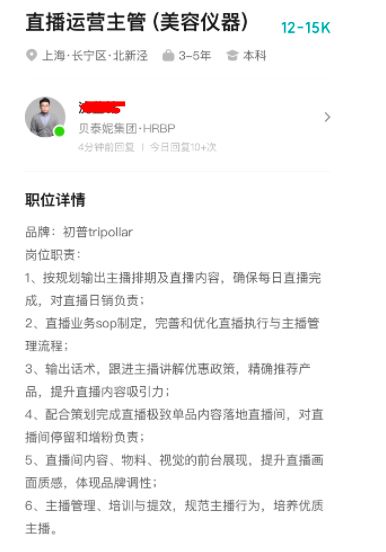
杀入“贵妇美容仪”市场?贝泰妮为初普组建运营团队
Nan Fang Du Shi Bao· 2025-08-05 01:58
Core Viewpoint - Betaini is establishing a professional operation team for its beauty device brand TriPollar, with Deputy General Manager Zhang Mei leading the initiative [1][5][12] Company Developments - Betaini has made significant investments in the beauty device sector, including two investments in Weimai Medical Technology Co., Ltd. and another in Wuhan Kelei Yimei Lianghong Biotechnology Co., Ltd. [1][7] - The company is actively recruiting for positions such as live broadcast operation supervisor and chief broadcast director specifically for the TriPollar brand [2][5] - TriPollar, a brand under the Israeli medical device company Pollogen, focuses on radiofrequency technology and has previously achieved a GMV of 1 billion yuan in the Chinese market [6][5] Market Context - The beauty device market has faced challenges, including a recall of 18,200 units of the first-generation TriPollar Stop Eye model due to safety concerns [6][10] - Regulatory changes are on the horizon, with the "new regulations for beauty devices" set to classify radiofrequency beauty devices as Class III medical devices, which has caused market instability [10][11] - The market has seen a shift in distribution, with Pollogen changing its Chinese distributor, which has led to the closure of various online stores [11][12]