软件和信息服务业

Search documents
服务业向“高”攀升 品质滨州建设添动能
Xin Lang Cai Jing· 2026-02-12 16:30
Group 1 - The core viewpoint emphasizes the acceleration of high-quality development in the service industry and the establishment of a new efficient service system as essential for advancing new productive forces and building a modern industrial system [1] Group 2 - In 2025, the added value of the service industry in Binzhou reached 163.83 billion, with a year-on-year growth of 6.1% at comparable prices; the contribution rate of the service industry to national economic growth was 54.4%, an increase of 16 percentage points from 2024, driving GDP growth by 2.9 percentage points, up 0.5 percentage points from 2024 [2] - The proportion of the service industry's added value in GDP rose to 46.1%, an increase of 0.7 percentage points from 2024; revenue from large-scale service enterprises grew by 8.0%, surpassing the 7.0% growth of large-scale industrial enterprises [2] - Key sectors such as transportation, warehousing, and postal services saw revenue growth of 7.4%, while leasing and business services experienced a significant increase of 20.2% [2] Group 3 - The technology service industry in Binzhou has rapidly expanded, with the number of large-scale technology service enterprises increasing by 47.5%, covering various sectors including chemicals, textiles, agriculture, photovoltaic, and environmental protection [3] - The application of digital technology is thriving, with the successful integration of the Weiqiao cloud computing project and a high growth rate in the intelligent computing sector; the software and information service industry now has 17 enterprises with annual revenues exceeding 500 million [3] - Traditional service industries are upgrading, with the transportation sector developing unique advantages and achieving annual revenues of 800 million from 15 enterprises in specialized transport services [3] Group 4 - The green service industry in Binzhou is accelerating, with three large-scale enterprises in environmental testing and technology promotion, and a year-on-year revenue growth of 1.4 times in environmental governance sectors [4] - The transportation infrastructure construction has shown results, with revenue growth of 51.2% in railway and water transportation, surpassing the 51.0% growth in road transportation [4] - The integration of modern service industries with advanced manufacturing is enhancing service capabilities and quality through investments in high-end equipment [4] Group 5 - The city is promoting multi-dimensional integration practices in tourism, sports, and other sectors to cultivate new growth points in service consumption [5] - In 2025, the film market saw a revenue increase of 73.4% for large-scale enterprises, while amusement parks grew by 16.3%, and the demand for express services increased by 13.8% [6] - New consumption growth points have emerged in elderly care and childcare services, with large-scale enterprises in these sectors growing by 19.5% [6]
长三角41市GDP大洗牌:南京增速5.02%,温州突破万亿,安徽、江苏多城增长乏力!
Sou Hu Cai Jing· 2026-02-09 03:19
Core Insights - The Yangtze River Delta is experiencing a significant economic reshuffling, with Shanghai maintaining its leadership position, followed by Suzhou and Hangzhou, while cities like Nanjing and Wenzhou show promising growth [1] Group 1: Economic Performance - Shanghai's GDP reached 56.7 trillion yuan with a growth rate of 5.49%, solidifying its status as the regional leader [1] - Nanjing's GDP hit 19,428.78 billion yuan, with a growth rate of 5.02%, driven by its strategic location and innovation capabilities [2] - Wenzhou's GDP surpassed 10,213.92 billion yuan, marking its entry into the "trillion club" with a growth rate of 5.09% [3][5] Group 2: Growth Drivers - Nanjing's growth is supported by its rich educational resources, with 53 higher education institutions and numerous national research platforms, contributing to its software and information services sector [2] - Wenzhou's economic model relies heavily on private enterprises, with traditional industries undergoing digital transformation, leading to significant growth in the digital economy [5] - Cities like Nantong and Changzhou are focusing on developing marine and new energy industries, respectively, as part of their economic transition [7] Group 3: Regional Disparities - Some cities, including Nantong, Changzhou, and those in Anhui, are experiencing slower growth due to industrial transformation challenges and reliance on traditional sectors [5][7] - The economic slowdown in these areas reflects the difficulties of transitioning from resource-dependent economies to more diversified growth models [5] Group 4: Future Outlook - The competition in the region will extend beyond GDP figures to include innovation, industrial resilience, and quality of life [8] - There is potential for cities with slower growth to emerge stronger post-transition, highlighting the importance of patience and understanding in evaluating their economic trajectories [8]

软件和信息服务业成江苏南京首个万亿级产业集群
Zhong Guo Xin Wen Wang· 2026-02-02 08:33
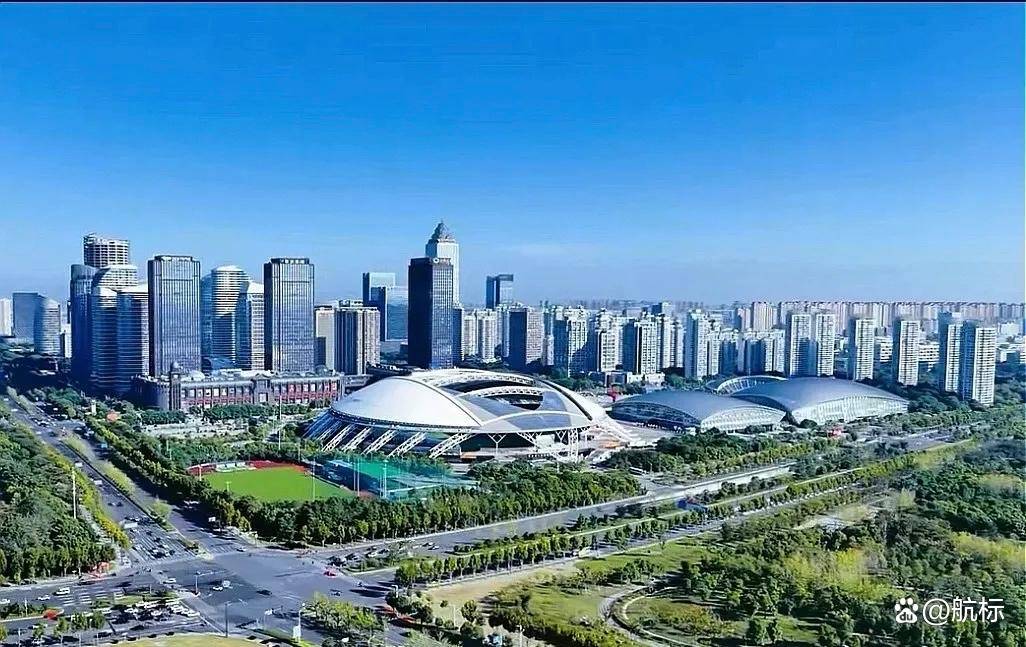
Core Insights - Nanjing's software business revenue is projected to reach approximately 1,020 billion RMB by 2025, marking a year-on-year growth of 16.7%, making it the first trillion-level industry cluster in the city [1][2] - Nanjing has been recognized as "China's Software City" and has been developing its software and information service industry since 2001, with an average annual growth rate of over 12% during the 13th Five-Year Plan period [1] - The city plans to establish the first artificial intelligence ecological street in Jiangsu Province by 2025, featuring a center for integrated online and offline intelligent products, with 326 AI-related investment projects registered [1] Industry Development - The software and information service industry in Nanjing is expected to generate a revenue of 8,740 billion RMB in 2024, ranking fourth in China [1] - Nanjing's initiatives include the "Artificial Intelligence+" action plan and the "6G City" action plan for 2026-2027, aimed at promoting the development of the AI industry and enhancing its integration with various sectors [1][2] - The city is focusing on deepening the integration of artificial intelligence with the software industry to become the leading city in software intelligence in China [2]
发展破壁,南京“42条”开新局
Xin Lang Cai Jing· 2026-01-26 22:08
Core Insights - Nanjing has launched a comprehensive policy package aimed at fostering new productive forces and promoting high-quality development, consisting of 42 measures across 9 areas, emphasizing cross-departmental collaboration to support major economic growth platforms and projects [1] Group 1: Economic Growth and Industry Development - Nanjing's GDP is projected to grow by 5.2% last year, an increase of 0.7 percentage points, marking the best performance in recent years [1] - The city has established its first trillion-yuan industry in software and information services, with the smart grid industry surpassing 500 billion yuan [1] - The "1026" advanced manufacturing cluster system is being developed, with increased rewards for newly recognized national and provincial manufacturing innovation centers, potentially exceeding 100 million yuan in cumulative support [1] Group 2: Support for Enterprises - Local companies, such as Brembo, have benefited from policies that support R&D and multinational company headquarters, making Nanjing a key city in their global operations [2] - The "Artificial Intelligence+" initiative aims to create a high-standard national AI innovation application pilot area, with plans to issue "computing power vouchers" to encourage startups and innovative enterprises [2] - Nanjing plans to release 1,000 high-value small-scale scenarios annually over the next three years, focusing on various sectors including government, healthcare, and finance [2] Group 3: Capital and Investment - Nanjing has established a "4+N" industrial fund cluster with a total scale exceeding 200 billion yuan, implementing a "one industry, one fund" model to support key industries with investments up to 10 million yuan per project [3] Group 4: Encouragement of Private Investment - The city is actively encouraging private investment in urban renewal, industrial development, and public services, with specific procurement policies favoring small and medium-sized enterprises [4] - The policy package includes 160 points to help businesses quickly understand and utilize the benefits, supported by a one-stop online service platform [4]
我市“建优软件服务集聚区”做法入选国家现代服务业高质量发展典型案例
Nan Jing Ri Bao· 2026-01-26 02:46
Core Insights - The National Development and Reform Commission has recognized the "Nanjing Software Valley" for its high-quality development in modern service industries, highlighting its innovative platforms and ecosystem [1] Group 1: Industry Overview - Nanjing Software Valley, located in Yuhuatai District, hosts over 4,900 software-related enterprises and 370,000 software professionals, contributing to a projected software business revenue of over 350 billion yuan by 2025, accounting for approximately 20% of Jiangsu Province and 35% of Nanjing's total [1] - The software valley has established a complete ecosystem from basic software to industry applications, including cloud computing and artificial intelligence, with major players like Huawei and ZTE alongside local innovators [2] Group 2: Development Strategy - The software valley is divided into three main areas, with a total development area of 73 square kilometers, featuring 59 sub-parks and 320 buildings, creating high-quality industrial carriers [2] - The operational strategy includes a "one leading industry per park" approach, with government guidance and social capital participation, fostering a diverse development pattern [2] Group 3: Collaboration and Innovation - The software valley promotes collaboration between state-owned and private enterprises, transforming underutilized land into quality research and incubation hubs [3] - The establishment of specialized industrial parks, such as the Runhe Innovation Center, has attracted over 100 upstream and downstream enterprises, creating an open cooperative industrial ecosystem [3] Group 4: Service and Support - The software valley implements a multi-dimensional policy system to support enterprise development, talent housing, technological innovation, and cross-border e-commerce [4] - A "line management + online smart platform" service mechanism has been introduced to enhance service efficiency, providing 24-hour online support for businesses [5] Group 5: AI Development - The "AI Mirror - Nanjing Artificial Intelligence Ecological Street" has been established to promote AI technology integration into daily life, with 381 AI companies and over 50,000 professionals currently engaged [6] - The street features an AI intelligence center showcasing innovative products and has successfully implemented over 50 application scenarios, including AI clinics and AI restaurants [6]
2025年工作回顾 向上势头不断巩固 向新动能持续增强 向好质态加速提升
Nan Jing Ri Bao· 2026-01-22 01:36
Core Viewpoint - The report highlights the achievements and future goals of Nanjing's development, emphasizing economic growth, industrial advancements, and improvements in public welfare. Group 1: Economic Growth - The city's GDP is expected to grow by approximately 5.2% in 2025, an increase of 0.7 percentage points compared to 2024 [2] - Industrial investment growth reached 12.1%, ranking first in the province, with its share in fixed asset investment increasing by 4.3 percentage points [3] Group 2: Industrial Advancements - The software and information services industry has become the first trillion-yuan industry, while the smart grid industry exceeds 500 billion yuan [4] - The number of national manufacturing single champion enterprises increased by 16, ranking first in the province, along with 6 new billion-level chain enterprises and 125 national specialized and innovative "little giant" enterprises [4][5] Group 3: Innovation and Technology - The number of nationally registered large models and AI innovation products accounts for over 60% and 50% of the province's total, respectively [5] - The technology contract transaction volume reached 110 billion yuan [17] - The number of national leading technology enterprises ranks first in the province, with over 23,000 technology-based small and medium-sized enterprises [19] Group 4: Infrastructure and Urban Development - Major infrastructure projects such as the new Changjiang Bridge and metro lines have been completed, increasing urban rail transit mileage to 524.4 kilometers [7][8] - 62 urban renewal projects have been implemented, and 138 old residential areas have been renovated [32] Group 5: Public Welfare and Employment - The city created 219,000 new urban jobs [37] - Over 2,000 units of affordable rental housing were secured, benefiting 116,000 talents [38] - Free preschool education reached 76,000 children [39]
上海杨浦创新指数发布:区域创新资源要素不断集聚
Xin Hua Cai Jing· 2025-11-19 06:52
Core Insights - The 2024 innovation index for Yangpu District, Shanghai, shows an 8.3% increase compared to the previous year, indicating a continuous accumulation of innovative resources and an enhancement of the innovation environment [1] - Yangpu's innovation index has maintained stable growth over the past nine years, with an average annual compound growth rate of 12.9% [1] Group 1: Innovation Investment and Talent - In 2024, Yangpu's local fiscal expenditure on science and technology reached 2.362 billion yuan, a year-on-year increase of 21.9%, accounting for 8.6% of the general public budget, which is 2.2 percentage points higher than the Shanghai average [1] - The R&D investment intensity in Yangpu for 2024 is 4.83%, up by 0.51 percentage points, exceeding the Shanghai average by 0.48 percentage points, indicating enhanced technological innovation capabilities [1] - The number of high-level talents in Yangpu reached 1,246 in 2024, reflecting an 11.5% year-on-year growth, showcasing a stable "talent pyramid" structure [1] Group 2: Development of Innovation Entities - Yangpu has established a multi-dimensional cultivation system for innovative enterprises, with 12 provincial and ministerial-level technology business incubators in 2024, a 9.1% increase [2] - There are 45 specialized technical service platforms in Shanghai, up by 15.4%, providing professional support for enterprise innovation and reducing innovation costs [2] - The number of enterprise technology centers has reached 111, serving as key carriers for the regional technological innovation system [2] Group 3: Innovation Output and Economic Transition - The transaction amount of technology contracts in Yangpu for 2024 is 23.09 billion yuan, a 16.4% increase, indicating improved liquidity and activity in the technology factor market [3] - The number of invention patents per 10,000 people in Yangpu is 152, a 7.0% year-on-year increase, with high-value invention patents exceeding the Shanghai average by 2.1 [3] - The digital economy in Yangpu is rapidly developing, with over 30% of total enterprises being digital companies and contributing more than 40% to total tax revenue [3] Group 4: Optimizing Innovation Ecosystem - Yangpu is focused on creating a "tropical rainforest" style innovation ecosystem, continuously upgrading its business environment to enhance enterprise confidence [3] - The district is committed to deepening its digital economy and strategically planning for future industrial tracks, promoting the integration of technological and industrial innovation [3]
数字经济赋能人民城市生活圈
Mei Ri Jing Ji Xin Wen· 2025-11-02 13:37
Group 1 - The event titled "2025 'Vibrant Yangpu' Digital Economy Building People's City Living Circle" was held in Shanghai, focusing on urban renewal, digital empowerment, and livelihood security [1] - Yangpu District aims to develop a "15th Five-Year Plan" blueprint, emphasizing the overall development strategy along the Huangpu River [1][2] - The district's digital economy core industry (software and information services) is projected to exceed 320 billion yuan in revenue by 2024, accounting for nearly one-fifth of the city's total [2] Group 2 - Yangpu District has established a robust innovation ecosystem supported by top universities and a large pool of high-level talent, which is crucial for digital economy development [2] - The district is optimizing its business environment by implementing a chief service officer system and streamlining policy application processes [2] - The "Golden Cross Axis" development pattern has been formed in Yangpu, integrating universities, industries, and residential spaces within a 5-kilometer radius [4] Group 3 - The integration of cultural industries and digital economy is seen as essential for injecting lasting vitality into urban development [3] - The discussion highlighted that industry upgrades are the core driver of urban renewal, with businesses leveraging data and blockchain technologies to optimize supply-demand structures [4] - The importance of institutional innovation was emphasized, particularly in establishing credible standards for data as an asset and improving housing policies for talent [5]

福昕软件:翟浦江先生累计已减持公司股份47040股
Mei Ri Jing Ji Xin Wen· 2025-09-29 09:10
Group 1 - The core point of the article is that Foxit Software has announced the completion of a share reduction plan by two shareholders, resulting in a minor decrease in total shareholding [1] - During the share reduction period, Mr. Zhai Pujiang reduced his holdings by 47,040 shares, accounting for 0.0514% of the total share capital, while Ms. Li Weilan reduced her holdings by 5,680 shares, accounting for 0.0062% of the total share capital [1] - As of the report date, Foxit Software's market capitalization stands at 6.8 billion yuan [1] Group 2 - For the first half of 2025, Foxit Software's revenue composition shows that the software and information services sector accounts for 99.89%, while other businesses contribute only 0.11% [1]

产业发展“最佳助攻”,如此赋能!
Nan Jing Ri Bao· 2025-09-07 23:56
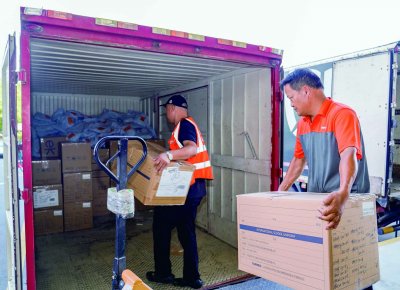
Core Insights - The article discusses the rapid development and integration of production service industries in Nanjing, highlighting the collaboration between logistics and manufacturing sectors to enhance efficiency and reduce costs [6][9][17] Group 1: Production Service Industry Development - Nanjing's service sector grew at a rate of 5.8% in the first half of 2025, leading the city's economic performance, with significant contributions from software, information services, high-tech services, finance, and logistics [6] - The "Nanjing Production Service Industry High-Quality Development Action Plan (2025-2027)" aims to promote the integration of modern service industries with advanced manufacturing, outlining clear development paths [6][16] Group 2: Logistics Innovations - The logistics company Shentong Express has implemented a "factory collection" model, reducing delivery times by at least 7 hours by embedding staff within client warehouses [7][9] - Shentong Express has established a dedicated pre-positioning warehouse for school uniforms, managing over 1500 SKUs and ensuring quality control through environmental monitoring [8][9] Group 3: Digital Transformation in Manufacturing - Jinsteel's digital transformation has streamlined steel trading processes, allowing transactions to be completed in just 5 minutes through an online system, significantly improving efficiency [10][12] - The implementation of a C2M (Customer to Manufacturer) e-commerce system at Jinsteel has enhanced customer satisfaction by 20%-30% and increased order efficiency by over 60% [12] Group 4: Healthcare Logistics - The "Shared Smart Traditional Chinese Medicine Pharmacy" project enables same-day delivery of herbal medicine, enhancing patient satisfaction with a 99% approval rating [13][14] - Nanjing Medical's logistics network supports over 34,000 healthcare institutions, ensuring timely and safe delivery of medications through advanced logistics solutions [14][15] Group 5: Future Directions and Recommendations - The action plan emphasizes the importance of digital transformation, investment in AI, and collaboration between enterprises and educational institutions to foster innovation and competitiveness [16][17] - The integration of production and service sectors is seen as a key driver for economic growth, with a focus on creating a more efficient and responsive service ecosystem [17]