酒企

Search documents
青海互助天佑德青稞酒股份有限公司 关于控股股东部分股份解除质押的公告
Zhong Guo Zheng Quan Bao - Zhong Zheng Wang· 2026-02-26 22:46
Group 1 - The company announced that its controlling shareholder, Qinghai Tianyoude Technology Investment Management Group Co., Ltd., has completed the process of releasing part of its pledged shares [1] - As of the announcement date, the total pledged shares held by the controlling shareholder were detailed, although specific figures were not provided in the text [1] - The company ensures that the information disclosed is true, accurate, and complete, with no false records or misleading statements [1][2] Group 2 - The company completed the registration change with the Qinghai Provincial Market Supervision Administration, resulting in a reduction of its registered capital from 482,002,974 yuan to 479,107,974 yuan [5] - This change was a result of the repurchase and cancellation of 2,895,000 restricted stocks that did not meet the conditions for lifting restrictions [4][5] - The company’s business license was updated to reflect these changes, while other contents remained unchanged [5]

每日投行/机构观点梳理(2025-12-26)
Jin Shi Shu Ju· 2025-12-26 12:32
Group 1 - UBS Wealth Management predicts that the Chinese stock market will continue to have upward potential through 2026, driven by advanced manufacturing and technology as new growth engines [1] - The technology sector, which accounts for about half of the MSCI China Index, is becoming increasingly resilient to external shocks and U.S. economic cycles [1] - The Hang Seng Tech Index is expected to see a 37% growth in earnings per share by 2026, with approximately 7 trillion RMB in excess household savings likely to flow into the stock market [1] Group 2 - Barclays anticipates that the Bank of Japan will raise interest rates in July and December of 2026, influenced by the spring wage negotiation cycle [2] - The report emphasizes the importance of wage negotiations as a key factor in the Bank of Japan's monetary policy and its response to the risk of yen depreciation [2] Group 3 - OANDA reports that multiple factors are driving a historic surge in precious metals, with gold potentially reaching $5,000 per ounce and silver $90 per ounce in the coming year [3] - The report attributes the rise to speculative trading, low liquidity at year-end, expectations of long-term Fed rate cuts, a weaker dollar, and increased geopolitical risks [3] - Platinum and palladium prices have surged due to supply constraints and strong industrial demand, with platinum up approximately 165% and palladium over 90% year-to-date [3] Group 4 - CICC suggests focusing on asset trend changes rather than specific gold price predictions, as current gold prices are above short-term valuation models, indicating potential bubbles [4] - The report anticipates that the gold bull market may not end soon, but volatility is expected to increase as prices deviate from fundamental indicators [4] - CICC maintains an optimistic outlook on Chinese assets, emphasizing the benefits of the AI technology wave and ample liquidity, while suggesting a focus on technology growth in the short term [5][6] Group 5 - CITIC Securities highlights the importance of maintaining macro liquidity stability through tools like reserve requirement ratio cuts and interest rate reductions [6] - The report predicts a 5%-10% increase in the overall A-share market in 2026, with Hong Kong stocks expected to experience a rebound in performance [6] - The outlook for commodities includes expectations for gold to challenge $5,000 per ounce and copper prices to rise to $12,000 per ton due to supply constraints and demand drivers [6] Group 6 - CITIC Securities notes a trend of diminishing focus on quantitative targets by the People's Bank of China, with an emphasis on long-term structural reforms [7] - The report indicates that the central bank's policy may shift towards addressing supply-side issues and reducing financing costs [7] Group 7 - Huatai Securities states that the current appreciation of the RMB is likely to enhance foreign interest in RMB-denominated assets, creating a positive feedback loop for capital inflows [8] - The report suggests that the strengthening of the RMB will continue to support the valuation of both onshore and offshore RMB assets [8] Group 8 - CITIC Jin Investment reports that rising storage costs have begun to impact consumer electronics prices, with several manufacturers increasing product prices by 100-200 RMB [9] - The report indicates that the cost pressures from rising storage prices are likely to lead to a temporary decline in consumer electronics sales [9] Group 9 - Galaxy Securities notes that leading liquor companies are adjusting their strategies for 2026, focusing on maintaining price stability and channel profitability amid cyclical pressures [10] - The report emphasizes the importance of developing new consumer segments and adapting to new consumption trends as part of long-term transformation efforts [10]
2026年,酒企依旧囿于“年轻化”
Xin Lang Cai Jing· 2025-12-16 09:30
Core Insights - The liquor industry is facing significant challenges, with inventory pressures increasing among A-share liquor companies, rising from 148.5 billion yuan at the end of 2023 to 152.7 billion yuan by Q3 2024 [1] - Young consumers are changing their drinking habits, with a potential market of 490 million young drinkers and a market size of 400 billion yuan, but they are harder to engage compared to previous generations [2][3] - The success of brands like Jinjiu, which saw a 50% sales increase in the first half of 2025, highlights the importance of appealing to younger consumers through social media and health-oriented marketing [4][5] Industry Trends - The liquor market is experiencing a shift, with 21.1% of companies increasing investment in youth-oriented products by mid-2025 [12] - The rise of health-conscious drinking is evident, with the new middle-class segment of health-oriented liquor growing at a compound annual growth rate of 19.8% [7] - The demand for low-alcohol and flavored beverages is increasing, with the low-alcohol market expected to exceed 74 billion yuan by 2025, growing at a rate of 25% [26] Consumer Behavior - Young consumers prioritize emotional value and social experiences over traditional drinking norms, leading to a rise in unique drinking environments and DIY cocktail culture [25][28] - The shift in drinking culture is evident, with 84.8% of young people expressing strong aversion to traditional drinking customs [24] - The popularity of health-oriented products, such as those featuring traditional Chinese medicinal ingredients, is on the rise among younger consumers [29] Company Strategies - Major liquor companies are struggling to connect with younger audiences, as seen in the decline of Moutai's ice cream sales and the challenges faced by Wuliangye in maintaining profit growth [21][16] - Jinjiu's strategy of lowering price points and increasing distribution channels has proven effective, achieving a 78% distribution rate in small restaurants and over 90% in convenience stores [11][10] - Companies like Wuliangye are attempting to innovate with new products and marketing strategies, but face challenges in aligning with the genuine needs of younger consumers [22][23]




人头马新CEO首秀:首要目标是重回增长 中国现复苏信号
2 1 Shi Ji Jing Ji Bao Dao· 2025-11-28 12:04
Core Viewpoint - The new CEO of Rémy Cointreau, Franck Marilly, expressed confidence in restoring growth despite challenging market conditions, emphasizing a series of strategic measures including cost-cutting and structural adjustments [1][3]. Financial Performance - For the first half of the 2025-26 fiscal year, Rémy Cointreau reported sales of €489 million, reflecting an organic decline of 4.2% year-on-year, with Cognac sales down 7.6% and liqueurs and spirits up 4.1% [4]. - The Americas market saw double-digit growth, while the Asia-Pacific and EMEA regions experienced double-digit declines, significantly impacted by the Chinese market [4]. - In China, sales dropped by double digits, with Cognac sales in Q2 down 25%, influenced by policy changes and disruptions in the duty-free channel [4][10]. Market Recovery Signals - Management highlighted positive signals in the market, with both major business segments showing signs of recovery. E-commerce sales in China continued to grow rapidly, and inventory levels were reported as healthy [3][5]. - The CEO noted that the Q3 (October-December) period showed encouraging signs, with low single-digit growth during the Mid-Autumn Festival and mid-double-digit growth during the recent Double Eleven shopping festival [4][10]. Strategic Initiatives - The CEO outlined three main initiatives to improve performance: flexible pricing strategies, strong operational execution, and an appropriate product mix to enhance business resilience in China [5][12]. - The company aims to revitalize the Cognac category and accelerate the expansion of liqueurs and spirits, with a focus on immediate value creation through revenue initiatives [11]. Future Goals - The company has set a target for organic sales to be flat or show low single-digit growth for the current fiscal year, with the CEO's first year divided into phases of listening, rethinking, and igniting growth [10]. - Five strategic priorities were identified: restarting growth, reassessing brand portfolio, enhancing operational efficiency, improving cash generation, and creating a new organizational structure for agility [11].

曾与茅台齐名,皇台酒业上半年亏527万,大股东驰援未停
Guo Ji Jin Rong Bao· 2025-10-15 03:46
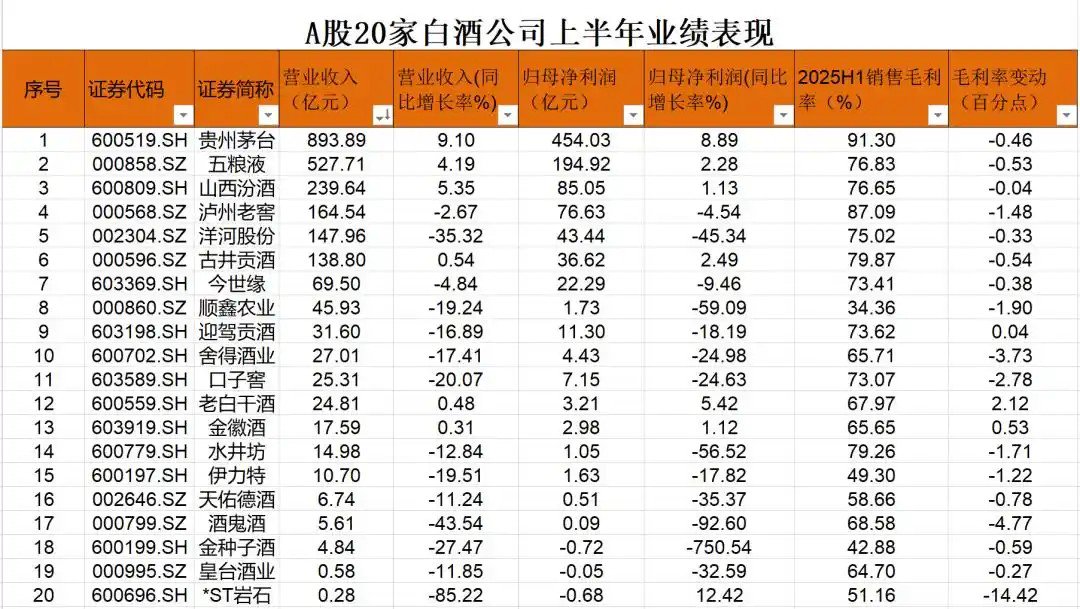
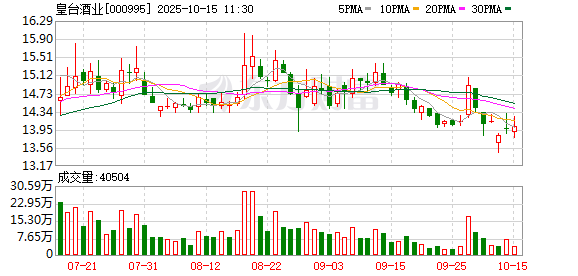
Core Viewpoint - The major shareholder of Huangtai Liquor Industry continues to support the company by increasing its shareholding, despite the company's declining stock price and performance [2][3]. Shareholding Changes - Gansu Shengda Group's shareholding in Huangtai Liquor has risen to 6.3%, with the total holding of Gansu Shengda and its concerted actions reaching 25% [2]. - The increase in shareholding began in April, with Gansu Shengda planning to invest between 60 million to 120 million yuan through secondary market transactions [3]. - In September, Gansu Shengda purchased 4.056 million shares at an average price of 14.69 yuan per share, amounting to an investment of approximately 59.6 million yuan [3]. Financial Performance - Huangtai Liquor's stock price has decreased by 15.39% year-to-date, underperforming the sector's decline of 1.24% [3]. - For the first half of the year, the company reported revenue of 57.74 million yuan, a year-on-year decline of 11.85%, and a net loss of 5.27 million yuan, worsening by 32.59% compared to the previous year [3]. Product and Market Overview - Huangtai Liquor is one of the few companies in the industry that produces both liquor and beer, with brands including "Huangtai" and "Liangzhou Huangtai" [4]. - The company's main revenue comes from mid-to-low-end products, which saw a revenue decline of 17.81% to 20.15 million yuan, while high-end products experienced slight revenue increases [4]. - The company has lost market share across all sales channels, with direct sales, distributors, and other channels all reporting declines [4]. Regional Performance - The company has been expanding outside Gansu province, with revenue from outside the province increasing from 7.35% to 21.81% year-on-year, while the share from within the province has decreased to 78.19% [4]. - In Gansu province, Huangtai Liquor's revenue fell to 45.15 million yuan, a nearly 26% decline compared to the previous year, significantly worse than competitors like Jinhui Liquor [5].

巴菲特已加仓!这个行业有绝佳机会?
Sou Hu Cai Jing· 2025-05-21 13:42
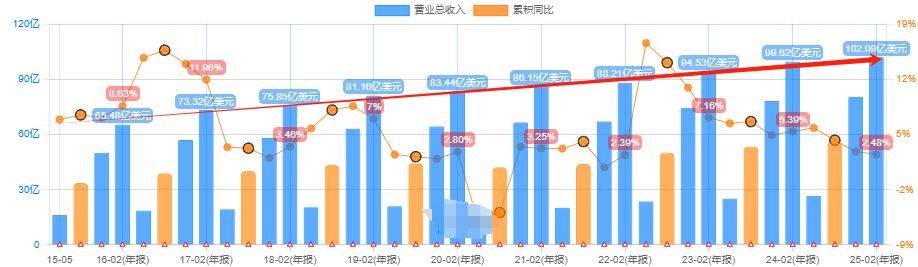
Group 1 - Berkshire Hathaway significantly increased its stake in Constellation Brands, a major U.S. beverage company, while selling various bank stocks [1] - Constellation Brands has a market capitalization of approximately 250 billion RMB, with 85% of its products being beer and 15% wine and spirits [1] - The company's revenue growth is stable but slow, ranging from 0% to 5% annually [1] Group 2 - Since early 2018, Constellation Brands' stock has decreased by 3%, while the S&P 500 has increased by 120%, indicating underperformance [5] - The stock price decline is part of a broader trend where global beverage companies have also seen poor stock performance [6][8] - Among the top 10 global beverage companies, 8 have experienced stock price declines since the end of 2021, with only 2 showing increases [7] Group 3 - Despite some companies experiencing declines in revenue, profit, or cash flow, overall profitability remains positive [9] - The primary reason for the stock price declines across the beverage sector is valuation compression, with significant reductions in price-to-earnings (PE) ratios [10][12] - For instance, the PE ratios of major companies like Moutai and Diageo have dropped from 40-50 times to 10-20 times [12][18] Group 4 - The COVID-19 pandemic has significantly impacted consumer behavior, leading to a decline in demand for high-alcohol beverages [14][16] - The shift in health consciousness has resulted in lower valuations for premium spirits, which were previously priced similarly to luxury goods [16][18] - Constellation Brands has a reasonable PE ratio of around 15, with a stable dividend and share buyback strategy, contributing to its attractiveness as an investment [22][24] Group 5 - If Chinese beverage companies increase their dividend payouts, they could achieve a dividend yield comparable to that of Constellation Brands, potentially reaching 5%-7% [24] - The overall potential return rate for A-share companies is high, but it is contingent on increasing dividend rates to fully materialize [30]
关税大炮
Datayes· 2025-04-01 12:03
Market Overview - The market showed a positive opening with indices rising, but there was a slight decrease in trading volume, indicating some caution among investors [1] - The pharmaceutical sector experienced significant gains, with many investors selling off their positions during the rally [1] Economic Indicators - The current market adjustment is expected to last until the end of April, with seasonal trends indicating a higher success rate for small-cap growth stocks in February and large-cap value stocks in April [4] - The GDP growth for the first quarter is estimated at approximately 5.2%, with the primary, secondary, and tertiary industries growing at 4.0%, 5.7%, and 5.1% respectively [4] Sector Performance - The pharmaceutical sector led the market gains, particularly in innovative drugs, with several stocks hitting the daily limit [12] - The energy sector, particularly related to controlled nuclear fusion, saw a resurgence with strategic investments announced by the Shanghai Future Industry Fund [12] Stock Movements - Xiaomi's automotive project is under scrutiny, with reports of a working group formed but no significant updates, reflecting market sentiment through stock price movements [9] - The stock of Xiaomi Group fell by 5.49% to HKD 46.50, with a total market capitalization of HKD 1.21 trillion [10] Investment Trends - The net outflow of capital was noted in the computer sector, while the pharmaceutical, public utilities, and defense sectors saw net inflows [22] - The market is currently characterized by high uncertainty, leading to cautious behavior among short-term investors [11] Price Adjustments - Several companies in the liquor industry, such as Guyue Longshan and Kuaijishan, announced price increases ranging from 2% to 12% for their products, effective April 1, 2025 [18] - The price of photovoltaic silicon wafers has increased due to external factors, with TCL Zhonghuan raising prices for various sizes of wafers [17]