黄金珠宝销售

Search documents
上亿资金提现无门,又一黄金平台暴雷
Xin Lang Cai Jing· 2026-01-30 12:03
Core Viewpoint - The article highlights the financial crisis faced by Shenzhen Jie Wo Rui Jewelry Co., which has led to widespread anxiety and despair among consumers and investors who are unable to withdraw their funds [2][45]. Group 1: Company Overview - Shenzhen Jie Wo Rui Jewelry Co. is described as the "largest gold and jewelry distribution market" in China, located in Shenzhen [2][45]. - The company has been experiencing severe cash flow issues since late January 2026, leading to difficulties in fulfilling payment obligations to customers [2][45]. Group 2: Consumer Experiences - Consumers like Lin Wei and Cai Lin have invested significant amounts in Jie Wo Rui, with Lin Wei investing over 5 million yuan and Cai Lin investing 185,000 yuan, both of which are now trapped in the company's system [3][46][50]. - The operational model of Jie Wo Rui involved a "consignment and recovery" approach, where consumers could buy gold at low prices and sell it back to the platform, initially providing a sense of security and profit [6][49]. Group 3: Crisis Development - The crisis escalated when the company's cash reserves were revealed to be critically low during a live stream by the company's owner, Zhang Zhiteng, on January 21, 2026, leading to a sudden halt in withdrawals [13][56]. - Reports indicate that the company had already been showing signs of operational abnormalities, such as limiting withdrawal amounts to 500 yuan per day, prior to the public acknowledgment of the crisis [14][56]. Group 4: Financial Impact - The estimated total amount involved in the crisis exceeds 2 billion yuan, with some reports suggesting it could be over 10 billion yuan, although these figures are largely based on informal estimates [17][60]. - Jie Wo Rui has proposed two repayment plans to investors: one offering a 20% return on principal in a lump sum and another offering 40% over 12 installments, both requiring investors to sign non-disclosure agreements [24][67]. Group 5: Regulatory Response - Following the crisis, local authorities in Shenzhen have formed a task force to oversee the situation, ensuring that the company addresses its responsibilities and communicates with investors [41][84]. - Despite the official response, many investors remain skeptical about the recovery of their funds and the effectiveness of the proposed repayment plans [42][85].


菜百股份股价跌5.07%,华泰柏瑞基金旗下1只基金重仓,持有22.08万股浮亏损失23.18万元
Xin Lang Cai Jing· 2026-01-27 05:25
Group 1 - The core point of the news is that Cai Bai Co., Ltd. experienced a 5.07% drop in stock price, closing at 19.67 yuan per share, with a trading volume of 137 million yuan and a turnover rate of 0.88%, resulting in a total market capitalization of 15.299 billion yuan [1] - The company, established on December 9, 1994, and listed on September 9, 2021, specializes in the procurement of raw materials, design, chain sales, and brand operation of gold and jewelry products [1] - The revenue composition of the company includes 63.79% from precious metal investment products, 27.05% from gold jewelry, 7.72% from precious metal cultural products, 0.70% from diamond and jade jewelry, 0.65% from joint commission income, and 0.09% from other sources [1] Group 2 - From the perspective of fund holdings, Huatai-PB Fund has one fund heavily invested in Cai Bai Co., Ltd., specifically the Huatai-PB Quantitative Leading Mixed A Fund (460009), which held 220,800 shares, accounting for 0.96% of the fund's net value, making it the third-largest holding [2] - The fund has experienced a floating loss of approximately 231,800 yuan today [2] - The Huatai-PB Quantitative Leading Mixed A Fund was established on June 22, 2010, with a current scale of 320 million yuan, and has achieved a year-to-date return of 11.44%, ranking 1242 out of 8861 in its category, and a one-year return of 51.89%, ranking 1798 out of 8126 [2]

利好引爆 直线拉涨停!房地产板块走高 多股涨停
Zhong Guo Ji Jin Bao· 2025-10-22 03:49
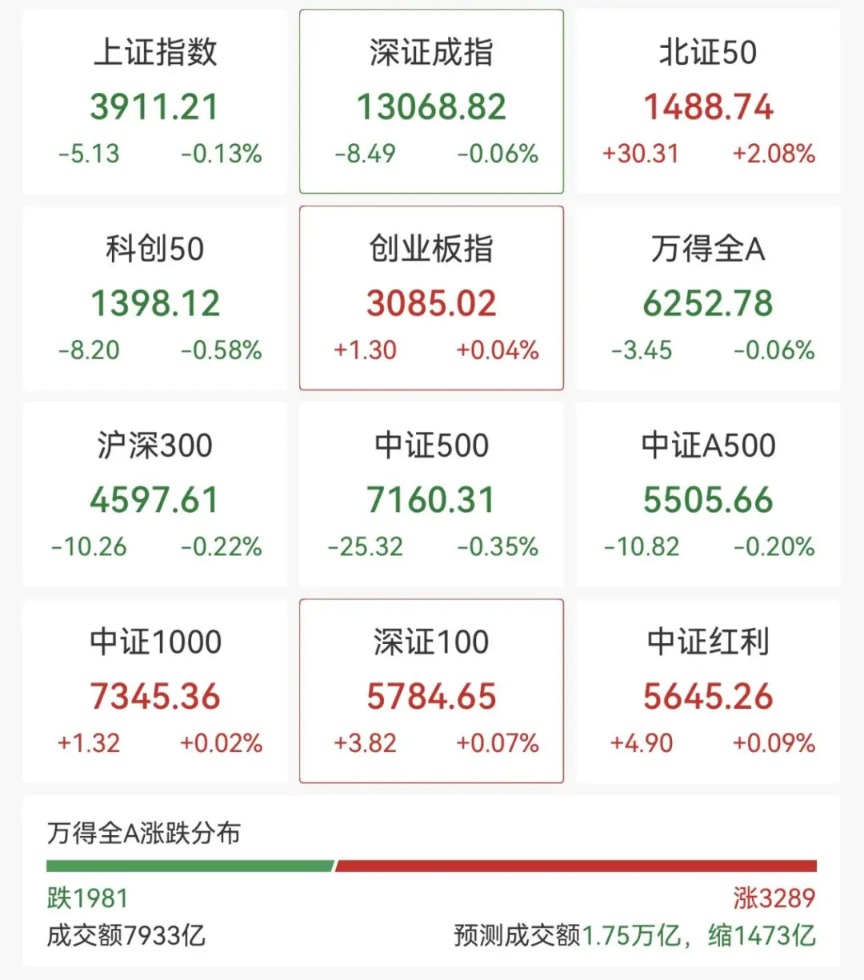
Market Overview - The A-share market experienced fluctuations on October 22, with the ChiNext index dropping over 1% before recovering slightly. As of the report, the Shanghai Composite Index fell by 0.13%, the Shenzhen Component Index decreased by 0.06%, while the ChiNext index rose by 0.04% [1][2]. Index Performance - The Shanghai Composite Index closed at 3911.21, down 5.13 points or 0.13% - The Shenzhen Component Index closed at 13068.82, down 8.49 points or 0.06% - The ChiNext index closed at 3085.02, up 1.30 points or 0.04% - The total trading volume reached 793.3 billion, with a predicted turnover of 1.75 trillion, a decrease of 147.3 billion [2]. Sector Performance - The real estate sector showed significant gains, with stocks like Yingxin Development achieving three consecutive trading limits, and other companies such as Guangming Real Estate and Shangshi Development also hitting their limits [5][6]. - The industrial machinery sector saw a rise, with companies like Haili Co., CITIC Heavy Industries, and Shenyang Machine Tool reaching their trading limits [8][10]. - Conversely, the gold and jewelry sector faced declines, with stocks like Mankalon dropping over 7% [11][12]. Government Initiatives - On October 21, the Shanghai Municipal Government released an action plan to promote high-quality development in the construction industry, outlining 21 specific measures to stabilize real estate investment and enhance urban renewal efforts [7].
利好引爆,直线拉涨停
中国基金报· 2025-10-22 03:34
Market Overview - The A-share market experienced fluctuations, with the ChiNext index initially dropping over 1% before recovering slightly. As of the report, the Shanghai Composite Index fell by 0.13%, the Shenzhen Component Index decreased by 0.06%, while the ChiNext index rose by 0.04% [2][3]. Real Estate Sector Performance - The real estate sector showed significant gains, with several stocks hitting the daily limit up. Notable performers included Yingxin Development, Guangming Real Estate, and Shangshi Development, all achieving limit-up status [5][9]. - The real estate sector index increased by 3.31%, indicating strong investor interest and positive sentiment in this segment [6]. Other Sector Movements - Other active sectors included power generation equipment, energy equipment, and superhard materials, while gold, non-ferrous metals, and semiconductors faced declines [5][6]. - The industrial machinery sector also saw a rise, with stocks like Haili Co., CITIC Heavy Industries, and Shenyang Machine Tool hitting limit-up [15]. Hong Kong Market Trends - In the Hong Kong market, major indices declined, with companies like NetEase, BYD Electronics, and Kingsoft Software dropping over 2% [7][8]. Policy Impact on Real Estate - On October 21, the Shanghai Municipal Government released an action plan aimed at promoting high-quality development in the construction industry, outlining 21 specific measures to stabilize real estate investment and enhance urban renewal efforts [13][14].


山西证券研究早观点-20250812
Shanxi Securities· 2025-08-12 00:12
Core Insights - The report highlights the macroeconomic impact of "anti-involution," suggesting a mild improvement in PPI (Producer Price Index) due to ongoing policy efforts to enhance competitive order and stabilize economic growth [6][5][4] - The report discusses the performance of various companies, including Haiguang Information, which reported a significant revenue increase and is on track to establish a full industry chain layout [11][13] - The apparel industry is facing challenges, with Under Armour's Q1 FY2026 revenue declining by 4% year-over-year, while other luxury brands like Ralph Lauren and Hugo Boss show mixed results [7][9][8] Market Trends - The domestic market indices showed varied performance, with the Shanghai Composite Index closing at 3,647.55, up 0.34%, and the Shenzhen Component Index rising by 1.46% to 11,291.43 [4] - The textile and apparel sector saw a 4.23% increase, outperforming the broader market, while the light industry manufacturing sector rose by 2.57% [9] Company Analysis - Haiguang Information (688041.SH) reported a 45.21% year-over-year revenue increase in H1 2025, reaching 5.464 billion yuan, with a net profit of 1.201 billion yuan, up 40.78% [11][13] - The company is expected to maintain high growth due to strong demand for domestic high-end chips and a significant amount of contract liabilities indicating future revenue [11][13] - Under Armour's Q1 FY2026 results showed a revenue decline, with North American sales down 5% to $670 million, while international sales decreased by 1% to $470 million [7] Industry Commentary - The report emphasizes the ongoing challenges in the apparel sector, with Under Armour's revenue expected to continue declining in Q2 FY2026 [7] - The textile manufacturing sector's exports showed mixed results, with a slight increase in textile exports but a decrease in apparel exports [9] - The jewelry market remains stable, with gold consumption down 3.54% in H1 2025, but demand for gold bars and coins increased significantly [9][10]

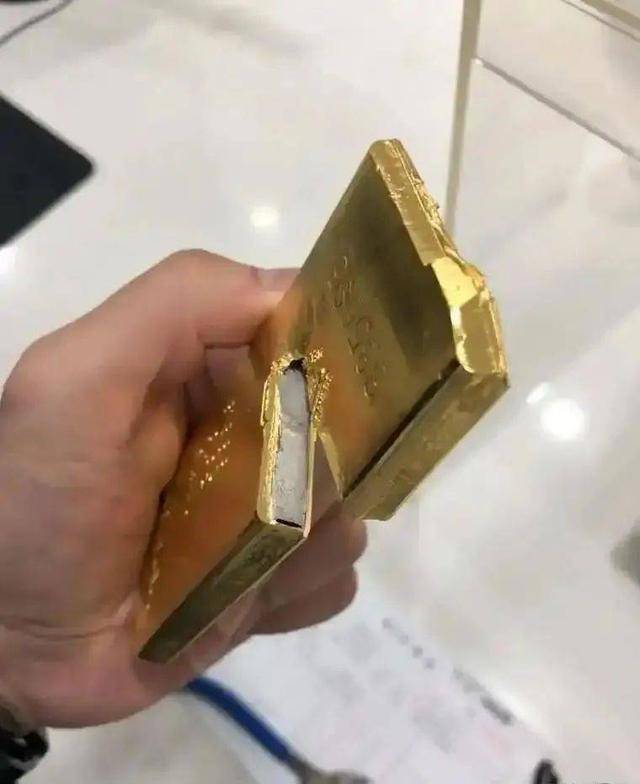
新骗局曝光!深圳水贝镀金饰品伪装真金,5359公斤黄金杀猪盘暴雷
Sou Hu Cai Jing· 2025-06-10 09:31
Core Viewpoint - The article highlights the dual issues in the gold market, focusing on the fraudulent practices in Shenzhen's Shui Bei area and the collapse of Yongkun Gold, which has significantly impacted investor trust and market integrity [1][3][36]. Group 1: Gold Market Overview - Gold has historically been a symbol of wealth and a safe haven in economic turmoil, with prices soaring to four-digit levels this year, making it less accessible for potential buyers [1]. - Shenzhen Shui Bei is recognized as a major hub for gold and jewelry, accounting for over 50% of the domestic gold transaction volume, but it has recently become a hotspot for fraudulent activities [5][9]. - The price advantage of gold in Shui Bei compared to branded stores attracts many consumers, especially during peak times like weekends [9][11]. Group 2: Fraudulent Practices - Investigations revealed serious fraud in Shui Bei, including the sale of gold-plated items disguised as real gold, which are difficult for average consumers to identify without professional testing [11][13]. - Common fraudulent methods include "gold-plated silver" and "aluminum gold," where merchants mislead consumers by marking fake items as genuine gold [13][15]. - The prevalence of such fraud has raised concerns about consumer protection and the integrity of the gold market [19]. Group 3: Yongkun Gold Collapse - Yongkun Gold, established in 2014, attracted many investors with seemingly attractive investment products promising high returns, but it turned out to be a well-structured scam [21][32]. - The company employed a Ponzi scheme model, using new investors' funds to pay returns to earlier investors, which became unsustainable as market conditions changed [34]. - Reports indicate that clients have entrusted Yongkun with 5,359 kilograms of gold, valued at approximately 4.1 billion yuan, highlighting the scale of the collapse [34]. Group 4: Market Implications - The fraudulent activities in Shui Bei and the collapse of Yongkun Gold serve as a cautionary tale for investors, emphasizing the need for vigilance and the importance of choosing reputable dealers in the gold market [36].