
Non - bank Financial Institutions

Search documents
存款再搬家!1月居民存款少增超3万亿,非银多增2.6万亿
Nan Fang Du Shi Bao· 2026-02-13 12:06
Core Viewpoint - The People's Bank of China reported that as of the end of January 2026, the total social financing stock reached 449.11 trillion yuan, reflecting an 8.2% year-on-year growth, indicating a stable support for the real economy amidst discussions on the maturity of large deposits [2][4]. Group 1: Social Financing and Monetary Supply - The total social financing stock increased by 8.2% year-on-year, with a total of 449.11 trillion yuan as of January 2026, despite a month-on-month decrease of 0.1 percentage points [4][5]. - The broad money supply (M2) grew by 9.0% year-on-year, which is significantly higher than the nominal GDP growth rate, supporting the stability of the real economy [4][5]. Group 2: Loan Data - In January 2026, new RMB loans amounted to 4.71 trillion yuan, which is a decrease of 420 billion yuan compared to the previous year [5]. - Resident loans in January totaled 456.5 billion yuan, with short-term and medium-to-long-term loans increasing by 109.7 billion yuan and 346.9 billion yuan, respectively, showing year-on-year increases of 1.594 trillion yuan and 3.1 trillion yuan [5]. Group 3: Deposit Trends - In January 2026, resident deposits decreased by 3.39 trillion yuan year-on-year, while non-bank financial institutions saw an increase of 2.56 trillion yuan in deposits [6]. - The discussion around the maturity of over 50 trillion yuan in fixed deposits has led to a "deposit migration" phenomenon, where residents are reallocating their savings towards higher-yielding assets [6][7]. Group 4: Financial Market Implications - Analysts suggest that the divergence in growth rates between resident deposits and non-bank financial institution deposits indicates a potential shift of funds towards capital markets, although significant direct investment from residents is not expected in the short term [7]. - The recent monetary policy report indicates a trend where asset management products and bank deposits are experiencing a "see-saw" effect, with funds moving towards asset management products while still remaining within the banking system [7].

购金热催生市场乱象,中消协点名“一口价”黄金与纯度造假
Sou Hu Cai Jing· 2026-02-09 12:28
Group 1 - The core issue highlighted is the prevalence of disputes related to "fixed-price" gold products, with reports of misleading information regarding the material and purity of gold jewelry sold online [2][3] - Consumers have experienced significant financial losses due to discrepancies in the actual weight and purity of gold items compared to what was advertised, leading to economic damages [2] - The China Consumer Association (CCA) emphasizes the need for gold retailers to adhere to clear pricing regulations, ensuring that key information such as weight, material, and purity is accurately disclosed [3] Group 2 - In 2025, the CCA received over 2 million consumer complaints, marking a 14.45% increase from the previous year, and successfully resolved over 1 million cases, recovering approximately 9.25 billion yuan for consumers [4] - Complaints have surged in various sectors, including automotive, emotional consumption, home decoration, travel, online skill training, second-hand platform transactions, and non-bank financial credit [4] - The CCA calls for non-bank financial institutions to recognize the importance of compliance and consumer protection as foundational to sustainable development, advocating for clearer information disclosure and ethical marketing practices [5]

IMF:全球金融体系脆弱性上升,银行对私募股权风险敞口增大
Di Yi Cai Jing· 2025-10-14 14:23
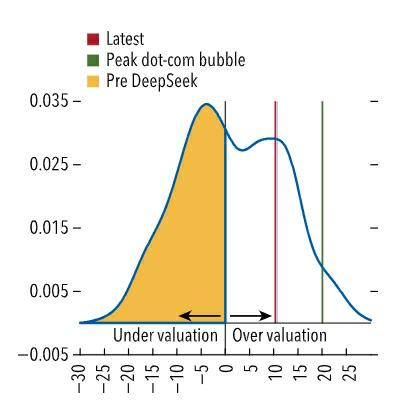
Core Viewpoint - The current asset valuations are significantly higher than fundamentals, increasing the likelihood of disorderly corrections during adverse shocks, as highlighted by the IMF and global financial leaders [1][2][4]. Group 1: Financial Stability Risks - The IMF's Global Financial Stability Report indicates that despite rising trade tensions and geopolitical uncertainties, asset prices have returned to elevated valuations, with financial conditions generally easing [2]. - The interconnectedness of banks and non-bank financial institutions (NBFIs) is increasing, with persistent maturity mismatches that could amplify shocks to the financial system [4][7]. - A recent bankruptcy in the U.S. auto parts sector has exposed potential risks within the burgeoning private credit market, emphasizing the vulnerabilities in the financial system [4]. Group 2: Non-Bank Financial Institutions - NBFIs are becoming increasingly reliant on banks for funding, with banks providing significant loans to various non-bank entities, including mortgage companies and investment funds [7]. - The risk exposure of banks to NBFIs is substantial, with NBFI loans averaging 9% of bank loan portfolios in Europe and the U.S., amounting to approximately $4.5 trillion [7]. - The concentration of risk is particularly high among large regional banks and those with assets under $100 billion, which face greater risk from their exposure to private equity and credit funds [7]. Group 3: Liquidity and Capital Ratios - The IMF warns that if NBFIs encounter difficulties, such as downgrades or declines in collateral value, it could significantly impact banks' capital ratios [8]. - Sensitivity analyses indicate that if NBFI borrowers fully draw on their credit lines, 4% of U.S. banks may lack sufficient liquid assets to meet outflows, potentially leading to negative net liquid assets [8]. - In the Eurozone, the number of banks facing severe liquidity pressures could rise to 5%, while in the U.S., it could increase to 14% under stricter definitions of liquid assets [8].
吉林市政府主要负责同志到中油财务吉林分公司调研
Sou Hu Cai Jing· 2025-09-22 04:42
Core Viewpoint - The meeting held by the mayor of Jilin City, Wang Ji, at the China National Petroleum Corporation Financial Co., Ltd. Jilin Branch emphasizes the importance of financial services in supporting local economic development and the transformation of the petrochemical industry [1][2]. Group 1: Company Overview - China National Petroleum Corporation Financial Co., Ltd. is a non-bank financial institution established with the approval of the People's Bank of China, serving the main business of China National Petroleum [2]. - The Jilin Branch was established in 2008 and has played a significant role in the financial management and services for the petrochemical industry in Northeast China [2]. Group 2: Economic Contribution - The Jilin Branch has provided efficient fund settlement and precise financial services, significantly supporting the transformation and development of the local chemical industry [2]. - The mayor expressed gratitude for the company's long-term support of local economic development and encouraged it to leverage development opportunities to enhance its financial product offerings [2]. Group 3: Future Directions - The company is encouraged to expand its business in settlement, credit, and bills, and to improve the quality and efficiency of its financial services [2]. - Financial regulatory agencies and relevant departments are urged to strengthen communication with the Jilin Branch to support its business operations and enhance the standardization and safety of financial services [2].


存款搬家继续!8月非银存款再增万亿,哪些产品受欢迎?
Sou Hu Cai Jing· 2025-09-12 11:49
Group 1 - The People's Bank of China reported that as of the end of August, the broad money supply (M2) reached 331.98 trillion yuan, with a year-on-year growth of 8.8% [2][6] - The narrow money supply (M1) stood at 111.23 trillion yuan, showing a year-on-year increase of 6%, with a month-on-month acceleration of 0.4 percentage points, marking four consecutive months of growth [2][6] - The phenomenon of "deposit migration" has become a hot topic, with individual deposits increasing by 110 billion yuan in August, although this is still 600 billion yuan less than the same month last year [2][7] Group 2 - In August, new RMB loans amounted to 590 billion yuan, recovering from negative growth in the previous month, but still 310 billion yuan less year-on-year [6] - The analysis indicates that the narrowing "scissors gap" between M1 and M2 growth rates suggests ample market liquidity and increased activity in corporate current funds, but weak credit generation efficiency [6][8] - The increase in deposits at non-bank financial institutions by 1.18 trillion yuan in August, which is 550 billion yuan more than the previous year, highlights the ongoing trend of "deposit migration" [7][8] Group 3 - Factors contributing to the current wave of deposit migration include reduced deposit interest rates, regulatory restrictions on manual interest supplementation, and rising stock market performance [8] - Popular investment products during this period include fixed-income products and equity funds, as they continue to attract significant capital despite the decline in net growth rates of money market and bond funds [9][10]
华阳股份: 山西华阳集团新能股份有限公司关于阳泉煤业集团财务有限责任公司的风险持续评估报告
Zheng Quan Zhi Xing· 2025-08-29 11:44
Core Viewpoint - The report assesses the ongoing financial risks associated with the Yangquan Coal Industry Group Financial Co., Ltd., highlighting its compliance with regulatory requirements and the effectiveness of its risk management practices [1][8]. Group 1: Basic Information of the Financial Company - The financial company was established through the acquisition and restructuring of the original Sihua Group Financial Company, with a registered capital of approximately 122.74 million yuan, representing 6.90% of the total capital [1]. - The financial company is located in Yangquan City, Shanxi Province, and operates under a non-banking financial business license [2]. Group 2: Risk Management Overview - The financial company has established a robust risk management framework, including a board of directors and various committees responsible for risk oversight [2][4]. - A risk management committee is in place to evaluate and supervise risk control measures, ensuring compliance with internal policies and regulatory standards [4][6]. Group 3: Financial Performance - As of June 30, 2025, the financial company reported total assets of 18.02 billion yuan, with a total liability of 13.61 billion yuan, resulting in owner’s equity of 4.42 billion yuan [7]. - The company’s operating income for the first half of 2025 was approximately 196.75 million yuan, with a net profit of about 111.83 million yuan [7]. Group 4: Regulatory Compliance - The financial company meets all regulatory indicators as stipulated by the Enterprise Group Financial Company Management Measures, ensuring its operations are within legal frameworks [8]. - The company has not encountered any significant deficiencies in risk control related to financial reporting, fund management, or credit operations since its establishment [8].

山西焦化: 山西焦化股份有限公司关于对山西焦煤集团财务有限责任公司的风险持续评估报告
Zheng Quan Zhi Xing· 2025-08-25 17:08
Core Viewpoint - Shanxi Coking Coal Group Financial Co., Ltd. is a non-banking financial institution established by Shanxi Coking Coal Group Co., Ltd. and Shanxi Coking Energy Group Co., Ltd., with a registered capital of 3.55 billion RMB, and has undergone a comprehensive risk assessment [1][9]. Group 1: Company Overview - The financial company was established on December 15, 2009, and is located in Taiyuan, Shanxi Province [1]. - The company is jointly funded by Shanxi Coking Coal Group (80% stake) and Shanxi Coking Energy Group (20% stake) [1]. - The financial company has a registered capital of 3.55 billion RMB [1]. Group 2: Organizational Structure - The highest authority of the financial company is the shareholders' meeting, which is supported by a board of directors and a supervisory board [2]. - The board of directors includes several committees: Risk Management Committee, Compensation and Assessment Committee, and Audit Committee [3]. Group 3: Business Scope - The financial company engages in various financial services, including accepting deposits, providing loans, bill discounting, and financial consulting for member units [4]. Group 4: Internal Control - The financial company has established a comprehensive internal control system, including governance structures and internal control measures to ensure effective risk management [4][5]. - The company emphasizes a culture of risk management and regularly conducts internal training to enhance employee skills [4]. Group 5: Financial Performance - As of June 30, 2025, the financial company reported total assets of approximately 45.65 billion RMB and total liabilities of approximately 39.92 billion RMB, with a liquidity ratio of 45.97% and a capital adequacy ratio of 16.97% [7]. - The company achieved an operating income of approximately 572.96 million RMB and a net profit of approximately 283.87 million RMB in the first half of 2025 [7]. Group 6: Risk Management - The financial company has maintained a good risk management status, with no significant risk events reported since its establishment [8]. - The company has established a comprehensive risk management framework to control various types of risks, including credit and liquidity risks [8]. Group 7: Regulatory Compliance - The financial company meets all regulatory requirements as per the "Enterprise Group Financial Company Management Measures" [9]. - The company has not encountered any major issues that could affect its normal operations or financial stability [8][10].

存款搬家持续!7月居民存款减少万亿,非银存款增加超2万亿
Nan Fang Du Shi Bao· 2025-08-13 12:08
Group 1 - As of the end of July, the broad money supply (M2) reached 329.94 trillion yuan, with a year-on-year growth of 8.8% [2][5] - The narrow money supply (M1) stood at 111.06 trillion yuan, showing a year-on-year increase of 5.6%, marking a continuous acceleration for three months [2][5] - The total RMB deposits amounted to 320.67 trillion yuan, reflecting a year-on-year growth of 8.7% [5][6] Group 2 - In July, household deposits decreased by 1.11 trillion yuan, which is a reduction of 780 billion yuan compared to the same month last year [5] - Non-bank financial institutions saw an increase in deposits of 2.14 trillion yuan in July, reaching a near ten-year high and surpassing the level of 1.81 trillion yuan in the same period of 2015 [5][6] - The rise in M1 growth is attributed to multiple factors, including a low interest rate environment, accelerated fiscal spending, and improved cash flow for enterprises [5]
央行:启动2025年度系统重要性金融机构评估工作 稳步拓宽附加监管覆盖范围至非银领域
news flash· 2025-05-09 09:46
Core Viewpoint - The central bank is initiating the assessment of systemically important financial institutions for 2025, aiming to expand additional regulatory coverage to the non-bank sector while enhancing financial risk management and stability measures [1] Group 1: Financial Stability Measures - The central bank plans to actively and prudently prevent and resolve financial risks, exploring the expansion of its macroprudential and financial stability functions [1] - There will be an improvement in the macroprudential policy framework to enhance systemic risk monitoring, assessment, and early warning capabilities [1] - The toolbox for macroprudential policies will be enriched to strengthen the management of systemically important financial institutions [1] Group 2: Regulatory Enhancements - Systemically important banks will be urged to comply with additional capital and leverage ratio requirements, improving the operability and effectiveness of recovery and resolution plans [1] - The assessment work for systemically important financial institutions for 2025 has been initiated, with a steady expansion of additional regulatory coverage to the non-bank sector [1] Group 3: Risk Management and Monitoring - There will be a focus on the orderly resolution of key risk projects and areas, supporting the risk resolution of small and medium-sized banks based on market-oriented and legal principles [1] - Financial risk monitoring, early warning, and assessment will be strengthened, enhancing the judgment of systemic financial risks [1] - The financial stability mechanism will be solidified, promoting the accumulation of deposit insurance funds and financial stability guarantee funds, while reinforcing the specialized financial risk resolution functions of deposit insurance [1]