Optical Communications

Search documents
光通信更新20230331
2026-04-01 09:59
光通信更新 20230331 摘要 光纤行业逻辑由周期转向成长,北美供应短缺促使长协价上涨,中资厂 商开始锁定海外产能。 长飞光纤 2025 年海外收入占比升至 40%,国内运营商依赖度下降,盈 利结构显著优化。 OCS(光路交换)市场空间预期翻倍至 40 亿美元,Polight 预计 2026 年交付 4 亿美元订单。 博创科技 G 客户需求指引连续翻倍,印尼三期工厂预计 2026 年中投产 以匹配高增需求。 源杰科技数通激光器出货达 1,700 万颗,总产能储备达 1 亿颗,客户结 构实现多元化突破。 磷化铟衬底供需极度紧张,Lumentum 预测需求 CAGR 超 85%,产业 链进入持续涨价周期。 DCI 与 1.6T 需求爆发,华工科技在手万只级 3.2T 订单,泰国产能扩张 应对 2026 年上量。 Q&A 请概述近期光通信行业的整体发展趋势以及在光芯片、光纤和 DCI 领域的具体 变化? 近期行业整体感受是订单充裕,产业浪潮正推动所有定位准确、产品和客户到 位的公司前行。具体到细分领域: 在光芯片方面,呈现两大趋势。一是低速率 光芯片,如电信领域的 2.5G 产品,出现了一定的涨价趋势。这主要并 ...
Cramer: CoreWeave's $8.5B Financing Is a ‘Landmark' Deal That AI Investors Can't Ignore
247Wallst· 2026-03-31 15:12
Cramer: CoreWeave's $8.5B Financing Is a 'Landmark' Deal That AI Investors Can't Ignore - 24/7 Wall St. S&P 5006,443.50 +1.48% Dow Jones45,805.80 +1.20% Nasdaq 10023,352.80 +1.73% Russell 20002,460.03 +1.91% FTSE 10010,212.40 +1.30% Nikkei 22551,777.30 +1.47% Stock Market Live March 31, 2026: S&P 500 (SPY) Pops on News Trump Could End War Investing Cramer: CoreWeave's $8.5B Financing Is a 'Landmark' Deal That AI Investors Can't Ignore By Joel SouthPublished Mar 31, 11:12AM EDT Quick Read CoreWeave (CRWV) ...



光最好的时代-寻找斜率最高的方向
2026-03-30 05:15
光最好的时代,寻找斜率最高的方向 20260329 摘要 AI 基建驱动光互联价值占比提升,预计从传统云时代的 3%升至 AI 时代 的 5%,未来有望达 10%,增速将跑赢整体资本开支。 OCS(光路交换)预期显著上调,Lumentum 预计 2027 年相关收入 超 10 亿美元,Coherent 将市场空间预测翻倍至 40 亿美元。 光纤市场由周期转向成长,北美长协价上涨且成本传导顺畅,康宁等供 应紧张促使大客户向中国厂商(如长飞)锁定产能。 磷化铟衬底供需持续紧张,受限于扩产周期长及出口许可,2026 年起 进入涨价通道,利好相关厂商毛利率提升。 DCI 市场景气度高,相干光模块配套部件(小型光放、可调谐激光器) 需求翻倍,产业链厂商需大规模扩产应对。 国产交换芯片渗透加速,盛科、中兴等预计 2026 年推出高速率新产品, 缩短代际差距并切入互联网大厂供应链。 技术路径演进明确,2026 年 CPO、NPO、OCS 等封装变化带来增量, 英伟达积极布局 OCS 于 Spine 层以提升网络弹性。 Q&A 在当前宏观因素影响下,光通信行业为何被视为一个优质且高增长的方向?其 在 AI 基础设施投资中的价 ...
中国通信:CPO 假设重申- 将 TFC 列为核心受益标的-China Communication Infrastructure Update CPO Assumptions Reiterate TFC As Key Beneficiary-
2026-03-26 13:20
Summary of Conference Call Notes Industry Overview - **Industry**: China Communication Infrastructure - **Focus**: Co-packaged optics (CPO) and related components Key Points and Arguments 1. **CPO Total Addressable Market (TAM) Assessment**: - The CPO TAM assessment has been extended to 2028, with forecasts for CPO switch units at 300, 5,000, and 209,000 for 2025, 2026, and 2027 respectively, and a preliminary forecast of approximately 691,000 units for 2028, which includes 100,000 for scale-out and 591,000 for scale-up [1][2][28] - The derived TAM for various components in 2028 is projected to reach Rmb10.4 billion for FAU, Rmb29.6 billion for ELSFP, Rmb89.6 billion for fiber shuffle, and Rmb55.7 billion for fiber tray [1][3][28] 2. **CPO Migration and Product Development**: - The migration to rack-to-rack scale-up is expected to follow a phased approach, with Lumentum anticipating scale-out with spectrum CPO in the second half of 2026 [2][17] - The roadmap aligns with previous expectations regarding supply chain readiness for step-by-step migration [2] 3. **Market Forecasts for Components**: - Forecasts for the FAU/connectors market are Rmb3.9 billion in 2027 and Rmb10.5 billion in 2028 [3] - The ELSFP market is expected to reach Rmb11.2 billion in 2027 and Rmb29.6 billion in 2028 [3] - The fiber shuffle market is projected at Rmb34.3 billion in 2027 and Rmb89.6 billion in 2028 [3] - The fiber tray market is forecasted to be Rmb24.0 billion in 2027 and Rmb55.7 billion in 2028 [3] 4. **Stock Recommendations**: - TFC and USI are preferred stock picks within the CPO chain, with TFC seen as a major player in the Nvidia CPO era [1][4] - A recent pullback in stock prices is viewed as an entry opportunity, with a target price for TFC maintained at Rmb446, based on a 25x multiple of 2027 EPS [4][38] 5. **Investor Sentiment and Concerns**: - Investor feedback indicates mixed views on CPO switch assumptions, with Asian investors finding the 209k unit assumption rational, while US investors consider it aggressive [14] - Concerns include TFC's long-term position with US customers and missed opportunities in the FAU market related to Spectrum CPO [39] 6. **Future Catalysts**: - Anticipation of updates on CPO-related component pricing in late March or early Q2 is seen as a potential positive catalyst [39] - Confirmation of detachable FAU capability could alleviate investor concerns and improve visibility on CPO scale-up adoption in the second half of 2026 [39] Additional Important Information - **Company Performance**: TFC's CPO-related revenue is expected to account for 28% of its mix in 2027 [38] - **Market Dynamics**: The demand for InP optical lane volume is growing at an 85% CAGR, indicating a tight supply situation for optical chips [17] - **Technological Developments**: The introduction of NVIDIA's Kyber and Vera Rubin Ultra systems is expected to significantly impact the CPO landscape [15][17] This summary encapsulates the critical insights from the conference call, focusing on the CPO market dynamics, company forecasts, and investor sentiment.



GTC-OFC总结-光互联-全液冷大时代
2026-03-26 13:20
Summary of Key Points from Conference Call Records Industry Overview - The industry is entering a new era characterized by optical interconnection and full liquid cooling, with the optical communication and liquid cooling sectors being the primary beneficiaries [1][2] Core Insights and Arguments - **Optical Module Demand**: Demand for traditional optical modules is stronger than expected, with Lumentum's 2027 capacity already secured by Google, indicating optimistic market expectations for 800G and 1.6T optical modules [2][1] - **XPO Module Introduction**: The introduction of the XPO module, featuring a rate of 12.8T and a single power consumption of up to 400W, necessitates liquid cooling for each optical module, reinforcing the trend towards full liquid cooling [2][1] - **New Technologies**: Technologies such as NPO, OCS, and CPO are actively advancing, with thin-film lithium phosphate materials gaining attention from optical module companies [2][1] - **Full Liquid Cooling Adoption**: The GTC conference confirmed that future products will adopt a 100% full liquid cooling solution, alleviating market concerns about some new products potentially not using liquid cooling [2][1] Key Developments in Chip and System Architecture - **Rubin System**: NVIDIA introduced the Rubin system, consisting of 7 chips and 5 architectures, set to be mass-produced in the second half of 2026, featuring HBM4 memory with a capacity of 288GB and a bandwidth 2.75 times that of HBM3e [3][4] - **Firman Architecture**: The next-generation GPU architecture "Firman" is designed for world models, utilizing TSMC's 1.6nm process, with a single GPU computing power of 50P and a 5-fold increase in inference performance compared to the previous generation [4][5] Market Expectations and Economic Concepts - **Token Factory Economics**: NVIDIA's "Token Factory Economics" concept emphasizes the importance of token throughput per watt as a core competitive metric, predicting AI chip demand to reach at least $1 trillion by 2027 [5][1] MSA Developments - **XPO, OpenCPX, and OCI**: These three MSAs aim to address core bottlenecks in optical interconnection for AI data centers, with XPO recognized for its innovative density and cooling capabilities, achieving 4 times the bandwidth density of mainstream OSFP optical modules [5][6] NPO and CPO Technologies - **NPO Technology**: Positioned as a mid-term solution for AI computing interconnection, NPO is expected to achieve scale before CPO, with significant reductions in power consumption and increased bandwidth density [7][1] - **CPO Technology**: CPO is gaining momentum, with NVIDIA planning to deploy it starting in 2026, and various companies showcasing CPO solutions at the OFC conference [8][9] OCS Technology - **OCS Commercialization**: OCS technology is moving towards large-scale commercialization, with Google and NVIDIA leading the way, promising significant reductions in latency and power consumption while enhancing bandwidth density [10][1] Hollow Fiber Technology - **Hollow Fiber Advancements**: Hollow fiber technology is transitioning to commercial use, with domestic manufacturers achieving global leadership in key metrics, offering significant bandwidth suitable for large-scale DCI interconnections [11][1]

Corning (GLW) to Showcase New AI-Driven Optical Communication Breakthroughs At the Optical Fiber Communication Conference 2026
Yahoo Finance· 2026-03-25 19:40
Corning Incorporated (NYSE:GLW) is included in our list of the 11 most overvalued companies according to the media. Corning (GLW) to Showcase New AI-Driven Optical Communication Breakthroughs At the Optical Fiber Communication Conference 2026 On March 16, 2026, Corning Incorporated (NYSE:GLW) announced that it will present new AI-driven optical communication breakthroughs at the Optical Fiber Communication Conference and Exhibition 2026, scheduled in Los Angeles in the third week of March. The company in ...

Is Corning Incorporated (GLW) A Good Stock To Buy Now?
Yahoo Finance· 2026-03-24 20:54
Is GLW a good stock to buy? We came across a bullish thesis on Corning Incorporated on r/AIPortfolios by manojs. In this article, we will summarize the bulls’ thesis on GLW. Corning Incorporated's share was trading at $124.58 as of March 20th. GLW’s trailing and forward P/E were 68.08 and 40.00 respectively according to Yahoo Finance. Is GLW a good stock to buy? Corning Incorporated operates in optical communications, display, specialty materials, automotive, and life sciences businesses in the United St ...
中国科技与通信:2026 年 GTCOFC 大会的影响-China Technology Communications Implications from GTC OFC 2026
2026-03-24 01:27
Summary of Key Points from the Conference Call Industry Overview - The conference call primarily discusses the **optical transceiver industry** and the implications of the **GTC and OFC 2026** events on various companies involved in this sector, particularly focusing on **NVIDIA Corp (NVDA)** and its product developments. Core Insights and Arguments 1. **Optical Transceiver Demand**: There is an expected increase in demand for pluggable optical transceivers, with projections of **50-60 million units** for **800G** and **20-30 million units** for **1.6T** in 2026, surpassing previous estimates of **40 million** and **20 million** respectively [12][2][4]. 2. **CPO Adoption**: The **CPO (Co-Packaged Optics)** deployment is anticipated to be hybrid in the **Rubin generations**, with **60%+** of the mix of switches in future generations expected to be CPO [2][7]. This supports a bullish outlook for **CPO** with a projected demand of **209,000** units by 2027 [2]. 3. **NVIDIA's Product Strategy**: NVIDIA's **Vera Rubin** platform is highlighted as a significant advancement, with the combination of **LPX racks** and **Vera Rubin** expected to deliver up to **35x higher TPS per megawatt** compared to previous models, creating new revenue opportunities [28][35]. 4. **Market Dynamics**: The tight supply of optical chips is expected to benefit companies like **DSBJ** and **Eoptolink**, while **WUS** is identified as the largest beneficiary in the LPX rack market [4][1]. 5. **Future Projections**: The **optical AI Total Addressable Market (TAM)** is projected to grow from **$18 billion** in 2025 to over **$90 billion** by 2030, with scale-up accounting for **45%** of the bandwidth in 2030 [9][11]. Additional Important Insights 1. **Supply Chain Perspectives**: Various companies in the supply chain, such as **Lumentum**, expect an **85% CAGR** in InP optical lane volume demand, indicating a persistent supply-demand gap of **30%** [9][12]. 2. **Technological Advancements**: The introduction of **Kyber architecture** is expected to enhance NVIDIA's capabilities in scaling up to **576 GPUs**, with the first deployment anticipated in **2028** [25][23]. 3. **CPO vs. Traditional Transceivers**: Some firms, including **Cisco** and **Celestica**, express a more conservative view on CPO adoption, suggesting a slower industry-wide interest and potential scaling starting from **2028-29** [14][7]. 4. **Hybrid Models**: The hybrid copper+CPO model is seen as a transitional solution until the supply chain is fully prepared for a complete shift to CPO [7][14]. Companies Mentioned - **NVIDIA Corp (NVDA)** - **Lumentum Holdings Inc (LITE)** - **Eoptolink Technology** - **WUS Printed Circuit** - **Celestica** - **Cisco Systems** - **Marvell Technology Inc (MRVL)** - **Astera Labs, Inc (ALAB)** - **Ayar Labs** - **Teradyne Inc (TER)** This summary encapsulates the key points discussed in the conference call, focusing on the implications for the optical transceiver industry and the strategic directions of the companies involved.
GTC-OFC小结-光的新起点
2026-03-24 01:27
Summary of Key Points from the Conference Call Industry Overview - The conference discussed the optical interconnect industry, highlighting the significant growth expected in the coming years, particularly with the introduction of the RubyUltra solution and the 1.6T optical module in 2026, which is anticipated to lead to a substantial increase in demand by 2027, maintaining a high industry boom for 3-5 years [1][2]. Core Insights and Arguments - **Supply Chain Challenges**: The industry is currently facing severe shortages of materials, particularly optical chips and isolators, with some orders locked in as far out as 2030. This has led to a situation where companies may pay premiums for expedited orders due to urgent delivery needs [3][4]. - **Market Growth Projections**: The market for 800G and 1.6T optical modules is expected to grow more than threefold year-over-year in 2026, with potential market size reaching $90 billion by 2028. The industry is projected to grow nearly tenfold from 2023 to 2026, with sustained high growth expected for the next 3-5 years [1][5]. - **Technological Collaboration**: There is a shift from divergent technological routes to collaborative efforts among major players like NVIDIA, Google, and Arista, focusing on enhancing bandwidth density and optimizing costs through coexistence of CPO, NPO, and LPO solutions [1][6]. - **Role of Chinese Companies**: Leading Chinese firms such as Zhongji Xuchuang, Xinyisheng, and Tianfu Communication are transitioning from product supply to standard-setting roles, actively participating in the development of new technologies and standards, indicating their leadership in the optical communication technology revolution [5][6]. Additional Important Insights - **Capital Market Sentiment**: There has been a positive shift in capital market attitudes towards optical communication technologies, with stocks associated with CPO and leading optical module companies showing synchronized performance post-OFC conference, indicating a recognition of their potential to participate in core areas of the market [9]. - **Emerging Technologies**: New materials and technologies, such as silicon photonics and thin-film lithium niobate, are being widely adopted to address supply chain challenges and enhance performance. These innovations are expected to mitigate risks associated with material shortages [10]. - **AI Computing Market Dynamics**: The domestic AI computing market is experiencing a supply-demand imbalance, primarily due to tight core chip supplies. A significant recovery in production is anticipated by Q2 2026, which is expected to alleviate current pressures on supply [11]. This summary encapsulates the critical developments and insights from the conference, reflecting the current state and future outlook of the optical interconnect industry.
Arista XPO白皮书解析
傅里叶的猫· 2026-03-22 13:54
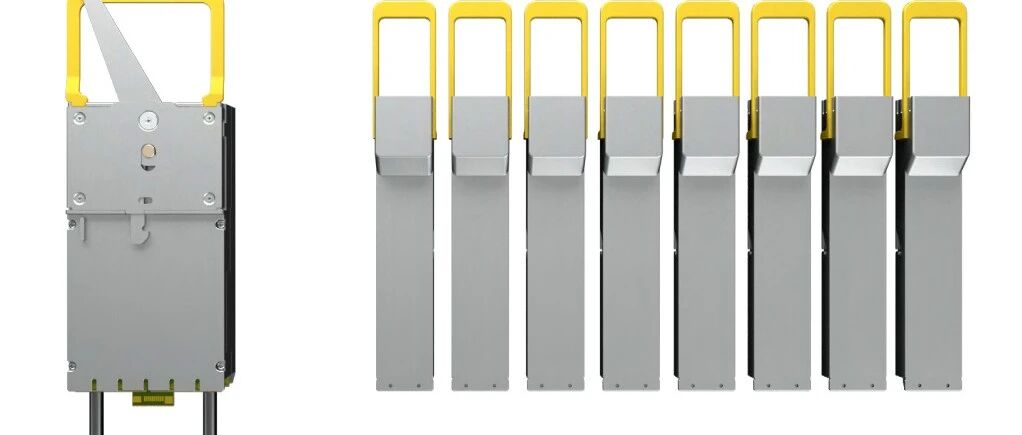
Core Viewpoint - The article discusses the recent developments in optical interconnects for AI data centers, focusing on Arista Networks' XPO architecture, which aims to address the increasing bandwidth demands and operational challenges faced by AI workloads [1][2]. Group 1: Infrastructure Challenges in AI - The scale of AI data centers has surpassed 100,000 GPUs, leading to training costs reaching millions of dollars per task, highlighting the need for a redefined optical interconnect [2]. - Traditional network architectures are struggling to meet the extreme bandwidth requirements of distributed training clusters, necessitating innovative solutions [4]. Group 2: XPO Architecture Overview - XPO is designed to provide both flexibility and a significant increase in density, achieving a single module bandwidth of 12.8Tbps and a front panel density of 204.8Tbps per 1U [5][6]. - Compared to OSFP, XPO's single module bandwidth is eight times greater, and its front panel density is four times higher, while also supporting integrated liquid cooling [6]. Group 3: Innovations in XPO Design - The "belly-to-belly" dual PCB architecture enhances heat dissipation by placing high-power components on the inner side and cooler components on the outer side [9]. - Integrated liquid cooling is a revolutionary feature, allowing the module to handle over 400W of heat, significantly improving thermal management compared to traditional air cooling [11]. - XPO utilizes a 50V high-voltage power supply, reducing current requirements and enhancing system reliability [15][16]. Group 4: System-Level Benefits - In a standard ORv3 liquid-cooled rack, XPO can achieve a total bandwidth of 6.5Pbps, supporting 32 switches, while OSFP only achieves 1.6Pbps with 8 switches [19][22]. - The use of XPO reduces the number of racks needed for large-scale deployments, leading to significant savings in space, power infrastructure investment, and cooling capacity [23]. Group 5: Ecosystem and Future Developments - XPO's development is supported by a broad ecosystem of over 45 partners, ensuring interoperability and competitive pricing through a multi-source agreement [32][33]. - The architecture is designed for continuous evolution, with plans to support 64 channels of 400Gbps in the future, doubling the current bandwidth capacity [35].