
B - 2隐形轰炸机

Search documents
美国政府消息人士:未来几周内爆发战争的可能性高达90%
Xin Lang Cai Jing· 2026-02-20 02:09
Core Viewpoint - The U.S. military is preparing for a potential large-scale bombing operation against Iran, with an increase in fighter jets and support aircraft being deployed to the Middle East [1][2]. Group 1: Military Deployment - A significant number of U.S. fighter jets and aerial refueling aircraft have been observed moving eastward, indicating preparations for military action [2]. - Over 50 U.S. fighter jets, including F-35s and F-16s, were deployed to the region within 24 hours as of the evening of February 17 [2]. - The deployment includes heavy bombers such as B-2 stealth bombers and potentially B-52 bombers, which were previously used in attacks on Iranian nuclear facilities [3]. Group 2: Strategic Intent - Analysts suggest that the increase in military presence may be aimed at clearing the way for heavy bombers to strike key targets in Iran [2]. - The U.S. Vice President indicated that Iran has not recognized the "red lines" set by President Trump, leaving the intent of the military buildup uncertain [6]. - Experts believe that if Iran retaliates, the U.S. has additional air and ground-based combat aircraft ready for defensive operations [7]. Group 3: Timing and Predictions - A U.S. government source stated that the likelihood of war breaking out in the coming weeks is as high as 90% [2]. - An Israeli former intelligence chief predicted that military action could occur within days [2][7]. - The military buildup follows the second round of indirect negotiations between the U.S. and Iran held in Geneva on February 17 [5].
美媒:美国在中东集结的空中力量,达到2003年入侵伊拉克以来之最
Xin Lang Cai Jing· 2026-02-20 02:04
Core Viewpoint - The escalating tensions between the US and Iran have led to significant military preparations by the US, including the deployment of advanced aircraft and naval forces, while diplomatic negotiations continue with limited progress [1][2][10]. Military Preparations - The US is deploying a large number of combat and support aircraft to the Middle East, marking the largest air force buildup in the region since the 2003 invasion of Iraq [1]. - Advanced fighter jets, including F-35 and F-22, are being sent to the region, along with a second aircraft carrier group and critical air defense systems [1][10]. - The US military is prepared for a sustained air campaign against Iran, potentially lasting several weeks, rather than a one-time strike [1][2]. Diplomatic Efforts - US and Iranian representatives have met in Geneva to discuss potential agreements regarding Iran's uranium enrichment, with some progress reported but significant disagreements remaining [2][6]. - Iran has indicated a willingness to compromise on its nuclear program, provided sanctions are lifted, but is unlikely to agree to a complete halt of uranium enrichment [6][12]. Strategic Considerations - The US military has overwhelming advantages over Iran, but Iran possesses a substantial missile arsenal that could target US bases and allies in the region [7][11]. - The US is considering using bases in Diego Garcia and the UK for potential military actions against Iran if diplomatic efforts fail [7][10]. Historical Context - The current military buildup is significant but still less than the forces deployed during the Gulf War in 1991 and the Iraq invasion in 2003, with fewer ground forces available for support [11]. - The lack of international coalition support and restrictions from regional allies like Saudi Arabia and the UAE complicate the US's military options [11].

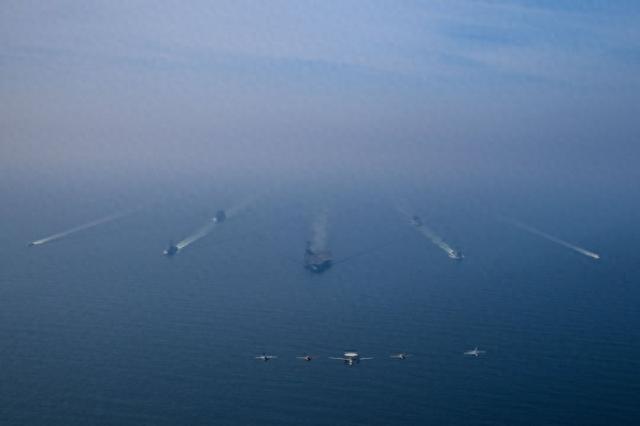
敏感时刻,“美军B-2轰炸机已高度警戒”
Xin Lang Cai Jing· 2026-02-19 16:52
Core Viewpoint - The U.S. is on the brink of military action against Iran, with significant military assets deployed in the region, while diplomatic negotiations continue, highlighting a complex decision-making scenario for the U.S. government [1][2]. Military Deployment - The U.S. has rapidly assembled a large military presence in the Middle East, including numerous refueling aircraft, over 50 fighter jets, and two complete aircraft carrier strike groups [1]. - The USS Ford aircraft carrier is en route to the Mediterranean, expected to arrive by the weekend or early next week, potentially stationed off the coast of Israel for defensive operations [1]. Diplomatic Efforts - Indirect negotiations between the U.S. and Iran took place in Geneva, with Iran's foreign minister stating that both sides reached a consensus on "a set of guiding principles" [1]. - Despite some progress in talks, significant differences remain, and the U.S. administration emphasizes that diplomacy is the preferred option [1]. Israeli Preparedness - Israel's security cabinet has rescheduled a meeting to discuss potential joint military actions with the U.S., preparing for possible significant strikes against Iran [1]. - Israeli officials indicate that military readiness has been heightened, with plans for intense operations to compel Iran to make concessions in negotiations [1]. Risks of Military Action - Analysts warn of substantial risks associated with military action, including potential large-scale missile retaliation from Iran against U.S. and Israeli forces in the region [2]. - The U.S. military has deployed defense systems like the Patriot and THAAD to protect its assets, but the sustainability of a prolonged conflict remains uncertain [2].
美军战斗机正飞往中东!伊朗:国防部队进入全面战备状态 俄罗斯警告美国:后果严重
Hua Xia Shi Bao· 2026-02-19 14:45
Group 1 - The core viewpoint of the articles indicates that the U.S. military is preparing for a potential large-scale bombing operation against Iran, with significant deployments of fighter jets and support aircraft to the Middle East [1][3][8] - Over 50 U.S. fighter jets, including F-35s and F-16s, have been deployed to the Gulf region within 24 hours, suggesting preparations for a military action against Iran [3][5] - Analysts predict that heavy bombers, such as B-2 and B-52, may be used for significant strikes if the U.S. decides to proceed with military action, indicating a potential for sustained military operations lasting several weeks [6][8] Group 2 - The U.S. military buildup follows indirect negotiations between the U.S. and Iran, with uncertainty about whether the troop increase is meant to threaten Iran or compel concessions in nuclear talks [8] - Iranian officials have stated that their defense forces are on full alert, indicating a readiness for potential conflict, and emphasizing the importance of both negotiation and military preparedness [8] - Russia has warned that any new U.S. strikes against Iran could have severe consequences, highlighting the risks associated with military actions in the region [9] Group 3 - The International Atomic Energy Agency (IAEA) has acknowledged progress in U.S.-Iran talks but warns that time is running out for a resolution, indicating the urgency of the situation [10] - The IAEA's director general noted that while there is a willingness to negotiate, the complexity of the discussions poses challenges for reaching an agreement [10]
突发!大批美军战机飞往中东,或为大规模轰炸做准备
Xin Lang Cai Jing· 2026-02-19 07:37
Group 1 - The core viewpoint of the article indicates that the U.S. military is preparing for a potential large-scale bombing operation against Iran, with significant troop and aircraft deployments to the Middle East [1][3][7] - Over 50 U.S. fighter jets, including F-35s and F-16s, have been deployed to the Gulf region within 24 hours, alongside numerous aerial refueling aircraft [3][5] - Analysts predict that the U.S. military buildup, including the approaching "Ford" aircraft carrier strike group and the already deployed "Lincoln" carrier in the Arabian Sea, suggests President Trump is preparing for a sustained military action against Iran [3][5] Group 2 - The role of F-16s and F-35s is to clear the way for heavy bombers to strike primary targets, effectively suppressing enemy air defense systems [5] - Heavy bombers, such as B-2 stealth bombers and possibly B-52s, could be deployed directly from the U.S. mainland or bases in Diego Garcia and Okinawa to target Iran [5] - U.S. military officials have indicated that the military presence allows for a sustained operation against Iran, extending beyond just nuclear-related targets [5][8] Group 3 - The military buildup follows the second round of indirect talks between the U.S. and Iran, with U.S. officials expressing uncertainty about whether the troop increase is meant to threaten Iran or compel concessions in nuclear negotiations [7] - Reports suggest that the U.S. military is prepared for a potential military strike against Iran as early as the upcoming weekend, although President Trump has not made a final decision [7][8] - Iranian officials have stated that their military is in full readiness, indicating a dual strategy of negotiation and preparation for potential conflict [7][8]
美军战斗机正飞往中东
Xin Lang Cai Jing· 2026-02-19 06:35
Group 1 - The core viewpoint of the articles indicates that the U.S. military is preparing for a potential large-scale bombing operation against Iran, with significant troop and aircraft deployments to the Middle East [1][4][8] - Over 50 U.S. fighter jets, including F-35 and F-16, have been deployed to the Gulf region within 24 hours, alongside numerous aerial refueling aircraft, indicating a substantial military buildup [4][6] - Analysts suggest that the deployment of these fighter jets is intended to clear the way for heavy bombers to strike key targets in Iran, with the possibility of B-2 and B-52 bombers being involved in the operation [6][9] Group 2 - The military buildup follows the second round of indirect talks between the U.S. and Iran, with indications that the U.S. may be using this show of force to pressure Iran in nuclear negotiations [8] - Reports suggest that the U.S. military is prepared for a potential military strike against Iran as early as the upcoming weekend, although a final decision from President Trump has not yet been made [8][9] - If military action occurs, it is expected to be a large-scale operation lasting several weeks, potentially involving joint actions with Israel, posing a significant threat to Iran and impacting the entire region [9]
大批战机出动,美国或对伊朗“踹门”
Xin Lang Cai Jing· 2026-02-19 04:58
Core Viewpoint - The U.S. military is preparing for a potential large-scale bombing operation against Iran, with an increase in fighter jets and support aircraft being deployed to the Middle East [1][10]. Group 1: Military Deployment - A significant number of U.S. fighter jets and support aircraft, including F-35 and F-16, have been observed moving eastward, indicating preparations for military action [11][12]. - Over 50 U.S. fighter jets were deployed to the region within 24 hours as of the evening of February 17 [11]. - The deployment includes aircraft that can be launched from the U.S. mainland, Diego Garcia in the Indian Ocean, or bases in Okinawa [13]. Group 2: Strategic Intent - Analysts predict that the deployment is aimed at clearing the way for heavy bombers to strike key targets in Iran, with the possibility of a sustained military operation [11][15]. - The U.S. government has indicated a 90% likelihood of war breaking out in the coming weeks, with an Israeli intelligence official suggesting that strikes could occur within days [11][16]. - The operation may involve heavy bombers such as the B-2 stealth bomber and potentially B-52 bombers, which were previously used in attacks on Iranian nuclear facilities [12]. Group 3: Political Context - The military buildup follows the second round of indirect negotiations between the U.S. and Iran held in Geneva on February 17 [14]. - U.S. Vice President Pence stated that the Iranian regime has not recognized the "red lines" set by President Trump, leaving the intent of the military buildup uncertain—whether it is to threaten Iran or compel concessions in nuclear negotiations [15].
“奥库斯”核潜艇遇阻,澳大利亚或改买B-2隐形轰炸机?
Xin Lang Cai Jing· 2026-02-02 23:10
Group 1 - The AUKUS trilateral security pact, signed by the US, UK, and Australia, involves a $368 billion investment to assist Australia in building a nuclear submarine fleet to counter perceived threats from China, but its implementation is increasingly doubtful [1] - Australia is currently paying the US and UK for the AUKUS agreement, with approximately $4.6 billion already received by the US for enhancing its submarine construction capabilities, and an additional $4.8 billion expected by the UK over the next decade, yet Australia has not received any substantial returns [1] - Experts indicate that the US is unlikely to provide Australia with Virginia-class submarines due to its own shortages, with a backlog of 12 orders and an average production rate of only 1.2 submarines per year, which is insufficient to meet both US and Australian demands [2] Group 2 - The UK is also facing challenges in meeting Australia's submarine needs, with its submarine fleet described as "chaotic" and "precarious," leading to a significant shortage of operational submarines [2] - Defense experts suggest that Australia should consider acquiring B-2 stealth bombers instead of nuclear submarines, as they could provide a more cost-effective and flexible strategic strike capability in the Indo-Pacific region [3] - The Chinese government has expressed opposition to the AUKUS pact, citing concerns over increased nuclear proliferation and an arms race in the region [3]
有限空中打击伊朗?卫星影像曝光,更多美军机“入场”
Huan Qiu Wang· 2026-01-30 10:59
Core Viewpoint - The situation between the U.S. and Iran is escalating, with military preparations and warnings exchanged, indicating a potential for increased military action in the Middle East [1][9]. Military Movements - Recent satellite imagery shows a significant increase in U.S. military presence around Iran, particularly at the Al Udeid Air Base, where the number of KC-135 refueling aircraft has increased [3][4]. - The U.S. Navy has confirmed the deployment of the USS Lincoln aircraft carrier and three Arleigh Burke-class destroyers in the Central Command area, equipped with over 70 aircraft including F-35C and F/A-18E/F [4][5]. Strategic Considerations - Experts suggest that the current U.S. military presence may not be sufficient for a large-scale operation against Iran, indicating that any action might be limited unless Israel participates [5][10]. - The U.S. military's strategy may involve targeted strikes on key Iranian military and nuclear facilities, but operational challenges remain significant due to Iran's fortified positions [10][11]. Iranian Response - Iran has reportedly enhanced its military capabilities, including the integration of 1,000 strategic drones into its armed forces, and has a substantial stockpile of ballistic missiles that could threaten U.S. bases and allies in the region [8][9]. - Iranian leadership has signaled a strong commitment to retaliate against any U.S. military actions, indicating a readiness to target U.S. and Israeli interests directly [11][12]. Geopolitical Context - The U.S. administration's approach to Iran is complicated by the historical context of military engagements, with experts noting that a direct military intervention in Iran would be more complex than previous actions in Venezuela [9][10]. - The U.S. strategy appears to be focused on avoiding prolonged military engagements in the Middle East, as indicated by recent national security reports [12].
突发!美军订购25架B2轰炸机!特朗普再次威胁伊朗,对欧改口“暂时不会加征关税”!美国天然气期货暴涨
Xin Lang Cai Jing· 2026-01-22 00:02
Group 1 - President Trump stated that U.S. inflation has been defeated, with a core inflation rate of 1.5%, and projected a GDP growth rate of 5.4% by Q4 2025, claiming the economy is growing at twice the rate predicted by the IMF [5][24] - Trump mentioned that U.S. oil production has increased by 730,000 barrels per day and that gasoline prices are expected to drop below $2 per gallon [6][25] - The U.S. federal deficit has been reduced by $100 billion, while exports have increased by $150 billion [6][25] Group 2 - U.S. natural gas futures prices surged, with a recent increase of over 30% following a previous day’s rise of over 28% [28][30] - Analysts indicated that the recent spike in overseas natural gas prices is driven by weather factors, with European temperatures expected to turn colder, leading to increased demand for U.S. LNG exports [29] - The U.S. natural gas futures contract closed at $5.099 per million British thermal units, marking a cumulative increase of over 66% in the last three trading days [30] Group 3 - Following Trump's statements, U.S. stock indices rose collectively, with the Dow Jones up by 1.21%, the Nasdaq by 1.18%, and the S&P 500 by 1.16% [32] - International gold prices saw a significant rise, with spot gold reaching $4,808 per ounce, nearing historical highs [33][34] - Multiple institutions forecast that gold prices could reach $5,000 per ounce in the near future, with analysts citing geopolitical tensions as a primary driver for the surge in gold demand [36][37]
