
《三角洲》

Search documents
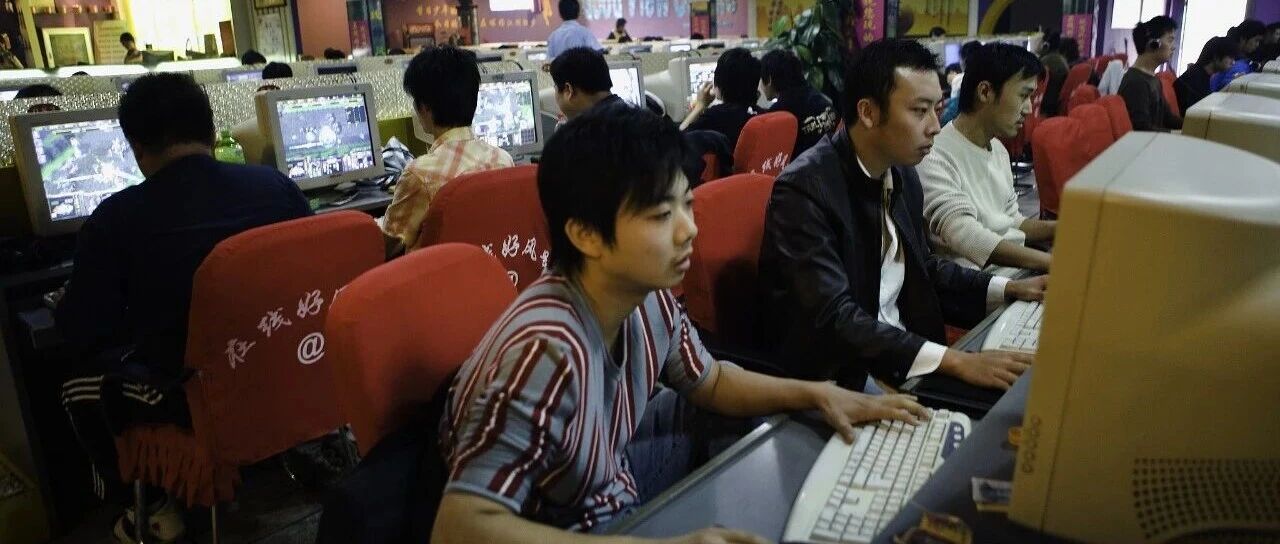
春节带火县城网吧,开网吧又是一门好生意了?
3 6 Ke· 2026-02-21 15:27
Core Insights - The internet café industry in China is experiencing a resurgence, with the number of operating entities expected to reach 122,600 by 2025, a year-on-year increase of 12.68%, and revenue projected to exceed 101.68 billion yuan [2] - The growth in the number of internet cafés, which increased by at least 40,000 in two years, is attributed to a rise in consumer demand post-pandemic and an influx of capital into the sector [4] Industry Trends - The business model of internet cafés is evolving, with new entertainment complexes combining internet cafés with bathhouses and hotels emerging [3] - The demand for internet cafés is driven by economic conditions that encourage consumers to seek affordable entertainment options, as they are perceived as a cost-effective way to enjoy high-end gaming experiences [6][7] User Demographics - The user base of internet cafés is diversifying, with an increase in female gamers from 7.5% to over 10% due to the popularity of cooperative games [7] - The demographic of internet café users is shifting, with a notable increase in users aged 30 and above, rising from 10% in 2012 to over 20% in 2024 [8] Revenue Streams - Many internet cafés are enhancing their revenue by offering additional services such as convenience stores, beverage bars, and dining options, with food and beverage sales accounting for 40% of revenue in urban locations and up to 60% in rural areas [11][12] - The integration of esports hotels is also on the rise, with the number of such establishments expected to reach 29,500 by 2025, marking an 8.86% increase [15] Competitive Landscape - The influx of new competitors has made it more challenging for existing cafés to achieve profitability, with the time to break even extending from one to two years pre-pandemic to two to two and a half years currently [18] - Price competition has intensified, with internet café fees returning to 2015 levels due to the oversaturation of the market [18] Technological Innovations - The emergence of cloud internet cafés, which reduce the need for high-performance hardware on-site, is gaining traction, allowing for lower fixed costs and less frequent equipment upgrades [20][21] - A significant player in this space, Shunwang Technology, is providing services to over 700,000 terminals, indicating a shift towards cloud-based solutions in the industry [21] Social Engagement - Internet cafés are increasingly focusing on social aspects by organizing gaming competitions and collaborating with game developers to offer exclusive in-game content, enhancing user engagement [22][24] - The social environment of internet cafés is a key factor in attracting users, with many patrons visiting in groups for a shared gaming experience [22]


春节假期县城网吧人气旺,网吧又是一门好生意了?
虎嗅APP· 2026-02-19 09:20
Core Viewpoint - The article discusses the resurgence of internet cafes in China, highlighting their transformation into affordable entertainment options amidst economic adjustments, with a projected growth in the number of cafes and revenue by 2025 [6][7]. Group 1: Industry Growth and Changes - By 2025, the number of internet cafes in China is expected to reach 122,600, a year-on-year increase of 12.68%, with revenue surpassing 101.68 billion yuan [6]. - The industry has seen a significant recovery post-pandemic, with at least 40,000 new cafes opening in two years and over 100,000 new employees added in one year [6]. - The emergence of hybrid entertainment complexes combining internet cafes with other services like bathing and hotels is becoming increasingly common [6]. Group 2: Demand Drivers - The demand for internet cafes is rising as they offer a low-cost entertainment option during economic downturns, appealing to consumers who are cutting back on high-end spending [11]. - The popularity of computer games, particularly titles like "Black Myth: Wukong" and "Delta" in 2025, has revitalized interest in internet cafes, attracting a diverse player base, including an increase in female gamers from 7.5% to over 10% [12][14]. - The demographic of internet cafe users is shifting, with an increase in users over 30 years old from 10% in 2012 to over 20% in 2024, and longer usage times reported [14]. Group 3: Business Model and Revenue Streams - Internet cafes are diversifying their revenue streams by offering additional services such as small supermarkets, beverage bars, and dining options, with food and beverage sales accounting for 40% in urban areas and up to 60% in rural areas [17][18]. - High-end internet cafes are emerging, featuring advanced equipment and premium services, with some charging over 10,000 yuan for high-end rooms [19]. - The number of esports hotels is also on the rise, with 29,500 expected by 2025, reflecting a growing trend in combining internet cafes with hospitality services [20]. Group 4: Competitive Landscape and Challenges - Despite the growth, the return on investment for new cafes has become more challenging, with payback periods extending to two to two and a half years due to increased competition [22]. - The influx of new competitors has led to price reductions, with internet cafe fees returning to 2015 levels after a period of increases during the pandemic [22]. - The emergence of cloud internet cafes, which reduce equipment costs by utilizing cloud servers, is changing the operational landscape, with companies like Shunwang Technology providing services to over 700,000 terminals [25][26]. Group 5: User Engagement and Community Building - Internet cafes are enhancing their social aspects by organizing gaming competitions and collaborating with game developers to offer exclusive in-game content, fostering community engagement [27][28]. - The appeal of internet cafes lies in their ability to provide a unique social experience and high-value gaming environments, catering to users seeking immersive experiences [28].
华泰证券今日早参-20251218
HTSC· 2025-12-18 02:02
Group 1: Macroeconomic Insights - The marginal recovery in broad fiscal expenditure indicates resilience in the economy, with a year-on-year decline in November's fiscal expenditure narrowing from 19.1% in October to 1.7% [2] - The adjusted broad fiscal expenditure (seasonally adjusted) showed a month-on-month increase from 15% in October to 33% in November, reflecting credit expansion driven by policy financial tools and local government debt issuance [2] Group 2: Fixed Income Market - The report highlights four main pathways through which overseas macro events influence the domestic market, including economic drivers, geopolitical factors, AI industry trends, and global liquidity [4] - Despite a dovish signal from the Federal Reserve, there is a concentration of consensus trades in "long AI technology + long industrial metals + short USD," leading to increased market volatility [4] Group 3: Company-Specific Developments - China International Capital Corporation (CICC) plans to absorb and merge with Dongxing Securities and Xinda Securities through a share swap, which is expected to increase net capital by 105% and enhance business synergies [5] - Tencent's gaming division is leveraging AI to enhance game development and operational efficiency, with a focus on "Games as a Service" (GaaS) to strengthen competitive advantage [6] - Pony.ai reported a revenue of $25.44 million for Q3 2025, a 72% year-on-year increase, driven by the positive impact of Guangzhou's single-vehicle operational efficiency [7]


A股传媒25Q3总结:游戏仍加速,分众毛利率回到峰值
Shenwan Hongyuan Securities· 2025-11-05 10:12
Investment Rating - The report indicates a positive investment outlook for the gaming sector, highlighting its strong performance compared to other sub-industries within the media sector [3][4]. Core Insights - The A-share media sector reported an 8.2% year-on-year revenue growth and a 59.8% increase in net profit attributable to shareholders in Q3 2025, with significant differentiation among sub-industries [3][4]. - The gaming industry showed remarkable growth, with a 28.6% year-on-year revenue increase, marking six consecutive quarters of accelerating revenue growth and achieving a profit margin of 19.0%, the highest quarterly level since 2022 [3][4]. - The external environment for gaming continues to improve, with an increase in the average monthly number of domestic game approvals and relaxed third-party payment policies from platforms like Google and Apple, which are expected to enhance channel cost efficiency [3][6][10]. - The advertising sector, particularly focusing on Focus Media, has seen substantial growth in internet advertising spending, leading to improved profit margins and a return to historical highs in gross margins [3][4]. - The publishing sector has shown mixed results, with some state-owned publishing groups experiencing significant profit growth while others face challenges due to changes in educational material subscription methods [3][4]. Summary by Sections Gaming Sector - The gaming sector's revenue in Q3 2025 grew by 28.6% year-on-year, with a profit margin of 19.0%, the best performance since 2022 [3][4]. - Domestic PC game sales increased by 20% year-on-year, driven by titles like "Dream" and "Delta" [11]. - Key companies to watch include ST Huatuo, Giant Network, and Jiubite, which have shown significant growth [3][4][19]. Advertising Sector - Focus Media has optimized its cost structure, leading to a gross margin that has reached historical highs [3][4]. - Future observations will focus on the elasticity of internet advertising spending and the impact of new partnerships and acquisitions [3][4]. Publishing Sector - The performance of state-owned publishing groups varies, with some recovering from previous declines while others continue to face challenges [3][4]. - The overall trend indicates a need for adaptation to changing market conditions and consumer demands [3][4]. Long Video Sector - Mango TV is at a critical juncture, with expectations for operational improvements as policy support strengthens [3][4]. - The focus will be on innovative IP operations and product cycles in the coming years [3][4].






国庆游戏高频数据亮眼,《黑神话:悟空》迎来更新优化,聚焦游戏ETF(159869)布局机会
Mei Ri Jing Ji Xin Wen· 2025-10-13 02:36
Group 1 - The gaming sector experienced a slight decline in early trading on October 13, with the gaming ETF (159869) dropping to around 1.5% [1] - As of October 10, the gaming ETF (159869) saw a net inflow of funds amounting to 2.102 billion yuan over the past five trading days, indicating strong investor interest [1] - The product size of the gaming ETF reached 10.936 billion yuan, facilitating investors' access to leading A-share gaming companies [1] Group 2 - On October 12, the official announcement of the game "Black Myth: Wukong" revealed an update aimed at performance optimization and bug fixes, set to be released on October 13 across platforms [1] - The update is intended to enhance player experience and strengthen the game's reputation and longevity, highlighting the importance of ongoing maintenance for AAA titles in the gaming industry [1] - Investors are likely to place greater value on companies capable of continuous content updates and technological iterations, shifting the competitive focus towards the full lifecycle operation of products [1] Group 3 - Citic Securities released a report indicating that the typical peak seasons for gaming are during summer and winter vacations, but this year, the National Day and Mid-Autumn Festival holidays showed strong performance in tourism and dining [2] - Several games, including "Delta," "Dream of the Westward Journey," and "Supernatural," achieved daily revenue during the holidays that was approximately 50% higher than the average daily revenue during the summer [2] - The gaming sector is experiencing multiple catalysts for transformation, including AI, content, and commercialization models, with the gaming ETF (159869) tracking the performance of the A-share listed companies in the animation and gaming industry [2]