《十三邀》

Search documents
许知远:描述世界令人兴奋,亦心力交瘁 | 我们的四分之一世纪
Jing Ji Guan Cha Bao· 2025-12-17 11:03
Core Insights - The article discusses the evolution of Xu Zhiyuan's thoughts and practices over the past 25 years, emphasizing the importance of time and context in shaping ideas and beliefs [4][5][9] - It highlights the shift from being an observer to a practitioner, reflecting on the need for deeper engagement with contemporary issues and personal experiences [5][8][10] Group 1: Time and Context - Xu emphasizes the power of time and how ideas are embedded in specific historical contexts, questioning how contemporary Chinese perspectives should evolve [5][6] - The transition from a media-centric approach to a more practical engagement with society is noted, as Xu seeks to connect personal beliefs with the realities of modern life [5][8] Group 2: Media and Public Engagement - The establishment of "One Way Street Library" and the subsequent success of the interview program "13 Invitations" illustrate Xu's journey from a media figure to a public intellectual [6][7] - The program's evolution from elite-focused content to a broader appeal reflects changes in societal discourse and Xu's desire to understand diverse life experiences [7][8] Group 3: Knowledge and Identity - Xu observes a fundamental shift in the role of intellectuals, noting their marginalization in favor of commercial and technological leaders, which has led to a fragmented societal structure [13][14] - He encourages the younger generation to seek unique personal experiences and form small communities to solidify their values amidst increasing organizational control [14][15] Group 4: Historical Reflection and Future Aspirations - Xu's writing on historical figures like Liang Qichao represents a deep dive into the past, aiming to counteract the superficiality often found in modern media [10][11] - His ongoing writing projects reflect a commitment to exploring complex narratives and maintaining a critical perspective on contemporary issues [16]
许知远:描述世界令人兴奋,亦心力交瘁 | 我们的四分之一世纪
经济观察报· 2025-12-17 10:15
Core Viewpoint - The article discusses the evolution of thought and practice in the context of societal changes, emphasizing the importance of individual experience and the need for a new collective narrative in contemporary China [4][9][19]. Group 1: Time and Practice - Time is portrayed as a powerful force that shapes individual experiences and societal contexts, with the author reflecting on how his understanding of concepts has evolved over the years [4][5]. - The transition from being an observer to a practitioner is highlighted, indicating a shift in the author's approach to understanding and engaging with the world [5][9]. - The establishment of the "Single Direction Library" and the subsequent media projects, such as the interview program "Thirteen Invitations," illustrate the author's efforts to create a public space for intellectual and cultural exchange [8][9]. Group 2: Change and Blind Action - The article notes that time brings about changes, and not all changes are positive, as the author grapples with the complexities of modern identity and societal roles [10][11]. - The concept of "blind action" is explored, suggesting that in times of uncertainty, such actions can sometimes lead to revitalization and creativity [12][15]. - The author reflects on the historical context of intellectuals and their diminishing influence in contemporary society, likening them to "guerrilla fighters" facing overwhelming forces [19]. Group 3: Generational Perspectives - The article discusses the generational shift in attitudes towards globalization and local identity, with younger generations seeking to establish their unique experiences in contrast to the previous generation's embrace of the global [20]. - The notion of "strange freedom" is introduced, emphasizing the need for patience and the understanding that creativity may take longer to manifest in today's context [20]. - The author argues that the coexistence of global and local perspectives is essential, suggesting that understanding one's roots can be enhanced through global experiences [20]. Group 4: Ongoing Inquiry - The article concludes with the idea that the most valuable aspect of the current humanistic attitude is the ability to maintain inquiry and engage in continuous dialogue and action, rather than seeking absolute truths [21]. - The author's ongoing writing projects reflect a commitment to exploring historical figures and their relevance to contemporary issues, indicating a desire to contribute to the collective narrative [21].


弱者着相,强者破相,智者无相(深度好文)
洞见· 2025-11-18 12:35
Core Viewpoint - The article emphasizes the importance of emotional control and wisdom in handling life's challenges, illustrating that those who can manage their emotions are more likely to succeed and avoid unnecessary conflicts [4][14][70]. Group 1: Weakness and Emotional Traps - The story of a shopkeeper who reacts impulsively to a street officer's comments leads to severe consequences, highlighting that uncontrolled emotions can result in self-inflicted harm [8][12][14]. - Historical examples, such as the ruler Zhu Zhuanggong, demonstrate how quick anger can lead to tragic outcomes, reinforcing the idea that emotional reactions can cloud judgment and lead to regret [16][22][24]. - The article suggests that those who cannot control their emotions are destined to suffer and struggle throughout their lives [27]. Group 2: Strength and Problem-Solving - The narrative of Zhu Di, who feigned madness to survive political threats, illustrates that strong individuals focus on resolving issues rather than being swayed by emotions [32][34][47]. - Lin Zexu's story emphasizes the importance of emotional restraint in leadership, showing that maintaining composure can lead to effective problem resolution [40][44][46]. - The article concludes that strong individuals live in the realm of problem-solving rather than being trapped by their emotions [47][48]. Group 3: Wisdom and Detachment - The experiences of writer Xu Zhiyuan, who remains unfazed by criticism, highlight that wise individuals understand the futility of emotional reactions to external judgments [52][56]. - The story of painters Jin Dongxin and Wang Zheng illustrates that true wisdom lies in not reacting to slights, as demonstrated by Jin's graceful handling of Wang's insults [58][70]. - The article advocates for cultivating a peaceful mind and focusing on self-improvement rather than being affected by external circumstances [72][75].

下一代核心商业媒体,应该是视频播客
乱翻书· 2025-11-02 13:19
Group 1 - The core viewpoint is that video podcasts may serve as a cost-effective alternative to traditional long-form content and variety shows, allowing platforms to allocate resources more efficiently while still providing engaging content for users [2][4] - The content supply model is shifting from "platform star-making" to "creator-driven content," with platforms acting more as curators rather than producers [3][5] - The next generation of core commercial media is likely to be led by top video podcasts, with a focus on deep engagement through targeted content rather than traditional media outlets [4][6] Group 2 - The trend in the U.S. shows that founders and investors are increasingly using podcasts as a direct communication channel, eliminating intermediaries and requiring leaders to engage authentically with audiences [5][7] - The challenges for podcast hosts include the need for in-depth knowledge and the ability to engage in meaningful discussions, which raises the bar for content quality [8][9] - The evolution of content consumption is driven by social media and recommendation algorithms, leading to a decentralization of traditional media authority [8][10] Group 3 - Podcasts should evolve to engage users visually and interactively, moving beyond audio-only formats to enhance user experience and retention [9][12] - The distinction between U.S. and Chinese podcasting landscapes highlights different user engagement strategies, with China leaning towards short video and live streaming formats [13][14] - The integration of video podcasts into existing platforms may reshape the content landscape, potentially attracting new participants to the podcasting space [14][15]
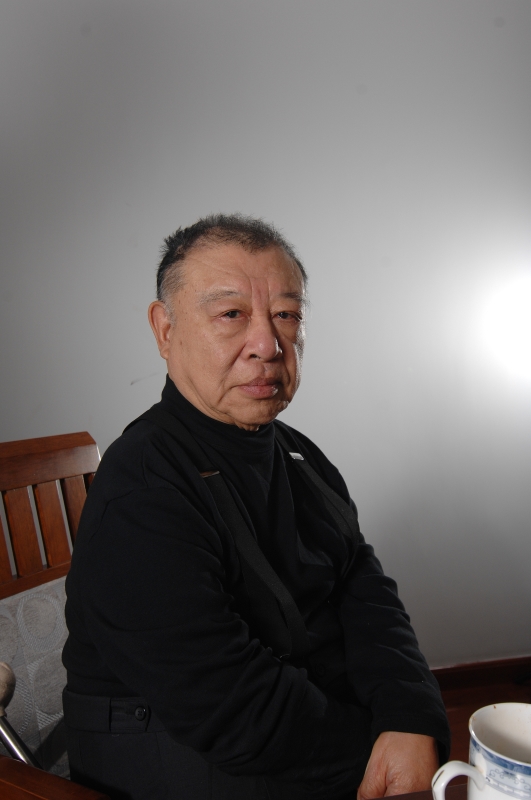
历史学家许倬云去世,一生的归属是历史上永远不停的中国
Di Yi Cai Jing· 2025-08-08 02:47
Core Viewpoint - Xu Zhuoyun, a prominent historian, passed away at the age of 95, leaving behind a legacy of optimism and a deep connection to his homeland despite a life marked by war and political turmoil [1][2]. Group 1: Personal Background and Legacy - Xu Zhuoyun lived in the United States for over 60 years and was known for his emotional responses when discussing historical events, particularly the Anti-Japanese War [4][5]. - He authored numerous works, including "The History of the Western Zhou" and "The Spirit of Chinese Culture," and continued to publish even in his 90s [1][10]. - His experiences during the Anti-Japanese War profoundly influenced his historical perspective, focusing on the lives of ordinary people [10][11]. Group 2: Educational Influence - Xu Zhuoyun served as a mentor to notable figures, including writer Wang Xiaobo, fostering a free and open dialogue about various subjects beyond strict academic boundaries [12][13]. - His teaching style emphasized the importance of understanding history and culture, which left a lasting impact on his students [12][13]. Group 3: Final Years and Reflections - In his later years, Xu Zhuoyun remained engaged with contemporary issues, addressing the challenges faced by younger generations and emphasizing the importance of moral integrity [15][16]. - His last works were inspired by global events, including the COVID-19 pandemic, and he sought to provide insights on how China could contribute positively to the world [15][16].
对话腾讯视频尤里卡:流量逻辑不会侵蚀纪录片内核|独家
Tai Mei Ti A P P· 2025-06-23 11:36
Group 1 - The core focus of the Eureka studio is to produce humanistic documentary content, with notable projects like "Thirteen Invitations" and "Tidal Current" that explore societal and commercial themes [2][3][10] - "Tidal Current" Season 2 addresses five major business topics, including overseas manufacturing and cross-border e-commerce, reflecting the challenges faced by Chinese entrepreneurs [3][4] - The studio aims to balance artistic integrity with commercial viability, relying on traditional advertising models to sustain operations within a large ecosystem like Tencent [4][21][26] Group 2 - The documentary industry faces challenges due to high production costs and long cycles, making it difficult to attract a broad audience [4][20] - The shift from traditional media to digital platforms has changed audience consumption habits, leading to a decline in humanistic documentary production by traditional broadcasters [20][21] - The studio's approach includes adapting to advertisers' needs and aligning content creation with commercial cycles, which is essential for maintaining financial sustainability [21][25][26] Group 3 - The studio recognizes the importance of storytelling in documentaries, emphasizing that deep narratives can generate significant audience engagement [7][12] - Collaborations with well-known figures like Li Xiang enhance the credibility and appeal of the content, allowing for a more profound exploration of commercial stories [15][16] - The studio's content strategy focuses on addressing contemporary issues and fostering intellectual engagement among viewers, targeting a niche audience that values thoughtful discourse [17][28]