三星Galaxy S26系列

Search documents
手机厂商,集体涨价
财联社· 2026-03-18 11:44
Core Viewpoint - The smartphone industry is facing significant challenges due to insufficient demand and soaring raw material costs, leading to price increases by various brands as a necessary response to cover rising costs [1][2][9]. Price Increase Overview - Brands like OPPO and vivo have officially announced price adjustments due to rising costs of key components, with OPPO increasing prices on certain models by 500 yuan and vivo planning similar adjustments [3][5]. - The price increase for low-end models ranges from 200 to 500 yuan, while new high-end models may see increases around 1000 yuan [1][6]. Impact on Low-End Models - The price hikes for low-end models are unlikely to fully cover the increased costs, with many manufacturers facing potential short-term losses [2][9]. - According to Counterpoint, the BOM cost for low-end smartphones is expected to rise significantly, making it difficult for manufacturers to maintain profitability [9][10]. Manufacturer Strategies - Manufacturers are diversifying their procurement strategies in response to rising costs, with larger brands securing direct supply agreements while smaller brands rely on ODMs [13][14]. - There is a shift in focus towards high-end products, with brands reducing their low-end offerings to mitigate losses [12][15]. Market Trends and Production Adjustments - The overall smartphone production is projected to decline due to increased costs, with estimates suggesting a drop of about 10% in global smartphone production by 2026 [16][17]. - Companies like Xiaomi and OPPO have already begun adjusting their production volumes in anticipation of rising storage prices [17].



千元机快要消失了
21世纪经济报道· 2026-03-10 06:55
Core Viewpoint - The article discusses the rising prices of smartphones due to increasing costs of key components, particularly storage chips, and how this trend is affecting various manufacturers in the industry [1][4][10]. Group 1: Price Adjustments by Manufacturers - OPPO announced a price adjustment for certain models, specifically the A and K series, starting from March 16, 2026, due to rising costs of key components [1][4]. - Other manufacturers, including Samsung, have also raised prices, with the Galaxy S26 series seeing an increase of 1000 yuan compared to its predecessor [6][10]. - The price hikes are primarily affecting lower-priced models, indicating that the cost pressures are most significant in the budget segment of the market [4][10]. Group 2: Impact of Storage Chip Prices - The continuous rise in storage chip prices is expected to lead to a contraction in the smartphone market, with predictions of a significant drop in shipments for budget models [4][9]. - The price of storage chips has reportedly increased to nearly four times the price from the previous year, creating substantial pressure on manufacturers [7][10]. - Analysts predict that the storage market is entering a "super bull market," with prices expected to rise by 40% to 50% in the coming years, further straining the smartphone industry [8][15]. Group 3: Strategic Responses from Manufacturers - Manufacturers are likely to respond to rising costs by reducing product specifications or delaying new releases, particularly in the budget segment [9][13]. - Companies like Xiaomi and Meizu are exploring partnerships and adjusting their product strategies to cope with the increased costs of components [7][13]. - The trend of rising prices and reduced specifications may lead to a "survival of the fittest" scenario in the smartphone market, with weaker brands facing significant challenges [11][15].

内存涨价“逼停”魅族手机
Guo Ji Jin Rong Bao· 2026-02-27 12:41
Core Viewpoint - Meizu Technology has announced a strategic transformation, denying rumors of bankruptcy and business suspension, while indicating a fundamental shift in its mobile business model by seeking third-party hardware partnerships [1][4]. Group 1: Company Background - Meizu, founded in 2003 by Huang Zhang, initially gained recognition in the MP3 market before transitioning to high-end smartphones in 2008 with the launch of its first smartphone, Meizu M8 [3]. - At its peak, Meizu's annual sales exceeded 20 million units, competing with major brands like Huawei, Xiaomi, and OPPO [4]. Group 2: Recent Challenges - Since 2016, Meizu has faced multiple crises, including a patent infringement lawsuit from Qualcomm, product quality issues, and the departure of key personnel, leading to a rapid decline in market share [4]. - In 2022, Meizu was acquired by automotive giant Geely and merged into Xingji Meizu, with ambitions to return to the top five in the domestic mid-to-high-end market within three years [4]. Group 3: Market Conditions - The smartphone market is experiencing intense competition, with rising component prices, particularly memory, exacerbating the challenges for non-mainstream brands [4][5]. - The announcement highlights the impact of soaring memory prices on product commercialization, with Meizu's plans for new products being significantly affected [5]. Group 4: Strategic Shift - Meizu is shifting its focus from hardware-driven development to AI-driven software products, aiming to enhance its Flyme software ecosystem for broader applications across various industries [5]. - The company reported that Flyme Auto achieved over 2.26 million units in 2025, aiming for 3 million units in collaboration with Geely in 2026 [6]. Group 5: Product Continuity - Despite the strategic shift, Meizu's mobile phones, AI glasses, and PANDAER products will continue to be sold, with existing services and support for current users remaining unchanged [6].
三星Galaxy S26系列正式发布:Ultra版首次引入内置式“防窥显示屏”
Xin Lang Cai Jing· 2026-02-25 23:54
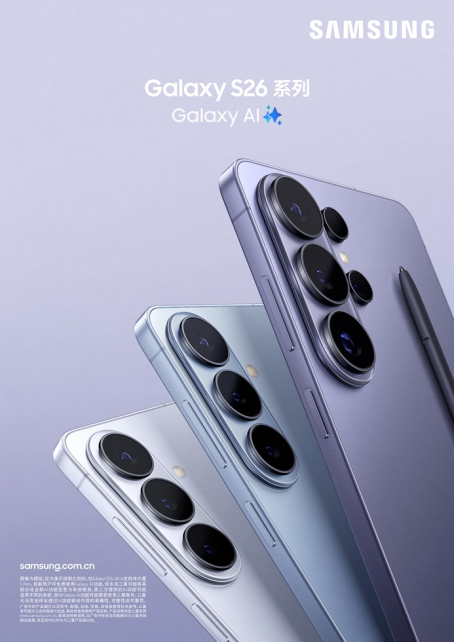
Core Insights - Samsung Electronics has officially launched its third-generation AI smartphone, the Galaxy S26 series, which aims to simplify user operations and enhance daily life through advanced AI capabilities [1][23]. Performance and Hardware - The Galaxy S26 series features the most powerful hardware configuration in the Galaxy S lineup, equipped with a custom chip optimized for AI performance, energy efficiency, and thermal management [4][25]. - The Galaxy S26 Ultra is powered by the fifth-generation Snapdragon 8 mobile platform, with significant performance improvements: CPU performance increased by 19%, NPU performance by 39%, and GPU performance by 24% [4][26]. Display Technology - The Galaxy S26 Ultra introduces an integrated anti-peep display, enhancing user privacy without compromising viewing quality [3][25]. - Samsung's proprietary display technologies have been integrated into the processor, improving overall visual performance, including a fourfold increase in image processing precision compared to the previous generation [6][28]. Imaging System - The Galaxy S26 series emphasizes ease of use in content creation, integrating shooting, editing, and sharing into a seamless process [7][29]. - The S26 Ultra features a larger lens aperture for better low-light performance and enhanced video stabilization capabilities [7][31]. AI Features - The Galaxy AI in the S26 series actively assists users by reducing manual operations and providing contextual support [11][33]. - The upgraded Bixby allows for simplified task management through voice commands, enhancing user interaction with the device [12][34]. Security and Privacy - Samsung has embedded security mechanisms throughout the Galaxy S26 series, including an anti-peep display and AI-driven call screening to protect user data [13][35]. - The series promises long-term security updates for up to seven years, ensuring ongoing protection for users [18][40]. Availability and Design - The Galaxy S26 series is available in multiple color options and is set to launch on February 26, 2026, with pre-order benefits for early customers [22][43]. - Samsung Care+ offers tailored support services for users, including screen replacement and extended warranty options [22][43].
新浪财经隔夜要闻大事汇总:2026年2月26日
Xin Lang Cai Jing· 2026-02-25 23:45
Market - US stock market closed higher for the second consecutive day, with AI concept stocks rising broadly. The Dow Jones, Nasdaq, and S&P 500 all increased. Nvidia and Salesforce are set to release earnings reports, leading investors to reassess tech stock valuations amid concerns about the sustainability of AI capital expenditures. Nvidia's stock rose, but its recent performance has been poor, raising market concerns about AI spending being unsustainable. Some investors believe current market fears are excessive [2][4][5] Company - Nvidia reported fourth-quarter earnings that exceeded expectations, with core data center revenue growing 75% year-over-year, becoming a major driver. Adjusted earnings per share and total revenue also surpassed expectations, with net profit nearly doubling. The company expects first-quarter revenue of $78 billion, significantly outperforming other large tech stocks this year [25][26] - Microsoft shares rose 2.98% despite facing an antitrust investigation by Japan for potential unfair competition in the cloud services market [55] - Salesforce's fourth-quarter revenue was $11.2 billion, a 12% year-over-year increase, marking the fastest growth in two years. However, the company's guidance for fiscal year 2027 indicates a growth of only 10%-11%, which is below Wall Street's expectations. Salesforce has allocated $50 billion for stock buybacks [31] - Samsung launched its Galaxy S26 series, with prices increasing by $100 for two models. The average smartphone price is expected to rise by 6.9% in 2026 due to a shortage of storage chips [22] - Ctrip reported a 60% year-over-year increase in international OTA bookings for Q4 2025, serving approximately 20 million inbound tourists throughout the year [29]






三星Galaxy S26系列发布,两款机型涨价100美元
Mei Ri Jing Ji Xin Wen· 2026-02-25 21:45
Core Viewpoint - Samsung Electronics has launched its latest flagship smartphone series, with two models seeing a price increase of $100 compared to the previous generation, amid a global shortage of storage chips driven by rapid expansion in AI infrastructure [1] Pricing Summary - The top model, S26 Ultra, maintains the same starting price as the previous S25 series, while the S26 and S26+ have increased by $100: Galaxy S26 starts at $899; Galaxy S26+ starts at $1,099; Galaxy S26 Ultra starts at $1,299 [1] Industry Context - The smartphone industry is currently facing challenges due to a global shortage of storage chips, which is impacting production and pricing strategies [1] - The shortage is attributed to the rapid expansion of AI infrastructure, which is increasing demand for storage solutions across the industry [1] Product Features - Samsung is emphasizing upgraded AI features and privacy display screens in its new smartphone models [1]
三星Galaxy S26系列发布:AI三引擎融合+隐私屏首发,两款机型涨价100美元
Xin Lang Cai Jing· 2026-02-25 21:15
Core Insights - Samsung Electronics has launched its latest flagship smartphone series, with two models priced $100 higher than their predecessors, amid a global storage chip shortage impacting the industry [1][9] - The average smartphone price is projected to increase by 6.9% by 2026 due to the storage chip shortage, as reported by Counterpoint Research [1][9] - The S26 Ultra's starting price remains the same as the previous S25 series, while the S26 and S26+ have seen a price increase of $100 [1][9] Product Features - The S26 series is Samsung's third generation of "AI phones," featuring faster processing chips and AI tools for photo editing and document scanning [3][11] - A standout feature of the S26 Ultra is its privacy display, which controls pixel illumination to limit side-angle visibility, claimed to be a global first [3][11] - The S26 integrates three independent AI engines: Google Gemini for task execution, Perplexity for web-based queries, and an upgraded Samsung Bixby as a more powerful on-device assistant [12] Market Dynamics - The storage chip shortage is expected to persist until 2027 or early 2028, driven by rapid AI infrastructure expansion diverting chip supply from smartphones and other consumer electronics [7][14] - Storage chip prices have doubled in the past two quarters, affecting broader global industries [14] - Samsung is diversifying its supplier base to mitigate risks associated with the storage chip shortage, reflecting a strategic shift in the industry [5][14]
三星Galaxy S26系列上手速报|硬件级防窥真机首秀
Xin Lang Cai Jing· 2026-02-25 18:29
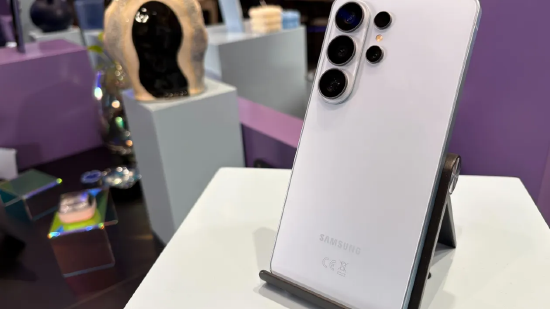
Core Insights - The introduction of hardware-level privacy screen technology enhances user security by providing clear visibility from the front while obscuring views from the sides [2] - The camera system features a 200 million pixel main camera along with dual telephoto lenses, significantly improving the device's capabilities for capturing live events [2] - New AI functionalities, including AI podcasting, smart copywriting, and instant search features, are introduced to enhance user experience [2] - Different models are available to cater to various user preferences: the S26 for compact users, the S26+ for balanced performance, and the Ultra for flagship experience seekers [2]
8点1氪丨凌晨3点候补成功致千元车票作废,12306回应;油价迎来年内第三次上涨;大疆起诉美国联邦通信委员会
3 6 Ke· 2026-02-25 00:07
Group 1 - The core issue of the news revolves around the recent price adjustments in various sectors, including oil prices and luxury vehicles, indicating market trends and consumer behavior [2][5][7]. - DJI has filed an appeal against the FCC's decision to list its products as a security risk, aiming to protect its consumer base in the U.S. [3]. - Major tech companies like Baidu, Tencent, and Xiaomi have introduced new employee benefits in the form of "red envelopes" for the Lunar New Year, reflecting a trend in employee engagement and corporate culture [4][6]. Group 2 - The luxury car market is experiencing significant price reductions, with brands like BMW and Mercedes offering substantial discounts, indicating competitive pressures and changing consumer preferences [5]. - The electric vehicle sector has seen a record increase in charging activity during the recent holiday period, highlighting the growing adoption of electric vehicles [7]. - Panasonic has announced a strategic shift by transferring its TV sales business in North America and Europe to China's Skyworth, focusing on its domestic market and high-end product development [10]. Group 3 - The Chinese government has placed 20 Japanese entities under export control, reflecting geopolitical tensions and regulatory measures impacting international trade [13]. - Anthropic has initiated a stock buyback program based on a valuation of $380 billion, allowing employees to liquidate their equity, which is significant for private AI companies [15]. - Huawei reported a sales revenue exceeding 880 billion yuan, showcasing its robust market position and growth in the technology sector [16]. Group 4 - AMD has secured a significant chip supply agreement with Meta, valued at up to $60 billion, indicating strong demand for AI-related technologies [14]. - Lucid Group reported fourth-quarter revenues surpassing market expectations, reflecting positive performance in the electric vehicle market [16]. - The U.S. stock market saw a collective rise in major indices, with notable gains in tech stocks, indicating a favorable investment climate [14].
为何安卓手机厂商就是不愿意做“真磁吸充电”
3 6 Ke· 2026-02-12 12:28
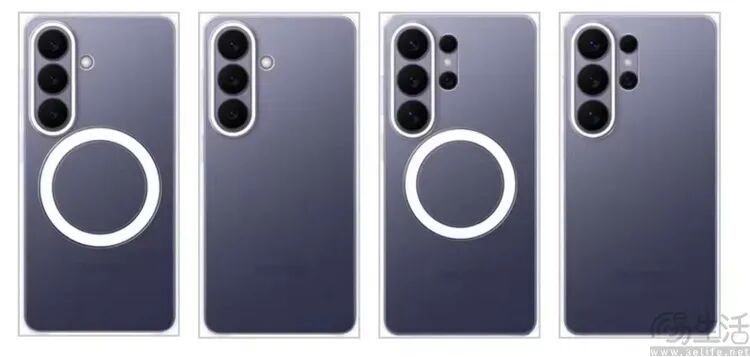
Core Viewpoint - The analysis suggests that Samsung's Galaxy S26 series may not include built-in magnets for magnetic charging, as indicated by the release of both magnetic and non-magnetic official cases, leading to speculation about the reluctance of Android manufacturers to adopt integrated magnetic charging designs [1][3]. Group 1: Magnetic Charging Technology - The absence of built-in magnets in the Galaxy S26 series implies that users will need to purchase separate magnetic cases to utilize magnetic charging, similar to other Android devices [3][6]. - Apple's MagSafe technology is a significant reference point, as it has established a proprietary ecosystem that Android manufacturers are hesitant to replicate due to patent restrictions and the need for original designs [4][6][9]. Group 2: Challenges for Android Manufacturers - Android manufacturers face technical challenges in creating original magnetic designs that comply with the Qi2.2 standard while avoiding infringement on Apple's patents, which complicates the development of a competitive magnetic charging solution [6][11]. - The cost implications of integrating magnets into devices are significant, especially in a market already affected by rising storage chip prices, making it an unattractive option for manufacturers [7][9]. Group 3: Market Dynamics - The success of Apple's iPhone 17 series in the domestic market indicates a lucrative opportunity for Android manufacturers to create accessories compatible with Apple's magnetic ecosystem, even if they do not directly compete with Apple [12]. - By opting not to include built-in magnets and instead offering magnetic cases, Android manufacturers can reduce production costs while still tapping into the potential revenue from magnetic accessories [12].