
存储芯片价格上涨

Search documents
手机厂商,集体涨价
财联社· 2026-03-18 11:44
Core Viewpoint - The smartphone industry is facing significant challenges due to insufficient demand and soaring raw material costs, leading to price increases by various brands as a necessary response to cover rising costs [1][2][9]. Price Increase Overview - Brands like OPPO and vivo have officially announced price adjustments due to rising costs of key components, with OPPO increasing prices on certain models by 500 yuan and vivo planning similar adjustments [3][5]. - The price increase for low-end models ranges from 200 to 500 yuan, while new high-end models may see increases around 1000 yuan [1][6]. Impact on Low-End Models - The price hikes for low-end models are unlikely to fully cover the increased costs, with many manufacturers facing potential short-term losses [2][9]. - According to Counterpoint, the BOM cost for low-end smartphones is expected to rise significantly, making it difficult for manufacturers to maintain profitability [9][10]. Manufacturer Strategies - Manufacturers are diversifying their procurement strategies in response to rising costs, with larger brands securing direct supply agreements while smaller brands rely on ODMs [13][14]. - There is a shift in focus towards high-end products, with brands reducing their low-end offerings to mitigate losses [12][15]. Market Trends and Production Adjustments - The overall smartphone production is projected to decline due to increased costs, with estimates suggesting a drop of about 10% in global smartphone production by 2026 [16][17]. - Companies like Xiaomi and OPPO have already begun adjusting their production volumes in anticipation of rising storage prices [17].



国家发改委关注存储芯片涨价!
是说芯语· 2026-03-02 23:45
Core Viewpoint - The global memory chip market is experiencing a significant price increase due to explosive demand and severe supply shortages, with prices expected to continue rising throughout the year [1][3]. Group 1: Memory Chip Price Trends - As of January this year, prices for the two main memory products, DRAM and NAND flash, reached their highest levels since data collection began in 2016. The average contract price for DRAM (DDR4 8Gb 1G*8) was $11.5, up approximately 24% month-over-month and about 83% since September 2025. NAND flash (128Gb 16G*8 MLC) averaged $9.5, increasing around 65% month-over-month and nearly 150% since September 2025 [3]. - The National Development and Reform Commission indicates that the memory chip market is currently in a rising cycle, driven by sustained demand for AI server computing power, leading to a persistent supply-demand imbalance [3]. Group 2: Impact on Consumer Electronics - The rising prices of memory chips are gradually being passed on to consumer electronics. Manufacturers are limited in their ability to alleviate cost pressures through downgrading specifications, making price increases for end products a common trend. Major computer manufacturers like Lenovo, Dell, and HP have issued price increase notices, with hikes generally ranging from 500 to 1500 yuan. Similarly, new models from Xiaomi and Vivo have seen price increases of 300 to 500 yuan for the same storage configurations compared to previous generations [3]. - Due to the surge in memory chip prices and its downstream effects, the Producer Price Index (PPI) for the computer, communication, and other electronic equipment manufacturing sectors is expected to stabilize, reducing the drag on PPI [3]. Group 3: Mobile Phone Price Adjustments - Industry insiders indicate that starting in March, mobile phone prices are set to rise significantly, with new models expected to see price increases of at least 1000 yuan. Major brands such as OPPO, OnePlus, Vivo, iQOO, Xiaomi, and Honor are likely to raise prices for older models as well, leading to a potential scenario in 2026 where the Chinese mobile phone market experiences multiple price hikes within a single year for the first time in history [4].

发改委关注存储芯片涨价!
国芯网· 2026-03-02 13:43
Core Viewpoint - The global memory chip market is experiencing a significant price increase due to explosive demand and severe supply shortages, with prices expected to continue rising throughout the year [1][3]. Group 1: Market Trends - As of January this year, prices for the two main memory products, DRAM and NAND flash, reached their highest levels since data collection began in 2016. The average contract price for DRAM (DDR4 8Gb 1G*8) was $11.5, up approximately 24% month-over-month and about 83% since September 2025. NAND flash (128Gb 16G*8 MLC) averaged $9.5, increasing by around 65% month-over-month and nearly 150% since September 2025 [3]. - The National Development and Reform Commission indicates that the memory chip market is currently in an upward cycle, driven by sustained demand for AI server computing power, leading to a persistent supply-demand imbalance [3]. Group 2: Impact on Consumer Electronics - The rising prices of memory chips are gradually being passed on to consumer electronics. Manufacturers are limited in their ability to alleviate cost pressures through product downgrades, making price increases for end products a common trend. Major computer manufacturers like Lenovo, Dell, and HP have issued price increase notices, with hikes generally ranging from 500 to 1500 yuan. Similarly, new models from Xiaomi and Vivo have seen price increases of 300 to 500 yuan for the same storage configurations compared to previous generations [3]. - Starting in March, mobile phone prices are expected to accelerate upward due to the surge in memory prices, with new models likely to see price increases of at least 1000 yuan. Major brands such as OPPO, OnePlus, Vivo, iQOO, Xiaomi, and Honor are anticipated to raise prices for older models as well, potentially leading to multiple price hikes within a single year in the Chinese smartphone market for the first time in history [4].

涨价、出货量下调!存储芯片刺痛终端厂商
芯世相· 2026-03-02 08:10
Core Viewpoint - The article discusses the significant price increase in storage chips and its cascading effects on various terminal manufacturers, leading to a potential price hike across the smartphone and PC markets [3][5][27]. Group 1: Impact on Terminal Manufacturers - Major smartphone manufacturers, including Samsung and Apple, have already raised prices or are expected to do so due to increased storage chip costs, with Samsung's Galaxy S26 series seeing price increases of up to 1000 yuan per unit [8][9]. - Xiaomi has signed long-term supply agreements to mitigate cost pressures and has raised the price of its new model, the Xiaomi 17 Ultra, by 500 yuan due to increased memory costs [10][11]. - Honor is limiting the production of models priced below 2000 yuan, indicating a strategic shift in response to rising costs [12]. Group 2: Price Adjustments in the PC Sector - Lenovo has warned partners of upcoming price increases for commercial products due to ongoing memory chip shortages, urging them to place orders quickly [15][16]. - HP anticipates that the cost of storage and components will rise to 35% of its material costs, prompting price adjustments and product redesigns [17]. - Dell is expected to raise prices for commercial PCs by up to 30% in response to the rising costs of storage chips [18]. Group 3: Broader Market Trends - The overall cost of storage chips has surged, with traditional DRAM contract prices expected to rise by 90%-95% in the first quarter of 2026, impacting the pricing strategies of terminal manufacturers [27][29]. - The smartphone market is projected to see a decline in sales volume by at least 2% this year, marking a reversal from previous growth expectations due to rising costs [27]. - The automotive industry is also feeling the pressure, with predictions of a storage chip supply crisis in 2026, potentially affecting production rates [25]. Group 4: Supply Chain Dynamics - Terminal manufacturers are adjusting their strategies by shortening price quotation periods and seeking more reliable supply agreements to cope with rising costs [22][24]. - The competition for storage chips has intensified, with manufacturers needing to bid higher to secure supplies, further driving up prices [29]. - The article highlights a shift in focus towards high-margin products as manufacturers grapple with the dual pressures of rising costs and potential declines in sales volume [28][30].





大存储版本至高涨2000元?手机涨价潮前京东iPhone迎来“抄底”窗口
Sou Hu Wang· 2026-02-27 08:45
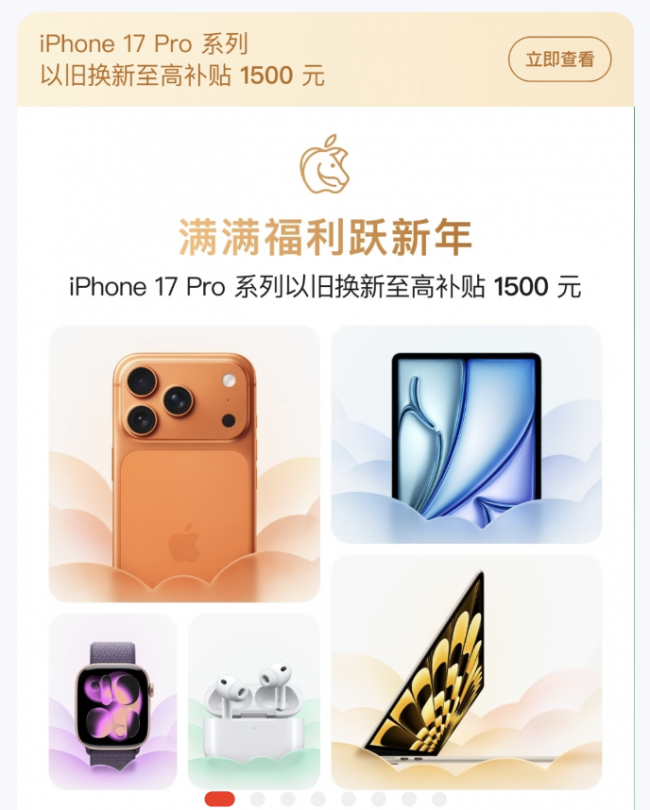
Group 1 - The core viewpoint of the articles highlights that smartphone prices are expected to rise significantly in 2026 due to increasing memory costs, with flagship models seeing price increases of 300 to 1000 yuan, and high-storage versions potentially increasing by up to 2000 yuan [1][3] - Consumers are already responding to the anticipated price hikes by upgrading their iPhones, with trade-in programs becoming popular, such as JD.com offering up to 1500 yuan in trade-in subsidies and interest-free payment options [1][3] - The price surge is primarily driven by rising costs of NAND flash and DRAM chips, influenced by global supply chain fluctuations and increased demand for AI devices, which is expected to affect not only smartphones but also other Apple products like iPads and MacBooks [3][4] Group 2 - JD.com is currently promoting several high-storage iPhone models with attractive trade-in offers, such as the 512GB iPhone 17 priced at 6699 yuan after subsidies and the 1TB iPhone Air at 8599 yuan with significant discounts [3] - The upcoming availability of "resource machines," which are refurbished devices with a clear source and warranty, is being highlighted as a cost-effective option for consumers, especially as the overall market faces price increases [4] - The uncertainty surrounding potential price drops during upcoming sales events, such as the 618 shopping festival, is noted, with consumers encouraged to consider purchasing high-value models before the anticipated price increases take effect [4]

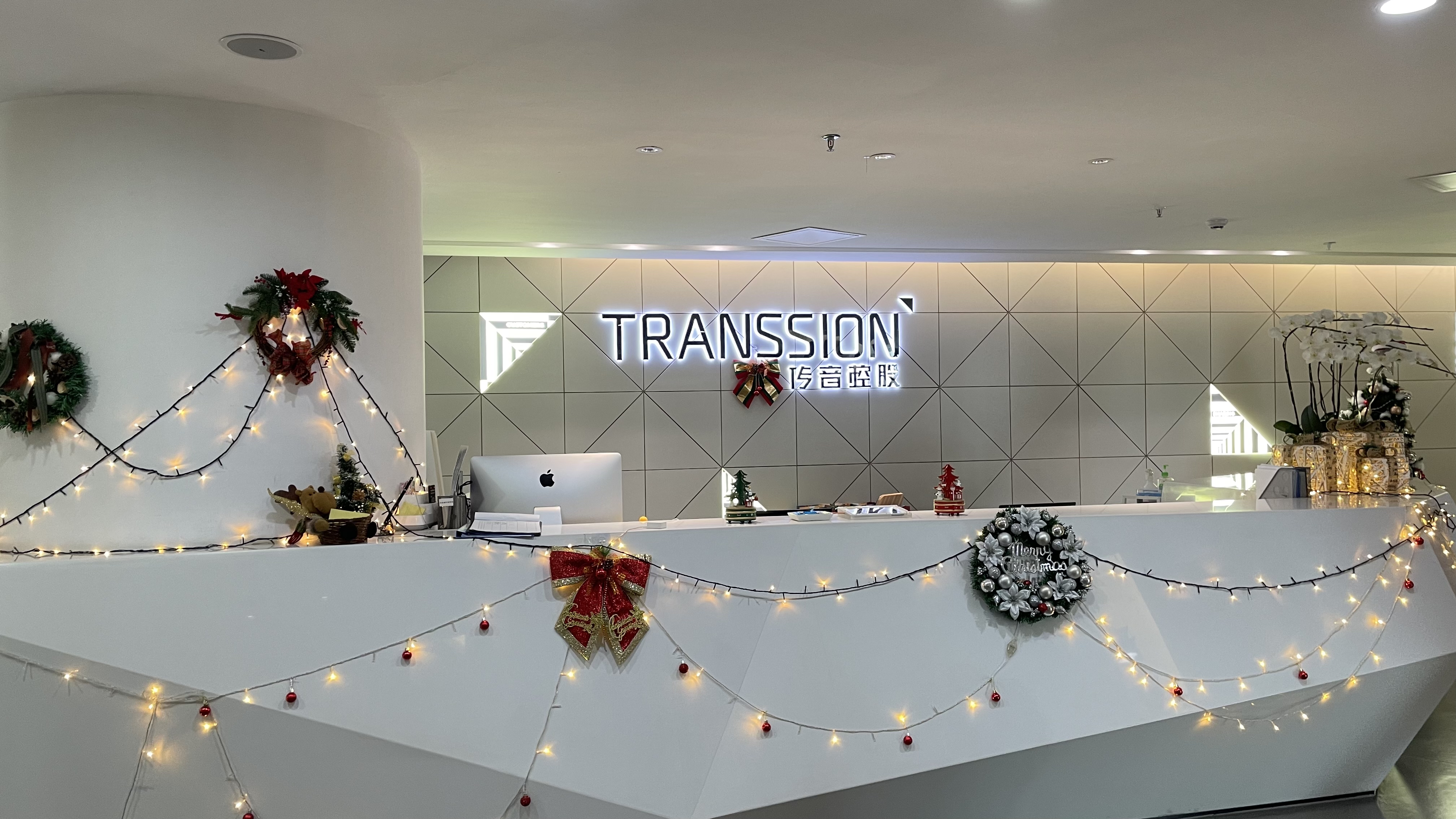
净利腰斩!传音控股上市以来首现年度业绩大幅下滑
Guo Ji Jin Rong Bao· 2026-02-25 11:48
Core Viewpoint - Transsion Holdings, known as the "King of Mobile Phones in Africa," is experiencing a significant decline in performance, with its annual net profit for 2025 dropping by over 50% for the first time since its market debut in 2019 [1][2]. Financial Performance - In 2025, Transsion Holdings reported total revenue of 65.623 billion yuan, a decrease of 4.50% year-on-year [1]. - Operating profit fell to 3.204 billion yuan, down 51.25% from the previous year [1]. - The net profit attributable to shareholders was 2.584 billion yuan, representing a decline of 53.43% [1]. - The net profit excluding non-recurring gains and losses was 1.968 billion yuan, down 56.66% year-on-year [1]. Factors Affecting Performance - The decline in performance is attributed to increased market competition and rising supply chain costs, particularly the prices of storage components [2]. - The company has increased its R&D expenses to enhance product competitiveness and user experience, leading to higher operational costs [2]. - Transsion's focus on overseas markets, particularly in Africa and other emerging regions, has resulted in a lack of brand recognition domestically [2]. Industry Context - The global storage chip market is experiencing a cyclical upturn, with NAND Flash and DRAM prices rising significantly, impacting the cost structure of mobile phone manufacturers [3]. - Counterpoint Research indicates that the global storage market has entered a "super bull market," with prices expected to rise by 40%-50% in the fourth quarter of 2025 and again in the first quarter of 2026 [3]. - The rising storage costs are fundamentally altering the bill of materials (BoM) for hardware manufacturers, with storage costs in smartphones increasing significantly [4]. Market Position and Challenges - Transsion Holdings, which primarily targets the low to mid-range smartphone market, is particularly vulnerable to rising storage costs, which account for over 20% of the BoM in its products [4]. - The company's limited presence in the high-end market restricts its ability to offset low-end product profit pressures with higher-margin products [4]. - The sensitivity of consumers in emerging markets to smartphone pricing further complicates Transsion's position amid industry-wide cost pressures [4]. Upcoming Developments - There are rumors that Transsion Holdings will initiate a non-deal roadshow for a Hong Kong listing on March 12, with an expected transaction scale of approximately $500 million to $1 billion [5]. - The company submitted its prospectus to the Hong Kong Stock Exchange in December 2025, seeking a dual listing [5].
美股异动丨惠普盘前跌5.2%,美国关税及内存成本上涨拖累盈利指引
Ge Long Hui· 2026-02-25 09:20
Core Viewpoint - HP's stock dropped 5.2% to $17.25 in pre-market trading despite reporting a 6.9% year-over-year revenue increase to $14.4 billion for Q1, with adjusted earnings per share of $0.81, exceeding market expectations. However, the adjusted operating profit margin of 6.9% fell short of the anticipated 7.4% [1] Financial Performance - HP reported Q1 revenue of $14.4 billion, reflecting a 6.9% increase year-over-year [1] - Adjusted earnings per share were $0.81, surpassing market expectations [1] - The adjusted operating profit margin was 6.9%, which was below the market forecast of 7.4% [1] Future Guidance - For the fiscal year 2026, HP expects earnings per share to be at the lower end of the guidance range of $2.90 to $3.20 [1] - Multiple factors are pressuring profit margins, including uncertainties related to U.S. tariffs and a shortage of storage chips, which have seen price surges [1]
传音控股2025年净利润下滑53% 存储芯片涨价成“拦路虎”
Ju Chao Zi Xun· 2026-02-25 09:11
Core Viewpoint - Transsion Holdings, known as the "King of African Mobile Phones," reported a significant decline in its financial performance for the year 2025, with a slight decrease in revenue and a drastic 53.43% drop in net profit attributable to shareholders [1][4]. Financial Performance - In 2025, Transsion Holdings achieved total operating revenue of 65.623 billion yuan, reflecting a minor decline of 4.50% year-on-year [4]. - Operating profit fell to 3.204 billion yuan, a sharp decrease of 51.25% compared to the previous year [4]. - The net profit attributable to shareholders was 2.584 billion yuan, marking a substantial year-on-year decline of 53.43% [4]. - The net profit after excluding non-recurring gains and losses was 1.968 billion yuan, down 56.66% year-on-year [4]. - Basic earnings per share also declined, indicating a temporary reduction in shareholder returns [4]. Reasons for Performance Decline - The company attributed its poor performance to both internal and external pressures, primarily due to increased competition and rising supply chain costs, particularly in storage component prices [5]. - The global storage market entered an upward cycle in 2025, leading to price increases that affected the gross margins of mobile phone manufacturers, including Transsion [5]. - Despite these challenges, the company adopted an aggressive strategy by increasing investments in technology innovation and product research and development to enhance user experience and product competitiveness [5]. Financial Stability - Despite the pressure on profits, Transsion Holdings maintained a robust balance sheet, with total assets of 44.363 billion yuan at the end of 2025, a slight decrease of 1.55% from the beginning of the year [6]. - The equity attributable to shareholders increased by 1.08% to 20.449 billion yuan, indicating a solid financial foundation [6]. - The net asset value per share also saw a slight increase, reflecting the company's strong financial position to withstand economic cycles [6].
消费电子成本暴涨7倍
Sou Hu Cai Jing· 2026-02-12 04:01
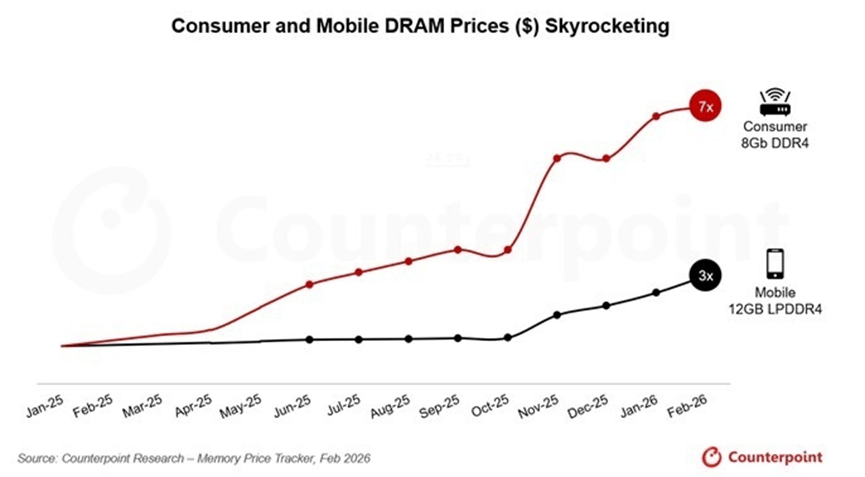
Group 1 - The core point of the articles highlights a significant increase in the cost of storage chips across various consumer electronics, with prices rising over 600% in the past year [1][4] - The smartphone storage chip prices have surged approximately threefold, while costs for routers and set-top boxes have increased nearly sevenfold in the last nine months [1] - The proportion of storage costs in low-end and mid-range routers has escalated from about 3% a year ago to over 20% currently, directly impacting manufacturing costs [1] Group 2 - Analysts predict that the upward price trend will continue at least until June 2026, with a potential peak in the first half of 2026, although supply shortages are expected to persist [4]
SK海力士因芯片价格上涨 一季度盈利有望超预期走强
Jin Rong Jie· 2026-01-30 04:02
Core Viewpoint - Nomura analysts C.W. Chung and Eon Hwang indicate that SK Hynix's first-quarter earnings performance may be stronger than expected due to a significant increase in storage chip prices [1] Group 1: Earnings Forecast - Analysts raised SK Hynix's quarterly operating profit forecast from 21 trillion KRW to 29 trillion KRW [1] - The report anticipates that DRAM and NAND storage product prices will increase by 56% and 40% quarter-on-quarter, respectively, surpassing Nomura's previous estimates of 23% and 20% [1] Group 2: Target Price and Rating - Nomura increased the target price for SK Hynix by 42% to 1.25 million KRW and maintained a buy rating [1] - SK Hynix's stock recently rose by 4.5%, reaching 900,000 KRW [1]