
下一代Roadster

Search documents
特斯拉Model S/X官宣停产,传奇车型就此落幕
36氪· 2026-01-30 10:24
Core Viewpoint - Tesla is transitioning from being a pure electric vehicle manufacturer to focusing on artificial intelligence and robotics, marking the end of the Model S and Model X production lines as part of this shift [4][30]. Group 1: Model S and Model X Production - Elon Musk announced that the Model S and Model X will cease production in Q2 2026, ending the lifecycle of these flagship models that once led the electric vehicle revolution [4][10]. - Despite multiple updates over the years, the core design and key components of Model S and Model X have not evolved to meet current industry standards, leading to declining sales [9][10]. - In 2025, Tesla sold 50,850 units of "other models," which includes Model S and Model X, reflecting a 40.2% year-over-year decline [10]. Group 2: Financial Performance - Tesla's total revenue for 2025 was $94.827 billion, a 3% decrease year-over-year, with a net profit of approximately $3.794 billion, down 46% [15]. - The company faced challenges due to outdated vehicle designs and increasing competition from traditional automakers, resulting in an 8.5% decline in sales compared to 2024, totaling around 1.6 million units sold [16][18]. Group 3: Future Directions - Musk emphasized that Tesla's future lies in FSD (Full Self-Driving), Robotaxi, and the Optimus humanoid robot, rather than in traditional vehicle manufacturing [20][28]. - The FSD software saw a 38% increase in purchases in 2025, with nearly 1.1 million paid users, and Tesla plans to shift to a subscription model for FSD to expand its user base [24][25]. - Tesla's electric truck, Semi, is set to begin production in H1 2026, and the next-generation Roadster is expected to launch in April 2026 [26]. Group 4: Strategic Shifts - The discontinuation of Model S and Model X signifies Tesla's departure from its identity as a pure automotive manufacturer [30]. - Musk's comments reflect a strategic necessity for the company to adapt to changing market conditions and technological advancements, indicating a shift in focus towards AI and robotics [29][33].


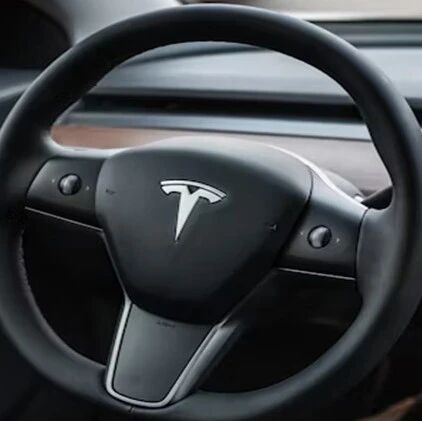
特斯拉史上首次年营收下滑,将停产Model S/X
21世纪经济报道· 2026-01-29 11:39
Core Viewpoint - Tesla faces unprecedented challenges as it reports its first annual revenue decline in history, with total revenues down 3% year-over-year in 2025, primarily due to a significant drop in automotive revenues and net income [4][6][7]. Financial Performance - Total automotive revenues for 2025 were $69.526 billion, a decrease of 10% from 2024, while total revenues were $94.827 billion, down 3% [6][7]. - Net income attributable to common stockholders (GAAP) fell by 46% to $3.794 billion, with diluted EPS dropping 47% to $1.08 [6][7]. - In Q4 2025, automotive revenue decreased by 11% to $17.693 billion, with vehicle deliveries down 15.61% to 418,200 units [7]. Strategic Shifts - CEO Elon Musk announced a new mission to "create incredible wealth," indicating a shift from being solely an electric vehicle manufacturer to a technology and mobility service company focused on autonomous driving and AI [8][11]. - Tesla plans to invest over $20 billion in 2026 for AI infrastructure and production capacity for Optimus robots and Robotaxi projects [8][11]. Product and Capacity Adjustments - The production of Model S and Model X will be gradually phased out, with the Fremont factory being repurposed for Optimus robot production [8][12]. - The Optimus 3 robot is set to be released soon, with a long-term production goal of 1 million units annually [8][12]. Autonomous Driving and Robotaxi Developments - Tesla has approximately 1.1 million paid users for its Full Self-Driving (FSD) feature, representing a 12% penetration rate among total vehicle sales [9][11]. - The company is transitioning to a subscription model for FSD, which may impact short-term automotive gross margins [11][13]. Vertical Integration and Core Technology Investments - Tesla is prioritizing the development of its AI chips, with plans for a self-built wafer factory to mitigate future supply chain risks [10][11]. - The company has invested in xAI to enhance AI capabilities for managing Robotaxi and Optimus operations [10][11]. Competitive Landscape - Tesla identifies China as its strongest competitor in AI and large-scale manufacturing [14]. - The company believes it uniquely possesses the capabilities to address key challenges in high-performance robotics, real-world AI, and scalable production [14]. Other Product Updates - The Cybertruck maintains its market leadership, with no plans for traditional pickup designs [15]. - The next-generation Roadster is expected to launch in April, promising an extraordinary experience [15].
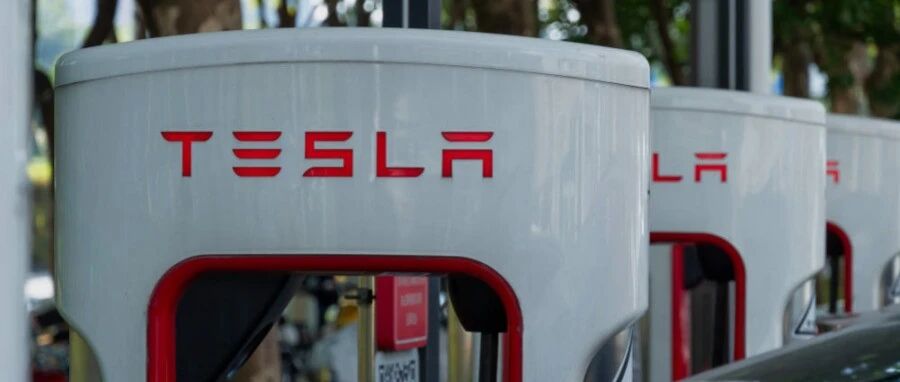
停产Model S/X,马斯克正式与造车老路诀别
2 1 Shi Ji Jing Ji Bao Dao· 2026-01-29 10:29
Core Insights - Tesla has reported its first annual revenue decline in history, with total revenue for 2025 at $94.827 billion, a decrease of 3% year-over-year, and net profit down 46% to $3.794 billion [1][2] - The company delivered approximately 1.636 million electric vehicles in 2025, reflecting a year-over-year decline of 8.6% [1] - Despite the challenges in its core automotive business, Tesla's energy segment showed resilience, with revenue growth of 25% and a record storage installation of 46.7 GWh, up 48.7% year-over-year [2] Company Strategy and Mission Update - CEO Elon Musk announced a new mission to "create amazing abundance," emphasizing optimism for the future driven by AI and robotics [6] - Tesla is transitioning from an electric vehicle manufacturer to a technology and mobility service company focused on autonomous driving, AI, and general robotics [6] Major Product and Capacity Adjustments - The company plans to gradually phase out the Model S and Model X, reallocating production capacity to future-oriented products like the Optimus robot [3] - Tesla's aggressive strategy includes significant capital expenditures exceeding $20 billion in 2026 for AI infrastructure and expanding production capacity for projects like Robotaxi [2][6] Autonomous Driving (FSD) and Robotaxi Business Progress - Tesla disclosed that it has approximately 1.1 million FSD subscribers, representing 12% of its total vehicle sales, indicating room for growth in penetration [4] - The company is shifting from a one-time purchase model to a subscription model for software revenue, with plans to expand Robotaxi services across a significant portion of the U.S. by the end of the year [4] Vertical Integration and Core Technology Investment - Tesla is pursuing vertical integration with a $2 billion investment in Musk's xAI company to enhance AI capabilities [5] - The company is considering building a large wafer fabrication plant (Terafab) to address future supply bottlenecks in AI chip production [5] Competitive Landscape and Company Advantages - Tesla identifies China as its strongest competitor in AI and large-scale manufacturing [6] - The company believes it is uniquely positioned to tackle three core challenges: high-performance humanoid robotics, real-world AI, and scalable production [6][7][8] Other Product Updates - The Cybertruck maintains a leading position in its market segment, with no plans for traditional pickup designs [9] - The next-generation Roadster is expected to launch in April, promising an "unimaginably exciting experience" [9]
美股三大股指齐跌,标普500终结7连涨,甲骨文一度重挫7%
Xin Lang Cai Jing· 2025-10-08 00:29
Core Points - The U.S. stock market experienced a decline, with all three major indices falling, ending the S&P 500's seven-day winning streak [1] - Concerns over the profitability of artificial intelligence impacted investor sentiment, leading to a drop in technology stocks [1] Company Summary - Oracle's stock fell by 2.52%, with reports indicating that its cloud business profit margins were significantly below analyst expectations, and it incurred losses in a deal involving NVIDIA chip rentals [1] - During intraday trading, Oracle's stock dropped over 7% [1] Industry Summary - The Philadelphia Semiconductor Index decreased by 2.06%, with notable declines in major chip stocks: TSMC down 2.77% and Micron Technology down 2.76% [1] - Broader technology stocks also weakened, with Tesla down 4.45% after announcing more affordable versions of its Model Y SUV and Model 3 sedan, which disappointed investors hoping for news on new products [1] - Other tech giants also saw declines: Google down 1.86%, Microsoft down 0.87%, Meta down 0.36%, NVIDIA down 0.35%, and Apple down 0.08% [1]

美股三大股指齐跌,标普500终结七连涨,甲骨文一度重挫7%
Di Yi Cai Jing Zi Xun· 2025-10-08 00:17
Market Overview - The three major US stock indices fell, ending the S&P 500's seven-day winning streak, driven by concerns over the profitability outlook of artificial intelligence [1] - The Dow Jones Industrial Average dropped 91.99 points, or 0.20%, closing at 46,602.98 points; the Nasdaq fell 153.30 points, or 0.67%, to 22,788.36 points; and the S&P 500 decreased by 25.69 points, or 0.38%, to 6,714.59 points [1] Company-Specific Developments - Oracle's stock fell by 2.52%, with a significant intraday drop exceeding 7%, due to its cloud business's profit margins being much lower than analysts' expectations and losses in some Nvidia chip leasing transactions [2] - The Philadelphia Semiconductor Index declined by 2.06%, with notable drops in major chip stocks: TSMC down 2.77% and Micron Technology down 2.76% [3] - Tesla's stock decreased by 4.45% after the company released more affordable versions of the Model Y SUV and Model 3 sedan, disappointing investors who anticipated news on other new products [3] - Other tech giants also saw declines: Google down 1.86%, Microsoft down 0.87%, Meta down 0.36%, Nvidia down 0.35%, and Apple down 0.08% [4] Market Sentiment and Economic Factors - Concerns over capital expenditures are prevalent, with investors questioning the return on investment in new technologies, particularly in the AI sector [4] - The Nasdaq Golden Dragon China Index fell by 2.24%, with significant declines in major Chinese stocks such as Baidu down 4.12% and Alibaba down 3.13% [4] - Gold futures prices surpassed $4,000 for the first time, driven by increased demand for safe-haven assets amid uncertainties surrounding the US government shutdown [5][6] - Spot gold rose by 0.59% to $3,984.14 per ounce, while COMEX gold futures increased by 0.71% to $4,004.80 per ounce [6]