专业户外装备

Search documents
伯希和将成为首个亮相冬奥赛场的中国户外品牌
Jing Ji Guan Cha Wang· 2026-01-12 09:57
Group 1 - The core viewpoint of the article highlights that 伯希和 has become an official partner of the International Skating Union (ISU), providing professional equipment support for event officials, referees, and technical teams in international ice sports [1] - 伯希和 has also secured a partnership with the International Ski Mountaineering Federation (ISMF) as the exclusive clothing supplier [1] - The company has established official partnerships with the National Olympic Committees of Kyrgyzstan, Bolivia, Uruguay, and Ecuador, providing designated equipment support for their national teams in the 2026 international events and significant international sports activities [1] Group 2 - Through these collaborations, 伯希和 will be the first Chinese outdoor brand to appear at the Winter Olympics [1] - The article notes that more Chinese brands are transitioning from "manufacturing" to "intelligent manufacturing," with 伯希和 representing a significant part of China's involvement in global sports [1]
今年,消费彻底变了
Ge Long Hui A P P· 2025-12-28 08:57
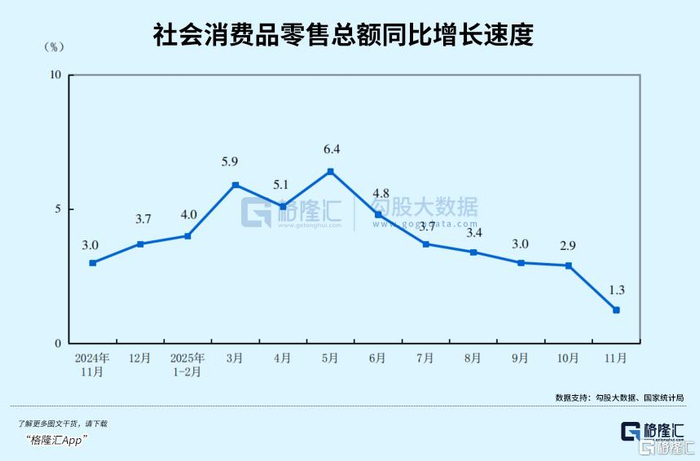
Core Insights - The consumption industry has undergone significant changes over the past year, with a shift in focus from traditional products like liquor to new consumption trends driven by emotional and social factors [1][10]. Group 1: Consumption Trends - Despite perceptions of a cooling consumption market, consumer demand has shown stability, with retail sales growing by 4.0% year-on-year in the first 11 months of this year, surpassing the 3.5% growth expected for the entire year of 2024 [4][5]. - The contribution of final consumption expenditure to economic growth reached 53.5% in the first three quarters of 2025, an increase of 9 percentage points compared to the entire year of 2024 [4]. - The concept of "new consumption" has emerged, characterized by emotional and social attributes, as seen in the popularity of brands like Bubble Mart and the rise of "self-reward" consumption [8][9]. Group 2: Consumer Behavior - Young consumers, particularly those from the Z generation, are becoming the main drivers of consumption, with 56.3% of them willing to spend on emotional value and interests, a 16.2 percentage point increase from 2024 [10][9]. - The trend of "rational consumption" is also evident, where consumers are increasingly focused on quality and value, with 47% of respondents indicating they only purchase essentials to avoid waste, while 68% are willing to spend more on products that help relieve stress [11][10]. Group 3: Market Opportunities - The second-hand economy is thriving, with platforms like Xianyu seeing a 30% year-on-year increase in transaction volume, reflecting young consumers' acceptance of "recycled consumption" [12]. - The health and wellness industry is benefiting from consumers' desire to invest in personal growth, with products like smart home devices and effective skincare gaining traction [14][13]. - The pet economy is emerging as a significant market, driven by the emotional support pets provide, with a wide range of related products and services [24]. Group 4: Future Outlook - The emotional consumption market in China is projected to reach 2.3 trillion yuan in 2024, with expectations to exceed 4.5 trillion yuan by 2029, indicating substantial growth potential [16]. - The consumption landscape is evolving into a complex ecosystem where rational and emotional consumption coexist, reshaping investment strategies and market dynamics [27].

欧洲又出新政,跨境卖家天塌了
Sou Hu Cai Jing· 2025-12-21 10:50
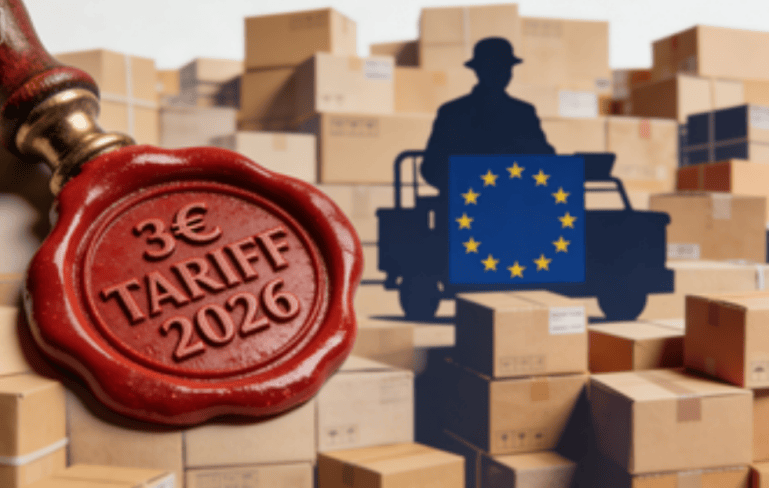
Core Viewpoint - The European Union has announced a fixed tariff of 3 euros on all imported packages valued below 150 euros, effective July 1, 2026, which is expected to significantly impact the e-commerce landscape, particularly affecting low-cost sellers from China [2][3]. Group 1: Policy Details - The new regulation introduces a flat fee of 3 euros instead of a traditional value-based tax, disproportionately affecting low-cost items [4]. - For example, a 5-euro phone case will see its cost increase by 150% due to the new tariff, while a 100-euro item will only see a minimal impact [5]. - The tariff is applied per customs classification, meaning that packages with multiple items may incur higher total tariffs if items fall under different categories [5][6]. Group 2: Market Impact - The new policy is expected to disrupt the business models of platforms like Shein and Temu, which rely on low prices and fast shipping [10][11]. - Small and medium-sized sellers, particularly those selling low-margin products, will face significant challenges as they may not be able to pass on the increased costs to consumers [11]. - The EU's decision is part of a broader trend of tightening regulations on low-value cross-border trade, with similar measures being adopted in the US, UK, and Thailand [13][14]. Group 3: Strategic Recommendations - Sellers are advised to shift from a "price war" strategy to a "value war," focusing on higher-value products to mitigate the impact of the new tariffs [15]. - Transitioning to a supply chain model that utilizes local warehouses in the EU can help sellers avoid the new tariffs and improve delivery times [16]. - Diversifying market presence beyond Europe to regions with less stringent tax policies can help sellers reduce risk and find new growth opportunities [16].
整合异业联盟营销,博士茶馆哲宁老师营销兵法。
Sou Hu Cai Jing· 2025-07-20 12:19
Group 1: Integration of Communication Channels - The integration of online and offline channels is essential, where traditional offline channels like stores and outdoor advertising work in synergy with online platforms such as social media and e-commerce [2] - A case study of Uniqlo illustrates how offline stores showcase product quality and provide fitting experiences, while online platforms promote new products and offer convenient shopping services [2] Group 2: Integration of Marketing Content - Consistency in marketing content across various platforms is crucial, ensuring that product packaging, advertising, and public relations maintain a unified style and core message [5] - Coca-Cola exemplifies this by aligning its vibrant advertising with its brand philosophy of "refreshment and sharing," reinforcing consumer recognition and memory [5] Group 3: Integration of Target Audience - Precise segmentation of the audience based on factors like age, gender, region, and consumption habits enhances marketing efficiency [7] - Internet financial brands utilize big data analysis to create detailed audience profiles, tailoring product recommendations to different user segments [7] Group 4: Integration of Marketing Teams - Cross-department collaboration is necessary for effective marketing, involving market research, creative planning, advertising, and sales [10] - Breaking down departmental barriers facilitates information sharing and efficient collaboration, ensuring smooth marketing activities [11] Group 5: Utilization of External Resources - Integrating external professional resources, such as advertising and public relations firms, can enhance marketing effectiveness [11] - Companies can leverage external expertise to compensate for internal shortcomings, optimizing marketing strategies and improving overall performance [12]