东风天龙KL纯电牵引车

Search documents
解放/三一/徐工/重汽等2026主销纯电重卡 谁会成为爆款?| 头条
第一商用车网· 2026-03-05 02:11
Core Insights - The electric heavy truck market is transitioning from closed scenarios to long-distance trunk routes, driven by both policy and market demands for cost reduction and carbon neutrality [1][3] - Major manufacturers are launching new electric heavy truck models with advancements in ultra-fast charging technology, electric drive integration, and cold climate adaptability [1][3] Group 1: Industry Trends - The domestic electric heavy truck market is experiencing three core trends: 1. Expansion from closed scenarios to trunk markets, with long-range and high-capacity products becoming mainstream. Current penetration in the mid-to-long-distance market is less than 1% [3] 2. The charging infrastructure is evolving towards ultra-fast and standardized solutions, with 800V high-voltage platforms becoming mainstream, enabling charging efficiencies that allow for 300 kilometers of range in just 30 minutes [3] 3. Core technologies are focusing on integration and autonomy, with electric drive bridges and integrated thermal management systems becoming competitive focal points, achieving electric drive system efficiencies exceeding 94% [3] Group 2: Product Highlights - The FAW Jiefang Eagle Chariot features a self-developed electric drive bridge, showcasing lightweight and high-efficiency advantages, with a comprehensive energy consumption of 1 kWh per kilometer [5][7] - The SANY Jiangshan SE636 electric heavy truck offers a 500-kilometer range and a 50% lower operating cost compared to diesel trucks, equipped with a 636 kWh battery and 640 kW dual motors [9] - The XCMG XG2 EX710S supports 1.44 MW ultra-fast charging, achieving a 10% to 90% charge in just 15 minutes, with a peak power of 520 kW and a maximum climbing ability of 30% [11] - The China National Heavy Duty Truck Shandeka C7M features a peak power of 825 kW and offers flexible charging options, including a large capacity battery from CATL [15] - The Foton Ouman Galaxy 9 is designed for express logistics, with a peak power output of 380 kW and enhanced charging efficiency, ensuring reliable range [19] - The CIMC Shaanxi G6000E integrates all-electric control and chassis, achieving a low energy consumption of 1.1 kWh per kilometer, with significant savings over 20,000 kilometers of operation [20][22] - The Dongfeng Tianlong KL offers multiple configurations for various transport needs, with a maximum range of 460 kilometers and a charging time of under 40 minutes from 20% to 80% [24][26] Group 3: Market Outlook - The electric heavy truck industry is entering a phase of "technology differentiation competition," with various manufacturers addressing specific market needs through tailored solutions [27] - The future of electric heavy trucks looks promising, with expectations for large-scale penetration in the mid-to-long-distance trunk market as charging networks improve and battery costs decrease [28]


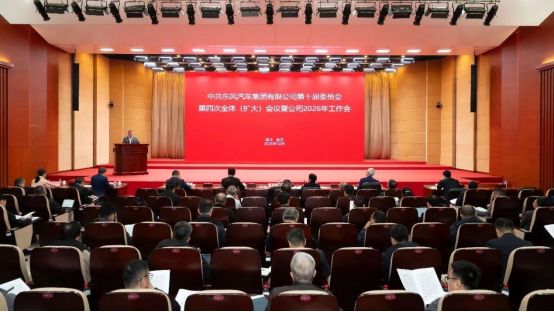
东风汽车召开2026年工作会 锚定“十五五”高质量发展新开局
Zheng Quan Shi Bao Wang· 2026-01-07 05:57
Core Viewpoint - Dongfeng Motor aims to establish a solid foundation for high-quality development in the "15th Five-Year Plan" by setting ambitious sales targets for 2026, including an overall sales goal of 3.25 million vehicles, 1.7 million new energy vehicles, and 600,000 exports, while focusing on long-term strategic goals rather than short-term gains [1][9]. Group 1: Transformation Achievements - During the "14th Five-Year Plan" period, Dongfeng Motor transitioned from relying on joint venture profits to achieving self-sustaining growth, marking a significant shift in its business model [3]. - In 2025, Dongfeng's new energy vehicle sales reached 1.04 million units, a year-on-year increase of 21%, with a penetration rate that improved by 7 percentage points [3]. - The company achieved over 1.5 million sales for its self-owned brands, a growth of over 9%, surpassing the strategic goal of a 1:1 sales ratio with joint ventures [3]. - Dongfeng's export volume reached 295,000 units, a 20% increase year-on-year, with significant advancements in overseas market expansion [3]. Group 2: Product Matrix Expansion - Dongfeng's product offerings have expanded, with 31 models in the passenger vehicle segment and 18 in the commercial vehicle segment, while the penetration rate of L2-level autonomous passenger vehicles exceeds 80% [4]. - The company maintains its leadership in the new energy MPV market with its Lantu brand, and has successfully launched smart off-road vehicles in collaboration with Huawei [4]. - The commercial vehicle sector has seen breakthroughs with the launch of the Tianlong KL pure electric tractor and the introduction of the Dongfeng Qiankun brand [4]. Group 3: Core Technology Development - Dongfeng is increasing its innovation investments, with a research and development intensity of 7.9% for its self-owned brands by 2025 [5]. - The company is focusing on multiple technology pathways, including hybrid, pure electric, and hydrogen energy, achieving a thermal efficiency of over 48% for its Maher hybrid engine [5]. - The domestic chip localization rate for self-owned brand vehicles has reached 67%, with the first domestically controllable high-performance automotive-grade MCU chip set for mass production in 2026 [6]. Group 4: Strategic Business Structure - Dongfeng has restructured its 27 directly managed units into a "4+2" business layout to address issues of business dispersion and internal competition [7]. - The establishment of Yipai Technology consolidates resources for self-owned passenger vehicles, while the creation of Yuechuang Technology aims to enhance the commercial vehicle business [7]. Group 5: 2026 Key Work Focus - The company will focus on three main lines of development in 2026: value creation, value protection, and value realization [9]. - Key areas of business development include advancing self-owned passenger vehicles, enhancing commercial vehicle performance, and accelerating the transformation of the parts sector [9]. - Brand building and ecosystem development will be critical, integrating marketing, brand positioning, technological innovation, and ecosystem value to enhance overall capabilities [9].

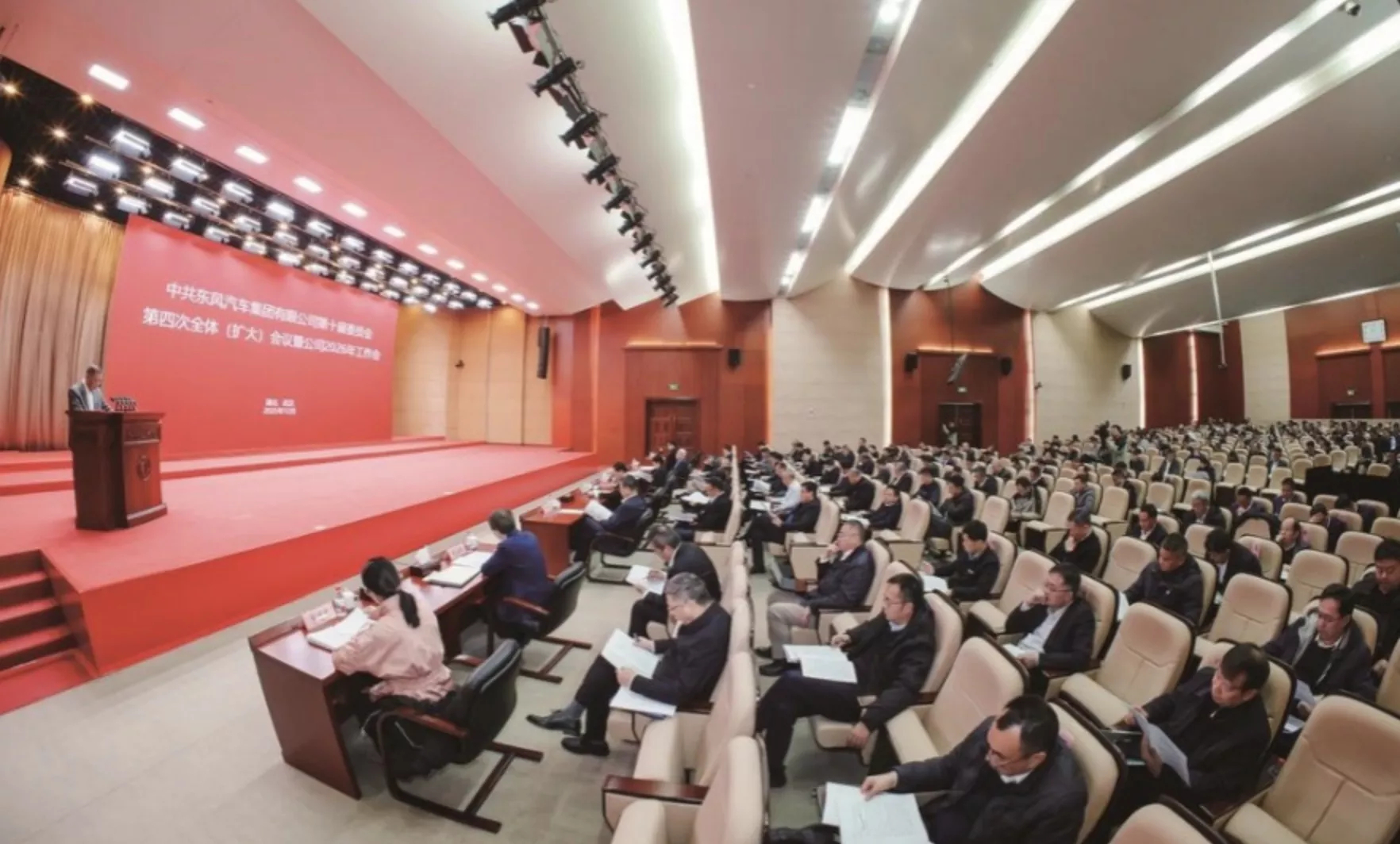
东风汽车丨2026年销量目标325万辆 汽车出口60万辆
Cai Jing Wang· 2026-01-06 08:29
Core Viewpoint - Dongfeng Motor has outlined its "14th Five-Year" development strategy and key tasks for 2026 during its recent work conference, while also summarizing its achievements from 2025 and the "13th Five-Year" period [1]. Group 1: Sales and Market Performance - In 2025, Dongfeng's total sales reached 1.04 million units of new energy vehicles (NEVs), marking a 21% year-on-year increase, with a penetration rate up by 7 percentage points [2]. - The company aims for a total sales target of 3.25 million units in 2026, including 1.7 million NEVs and 600,000 units for export [2][6]. Group 2: Product Development and Innovation - Dongfeng's product lineup for its self-owned NEV brands expanded in 2025, featuring flagship models from Lantu and new products from Yipai and other brands [3]. - The company made significant advancements in hybrid, pure electric, and hydrogen technologies, achieving a thermal efficiency of over 48% for its Mahle hybrid engine and progressing in solid-state battery development [5]. Group 3: Strategic Initiatives and Partnerships - Dongfeng is transitioning its joint ventures towards new models, with the launch of new energy models from Dongfeng Nissan and upgrades in intelligent products [5]. - The company has established strategic partnerships with tech firms like Tencent and Huawei to enhance its "car-internet" integration and smart technology applications [5][8]. Group 4: Organizational and Operational Enhancements - Since 2025, Dongfeng has implemented reforms in organizational structure, process mechanisms, and supply chain collaboration to improve operational efficiency and profitability [8]. - The company plans to strengthen its global business layout, particularly in Europe and Southeast Asia, to drive growth through localized production and marketing networks [8].
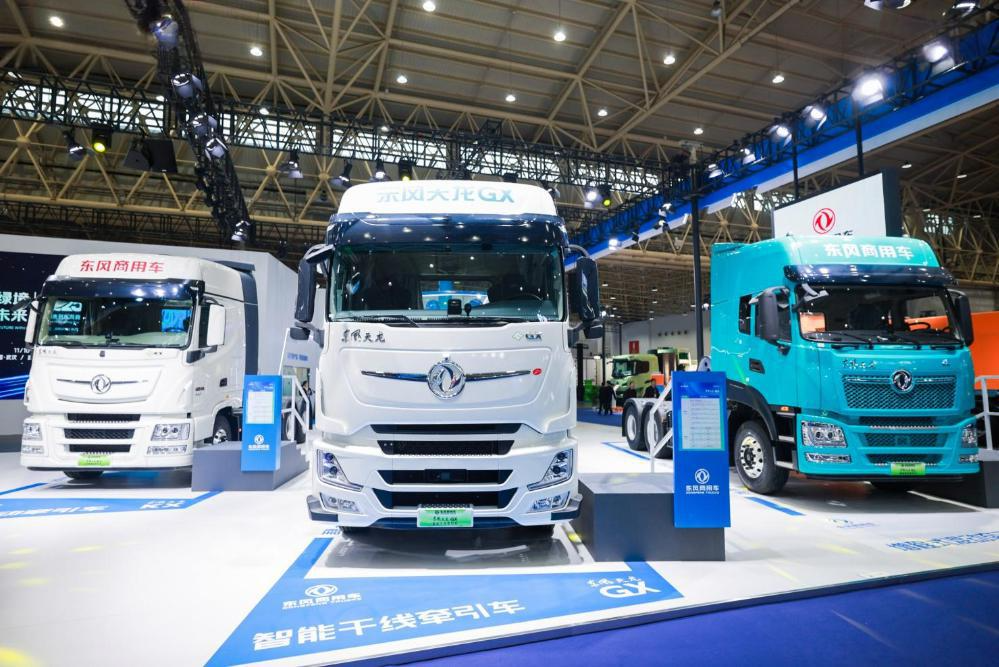
6款整车及7款核心零部件亮相 东风商用车展示新能源全矩阵实力
Yang Shi Wang· 2025-11-12 11:42
Core Insights - The 2025 China International Commercial Vehicle Show (CCVS) was held in Wuhan from November 10 to 13, showcasing Dongfeng Commercial Vehicle's commitment to green and intelligent technologies with six complete vehicles and seven core components on display [1][2]. Electric and Hydrogen Technologies - Dongfeng's hydrogen fuel cell truck, the Dongfeng Tianlong GX, features a high-efficiency fuel cell system with an efficiency of ≥48%, a refueling time of 20 minutes, and a range of 700 km, meeting EU safety and emission standards [1]. - The Dongfeng Tianlong KL electric truck, developed in collaboration with Huawei, can charge to 80% in under 20 minutes under dual-gun supercharging conditions and has a range of 460 km with a power consumption of only 1.2 kWh per kilometer [1][2]. Hybrid Solutions - The Dongfeng Tianlong KX dual-engine hybrid truck utilizes a gas engine and electric motor system, achieving a fuel-saving rate of 10% in complex mountainous conditions [2]. - The Dongfeng Tianlong KL range-extended hybrid truck supports pure electric start and features energy recovery systems, enhancing energy efficiency while ensuring driver comfort with adjustable seating [2]. Intelligent Driving Features - The Dongfeng Tianlong GX intelligent truck is equipped with L2+ level autonomous driving capabilities, supporting full-speed range intelligent assistance and predictive cruise functions [2]. - The vehicle's "smart brain" consists of self-developed controllers for energy distribution and advanced driving, showcasing Dongfeng's control over core power technologies [2]. Technological Advancements - The seven core technology exhibits highlight Dongfeng's achievements in independent research and development of key components, focusing on a unified multi-energy engine platform aimed at zero-carbon fuel technology [4]. - This platform is designed to comply with National VI emissions standards and is compatible with future regulations, featuring 16 proprietary technologies that lower user acquisition and maintenance costs [4].