
傅里叶变换

Search documents
我科学家研发出多物理域全新计算系统
Huan Qiu Wang Zi Xun· 2026-01-15 01:21
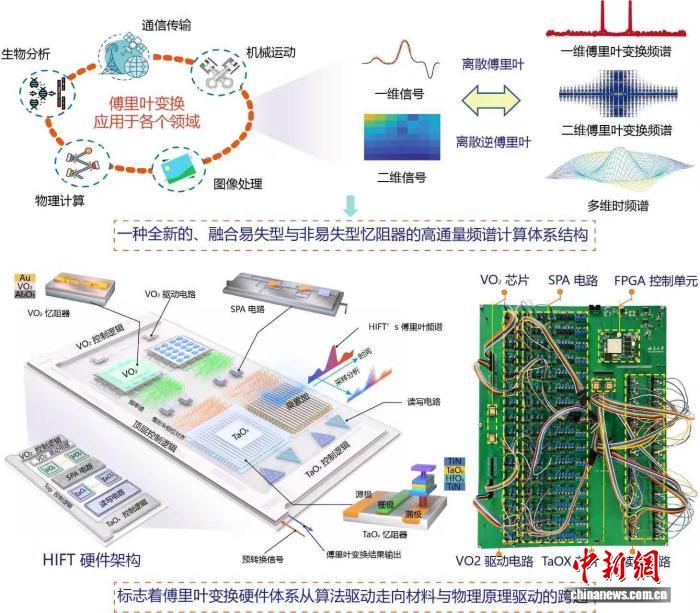
Core Insights - The research team from Peking University has developed a novel multi-physical domain fusion computing system that enhances Fourier transform capabilities, achieving nearly a fourfold increase in computational power, which opens new possibilities in fields like embodied intelligence and communication systems [1][2] Group 1: System Performance - The new system integrates two distinct types of memristors, achieving remarkable parallel computing efficiency [2] - In brain-computer interface experiments, the system demonstrated low latency and high accuracy in EEG typing, with a single classification accuracy of 99.2% [2] - The processing throughput of the system increased from approximately 130 billion operations per second to 504.3 billion operations per second, reaching 96.98 times the performance of existing dedicated fast Fourier transform hardware [2] Group 2: Significance and Future Implications - This achievement signifies a shift from "algorithm-driven design" to "physics principle-driven" approaches, transforming mathematical operations into a more efficient process akin to natural evolution [2] - The new computing framework is expected to overcome the challenges of operator spectrum expansion for post-Moore devices, enabling support for multiple computing methods and laying a solid foundation for future advancements in edge intelligence, brain-like computing, and optoelectronic integration systems [2]
提升算力 北大团队在多物理域融合计算架构领域取得突破
Zhong Guo Xin Wen Wang· 2026-01-13 06:19
Core Viewpoint - A research team from Peking University has achieved a breakthrough in multi-physical domain fusion computing architecture, enhancing computing power by nearly four times through a novel implementation of Fourier transform using post-Moore new devices [1][5]. Group 1: Breakthrough Details - The research focuses on expanding the operator spectrum of post-Moore new devices, addressing the challenges of low-latency and low-power signal processing and computing needs in various advanced fields [1][5]. - The new architecture achieves a Fourier transform precision of 99.2%, with a throughput rate of up to 504.3 GS/s, representing a nearly fourfold improvement over the fastest silicon-based chips and a 96.98-fold increase in energy efficiency [5][6]. Group 2: Technical Innovations - The team creatively integrated volatile vanadium oxide devices with non-volatile tantalum/hafnium oxide devices to create a hardware system capable of supporting diverse computing methods, particularly for Fourier transform [5][6]. - This new computing framework allows for simultaneous support of multiple computing methods, addressing the operator spectrum expansion challenge for post-Moore new devices [6]. Group 3: Future Applications - The advancements are expected to enhance real-time processing capabilities for high-concurrency and multi-modal signals in applications such as embodied intelligence and brain-computer interfaces, potentially alleviating the need for multiple invasive surgeries for hardware replacements [6]. - Experts anticipate accelerated applications of these new devices in cutting-edge fields such as artificial intelligence foundational models, autonomous driving, communication systems, and signal processing, contributing to high-quality economic development [6].

我科学家创出全新计算架构提升算力
Ke Ji Ri Bao· 2026-01-11 23:54
Core Insights - A research team from Peking University has developed a new computing architecture that achieves heterogeneous integration of post-Moore devices with multi-physical domain Fourier transform, resulting in nearly a fourfold increase in computing power [1] - The new architecture addresses the limitations of traditional silicon-based devices, which face challenges in miniaturization, power consumption, and storage [1] - The technology demonstrates a Fourier transform accuracy of 99.2%, with throughput nearly four times faster than the fastest silicon chips and energy efficiency improved by 96.98% [1] Industry Implications - The application of this breakthrough is expected to meet the low-latency and low-power signal processing and computing needs in various cutting-edge fields, positioning China to surpass in the next generation of computing architecture [2]
新华财经早报:1月11日
Xin Hua Cai Jing· 2026-01-11 00:44
Group 1 - The National Internet Information Office has drafted the "Regulations on the Collection and Use of Personal Information by Internet Applications" and is seeking public opinion, emphasizing minimal impact on personal rights and the necessity of data collection for services [1] - The revised "Market Supervision Complaint and Reporting Handling Measures" will take effect on April 15, 2026, aiming to enhance the quality of complaint handling and regulate malicious claims [1] - The National Medical Insurance Administration has initiated a pilot program for the "Personal Medical Insurance Cloud," set to explore a new model for smart medical insurance management from February to December this year [1] Group 2 - The Supreme People's Procuratorate reported that from 2024 to November 2025, 191 individuals were prosecuted for financial fraud, with a 21% increase in prosecutions from January to November 2025 compared to the previous year [1] - The China Securities Regulatory Commission has imposed penalties on Jiang Wei for insider trading, resulting in the confiscation of illegal gains amounting to 4,709,741.41 yuan and a fine of 14,629,224.23 yuan [1] - The "China Ice and Snow Tourism Development Report (2026)" forecasts that the number of participants in ice and snow tourism will reach 360 million by the winter of 2025-2026, generating an expected revenue of 450 billion yuan [1] Group 3 - QDII funds are set to receive policy support, with adjustments required in the use of QDII quotas for public and private products, aiming for at least 50% of the adjustments to be completed by the end of 2026 [1] - The Beijing Electric Power Trading Center reported that inter-provincial electricity trading volume in the State Grid's operating area reached 1.67 trillion kilowatt-hours in 2025, a 10% year-on-year increase [1] - China has applied for frequency resources for over 200,000 satellites, indicating a strategic elevation of satellite frequency resource applications [1]

我国创出全新计算架构提升算力
Mei Ri Jing Ji Xin Wen· 2026-01-10 15:24
Core Insights - The research team from Peking University has developed a novel multi-physical domain fusion computing architecture that utilizes post-Moore new devices to support Fourier transforms, enhancing computing power by nearly 4 times [1] Group 1: Technology and Innovation - The new architecture allows for the translation of complex signals such as sound and images into frequency language, which is fundamental in scientific and engineering applications [1] - This advancement opens new possibilities in fields such as embodied intelligence, edge perception, brain-like computing, and communication systems [1] Group 2: Publication and Recognition - The research findings were published on the 9th in the journal Nature Electronics, highlighting the significance of the work in the academic community [1]
我国创出全新计算架构提升算力
财联社· 2026-01-10 14:28
Core Viewpoint - The research team from Peking University has developed a novel multi-physical domain fusion computing architecture that utilizes post-Moore new devices to support Fourier transforms, achieving nearly a fourfold increase in computing power, which opens new possibilities in fields such as embodied intelligence, edge perception, brain-like computing, and communication systems [1][2]. Group 1: New Computing Architecture - The new computing architecture allows various computing methods to operate in their suitable physical domains such as current, charge, and light, enhancing computational efficiency [2]. - The integration of volatile vanadium oxide devices and non-volatile tantalum/hafnium oxide devices leverages their complementary advantages in frequency generation control and storage-computation integration, improving the speed of Fourier transform calculations from approximately 130 billion operations per second to about 500 billion operations per second [2]. Group 2: Applications and Implications - The new framework is expected to overcome the challenges of expanding the operator spectrum of post-Moore new devices, enabling support for multiple computing methods, thus allowing new devices to function effectively [2]. - This advancement is anticipated to accelerate the application of new devices in cutting-edge fields such as artificial intelligence foundational models, embodied intelligence, autonomous driving, brain-machine interfaces, and communication systems [2].

新华财经晚报:向恶意索赔亮剑 市场监管投诉举报新规出台
Xin Lang Cai Jing· 2026-01-10 11:13
Group 1 - The National Internet Information Office is drafting regulations to standardize the collection and use of personal information by internet applications, emphasizing minimal impact on user rights and requiring easy account cancellation features [2] - The revised Market Supervision Complaint Handling Measures aim to enhance the efficiency of complaint processing and regulate malicious claims, requiring complainants to provide real identity information and factual basis [2] Group 2 - The Supreme People's Procuratorate reported an increase in financial fraud prosecutions, with 191 individuals indicted from 2024 to November 2025, marking a 21% year-on-year increase [3] - Major financial fraud cases, including those involving Jinzhou Port and Meishang Ecology, are being closely monitored and prosecuted to deter such crimes [3] Group 3 - The QDII fund sector is set to benefit from new policies encouraging the use of QDII quotas in public offerings, with a requirement to adjust the ratio of QDII quotas used in separate accounts to below 20% by the end of 2027 [3] Group 4 - China has applied for frequency resources for over 200,000 satellites, indicating a strategic national interest in satellite frequency resource allocation [4] - A new computational architecture developed by Peking University enhances Fourier transform capabilities, potentially improving computational power by nearly four times for various advanced applications [4] Group 5 - U.S. oil companies are expressing caution regarding investments in Venezuela's oil sector during discussions with President Trump, reflecting a cautious approach to international investments [5]

让新器件“跑起来”:我国科学家创出全新计算架构提升算力
Xin Hua She· 2026-01-10 07:57
Core Viewpoint - A new multi-physical domain fusion computing architecture developed by a research team from Peking University significantly enhances the performance of Fourier transforms, achieving nearly a fourfold increase in computing power, which opens new possibilities in various fields such as embodied intelligence, edge perception, brain-like computing, and communication systems [1][2]. Group 1 - The new computing architecture allows for multiple computing methods to be executed in their suitable physical domains, such as current, charge, and light, thereby improving computational efficiency [2]. - The integration of volatile vanadium oxide devices and non-volatile tantalum/hafnium oxide devices enables complementary advantages in frequency generation control and storage-computation integration, increasing the speed of Fourier transform calculations from approximately 130 billion operations per second to about 500 billion operations per second [2]. - This new framework is expected to overcome the challenges of expanding the operator spectrum of post-Moore new devices, allowing them to support various computing methods and accelerating their application in cutting-edge fields such as artificial intelligence foundational models, embodied intelligence, autonomous driving, brain-machine interfaces, and communication systems [2].
Hinton的亿万富豪博士生
量子位· 2026-01-10 03:07
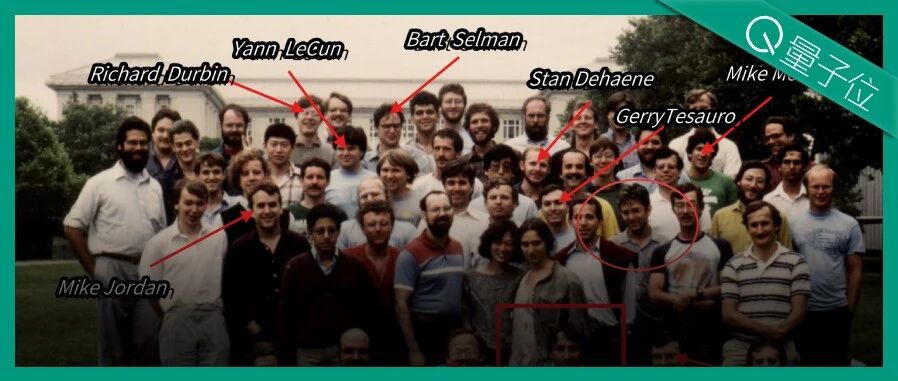
Core Viewpoint - The article discusses the legacy and influence of Geoffrey Hinton in the AI field, highlighting his contributions and the success of his first PhD student, Peter Brown, who became a prominent figure in quantitative finance [1][8][14]. Group 1: Hinton's Influence and Legacy - Hinton is recognized as a pivotal figure in the development of neural networks, which have become foundational in AI, particularly in deep learning [4][8]. - The 1986 photo from the first connectionist summer school at CMU features Hinton alongside other influential figures in AI, showcasing the early community that would shape the future of technology [2][4]. - Hinton's commitment to his research and his reluctance to leverage his connections for personal gain reflect his integrity and dedication to the field [9][10]. Group 2: Peter Brown's Journey - Peter Brown, Hinton's first PhD student, transitioned from AI research to become the CEO of Renaissance Technologies, a leading quantitative hedge fund [5][14]. - Brown's early work in speech recognition laid the groundwork for modern statistical models in the field, influencing decades of research [23][25]. - His decision to join Renaissance Technologies was driven by financial necessity, highlighting the intersection of personal circumstances and career choices [31][33]. Group 3: Renaissance Technologies - Renaissance Technologies is known for its high returns, particularly through its Medallion Fund, which achieved an annualized return of over 66% from 1988 to 2019 [38]. - The firm's success is attributed to its reliance on data-driven, quantitative trading strategies developed by mathematicians and computer scientists [39][40]. - Brown's leadership and work ethic, including a commitment to long hours, have been crucial to the firm's performance and his personal wealth accumulation [42][43].
金融工程专题:宏观因子的周期轮动与资产配置
BOHAI SECURITIES· 2025-12-30 09:53
Quantitative Models and Construction Methods 1. Model Name: HP Filter - **Model Construction Idea**: The HP filter is used to decompose a time series into trend and cyclical components, aiming to remove long-term trends and short-term noise from macroeconomic factors[10][9] - **Model Construction Process**: The HP filter solves the following optimization problem to balance trend smoothness and data fit: $$\operatorname*{min}\left\{\sum_{t=1}^{T}(y_{t}-g_{t})^{2}+\lambda\sum_{t=2}^{T-1}[(g_{t+1}-g_{t})-(g_{t}-g_{t-1})]^{2}\right\}$$ - \(y_t\): Original time series data - \(g_t\): Trend component - \(\lambda\): Smoothing parameter, where larger \(\lambda\) results in a smoother trend In this report, a larger \(\lambda\) is used to remove long-term trends, and a smaller \(\lambda\) is applied to filter out noise, resulting in a mid-cycle series for further analysis[10] - **Model Evaluation**: The HP filter aligns with classical macroeconomic analysis frameworks but suffers from endpoint bias and cannot identify different frequency cycles[3][42] 2. Model Name: Fourier Transform - **Model Construction Idea**: Fourier Transform decomposes a time series into a combination of sine waves with different frequencies, amplitudes, and phases, enabling the identification of dominant cycles in macroeconomic data[25][26] - **Model Construction Process**: The Fourier Transform is defined as: $$F(f)=\int_{-\infty}^{\infty}f(x)e^{-i2\pi f(x)}\,\mathrm{d}x$$ - \(f(x)\): Time series data - \(F(f)\): Frequency domain representation Since most macroeconomic data are non-stationary, the HP filter is first applied to remove long-term trends, producing a stationary series. The Fourier Transform is then used to extract the main cycles and fit the periodic series[25][26] - **Model Evaluation**: Suitable for analyzing historical data and identifying economic cycle patterns, but assumes constant periodic structures over time, which may reduce short-term fit[3][42] 3. Model Name: Hybrid Filtering - **Model Construction Idea**: Combines the strengths of HP filtering and Fourier Transform to achieve both extrapolation capability and flexibility in cycle fitting[42] - **Model Construction Process**: - Apply Fourier Transform to identify periodic patterns in macroeconomic data - Use HP filtering to observe short-term trends in macroeconomic factors - Combine the results to create a series that retains both periodicity and trend information[42] - **Model Evaluation**: Balances the advantages of both methods, providing better adaptability for macroeconomic data analysis[42] 4. Model Name: Merrill Lynch Clock Model - **Model Construction Idea**: Divides the economic cycle into four phases based on economic growth and inflation, using PMI YoY growth as a proxy for economic growth and PPI YoY growth for inflation[68][72] - **Model Construction Process**: - Recovery: PMI YoY up, PPI YoY down → 60% stocks, 40% bonds - Expansion: PMI YoY up, PPI YoY up → 60% commodities, 40% stocks - Stagflation: PMI YoY down, PPI YoY up → 60% cash, 40% commodities - Recession: PMI YoY down, PPI YoY down → 60% bonds, 40% cash[72] - **Model Evaluation**: Achieves higher returns and Sharpe ratio compared to a balanced allocation model, with a monthly win rate of 56.49%[68][70] 5. Model Name: Monetary-Credit Model - **Model Construction Idea**: Adapts the Merrill Lynch Clock for the Chinese market by focusing on monetary and credit conditions, using M2 YoY growth for monetary policy and social financing YoY growth for credit conditions[76] - **Model Construction Process**: - Loose Monetary & Loose Credit: M2 YoY up, social financing YoY up → 60% stocks, 40% commodities - Tight Monetary & Loose Credit: M2 YoY down, social financing YoY up → 60% commodities, 40% stocks - Tight Monetary & Tight Credit: M2 YoY down, social financing YoY down → 60% cash, 40% bonds - Loose Monetary & Tight Credit: M2 YoY up, social financing YoY down → 60% bonds, 40% stocks[76] - **Model Evaluation**: Slightly lower annualized returns than the Merrill Lynch Clock but demonstrates more stable excess returns since 2020[76][85] --- Model Backtesting Results 1. HP Filter - **Annualized Excess Return**: 1.43%-3.16% for stock index timing[57][58] - **Annualized Excess Return**: 4.84%-9.91% for stock-bond timing[60][61] 2. Fourier Transform - **Core Cycle**: Identified a 38-44 month cycle across all macroeconomic factors, suggesting a 3-4 year mid-cycle pattern[26][83] 3. Merrill Lynch Clock Model - **Annualized Return**: 11.71% - **Annualized Excess Return**: 5.82% - **Sharpe Ratio**: 1.037 - **Monthly Win Rate**: 56.49%[68][70] 4. Monetary-Credit Model - **Annualized Return**: 9.93% - **Annualized Excess Return**: 4.04% - **Sharpe Ratio**: 0.589 - **Monthly Win Rate**: 56.90%[76][79] --- Quantitative Factors and Construction Methods 1. Factor Name: PMI YoY Growth - **Construction Idea**: Represents economic growth trends[9][83] - **Construction Process**: Derived from the year-over-year growth rate of the Purchasing Managers' Index (PMI)[9][83] 2. Factor Name: PPI YoY Growth - **Construction Idea**: Represents inflation trends[9][83] - **Construction Process**: Derived from the year-over-year growth rate of the Producer Price Index (PPI)[9][83] 3. Factor Name: M1 YoY Growth - **Construction Idea**: Reflects changes in narrow money supply[9][83] - **Construction Process**: Derived from the year-over-year growth rate of M1[9][83] 4. Factor Name: M2 YoY Growth - **Construction Idea**: Reflects changes in broad money supply[9][83] - **Construction Process**: Derived from the year-over-year growth rate of M2[9][83] 5. Factor Name: Social Financing YoY Growth - **Construction Idea**: Represents credit supply conditions[9][83] - **Construction Process**: Derived from the year-over-year growth rate of total social financing[9][83] 6. Factor Name: 1-Year Treasury Yield YoY Difference - **Construction Idea**: Reflects interest rate trends[9][83] - **Construction Process**: Calculated as the year-over-year difference in 1-year treasury yields[9][83] 7. Factor Name: Industrial Production YoY Growth - **Construction Idea**: Represents industrial output trends[9][83] - **Construction Process**: Derived from the year-over-year growth rate of industrial production[9][83] 8. Factor Name: Corporate Profit YoY Growth - **Construction Idea**: Reflects corporate profitability trends[9][83] - **Construction Process**: Derived from the year-over-year growth rate of corporate profits[9][83] --- Factor Backtesting Results Stock Index Timing - **Annualized Excess Return**: 1.43%-3.16% for factors like M1 YoY, PPI YoY, and PMI YoY[57][58] Stock-Bond Timing - **Annualized Excess Return**: 4.84%-9.91% for factors like M1 YoY, PPI YoY, and PMI YoY[60][61]