丸美

Search documents
未知机构:申万化妆品26年1月抖音渠道重点国货GMV同比基于蝉妈妈数据分析-20260203
未知机构· 2026-02-03 01:45
Summary of Key Points from the Conference Call Records Industry Overview - The records focus on the cosmetics industry in China, specifically analyzing the Gross Merchandise Value (GMV) of various brands in January 2026 through data from the Douyin platform. Key Companies and Their Performance 1. 上美股份 (Shangmei Group) - Total GMV for 韩束 (Hansu) and its sub-brands in January was approximately 6.6 billion CNY, representing a 9% increase year-over-year [1] - 韩束 brand GMV was about 5.3 billion CNY, showing a decline of 3% [1] - NewPage brand GMV reached approximately 0.7 billion CNY, marking a significant increase of 120% [1] - 极方 (Jifang) achieved a GMV of 0.1 billion CNY, with rapid growth year-over-year [1] - 聚光白 (Juguangbai) also recorded a GMV of 0.1 billion CNY, indicating high growth [1] - 安敏优 (Anminyou) had a GMV of 0.3 billion CNY, with a remarkable year-over-year growth of 267% [1] 2. 珀莱雅 (Proya) - The three major brands under Proya had a combined GMV of 3.5 billion CNY in January, reflecting a 2% increase [1] - The main brand, 珀莱雅, generated a GMV of approximately 2.8 billion CNY, down by 2% [1] - 彩棠 (Caitang) brand GMV was 0.3 billion CNY, showing a decline of 12% [1] - OR洗护 (OR Hair Care) brand GMV reached 0.3 billion CNY, with a substantial increase of 148% [1] 3. 若羽臣 (Ruoyuchen) - The combined GMV for the brands 绽家 (Zhanjia), 斐萃 (Feicui), and Nuibay was 1.7 billion CNY [2] - 绽家 brand GMV was 0.7 billion CNY, increasing by 88% [2] - 斐萃 brand GMV was 0.8 billion CNY, showing a remarkable growth of 345% [2] 4. 丸美股份 (Marubi) - The total GMV for its two main brands was 2.6 billion CNY, reflecting a 1% increase [2] - 主品牌丸美 (Marubi) had a GMV of approximately 1.8 billion CNY, up by 5% [2] - 恋火 (Lianhuo) brand GMV was 0.8 billion CNY, down by 7% [2] 5. 毛戈平 (Mao Geping) - The brand achieved a GMV of approximately 2.9 billion CNY, with an increase of 78% [2] 6. 林清轩 (Lin Qingxuan) - The brand's GMV was 2.6 billion CNY, reflecting a significant increase of 145% [2] 7. 薇诺娜 (Winona) - The brand recorded a GMV of 1.0 billion CNY, with a growth of 156% [2] 8. 润本 (Runben) - The brand's GMV was approximately 0.4 billion CNY, showing a slight decline of 1% [2] 9. 福瑞达 (Furuida) - The two major brands under Furuida had a combined GMV of about 0.8 billion CNY, increasing by 12% [2] 10. 水羊股份 (Shuiyang) - The four major brands achieved a GMV of approximately 0.7 billion CNY, doubling year-over-year [2] 11. 上海家化 (Shanghai Jahwa) - The three skincare brands under Shanghai Jahwa had a combined GMV of about 0.9 billion CNY, reflecting a significant increase of 252% [2] 12. 植物医生 (Plant Doctor) - The brand's GMV in December was 0.1 billion CNY, showing a decline of 5% [2] 13. 拉芳 (Lafang) - The brand achieved a GMV of approximately 0.1 billion CNY, with an increase of 135% [2] Additional Insights - The data indicates a mixed performance across various brands, with some experiencing significant growth while others faced declines. - The overall trend suggests a competitive landscape in the cosmetics industry, with emerging brands showing strong growth potential, particularly in the Douyin channel. This analysis highlights the dynamic nature of the cosmetics market in China, emphasizing the importance of monitoring GMV trends for investment opportunities and risk assessment.




丸美生物递表港交所,拟“A+H”募资加码研发与渠道
Jiang Nan Shi Bao· 2025-12-25 06:44
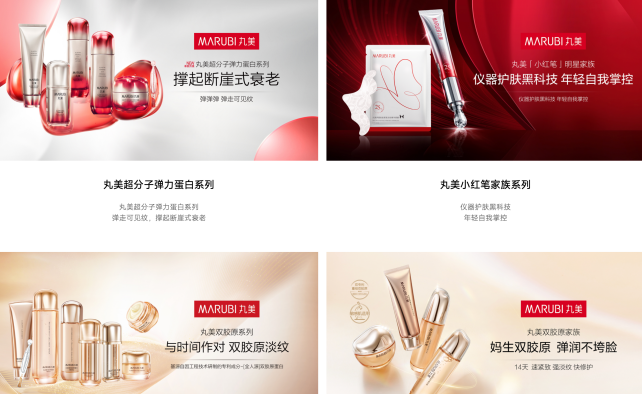
Core Viewpoint - Marubi Biotechnology (丸美生物) is planning to issue H-shares to raise funds aimed at enhancing its core strategies, including strengthening its omni-channel sales system, improving brand value, incubating new brands, enhancing R&D capabilities, optimizing the supply chain, and supplementing working capital, with the goal of improving overall competitiveness [1][2] Group 1: Company Strategy and Market Position - The company has been focused on the anti-aging skincare industry for over 20 years, leveraging synthetic biology technology and core breakthroughs in research and development, particularly in recombinant collagen products [1] - According to a Frost & Sullivan report, Marubi is the third largest beauty company in China in the recombinant collagen skincare segment, based on retail sales projected for 2024 [1] - Marubi has established an integrated R&D platform that encompasses synthetic biology, protein engineering, green chemistry, natural plant extraction, and bio-fermentation, continuously launching new ingredients and products to support business growth [1] Group 2: Fundraising and Use of Proceeds - The company has developed over 80 proprietary ingredients, including recombinant double collagen and super molecular cotton flower extract, with more than 30 achieving large-scale production as of September 30, 2025 [2] - The funds raised from the H-share issuance will be used to build a comprehensive omni-channel sales system, enhance brand value through diversified marketing activities, expand the R&D team, upgrade R&D facilities, improve supply chain capabilities, and support working capital [2] - The issuance will not change the company's control, with Dr. Sun Huaqing and Wang Xiaopu remaining the actual controllers [2] Group 3: Competitive Advantage and Future Outlook - Marubi's brand has ranked first in China's domestic eye care market for four consecutive years, while its "Lianhuo" brand ranks third among domestic foundation brands [3] - The anti-aging skincare segment is the fastest-growing sub-sector in China's skincare industry, and the company aims to leverage this growth opportunity through continued investment in core technology R&D [3] - As of September 30, 2025, the company has applied for 651 patents globally, with 265 authorized invention patents, positioning its R&D strength among the top in domestic beauty enterprises [3] - The H-share issuance is viewed as a strategic decision for long-term development, enhancing capital strength and core competitiveness, and laying a solid foundation for sustainable growth and shareholder value creation [3]
丸美生物改造管理层
经济观察报· 2025-12-21 04:15
Core Viewpoint - Mumei Bio is undergoing significant management changes and operational adjustments to enhance its online sales channels and overall efficiency, amidst challenges in financial reporting and profitability [2][12][16]. Management Changes - Mumei Bio has appointed a new co-CEO, Wu Meng, who has a strong background in e-commerce and was previously a key figure at Shanghai Natural Hall Group [2][6][8]. - The company has seen notable management turnover, including the departure of key personnel such as Wang Xiweng, who was responsible for e-commerce operations [7][10]. - The founder's son, Sun Yunqi, has been appointed to the board, indicating a shift in leadership dynamics [11]. Financial Performance - Mumei Bio's revenue for the first half of 2025 is reported at 1.765 billion yuan, a year-on-year increase of 30.55%, while net profit has declined by 1.2% to 174 million yuan [2][4]. - The company experienced a revenue plateau from 2020 to 2022, but in 2023, revenue surpassed 2.2 billion yuan, with projections of 2.9 billion yuan for 2024 [3][15]. - Despite revenue growth, net profit has not kept pace, with a notable decline in 2025, marking the first drop in three years [4][15]. Operational Strategy - Mumei Bio is focusing on enhancing its direct-to-consumer (DTC) capabilities and optimizing its online sales channels, with a significant shift towards self-broadcasting on platforms like Douyin and Kuaishou [14][15]. - The company aims to balance its sales strategies between self-broadcasting and traditional e-commerce to improve profitability and reduce reliance on influencer commissions [15]. Regulatory and Compliance Issues - Prior to its Hong Kong IPO application, Mumei Bio faced scrutiny from the Guangdong Securities Regulatory Commission regarding financial reporting inaccuracies, including revenue recognition and asset valuation issues [16][17]. - The company has made corrections to its financial statements, revealing inflated revenue and profit figures, which raises concerns about its compliance and operational integrity [16][17].


丸美生物改造管理层
Jing Ji Guan Cha Wang· 2025-12-20 06:47
Core Insights - Guangdong Marubi Biotechnology Co., Ltd. has appointed a new co-CEO, Wu Meng, who previously played a significant role in the online business development at Shanghai Natural Hall Group [2][4] - The company is optimizing its online channels and improving operational efficiency while preparing for a Hong Kong stock listing [2][10] - Marubi's revenue for the first half of 2025 is reported at 1.765 billion yuan, a year-on-year increase of 30.55%, but net profit has declined by 1.2% [2][3] Management Changes - Wu Meng's appointment as co-CEO is part of Marubi's strategy to enhance its e-commerce operations [6][10] - The company has seen significant turnover in its management, including the departure of key figures like Wang Xiweng, who was responsible for e-commerce [5][7] - Sun Yunqi, the son of founder Sun Huaqing, has been appointed as an executive director, indicating a shift in leadership dynamics [8][10] Financial Performance - Marubi experienced a revenue plateau from 2020 to 2022, but in 2023, revenue surpassed 2.2 billion yuan, with projections of 2.9 billion yuan for 2024 [3][10] - Despite revenue growth, net profit has been declining, with the first half of 2025 showing the first drop in three years [3][11] - The company has faced scrutiny from regulators regarding financial reporting issues, including inaccurate revenue recognition [12][13] E-commerce Strategy - Marubi's online sales have become a crucial growth driver, with online revenue reaching 1.87 billion yuan in 2023, a year-on-year increase of approximately 50% [5][10] - The company aims to enhance its direct-to-consumer capabilities and improve its online sales channels as part of its fundraising strategy for the Hong Kong listing [10][11] - The shift towards self-broadcasting in e-commerce is a key focus, with plans to balance different sales channels to improve profitability [11][12]

从“假洋品牌”往事到真“财务问题”,丸美赴港上市能赢回信任吗?
Feng Huang Wang Cai Jing· 2025-12-18 06:07
Core Viewpoint - The company Marubi, known for its beauty products, is planning a secondary listing in Hong Kong after facing financial and governance issues following its initial public offering in A-shares in 2019. The company has experienced a decline in net profit from 2020 to 2022, with a significant drop of 47.95% in 2021, although there has been a recovery in 2023 [1][3]. Financial Performance - Marubi's revenue from 2022 to 2025 (first nine months) is projected to be 17.3 billion, 22.3 billion, 29.7 billion, and 24.5 billion respectively, while net profits are expected to be 1.7 billion, 2.8 billion, 3.4 billion, and 2.5 billion [3]. - The company's revenue is primarily generated from its two brands, Marubi and Lianhuo, with Marubi contributing 70-80% of total revenue. Lianhuo's revenue is expected to grow from 2.9 billion in 2022 to 9 billion in 2024 [5]. - Marubi's overall gross margin has increased from 67.8% in 2022 to 74.8% in the first nine months of 2025, while the net profit margin has remained around 10% [6]. Governance Issues - Marubi has faced scrutiny for financial irregularities, including inaccurate revenue recognition and improper accounting practices. The company has been penalized for these issues, which include misreporting funds held in third-party payment platforms and misclassifying consulting fees as research and development expenses [8][9]. - The management of raised funds has also been criticized, as Marubi failed to separate the accounting for projects funded by raised capital from those funded by its own resources [9]. Dividend Concerns - Since its IPO in 2019, Marubi has distributed a total of 1.08 billion in cash dividends over eight occasions, with significant amounts flowing to the founder and his spouse, raising questions about the sustainability of such distributions [12][13]. Brand Trust Issues - Marubi has a history of controversies, including misleading claims about its Japanese origins and product quality issues. Although these past issues have been less frequently mentioned in recent discussions, the company now faces new challenges related to financial data and governance, which could impact its brand trust [17][20].
从“假洋品牌”往事到真“财务问题”,丸美赴港上市能赢回信任吗?
凤凰网财经· 2025-12-18 03:52
Core Viewpoint - The company Marubi, known for its beauty products, is planning a secondary listing in Hong Kong after facing financial and governance issues following its initial public offering in A-shares in 2019. The company has experienced a decline in net profit from 2020 to 2022, with a significant drop of 47.95% in 2021, although there has been a recovery in 2023 [1][3]. Financial Performance - Marubi's revenue for the years 2022 to 2024 and the first nine months of 2025 is projected to be 1.73 billion, 2.23 billion, 2.97 billion, and 2.45 billion respectively, with net profits of 170 million, 280 million, 340 million, and 250 million [3]. - The company's revenue is primarily generated from its two brands, Marubi and Lianhuo, with Marubi contributing 70-80% of total revenue. Lianhuo's revenue is expected to grow from 290 million in 2022 to 900 million in 2024 [5]. - Despite an increase in overall gross margin from 67.8% in 2022 to 74.8% in the first nine months of 2025, the net profit margin has remained around 10% due to rising sales and distribution expenses, which increased from 850 million in 2022 to 1.63 billion in 2024 [6]. Governance and Compliance Issues - Marubi has faced scrutiny for financial irregularities, including inaccurate revenue recognition and improper accounting practices. The company has been penalized for these issues, which include misreporting funds held in third-party payment platforms and misclassifying consulting fees as research and development expenses [10][11]. - The management of raised funds has also been criticized, as Marubi failed to separate the accounting for projects funded by raised capital from those funded by its own resources, leading to non-compliance with regulations [11][15]. Dividend Practices - Since its IPO in 2019, Marubi has distributed cash dividends totaling 1.08 billion, with significant amounts flowing to the founder and his spouse, raising concerns about the sustainability of such practices in relation to the company's financial health [16][19]. Brand Trust and Historical Controversies - Marubi has a history of controversies, including misleading claims about its Japanese origins and product quality issues. Although these past issues have diminished in public discourse, current concerns have shifted to financial data integrity and governance practices [30][31].
丸美生物:向港交所递表 全面提升综合竞争力
Zheng Quan Shi Bao Wang· 2025-12-17 11:02
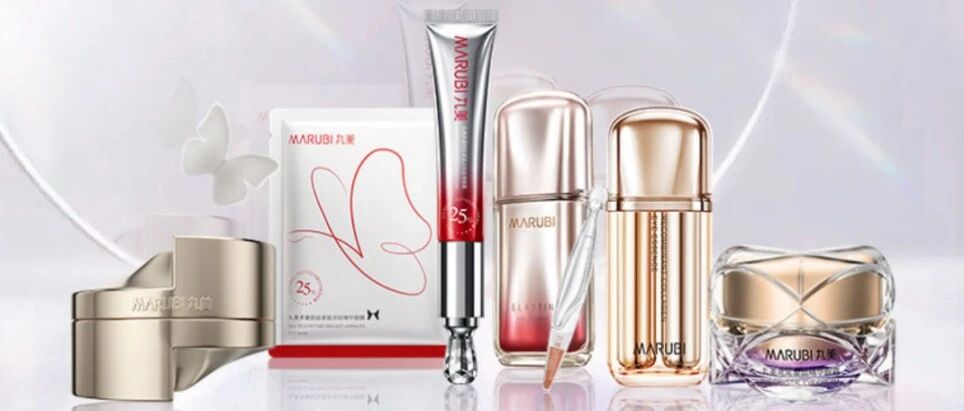
Core Viewpoint - Marubi Biotechnology (丸美生物) is planning to issue H-shares to raise funds aimed at enhancing its core strategies, including strengthening its omni-channel sales system, improving brand value, incubating new brands, enhancing R&D capabilities, optimizing the supply chain, and supplementing working capital, with the goal of improving overall competitiveness [1][2] Group 1: Company Strategy and Financial Plans - The funds raised from the H-share issuance will be used entirely to reinforce the company's core strategies, including building a comprehensive omni-channel sales system and enhancing brand value through diversified marketing activities [1][2] - The company emphasizes that the H-share issuance will not lead to a change in control, with Dr. Sun Huaqing and Wang Xiaopu remaining the actual controllers [2] - Marubi plans to invest in both online and offline direct-to-consumer (DTC) capabilities, expand its R&D team, upgrade R&D facilities, and improve supply chain capabilities [2] Group 2: Market Position and Competitive Advantage - Marubi has established a closed-loop value chain for core raw materials, having developed over 80 proprietary ingredients, with more than 30 achieving large-scale production [2] - The company holds 651 global patent applications and has been granted 265 invention patents, positioning its R&D strength among the top in the domestic beauty industry [3] - Marubi's brand has ranked first in China's eye care market for four consecutive years, while its "Lianhuo" brand ranks third in the domestic foundation market [3] Group 3: Industry Growth and Future Outlook - The anti-aging skincare segment is the fastest-growing sub-sector in China's skincare industry, presenting significant growth opportunities for Marubi [3] - The H-share issuance is viewed as a strategic decision for long-term development, aligning with industry trends and enhancing the company's capital strength and core competitiveness [3]
丸美生物递表港交所 全面提升综合竞争力
Zhong Zheng Wang· 2025-12-16 10:55
Core Viewpoint - Guangdong Marubi Biotechnology Co., Ltd. plans to raise funds through H-share issuance to strengthen its core strategies, enhance its comprehensive competitiveness, and improve its operational capabilities [1][3] Group 1: Company Overview - Marubi has been focused on the anti-aging skincare industry for over 20 years, leveraging synthetic biology technology and core breakthroughs in recombinant collagen [2] - According to a Frost & Sullivan report, Marubi is the third largest beauty company in China in the recombinant collagen skincare segment based on retail sales in 2024 [2] Group 2: Fundraising Purpose - The funds raised will be used to enhance the company's multi-channel sales system, improve brand value, incubate new brands, strengthen R&D capabilities, optimize the supply chain, and supplement working capital [1][3] - Specific plans include building direct-to-consumer (DTC) capabilities, diversifying marketing activities, expanding the R&D team, and upgrading R&D facilities [3] Group 3: Brand Positioning - Marubi's brand has ranked first in China's eye care market for four consecutive years, while its "Lianhuo" brand ranks third among domestic makeup brands [3] - The company has developed over 80 proprietary ingredients, with more than 30 achieving large-scale production, establishing a closed-loop value chain from basic research to application [2] Group 4: Shareholder Return Strategy - Marubi emphasizes a shareholder return plan, prioritizing cash dividends, with a commitment to distribute at least 10% of the annual distributable profits in cash [4] - The company aims to leverage growth opportunities in the anti-aging skincare market, which is the fastest-growing segment in China's skincare industry [4] Group 5: Long-term Development Strategy - The H-share issuance is a strategic decision for long-term development, aligning with industry trends to enhance capital strength and core competitiveness [5] - Effective use of the raised funds will support product innovation and market expansion, laying a solid foundation for sustainable long-term growth [5]
韩国品牌涌入中国;露露乐蒙CEO被炒了
2 1 Shi Ji Jing Ji Bao Dao· 2025-12-15 07:09
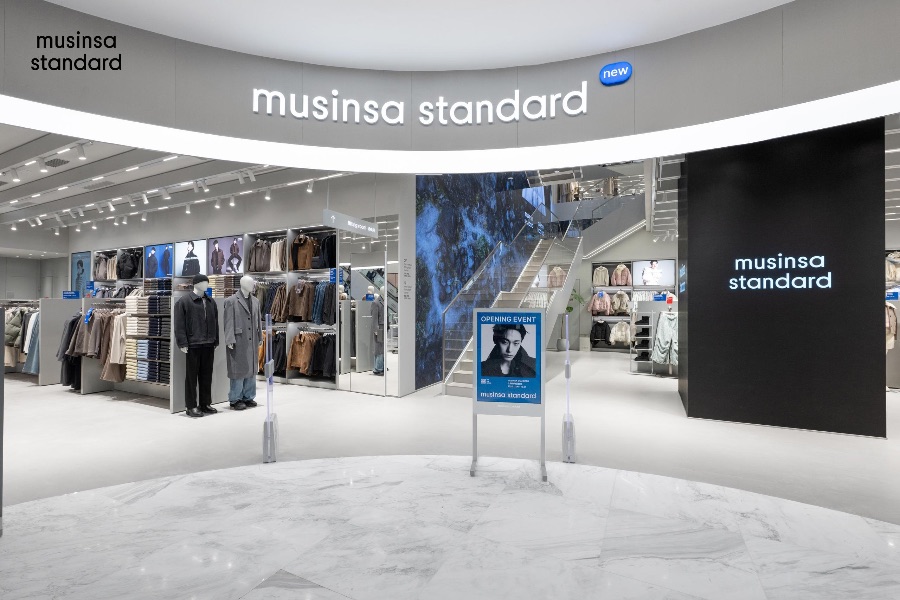
Group 1: Lululemon Financial Performance - Lululemon reported a 7% year-over-year increase in global net revenue to $2.6 billion, but net profit decreased by 12.8% to $307 million [1] - The company experienced a significant 46% year-over-year increase in net revenue from the China market, leading global performance [9] - The CEO Calvin McDonald will step down at the end of January 2026, with interim leadership provided by the CFO and CBO during the search for a new CEO [5] Group 2: Market Developments in Fashion and Retail - Musinsa opened its first overseas flagship store in Shanghai, with plans to expand to over 100 stores in China within five years, targeting a revenue of 1 trillion KRW (approximately 4.78 billion RMB) by 2030 [2] - The opening of the largest Dior store in Beijing signifies a recovery in the luxury market in China, showcasing a blend of retail and art [6] - Marubi plans to list on the Hong Kong Stock Exchange, having shown significant revenue growth in its main brands [10] Group 3: Investment Activities - L'Oréal is increasing its stake in the medical beauty giant Gauderm, raising its total ownership to 20% [14] - Ermenegildo Zegna has made a second investment in the Canadian running brand Norda, indicating a strategic move into the outdoor market [15] - Unilever has spun off its ice cream division into a standalone company, which has successfully listed in Amsterdam, London, and New York, capturing over 20% of the global ice cream market [16]

丸美生物,拟赴港上市
Zhong Guo Zheng Quan Bao· 2025-11-13 13:37
Core Viewpoint - Marubi Biotechnology announced plans to issue H-shares and apply for listing on the Hong Kong Stock Exchange to enhance capital strength and international competitiveness [1][3] Group 1: Company Strategy - The company aims to accelerate its internationalization strategy and will consider the interests of existing shareholders during the issuance process [1] - The specific timing and details of the issuance will be determined by the board based on market conditions and regulatory approvals [1] Group 2: Financial Performance - For the first three quarters of 2025, Marubi achieved revenue of approximately 2.45 billion yuan, a year-on-year increase of 25.51%, and a net profit of about 244 million yuan, up 2.13% year-on-year [4] - The average selling prices of eye care, skin care, cleansing, and beauty products increased by 54.77%, 4.62%, 12.64%, and 24.78% respectively [4] Group 3: Operational Metrics - The accounts receivable turnover days decreased to 3.6 days from 6.32 days year-on-year, indicating improved efficiency in receivables management [5] - Inventory turnover days increased to 110.03 days from 98.94 days year-on-year, attributed to preemptive stocking for the "Double 11" shopping festival and increased safety stock due to business growth [5]