
沉浸式戏剧

Search documents
天津多元场景激发春节文旅消费市场
Sou Hu Cai Jing· 2026-02-25 02:04
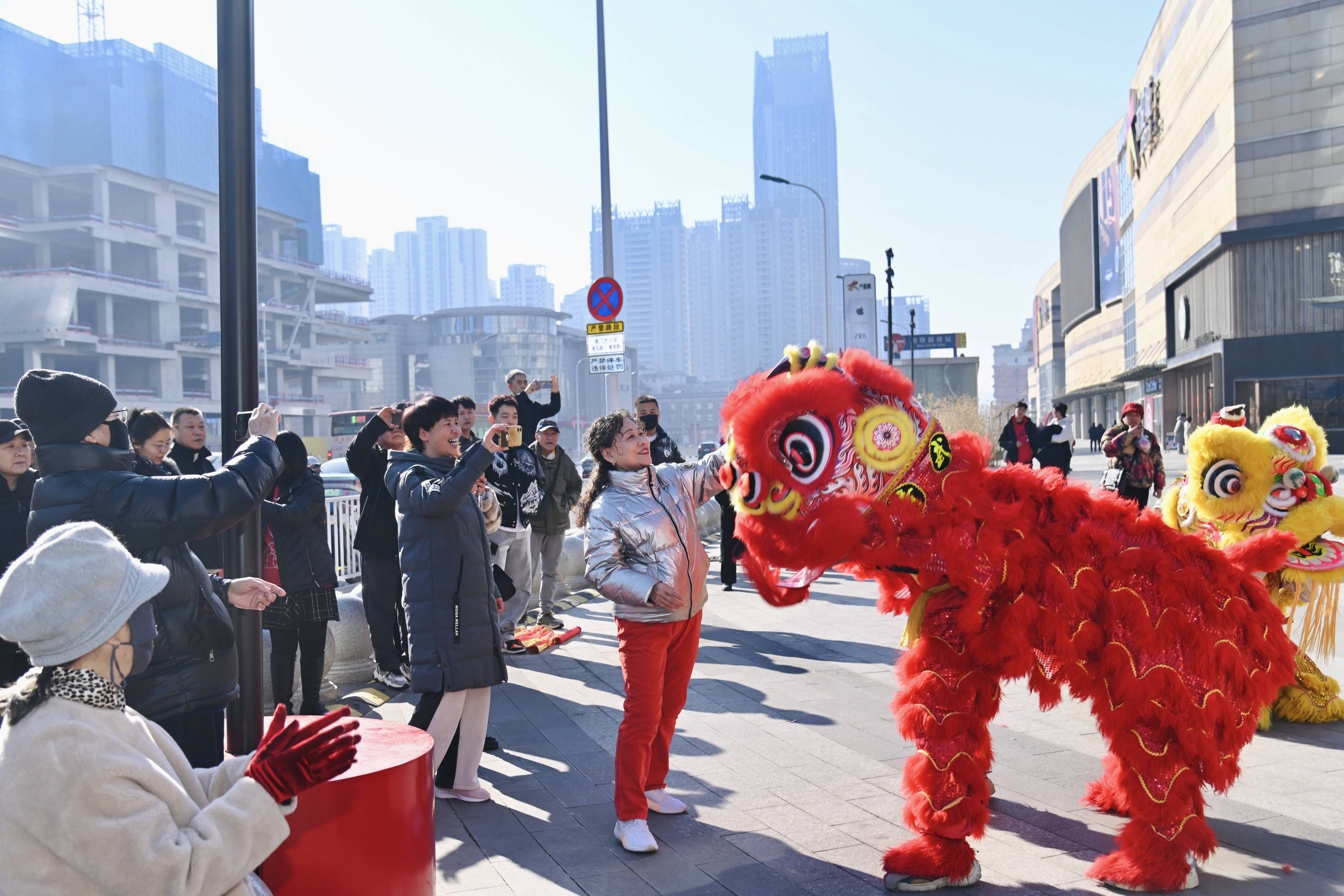
Group 1 - The article highlights the transformation of traditional theater experiences to meet the demands of younger audiences, with immersive and interactive performances becoming popular in shopping centers like Tianjin Nankai Dayue City [1] - The integration of various cultural and entertainment activities during the Spring Festival has led to a surge in visitor numbers and consumer engagement, creating a vibrant new consumption ecosystem [2][5] - The average daily visitor count at the ancient culture street in Tianjin exceeded 200,000 during the Spring Festival, showcasing the effectiveness of combining cultural experiences with consumer activities [7][8] Group 2 - During the Spring Festival, 473 monitored commercial enterprises in Tianjin achieved a total sales revenue of 2.97 billion yuan, reflecting an 8.1% year-on-year increase, with foot traffic reaching 20.04 million, up 6% [8] - The Tianjin Municipal Bureau of Commerce initiated the "2026 Happy Shopping Spring" campaign, organizing over 500 special events to enhance the festive market atmosphere and promote consumer spending [8] - The overall consumer environment in Tianjin during the Spring Festival was characterized by a rich supply of goods, high visitor flow, and a well-ordered market, indicating a thriving economic landscape [8]

透过春节文旅窗口看热气腾腾的郑州
Zheng Zhou Ri Bao· 2026-02-25 00:50
Core Insights - The recent Spring Festival holiday in Zhengzhou showcased a vibrant cultural and tourism market, reflecting the city's innovative development and vitality [1] Group 1: Visitor Statistics - During the holiday, Zhengzhou received a total of 17.907 million visitors, with 9.8272 million visiting 19 featured commercial streets [1] - Zhengzhou Airport served 850,000 passengers, while the railway transported 5.368 million travelers [1] - The total box office revenue for films during the Spring Festival reached 60.368 million yuan, placing Zhengzhou among the top ten cities in terms of box office performance (excluding municipalities) [1] Group 2: Cultural Activities and Offerings - The Zhengzhou cultural tourism market experienced robust supply and demand, with 233 cultural activities across 13 categories launched during the Spring Festival [2] - Over 340 festive events were organized by various tourist attractions and cultural venues, including immersive theater and traditional performances [2] - The cultural products evolved from quantity to quality, catering to diverse consumer needs while maintaining cultural heritage [2] Group 3: Service and Market Environment - Zhengzhou implemented policies to enhance consumer experience, including a trade-in program and promotional activities for receipts [2] - The city ensured sufficient supply and stable prices for essential goods, contributing to a well-ordered urban operation and enhanced service quality [2] - These measures fostered consumer enthusiasm and market confidence, creating a favorable environment for cultural tourism [2] Group 4: Economic Outlook - The Spring Festival highlighted the economic vitality of Zhengzhou, showcasing the city's orderly governance and steady development [3] - The city aims to leverage cultural tourism to stimulate consumption and enhance economic growth, focusing on deepening cultural roots and optimizing service support [3] - Zhengzhou is positioned to unlock its domestic demand potential and drive the cultural tourism market towards sustained success throughout the year [3]
守住古城文化根脉
Xin Lang Cai Jing· 2026-01-31 23:42
Core Insights - The "Ancient City Lecture Hall" in Quanzhou aims to deepen the understanding of the city's historical and cultural significance as a key node on the Maritime Silk Road, enhancing its academic vitality [1][2] - The initiative reflects a growing trend in domestic cultural tourism, where ancient cities are seen as museums of civilization, offering not just tourism but also a sense of cultural belonging and spiritual home [1][2] Summary by Sections Cultural Significance - Quanzhou's "Ancient City Lecture Hall" provides a platform for in-depth interpretation of its history, moving beyond superficial tourism to a more profound cultural experience [2] - The initiative emphasizes the importance of local community engagement, ensuring that residents have a deep understanding and pride in their cultural heritage [2] Tourism Development - Current trends show that many ancient cities focus on sightseeing, leading to a superficial representation of culture, where historical narratives are simplified and traditional crafts are reduced to mere souvenirs [1] - The risk of cultural dilution and tourism homogenization is highlighted, as visitors often lack a deep emotional connection to the local heritage [1] Future Directions - The "Ancient City Lecture Hall" is positioned as a public learning platform for local workers, citizens, and cultural researchers, promoting a sustainable cultural community rather than a purely tourist-driven economy [2] - Quanzhou plans to transform academic resources into sustainable cultural tourism products, such as immersive dramas based on maritime stories and creative cultural products that reflect local aesthetics [2][3]
“怀旧消费”不能千篇一律
Xin Lang Cai Jing· 2026-01-11 22:25
Core Viewpoint - The "nostalgia trend" is becoming a new consumer market force, but there are concerns about its superficiality and lack of deep connection to local history and culture [1][2] Group 1: Transformation of Nostalgia Consumption - The key to transforming "emotional consumption" into "value creation" lies in moving from mere "place replication" to "scenario presentation" [1] - Nostalgia consumption should focus on allowing visitors to "experience" and "understand" the past rather than just "seeing" it [1] - Engaging activities, high-tech scene restoration, and immersive storytelling can turn historical facts into tangible experiences, encouraging deeper engagement from visitors [1] Group 2: Local Roots and Unique Identity - The vitality of the nostalgia economy comes from its unique and regional characteristics, which cannot be replicated [2] - Project development should deeply explore local historical and cultural resources to uncover unique urban, industrial, and community memories [2] - Rooting projects in specific cultural contexts can help avoid the monotony of "one-click replication" and build lasting competitive advantages [2] Group 3: Expanding Beyond Single Business Models - Nostalgia themes should extend beyond consumer scenarios to encompass upstream industry chains, including creative design, product development, and brand incubation [2] - Landmarks, stories, and buildings can give rise to diverse cultural products, immersive dramas, and themed travel routes, creating a culture-value-centric industrial ecosystem [2] - Collaborating with night economies, educational travel, and senior markets can develop deep experience products for various demographics, effectively broadening market boundaries [2] Group 4: Integration with Urban Planning - Nostalgia economy projects must maintain close ties with cities and receive support in urban planning to encourage positive interactions with surrounding historical streets and traditional markets [2] - Continuous exploration of cultural value during project construction can elevate nostalgic spaces into "living memory museums" for cities [2] - When the nostalgia economy transcends mere nostalgia, it can become a new driver of consumer growth [2]
小寒·演出经济暖寒冬|财经二十四节气
2 1 Shi Ji Jing Ji Bao Dao· 2026-01-05 01:12
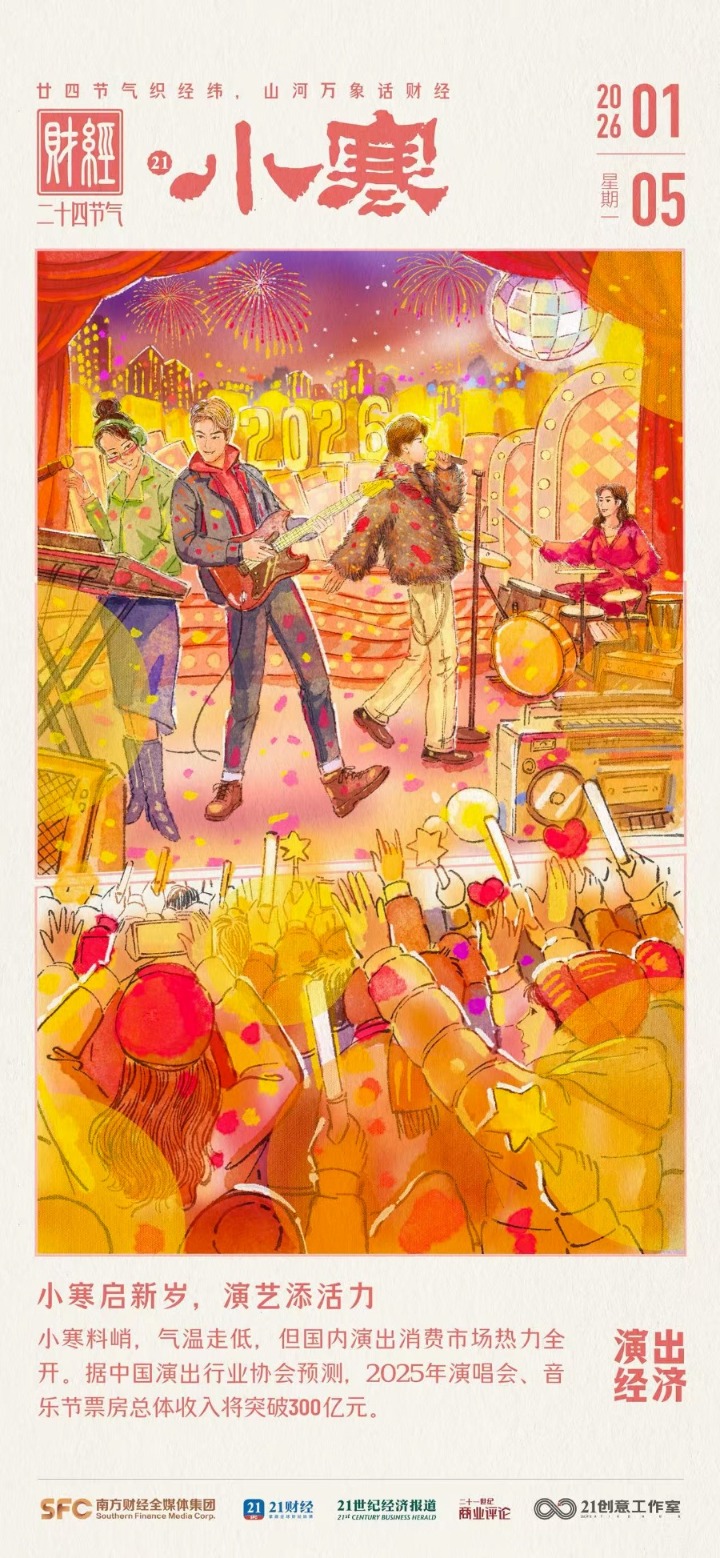
Core Viewpoint - The performance economy in China is experiencing significant growth, becoming a crucial driver of consumer spending, particularly during the winter season with events like concerts and theater performances attracting large audiences [3][4][5]. Group 1: Performance Market Trends - The performance economy has become an important engine for consumption growth, with events during the New Year period seeing high demand and sold-out tickets becoming the norm [5]. - In the 2025-2026 New Year period, major concerts in cities like Guangzhou attracted tens of thousands of attendees, indicating a robust interest in live performances [5]. - The overall market size for the performance industry is projected to reach 1,017.03 billion yuan in 2025, up from 969.10 billion yuan in 2024, reflecting a consistent upward trend [7]. Group 2: Impact on Local Economies - The performance industry is expected to generate over 300 billion yuan in ticket sales for concerts and music festivals in 2025, which will indirectly boost related sectors such as transportation, accommodation, and dining by over 2,000 billion yuan [10]. - Innovative projects that combine performances with tourism are emerging, such as themed events in cities like Nanning and Xi'an, which attract significant numbers of visitors and stimulate local economies [10]. Group 3: Changing Consumer Behavior - The audience's demand for emotional experiences is driving a shift from functional consumption to emotional consumption in the performance sector, highlighting the need for content that resonates deeply with viewers [18]. - Live performances are increasingly seen as a means for emotional release and social connection, providing a unique experience that contrasts with the digital consumption prevalent today [15][18].
推动“百业+文旅”深度融合发展
Xin Hua Ri Bao· 2025-09-24 23:26
Core Insights - The Jiangsu Provincial Government has launched a three-year action plan (2025-2027) to promote high-quality development in the cultural tourism industry, focusing on integrated development and enhancing the product system of cultural tourism [1] Group 1: Integration and Collaboration - The establishment of a "Big Cultural Tourism" working mechanism is essential, requiring cross-departmental coordination and a permanent collaborative platform to address major issues in the integration of various industries with cultural tourism [2] - A resource integration mechanism will be created, involving government leadership and third-party participation to conduct a comprehensive resource survey and establish a database for "integrated resources" [2] Group 2: Regulatory and Service Mechanisms - A comprehensive service and regulatory mechanism will be implemented to enhance cultural tourism consumption services, including the establishment of financial support policies and market regulation measures [3] - The government will focus on improving the quality of tourism services and ensuring a healthy market environment through enhanced regulatory measures [3] Group 3: Innovative Consumption Scenarios - Differentiated integration models will be designed for various industries, creating unique consumption scenarios such as "Performance + Cultural Tourism" and "Agriculture + Cultural Tourism" [4][5] - The integration of agriculture and cultural tourism aims to create new consumption scenes centered around rural areas, enhancing agricultural value and promoting rural tourism [5] Group 4: Sports and Cultural Tourism - The integration of sports and cultural tourism will be promoted through events, enhancing the tourism experience by incorporating local culture and cuisine into sports events [6] - The Jiangsu Provincial Football League has demonstrated significant tourism growth, with a 24.67% increase in visitor numbers during a specific period, showcasing the multiplier effect of sports events on local tourism [6] Group 5: Product Supply and Development - The cultivation of high-quality cultural tourism enterprises is emphasized, encouraging collaboration among key players in the industry to form competitive clusters [7] - Support will be provided for traditional tourism businesses to upgrade and for new enterprises in digital and innovative tourism sectors to thrive [7] Group 6: Technological Empowerment - The integration of technology into cultural tourism is highlighted, utilizing advanced technologies like big data and AI to innovate and enhance the cultural tourism product offerings [8] - Local historical and cultural resources will be leveraged to promote the integration of various industries with cultural tourism through targeted project development [8]
创新消费力|开心麻花:打破“第四堵墙”与观众戏剧共创
Bei Jing Shang Bao· 2025-08-06 01:59
Core Viewpoint - The article discusses how the theater company Happy Mahua is transforming the traditional theater experience into an immersive and interactive social event, breaking down the "fourth wall" and redefining audience engagement [1][5][9]. Group 1: Industry Transformation - Happy Mahua is moving performances from traditional theaters to bars, shopping malls, and community spaces, making theater more accessible to younger audiences [5][14]. - The company has established over 50 self-operated theaters and multifunctional spaces across the country, attracting new audiences who may not have previously engaged with theater [5][6]. - The immersive theater experience allows audiences to interact directly with the performance, creating a unique and personalized experience that varies for each viewer [7][8]. Group 2: Audience Engagement - The shift towards immersive theater has led to the emergence of "drama enthusiasts" who actively participate in performances, with many returning for multiple viewings to experience different storylines [7][9]. - Happy Mahua's performances are designed to include interactive segments, allowing audience choices to influence the narrative, enhancing the overall engagement [8][12]. - The company is leveraging social media to create a community around its performances, encouraging audience members to share their experiences and connect with each other [10][11]. Group 3: Market Adaptation - In response to changing audience expectations, Happy Mahua is adjusting its pricing strategies and enhancing service offerings to cater to repeat viewers and their specific demands [12][13]. - The company is focusing on optimizing its productions to retain competitive shows while managing costs effectively [13]. - Happy Mahua aims to position its theaters in high-traffic areas frequented by young people, integrating theater into their daily lives and social activities [14].
沉浸式互动戏剧铺开崭新业态
Xiao Fei Ri Bao Wang· 2025-07-31 02:59
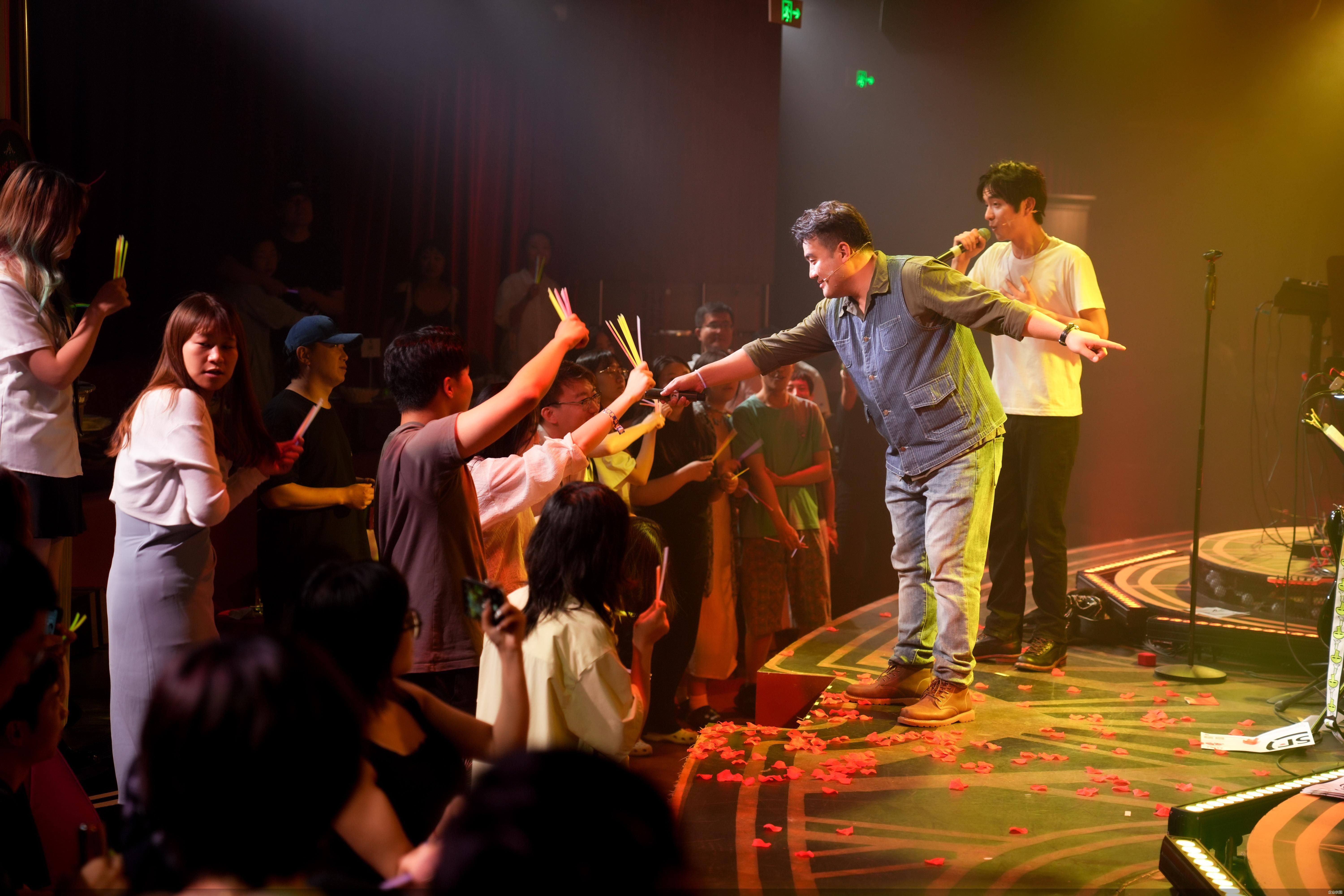
Core Viewpoint - Immersive theater is emerging as a popular form of entertainment, allowing audiences to engage directly with the performance, breaking traditional viewing barriers and providing personalized experiences [2][5]. Group 1: Immersive Theater Experience - Immersive theater allows audiences to participate in the narrative, enhancing their engagement through interactive elements such as solving mysteries alongside characters [2][3]. - The format has gained traction, with 69.63% of surveyed audiences expressing a willingness to purchase tickets for immersive and interactive performances, indicating a growing market [5]. Group 2: Industry Trends and Challenges - The rise of immersive theater is pushing service providers to enhance quality, requiring more complex scene designs and higher performance standards from actors [3][4]. - Despite its growth, the industry faces challenges such as maintaining appropriate levels of audience interaction and ensuring content quality, which are being addressed as the market expands [4][6]. Group 3: Future Development and Support - Government initiatives are being implemented to support the development of immersive theater, focusing on creating new entertainment spaces and promoting original content [6]. - Industry experts emphasize the need for improved cost control and the establishment of industry standards to ensure sustainable growth and quality in immersive theater productions [6].
引进“沉浸式戏剧+”“元宇宙剧场”等新业态 西安打造文旅新地标
Zhong Guo Xin Wen Wang· 2025-06-10 07:25
Group 1 - The cultural and tourism industry in Xi'an is experiencing robust growth, with 146 million tourist visits in the previous year, a year-on-year increase of 9.23%, and a total tourism revenue of 69.82 billion yuan [1] - Xi'an Qujiang New District aims to become a leader in cultural tourism integration, focusing on the "cultural tourism + technology + commerce" model to create new consumption spaces that meet diverse needs [1] - The district is targeting young consumers by developing immersive tourism experiences and collaborating with international tech companies to launch digital cultural tourism products [1] Group 2 - Future plans for Xi'an Qujiang New District include introducing new business models such as "immersive theater" and "metaverse theater" to create a new landmark for small theaters [2] - The district aims to enhance the operational efficiency of 30 cultural venues, with a target of 5,300 performances and a revenue growth of over 10% [2] - Measures to expand inbound tourism consumption include product innovation, scene upgrades, and service optimization, along with the installation of foreign card POS machines and online booking services for international tourists [2]
去年总收入796.29亿元 同比增长7.61%——演出市场释放消费新活力
Jing Ji Ri Bao· 2025-04-21 21:59
Core Insights - The Chinese performance market is projected to reach a total revenue of 79.629 billion yuan in 2024, marking a year-on-year growth of 7.61% [1] - The market is experiencing a shift towards high-quality development, with a balanced distribution of large performances like concerts and music festivals across regions [2] - The integration of cultural and tourism sectors is driving the performance market to new heights, creating opportunities for high-quality content and innovative performance products [3] Group 1: Market Overview - The total revenue of the national performance market is expected to be 79.629 billion yuan in 2024, with ticket sales contributing 57.954 billion yuan and other revenues at 21.675 billion yuan [1] - The demand for performances is being driven by rising income levels, leading consumers to prefer high-quality and differentiated experiences [1] - The youth demographic is becoming the primary consumer group, favoring personalized and experiential content [1] Group 2: Industry Trends - The trend of "traveling to a city for a performance" is emerging, with over 60% of cross-city attendance reported, generating over 200 billion yuan in comprehensive consumption [2] - The performance market is witnessing a significant increase in service quality and detail optimization, moving towards a more standardized and healthy direction [2] - The competition within the performance market is intensifying, necessitating the discovery of more original talents and the production of unique music works [2] Group 3: Cultural Integration - The integration of cultural and tourism sectors is seen as a key driver for the performance market, allowing for broader audience reach through tourism scenarios [3] - The industry is encouraged to expand the supply of cultural performances and introduce more high-quality projects, exploring the potential of "performance+" and "+performance" models [3] - The focus is shifting from reliance on celebrity appeal to fostering a long-term ecosystem that emphasizes experiential consumption [3]