
书架

Search documents
宜家在中国败给了谁?
新消费智库· 2026-01-28 13:00
Core Viewpoint - IKEA's recent closure of seven stores in China marks its largest contraction in 28 years, reflecting significant shifts in consumer behavior and market dynamics [2][4]. Group 1: Changes in Consumer Behavior - Over the past decade, Chinese consumers have shifted from purchasing entire home furnishings to more fragmented, scene-based buying, with over 70% of home furnishing demand now focused on renovation and partial upgrades [5][8]. - The decline in new home sales, down 3.5% year-on-year in the first half of 2025, and the rise of second-hand home transactions, which now account for 42%, indicate that fewer consumers are moving into empty homes [7][8]. - Consumers now prioritize comfort and aesthetics in their living spaces, leading to a demand for smaller, more frequent purchases rather than large-scale furniture acquisitions [8][19]. Group 2: Shifts in Shopping Experience - The traditional "destination shopping" experience at IKEA, characterized by family outings and leisurely browsing, is losing appeal as consumers increasingly prefer instant gratification through online shopping [9][10]. - Consumers now visit stores with specific intentions, often to confirm details of products they have already researched online, rather than to explore and seek inspiration [11][13]. - IKEA's large store format, designed for extensive product displays, is becoming cumbersome for consumers who seek quick and efficient shopping experiences [14][15]. Group 3: Business Model Challenges - IKEA's heavy asset model, which involves owning rather than leasing properties, has become a burden as declining foot traffic increases operational costs for its large stores [17][18]. - The company's reliance on high-ticket items for profitability conflicts with the current consumer trend towards lower-cost, frequently purchased goods, creating a dilemma for maintaining store viability [19][20]. - Attempts to open smaller stores in urban centers face challenges in showcasing large furniture items while maintaining profitability [20][32]. Group 4: Competition from Local Brands - Local Chinese furniture brands have surpassed IKEA in consumer preference, indicating a significant shift in market dynamics and brand perception [23]. - These brands leverage competitive pricing, enhanced shopping convenience through e-commerce, and localized product designs that better meet the needs of Chinese consumers [26][27]. - Local brands utilize social media and live-streaming for marketing, establishing more direct and emotional connections with consumers compared to IKEA's traditional marketing strategies [28]. Group 5: IKEA's Strategic Adjustments - In response to market challenges, IKEA has implemented price reductions, introducing over 1,500 lower-priced products across multiple fiscal years, although this strategy risks diluting its brand image [30][31]. - The company is also transitioning to smaller store formats and enhancing online sales channels, including partnerships with major e-commerce platforms for faster delivery options [32][33]. - However, IKEA's global operational model may hinder its ability to adapt quickly to the rapidly changing Chinese market, as local brands can respond more agilely to consumer demands [33].


宜家关大店、开小店,在中国市场调整身位有多难? | 声动早咖啡
声动活泼· 2026-01-12 09:06
Core Viewpoint - IKEA's performance in China has declined significantly, with sales dropping from 157.7 billion yuan in FY2019 to 111.5 billion yuan in FY2024, a decrease of nearly 30% [4][5] Group 1: Market Challenges - The decline in sales is attributed to a slowdown in the real estate market, which has reduced demand for whole-home furniture [4] - The closure of seven stores, primarily located in non-core urban areas with low population density, reflects the challenges in maintaining foot traffic, with some stores seeing daily visitor numbers drop below 800, far below the 1,500 needed for basic operations [4] - IKEA's shift from large-scale expansion to a focus on smaller stores and online channels is a response to these challenges, with plans to reduce the number of physical stores from 41 to 34 [5] Group 2: Store Format and Strategy - IKEA has experimented with various small store formats, including a 2,000 square meter ordering center and an experience center, but many of these have closed within two to three years [5][6] - The company is now testing a community-oriented small store concept in Shenzhen, with a focus on personalized design services, but the network of such stores is not yet fully established [7] Group 3: Pricing and Consumer Trends - IKEA is investing in lower-priced products to appeal to a more price-sensitive consumer base, but many consumers still perceive IKEA's larger items as expensive compared to local alternatives [8] - The consumer base is becoming polarized, with some young renters finding IKEA's prices too high and turning to platforms like Pinduoduo, while others seek high-end, customized options that IKEA's standardized products do not meet [9] Group 4: Online Presence and Competition - IKEA's online strategy has been slow, with significant competition from local brands that have capitalized on e-commerce trends, leading to a decline in IKEA's visibility in online channels [10][11] - The company's traditional model of large suburban stores has limited its ability to adapt to the rapid growth of online shopping, resulting in missed opportunities during the e-commerce boom [11]

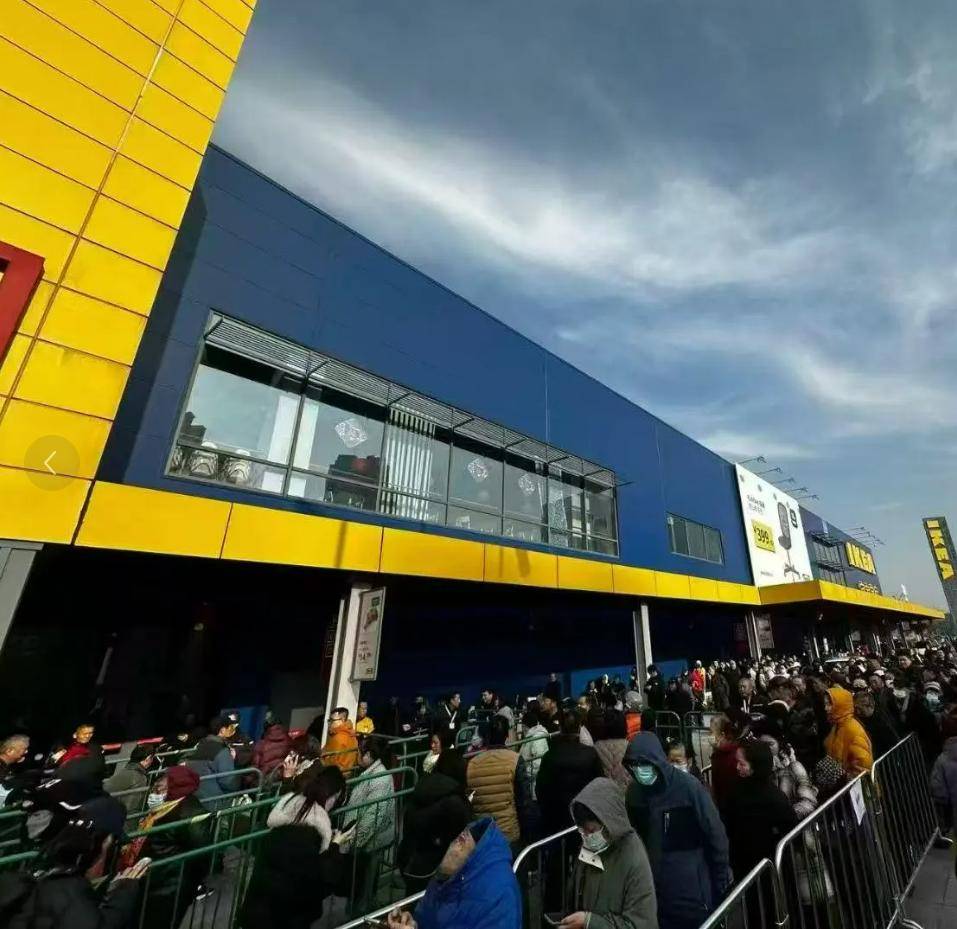
宣布闭店后的宜家人满为患
Sou Hu Cai Jing· 2026-01-10 00:55
Core Viewpoint - IKEA is undergoing a significant strategic transformation in China, moving away from large-scale expansion to focus on community-based small stores and online instant retail, prompted by declining sales and changing consumer habits [6][8][10]. Group 1: Store Closures and Consumer Response - IKEA announced the closure of seven stores in China, including locations in Shanghai, Guangzhou, and Ningbo, effective February 2 [4]. - Following the announcement, there was a surge in customer traffic at the remaining stores, with long queues and crowded aisles as consumers rushed to take advantage of the clearance sales starting January 15 [5][6]. - The closures have sparked nostalgia among consumers, who associate IKEA with personal memories and experiences, highlighting its role as a community space beyond just a furniture retailer [4][5]. Group 2: Financial Performance and Market Dynamics - IKEA's parent company, Ingka Group, reported a 5.5% decline in global revenue to €41.864 billion for the fiscal year ending August 2024, while IKEA China's sales dropped nearly 30% from a peak of ¥15.77 billion in 2019 to approximately ¥11.15 billion in 2024 [6][8]. - The traditional drivers of the home furnishings market, such as new housing deliveries and large-scale renovations, are diminishing, impacting sales [7]. - Changing consumer behavior, particularly among younger generations who prefer online shopping and efficient purchasing, has challenged IKEA's traditional large store model [7][8]. Group 3: Competitive Landscape and Strategic Shift - Local brands in China are gaining market share, with IKEA ranking seventh in sales during the 2024 Double Eleven shopping festival, behind brands like Yuan Shi Mu Yu and Lin Shi Home [8]. - These local competitors offer more flexible supply chains, designs that resonate with local aesthetics, and competitive pricing, making IKEA's traditional self-service model less appealing [8]. - In response, IKEA plans to open over ten small-format stores in key cities like Beijing and Shenzhen over the next two years, marking a shift towards a "small but beautiful" community store model [8][10].
葡萄架下的惊喜
Xin Lang Cai Jing· 2025-12-27 23:52
Group 1 - The article highlights the beauty and sweetness of life found in simple experiences, such as enjoying a bunch of grapes, which symbolizes nature's gifts [2] - The narrative describes a joyful visit to a relative's house, emphasizing the sensory experience of observing and tasting fresh grapes [1] - The vivid imagery of the grapes and the emotional connection to nature reflects a deeper appreciation for life's small pleasures [2][1] Group 2 - The article recounts a school field trip to a theme park, showcasing the excitement and challenges faced by students during the adventure [3] - The experience includes various thrilling rides and activities, emphasizing teamwork and leadership among peers [3][4] - The narrative conveys personal growth through overcoming fears and creating lasting memories from the trip [4] Group 3 - The article describes a collaborative project between a child and a parent to build a bookshelf, highlighting the importance of teamwork and hands-on learning [6] - The process of constructing the bookshelf is detailed, showcasing the child's growing skills and sense of accomplishment [6] - The final result is a source of pride and joy, symbolizing the bond between parent and child through shared activities [6] Group 4 - The article presents a heartwarming depiction of a pet dog named "卷毛," emphasizing the companionship and joy pets bring to families [7] - The dog's playful and affectionate nature is described, illustrating the emotional connection between the pet and its owner [7] - The narrative highlights the positive impact of pets on family dynamics, portraying "卷毛" as a source of happiness [7]