
乳清蛋白粉

Search documents
中信证券:乳制品产业升级正当时 龙头乳企前景广阔
智通财经网· 2026-03-31 01:45
Core Viewpoint - The liquid milk industry is under pressure, accelerating the transformation of the dairy product sector, with significant potential in deep processing of dairy products [1] Group 1: Industry Trends - The average CAGR for liquid milk production from 2022 to 2025 is projected at -2.8%, indicating a decline in traditional liquid milk products. However, solid dairy products are experiencing rapid growth, supporting a slight overall increase in dairy production [1] - China's dependence on imports for deep-processed solid dairy products is high, with cheese and butter accounting for only 7.3% of the market, which is less than one-fourth of the average level in developed countries [1] - The upstream dairy farming sector has reached a global top five scale, with competitive efficiency and low costs, which are expected to support the growth of deep processing in the dairy industry [1] Group 2: Demand Drivers - B-end demand is becoming a crucial support, with the baking, Western fast food, coffee, and tea beverage industries projected to grow at CAGRs of 3.9%, 8.5%, 22.6%, and 10.5% respectively from 2020 to 2025, driving mid to high single-digit growth in B-end cheese, butter, and cream products [2] - The C-end market for deep-processed dairy products is still in its infancy, with significant potential for growth as 60% of consumers do not consider dairy products essential in their daily diet, indicating room for consumption upgrades [2] Group 3: International Insights - Japan's dairy product deep processing began post-World War II, with policy guidance and localized product innovation leading to a significant increase in per capita cheese consumption, highlighting the need for consumer education and product innovation in China [3] - Fonterra's global B-end dairy product deep processing business is characterized by a comprehensive industry chain layout, low leverage, and high profitability, suggesting a model for China to explore in its B-end expansion [3] Group 4: Industry Outlook - The leading dairy companies are categorized into three types: 1) full industry chain leaders with comprehensive layouts and advanced R&D; 2) vertical leaders excelling in specific categories like cheese and milk powder; 3) regional companies growing through B-end customer relationships, particularly in cheese [4] - The future of deep processing in the dairy sector is expected to be dominated by full industry chain leaders, while smaller companies may find opportunities by specializing in specific product categories [4]

西子健康:年入超16亿元VS 99%收入靠线上,“成也抖音,忧也抖音”?
Zhi Tong Cai Jing· 2026-01-14 02:16
Industry Overview - The health and nutrition food industry in China is experiencing significant growth, with retail sales increasing from RMB 297.9 billion in 2020 to an expected RMB 405.7 billion in 2024, representing a compound annual growth rate (CAGR) of 8.0%. By 2029, the market is projected to reach RMB 645.2 billion, with a CAGR of 9.7% [1]. Company Profile - Xizi Health, established in 2013, is a leading player in the sports nutrition food sector in China, focusing on the research, production, and sales of sports nutrition products. The company operates four major brands: FoYes, fiboo, Guben Diary, and HotRule, covering various product categories such as whey protein powder, creatine, functional gummies, and energy supplements [2][3]. Marketing Strategy - Xizi Health employs a data-driven marketing strategy, utilizing online traffic operations and customized strategies for different brands and sales channels. The company has built an efficient multi-channel sales network centered on direct-to-consumer (DTC) sales, which has allowed it to effectively reach consumers [3]. Financial Performance - The company's revenue has shown substantial growth, with figures of RMB 1.447 billion in 2023, RMB 1.692 billion in 2024 (up 16.9% year-on-year), and RMB 1.609 billion in the first nine months of 2025 (up 23.0% year-on-year). The net profit also increased, reaching RMB 94 million in 2023, RMB 149 million in 2024, and RMB 118 million in the first nine months of 2025, with growth rates of 58.5% and 1.9% respectively [4]. Cost Structure - Despite high revenue growth, Xizi Health faces challenges related to rising marketing expenses, which increased from RMB 473 million in 2023 to RMB 756 million in the first nine months of 2025. The sales expense ratio rose from 32.7% in 2023 to 47% in the first nine months of 2025, impacting profit margins [5]. Cash Flow and Operational Efficiency - The company's operating cash flow has declined from RMB 270 million in 2023 to RMB 66 million in the first nine months of 2025, indicating that high growth has come at the cost of significant working capital usage [6]. Strategic Transition - Xizi Health has successfully transitioned from third-party brand operations to a self-owned brand model, with self-owned brand revenue increasing from RMB 614 million in 2023 to RMB 1.498 billion in 2024, a growth of 144.0%. By the first nine months of 2025, this revenue further increased to RMB 1.567 billion, up 38.7% year-on-year [7]. Revenue Concentration - The company's revenue is highly concentrated in online channels, with online sales accounting for approximately 99.4% in 2023, 99.0% in 2024, and 98.9% in the first nine months of 2025. Notably, Douyin (TikTok) is a critical revenue source, contributing 45.5% to 62.8% of total sales during the same periods [8].
新股前瞻|西子健康:年入超16亿元VS 99%收入靠线上,“成也抖音,忧也抖音”?
智通财经网· 2026-01-14 02:12
Industry Overview - The health and nutrition food industry in China is experiencing significant growth, with retail sales increasing from 297.9 billion RMB in 2020 to an expected 405.7 billion RMB in 2024, representing a compound annual growth rate (CAGR) of 8.0%. By 2029, the market is projected to reach 645.2 billion RMB, with a CAGR of 9.7% [1]. Company Profile - Xizi Health, established in 2013, is a leading player in the sports nutrition food sector in China, focusing on the research, production, and sales of sports nutrition products. The company operates four major brands: FoYes, fiboo, Guben Diary, and HotRule, covering various product categories such as whey protein powder, creatine, functional gummies, and energy supplements [2][3]. Marketing Strategy - Xizi Health employs a data-driven marketing strategy, utilizing online traffic operations and customized strategies for different brands and sales channels. The company has built an efficient multi-channel sales network centered on direct-to-consumer (DTC) sales, which has allowed it to effectively reach consumers [3]. Financial Performance - The company's revenue has shown substantial growth, with figures of 1.447 billion RMB in 2023, 1.692 billion RMB in 2024 (up 16.9% year-on-year), and 1.609 billion RMB in the first nine months of 2025 (up 23.0% year-on-year). Net profit also increased, reaching 94 million RMB in 2023, 149 million RMB in 2024 (up 58.5% year-on-year), and 118 million RMB in the first nine months of 2025 (up 1.9% year-on-year) [4]. Cost Structure - The company's sales expenses have risen significantly, from 473 million RMB in 2023 to 756 million RMB in the first nine months of 2025, leading to an increase in the sales expense ratio from 32.7% in 2023 to 47% in 2025. This has impacted profit growth, with net profit growth lagging behind revenue growth due to rising sales expenses [5]. Cash Flow and Operational Efficiency - Xizi Health's operating cash flow has declined from 270 million RMB in 2023 to 66 million RMB in the first nine months of 2025, indicating that high growth has come at the cost of significant working capital usage [6]. Strategic Transition - The company has successfully transitioned from third-party brand operations to a self-owned brand model, with self-owned brand revenue increasing from 614 million RMB in 2023 to 1.498 billion RMB in 2024 (up 144.0% year-on-year) and further to 1.567 billion RMB in the first nine months of 2025 (up 38.7% year-on-year). The gross margin has also improved, rising from 44.4% in 2023 to 59.5% in the first nine months of 2025 [7]. Revenue Concentration - Xizi Health's revenue is highly concentrated in online channels, with online sales accounting for approximately 99.4% in 2023, 99.0% in 2024, and 98.9% in the first nine months of 2025. The company heavily relies on Douyin, which contributed 45.5% to 62.8% of total revenue during the same periods. The DTC sales model accounted for about 88.4% in 2024 and 89.8% in the first nine months of 2025 [8].
下一个黄金原料?巨头们都在悄悄布局乳清! | 新发现
Sou Hu Cai Jing· 2025-09-12 00:39
Group 1 - The article highlights the launch of a fresh whey drink by HeRun, which has garnered significant industry attention and sparked discussions about the potential of whey-based products [1][2]. - Whey is defined as a byproduct of cheese production, previously considered waste but now recognized for its nutritional value, including high-quality protein and lactose [4][5]. - The processing of whey has evolved, allowing it to be transformed into various forms such as whey powder, demineralized whey powder, and whey protein powder, catering to different food industry needs [5][7]. Group 2 - The global whey market was valued at $9.9 billion in 2023 and is projected to reach $17.82 billion by 2032, with a compound annual growth rate (CAGR) of 8.76% [11]. - In China, the whey protein market is expected to grow from $34.6 million in 2021 to $51.8 million by 2025, with an annual growth rate of 11.238%, surpassing the global average [11]. - The primary applications of whey include functional foods, with yogurt, adult milk powder, and milk beverages being the most common products utilizing whey as a key ingredient [11][12]. Group 3 - The article discusses various innovative applications of whey in beverages, snacks, and baking, emphasizing its role as a high-quality protein source that enhances nutritional value and product characteristics [15][18]. - Whey protein is increasingly used in sports nutrition products, including protein powders and energy bars, to meet the demands of different consumer groups [20]. - The competitive landscape of the whey powder market is characterized by leading companies leveraging product quality, brand recognition, pricing strategies, and distribution channels [21]. Group 4 - Major players in the whey market include Yili Group, Mengniu, and FrieslandCampina, which dominate the high-end market in China, collectively holding over 40% market share [21][22]. - Companies like Actus Nutrition and Agropur are recognized as leading manufacturers of whey protein ingredients, supplying a wide range of products for various applications, including infant formula and sports nutrition [22]. - The article also highlights the technological advancements in whey processing, such as membrane filtration and enzymatic hydrolysis, which are helping domestic companies reduce reliance on imports and improve product quality [21][22].




2025年中国乳清蛋白粉行业政策汇总、产业链图谱、市场规模及发展趋势研判:消费人群以健身爱好者、运动人群为主[图]
Chan Ye Xin Xi Wang· 2025-07-22 01:34
Core Viewpoint - The demand for high-quality protein, particularly whey protein, is increasing in China due to rising living standards and health awareness, with the whey protein powder market expected to reach 1.995 billion yuan in 2024, a year-on-year growth of 15.38% [1][11]. Market Policy - The Chinese government has implemented various policies to support the development of the nutritional supplement industry, including whey protein powder, aiming to enhance the quality of health products and services [4][5]. Industry Chain - The whey protein powder industry includes upstream suppliers of whey, additives, packaging materials, and extraction equipment, while downstream channels consist of gyms, sports stores, pharmacies, supermarkets, and e-commerce platforms, with online sales increasing annually [6]. Consumer Demographics - The core consumer group for whey protein powder includes fitness enthusiasts and athletes, with over 60% of male consumers favoring it for muscle gain, while female consumers tend to be older, higher-income individuals focused on health and fitness [9]. Competitive Landscape - The whey protein powder market features numerous participants, including international brands like ON, MuscleTech, and Dymatize, as well as domestic brands like汤臣倍健 and 康比特, with various strategies employed to capture market share [13][15]. Company Analysis -汤臣倍健 has established itself as a leading dietary supplement company in China, with projected revenues of 6.838 billion yuan and a gross profit of 4.56 billion yuan in 2024 [15]. - 北京康比特体育科技股份有限公司 focuses on sports nutrition and health food, with expected revenues of 1.04 billion yuan and a gross profit margin of 39.41% in 2024, driven by the sales of whey protein and energy gels [17]. Development Trends - Future whey protein products are expected to diversify beyond traditional powders to include protein beverages, baked goods, and bars, with tailored products for specific demographics such as athletes and the elderly [19].

乳品进口注意事项(海关答疑)
Ren Min Ri Bao· 2025-06-13 20:06
Core Points - The company is planning to import dairy products due to business expansion needs, which includes various types of dairy such as raw milk, pasteurized milk, and infant formula [1] - The import of dairy products is regulated by multiple laws and regulations in China, including the Food Safety Law and the Import and Export Food Safety Management Measures [1] Group 1: National Access - China implements access management for imported dairy products, with the General Administration of Customs evaluating the food safety management systems of exporting countries before granting access [2] Group 2: Company Qualifications - Foreign dairy producers must be registered through their local authorities and approved by the General Administration of Customs before exporting to China [3] - Exporters and agents must register with the General Administration of Customs to handle food import business [3] Group 3: Import Declaration - Importers must declare the import of dairy products truthfully to customs, providing necessary documents such as health certificates and proof of compliance with Chinese food safety standards [4] - For infant formula, a specific registration certificate is required, and organic products must have relevant certification [5] Group 4: Goods Release and Non-compliance Handling - Customs will release imported dairy products that pass inspection and issue a quarantine certificate, while non-compliant products will be handled according to regulations [6] Group 5: Other Requirements - Packaging must include the registration number of the producer in China or the approval number from the local authority [8] - Infant formula must have a shelf life of at least three months from the date of customs declaration, and large packages cannot be repackaged in China [8] - Labels for special dietary foods must be printed directly on the smallest retail packaging without additional stickers [8]
乳品消费开辟新场景 行业精耕营养健康正当时
Zhong Guo Jing Ji Wang· 2025-05-26 05:44
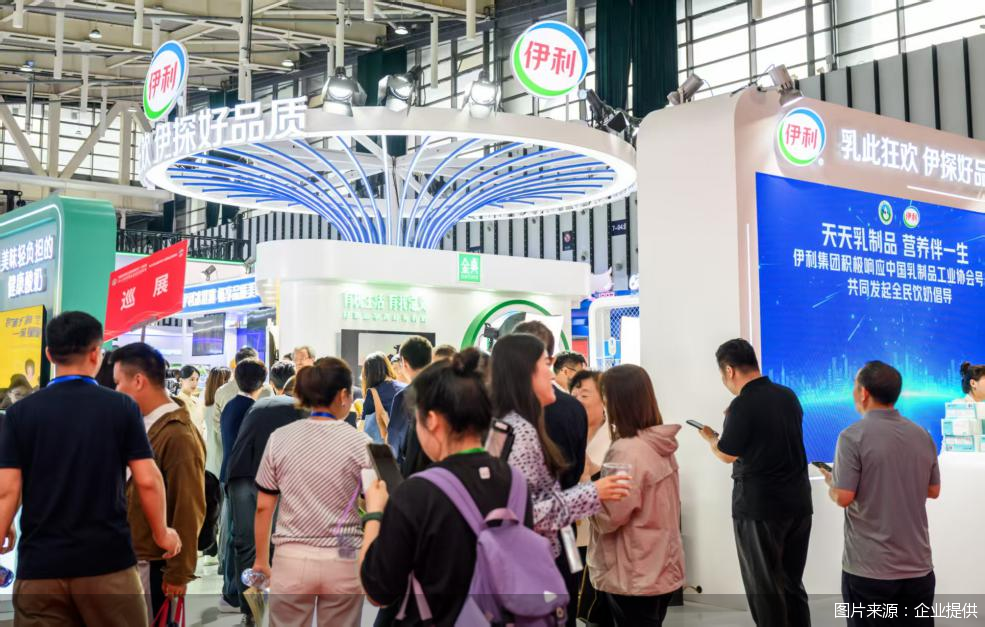
Group 1 - The China Dairy Industry Association held its 31st annual meeting and the 2025 China Dairy Technology Expo in Nanjing, Jiangsu, showcasing Tetra Pak's innovative packaging solutions and deep processing technologies for dairy products [1] - Tetra Pak's Greater China President emphasized the growing consumer demand for nutrition and health, indicating a shift towards a more precise approach in the dairy industry [1] - The China Nutrition Society released a report highlighting the nutritional health issues faced by the elderly population, stressing the importance of early planning and scientific intervention for nutritional supplementation [1] Group 2 - The diversification of lifestyles has led to new consumption scenarios for dairy products, prompting Tetra Pak to present innovative packaging solutions suitable for various contexts, including small-capacity packaging for snacks and sustainable packaging options [2] - Experts noted that dairy products need to evolve from traditional liquid consumption to a more integrated "drink + food" model, reflecting changing consumer preferences for taste, emotional value, and nutritional functionality [2] - Tetra Pak's deep processing technology supports the transformation of dairy products, enabling the separation and recombination of native components to enhance product experience and brand upgrade [2]
精准营养迎风口,乳企内卷下寻增量
Bei Jing Shang Bao· 2025-05-25 13:22
Core Insights - The 2025 China Dairy Technology Expo highlighted the rapid growth of precision nutrition solutions in the dairy industry, with companies like Yili, Mengniu, Feihe, and Miaokelando launching targeted products [1][3][4] - The demand for dairy products is shifting from basic nutrition to functional segmentation, with a focus on high-protein, probiotic, and low-sugar options [3][5] - The Chinese dairy industry is seeking structural transformation due to declining milk prices and oversupply, with a trend towards quality, health, branding, and premiumization [5][6] Group 1: Industry Trends - Precision nutrition is expected to reach a peak by 2028, with market size projected to hit between 1000 billion to 1500 billion [9] - The dairy industry is experiencing a shift towards cheese production, which is seen as a significant opportunity to consume excess raw milk [6][7] - The market for special medical foods in China is projected to exceed 48 billion by 2025, with a compound annual growth rate of 30% [9] Group 2: Company Innovations - Yili has introduced a range of functional nutrition products inspired by traditional wisdom, addressing health needs such as gut health and blood sugar management [3][5] - Mengniu is focusing on scientific innovation to create customized products for various demographics, including seniors and fitness enthusiasts [3][5] - Feihe launched the first domestic database for human milk oligosaccharides (HMOs), enhancing research capabilities in maternal nutrition [4] Group 3: Market Dynamics - The Chinese dairy market is currently dominated by foreign brands in the special medical food sector, but domestic companies are increasing their product offerings [8][9] - The cheese market in China is underdeveloped compared to other countries, presenting a significant growth opportunity as consumer preferences evolve [6][7] - The overall dairy consumption per capita in China is declining, indicating a need for innovative products to stimulate demand [5]
朝阳区已有4家非营利医疗机构取得“特医食品”备案
Xin Jing Bao· 2025-04-02 11:45
Core Insights - The seminar on the high-quality development of special medical foods highlighted the successful implementation of a non-profit medical institution's registration for selling special medical foods in Chaoyang District, addressing the challenges of accessing these foods in hospitals [1] Group 1: Special Medical Foods Overview - Special medical foods are specifically formulated to meet the nutritional needs of individuals with restricted diets, digestive absorption disorders, metabolic disorders, or specific disease states [2] - There is a significant market demand for special medical foods in China, particularly for treating rare diseases, with 32 out of 207 rare diseases listed requiring these foods [2] Group 2: Clinical Impact and Cost Efficiency - The use of special medical foods, such as whey protein powder, can effectively treat patients with low protein blood syndrome at a much lower cost compared to human albumin, which is priced at 400-500 yuan per 10 grams [3] - After obtaining registration, a hospital reported a 23% reduction in the use of human albumin while ensuring standard treatment for patients, leading to decreased medical costs [3] Group 3: Regulatory and Developmental Challenges - The development of special medical foods in China faces challenges such as limited product supply, insufficient research investment, and restricted sales channels [2] - The Chaoyang District Market Supervision Administration has been actively working to resolve the bottlenecks in the hospital access of special medical foods, with positive feedback received over the past six months [3]