五指灵巧手

Search documents
集齐阿里美团字节!自变量机器人再获数亿融资,王潜直言:唱歌跳舞机器人赛道将快速出清
Jin Rong Jie· 2026-03-04 03:41
Core Insights - The company X Square Robot has raised over 3 billion yuan in total funding, with a recent financing round of several hundred million yuan completed within a month of a previous 1 billion yuan round [2][3][4] - The founder Wang Qian indicates a shift in the industry focus from performance robots to practical applications in household and industrial scenarios, aiming for positive ROI by 2026 [1][8] Funding and Investment - X Square Robot has completed 10 rounds of financing since its establishment in December 2023, with significant investments from major industry players including Meituan, Alibaba, and ByteDance [3][4] - The company’s funding history includes multiple rounds with amounts ranging from several million to 1 billion yuan, showcasing strong investor confidence [3][4] Industry Trends - The competition in the robotics industry is shifting towards developing intelligent "brains" for robots, focusing on their ability to understand and operate in complex physical environments [5][6] - Wang Qian notes that the market for performance-based robots is declining, leading to a consolidation phase where only a few top companies will survive [5][6] Commercialization Strategy - X Square Robot plans to focus on two main scenarios for commercialization in 2026: household tasks and specific industrial applications, aiming to achieve positive ROI [8][9] - The household robotics market is identified as having significant potential, with estimates suggesting that household labor constitutes about 25% of GDP when not accounted for [8] Future Outlook - The company anticipates that robots will achieve commercial viability with positive ROI within the year, while advanced models akin to GPT-3 may emerge in about a year [9] - The expected consumer price range for robots is projected to be between 10,000 to 20,000 USD, indicating a need for cost optimization in the industry [9]

深圳青年造机器人,4个月融钱20亿
2 1 Shi Ji Jing Ji Bao Dao· 2026-01-13 02:44
Core Insights - The company, founded by Wang Qian, has raised nearly 2 billion yuan in just four months, with a recent 1 billion yuan A++ round of financing involving investors like ByteDance and Sequoia China [1][2]. Company Overview - Wang Qian, the founder and CEO, graduated from Tsinghua University and has a research background in robotics and home service robots. The core team consists of technical experts and executives from the robotics and hardware sectors [3]. - The company has expanded its employee base significantly over the past two years and moved to a larger facility in the Aerospace Innovation Building [4]. Product Development - The company focuses on self-research and development of a "general embodied intelligence model," investing heavily in data collection through various devices to gather high-quality real machine data [5]. - It has launched three products: Quantum 1 and Quantum 2, which are wheeled dual-arm and general wheeled humanoid robots, and a "five-finger dexterous hand" capable of performing intricate movements [7]. Market Position and Future Outlook - According to Omdia, the humanoid robot industry is expected to enter a high-growth phase in 2025, with shipments reaching 13,000 units, although the company has not yet made it onto the list of leading players [8]. - Wang Qian believes that the next phase of competition in embodied intelligence will revolve around the construction of foundational models and the evolution of these models [6]. - The company aims to prioritize practical applications of robots, emphasizing their utility in various scenarios as it prepares for commercialization in 2026 [9].
大场景,新应用!人形机器人产业2026年值得期待
Xin Lang Cai Jing· 2025-12-26 10:50
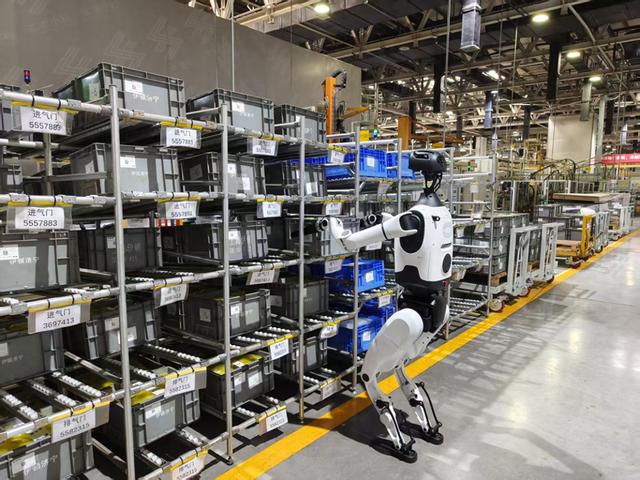
Core Insights - The humanoid robot industry in China is expected to transition from technology validation to large-scale commercialization by 2025, driven by supportive and regulatory policies that encourage self-research in algorithms and hardware [1][3][4] - The industry is witnessing a solid foundation for substantial breakthroughs in 2026, with a clear technological path and validated business models [1][3] Policy Framework - A multi-layered support system has been established, combining national strategic guidance with local government measures to address industry challenges [1][3] - The National Development and Reform Commission announced plans to create an entry and exit mechanism for the embodied intelligence industry to prevent market saturation and promote fair competition [1][4] - Local policies, such as Beijing's "Ten Measures for Embodied Intelligent Robots," provide targeted support, including training rewards and sales subsidies [3][4] Technological and Capital Development - The humanoid robot industry has made significant technological advancements, shifting focus from flashy demonstrations to scalable applications, with cost and reliability being top priorities [4][5] - Companies like Xingdong Jiyuan and Leju Robotics have secured substantial funding, indicating strong investor interest due to their self-research capabilities and clear commercialization results [7][8] Market Trends and Future Outlook - The 2025 World Artificial Intelligence Conference showcased robots ready for practical applications in manufacturing and logistics, indicating a clear path toward scalable deployment [8][10] - Predictions suggest that 2026 will see a wave of large-scale deliveries in sectors like logistics and industrial manufacturing, with humanoid robots increasingly taking over repetitive tasks [10][11] - Companies are also looking to expand internationally, targeting emerging markets with tailored products to meet specific regional needs [10][11]

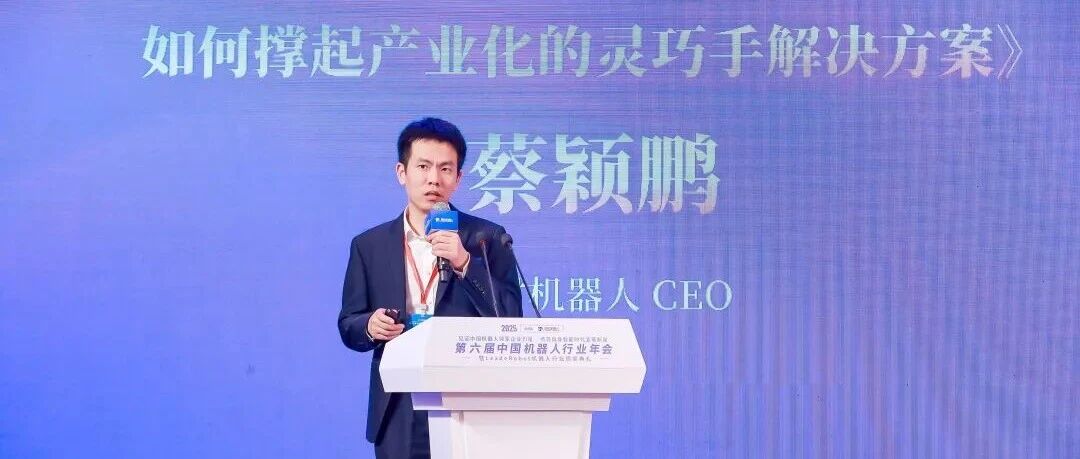
践行者说|蔡颖鹏:将“最难一厘米”拆解为模块,穿越灵巧手的量产深水区
机器人大讲堂· 2025-12-26 00:00
Core Insights - The sixth China Robot Industry Annual Conference was held in Hangzhou, gathering over 2,000 industry experts and entrepreneurs to discuss the future of robotics technology and business [1] - The focus of this report is on the insights shared by Cai Yingpeng, CEO of Yinshi Robotics, regarding the challenges and solutions in the industrialization of dexterous hands [3][4] Group 1: Challenges in Dexterous Hand Development - Cai Yingpeng highlighted that dexterous hands represent the "last centimeter" of value realization in humanoid robots, which is also the most challenging aspect for mass production [3][7] - The industry faces a "cost, performance, and reliability" triangle, where achieving success in industrialization requires addressing these interrelated challenges [7] - The cost considerations extend beyond manufacturing to include usage and maintenance costs, emphasizing the need for modular designs that allow users to easily replace and upgrade components [7][8] Group 2: Modular Design Solutions - Yinshi Robotics has adopted a unique approach since its establishment in 2016, focusing on a universal modular design that integrates the micro servo cylinder as a standardized "bionic muscle" module [8][10] - This modular design allows for compatibility with various technical routes, enabling the development of dexterous hands that can achieve high load capacity and precision for industrial applications [10][11] - The design simplifies the processes of design, manufacturing, and maintenance, improving cost-effectiveness and reliability [11] Group 3: Innovations in Sensor Technology - The design philosophy extends to sensor technology, where tactile sensors are created as easily replaceable standard modules, addressing power supply, communication, and environmental protection issues [12] - A fusion of tactile and force sensors is employed to achieve adaptive force control across a range of tasks, from precision assembly to heavy object handling [12] Group 4: Market Validation and Growth - The micro servo cylinder has applications beyond robotics, including in high-end manufacturing and medical robotics, which validates its mass production and quality control in more demanding markets [14] - Yinshi Robotics has seen accelerated growth in delivery volumes, with a cumulative delivery of 1,000 units from 2016 to 2023, and projections of 2,000 units in 2024 and over 10,000 units in 2025 [14] - The company serves over 700 clients across various sectors, including education, industry, commerce, and healthcare, demonstrating the effectiveness of its modular approach [14][18]
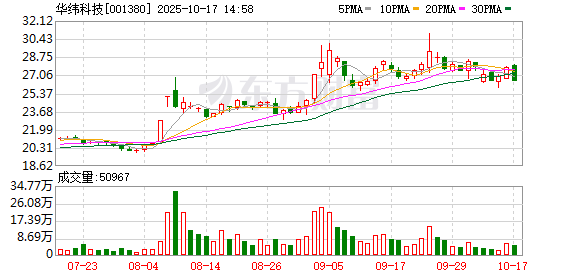
华纬科技:目前“年产900万根新能源汽车稳定杆和年产10万套机器人及工程机械弹簧建设项目”部分建设完成且已有一定的产能释放
Zheng Quan Ri Bao Wang· 2025-12-19 08:17
Group 1 - The company has completed part of the construction for the annual production of 9 million new energy vehicle stabilizers and 100,000 sets of robot and engineering machinery springs, with certain production capacity already released [1] - The company is entering into a strategic cooperation with Jukun Robotics to focus on the Five-Finger Dexterous Hand and industrial robotic arms, leveraging its advantages in intelligent manufacturing and industry position [1] - The collaboration aims to promote the commercialization of technological solutions and the integration of industries [1]

马斯克被一只“手”卡住了脖子,中国公司却已悄悄量产上万台
机器人大讲堂· 2025-11-05 09:57
Core Viewpoint - Tesla is facing significant challenges in producing flexible robotic hands for its Optimus humanoid robots, leading to a reduction in production plans for thousands of units in 2023. In contrast, a Chinese company, InTime Robotics, has successfully achieved mass production and commercialization of dexterous hands, positioning itself as a global leader in this field [1][3]. Group 1: Challenges in Robotic Hand Production - The robotic hand is the most technically dense and difficult component in humanoid robots, with Tesla struggling to integrate sufficient degrees of freedom and sensors within a compact design [3]. - InTime Robotics has overcome the bottleneck from laboratory prototypes to mass production through self-research and nearly a decade of experience, allowing it to advance from initial development to optimization [4][5]. Group 2: Technological Innovations - InTime Robotics recognized early on that the challenge lies in efficiently producing consistent and usable dexterous hands while maintaining performance [4]. - The company employs an innovative linear drive design that integrates motors, reducers, screws, and sensors into a compact actuator, facilitating the control of finger movements within limited space [5][7]. Group 3: Product Iteration and Market Position - InTime Robotics has demonstrated strong iterative capabilities with the launch of two significant product series in 2025, showcasing its technical depth and adaptability to diverse humanoid robot needs [8][10]. - The RH56F1 series features a full-metal design and advanced multi-modal sensing capabilities, enhancing its precision and adaptability for industrial automation and humanoid robots [10][13]. Group 4: Competitive Advantages - InTime Robotics has established long-term barriers in core technology, production systems, and organizational mechanisms, enabling it to convert technology into stable products while understanding customer needs [15][16]. - The company has developed specialized assembly and testing tools to ensure high consistency and quality control, which are critical for the performance of dexterous hands [15]. Group 5: Implications for the Industry - The dexterous hand is crucial for the practical application of humanoid robots, and the challenges faced by Tesla reflect a broader technological bottleneck in the global robotics industry [16]. - InTime Robotics' success in mass production and continuous innovation positions it as a benchmark in China's dexterous hand sector, with potential to lead in the global humanoid robot market [16].


华纬科技战略投资炬坤机器人 解锁人形机器人黄金赛道
Quan Jing Wang· 2025-10-20 13:29
Investment in Robotics - Company has invested in Hangzhou Jukun Robotics, acquiring a 3.70% stake through capital increase, completed on October 15, 2025 [1] - Jukun Robotics focuses on the design and control of robotic hands/arms, multimodal perception, and intelligent operations [1] - Strategic cooperation will focus on dexterous hands and industrial robotic arms, leveraging the company's advantages in smart manufacturing [1] Financial Performance - In the first half of 2025, company reported total revenue of 937 million, a year-on-year increase of 32.62% [2] - Profit before tax reached 143 million, up 58.81%, while net profit attributable to shareholders was 127 million, increasing by 56.18% [2] - Company is expanding into non-automotive sectors, including humanoid robots and aerospace, through acquisitions [2] Production Capacity Expansion - Domestic production capacity expansion includes a 250 million investment in Chongqing, aiming for an annual output of 5 million stabilizers and 3 million springs [3] - Internationally, the company has established production bases in Germany, Mexico, and Morocco to serve North African and European markets [3] - Continuous investment in new technologies and automation has improved production efficiency and product quality [3] Technological Advancements - Company holds 23 national invention patents and 186 utility model patents, with a strong focus on R&D [4] - Recognized as a provincial enterprise technology center and research institute, enhancing its competitive edge in the automotive spring sector [4] - Strong technical foundation and manufacturing capabilities have enabled entry into the supply chains of leading domestic and international automotive brands [4]
华纬科技战略投资炬坤机器人
Mei Ri Jing Ji Xin Wen· 2025-10-17 06:57
Core Insights - The company has signed an investment agreement and a shareholder agreement to invest in Hangzhou Jukun Robot Co., Ltd. through a capital increase, acquiring a 3.70% stake in the company [2] - The investment was completed with the registration of industrial and commercial changes on October 15 [2] - Following this investment, the company and Jukun Robot will engage in strategic cooperation focusing on dexterous hands and industrial robotic arms, leveraging the company's advantages in smart manufacturing and industry position to promote the commercialization of technological solutions and industry integration [2]
梅卡曼德机器人据报已秘密向港交所提交上市申请,预计集资2亿美元
Ge Long Hui A P P· 2025-09-24 15:35
Group 1 - Mech-Mind Robotics, an AI software solution provider backed by Meituan, has secretly submitted a listing application to the Hong Kong Stock Exchange, aiming to raise $200 million [1] - Founded in 2016 by a team from Tsinghua University, the company focuses on embodied intelligent robots, utilizing advanced AI and sensing technologies to develop 3D vision systems, AI brains, and dexterous robotic hands [1] - The company has over 600 employees and has maintained the top market share for five consecutive years, with clients and partners including Bank of China, Toyota, Siemens, and Intel [1] Group 2 - In addition to Meituan, the company has received multiple rounds of support from investors such as Sequoia China, IDG Capital, Intel Capital, and Source Code Capital, with total financing exceeding 2 billion RMB [1] - The latest funding round in August raised nearly 500 million RMB, with investments from state-owned Xiong'an Fund, Huachuang Capital, and Tianchuang Capital [1] - Mech-Mind Robotics has been recognized as a national-level "Little Giant" enterprise and a national high-tech enterprise [1]
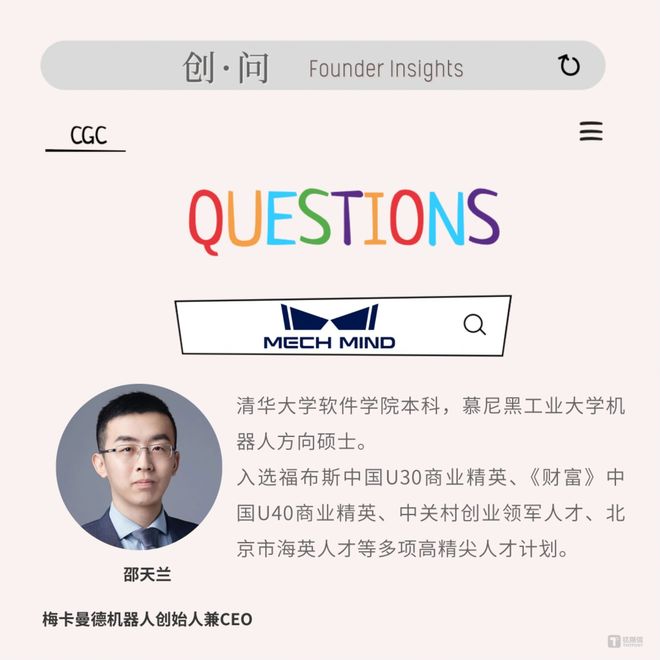
梅卡曼德机器人邵天兰:具身智能没有“英雄主义”,只有“魔鬼细节”
Tai Mei Ti A P P· 2025-08-18 03:42
Core Insights - The article highlights the journey and achievements of Mech-Mind, a leading company in the AI and robotics sector, emphasizing its focus on standardization and mainstream market needs rather than differentiation [5][22][36] Company Development - Mech-Mind was founded in 2016 and has evolved into the largest unicorn in the "AI + robotics" field globally, with significant advancements in its products, including 3D vision systems and AI capabilities [5][29] - The company has successfully developed versatile robotic solutions that can be applied across various industries, including automotive, logistics, and heavy machinery [5][18][22] Product Innovation - The company has introduced a comprehensive AI capability known as "eye-brain-hand," which integrates high-precision 3D cameras, a multimodal AI model (Mech-GPT), and a dexterous robotic hand (Mech-Hand) [15][20][22] - Mech-Mind's products are designed to be adaptable and applicable in diverse environments, allowing for efficient handling of complex tasks such as sorting and assembly [15][20][22] Market Strategy - The company targets the mainstream market, focusing on common needs and standards rather than niche differentiation, which has proven effective in scaling its operations [22][36] - Mech-Mind has established a global presence, with significant revenue coming from international markets, and aims to meet high standards set by clients in developed countries [38][41] Challenges and Solutions - The company faces challenges in meeting diverse customer needs efficiently, which requires meticulous attention to detail and continuous product iteration [6][26][36] - Mech-Mind has developed a robust support system, including AI-assisted customer service and extensive training documentation, to address client issues promptly [26][41] Industry Perspective - The robotics industry is characterized by its complexity and the necessity for continuous technological iteration, with no single "silver bullet" solutions [27][36] - The future of robotics is expected to expand beyond current applications, potentially transforming various sectors and societal paradigms [41][42]