慧思开物通用具身智能平台

Search documents
新思想引领新征程丨“十四五”期间 我国科学谋划、全局统筹 加大重点领域关键核心技术攻关力度 未来产业发展呈现良好势头
Yang Guang Wang· 2026-02-25 07:12
Core Insights - The article emphasizes the strategic importance of advancing future industries in China, focusing on key technologies and sectors that can drive economic growth and national rejuvenation [1] Group 1: Future Industry Development - The "14th Five-Year Plan" outlines a comprehensive approach to future industry development, highlighting the need for breakthroughs in key core technologies [1] - The Beijing Humanoid Robot Innovation Center has launched the "Embodied Tiangong 3.0," a new generation of general-purpose robots with significant improvements in motion control and autonomous operation [1] - The "15th Five-Year Plan" suggests forward-looking layouts for future industries, including quantum technology, biomanufacturing, hydrogen energy, nuclear fusion, brain-machine interfaces, embodied intelligence, and 6G mobile communication [1] Group 2: Brain-Machine Interface - In Guangzhou, a clinical research ward for brain-machine interfaces is helping patients with severe conditions regain mobility through non-invasive training methods [2] Group 3: Quantum Technology and Hydrogen Energy - Anhui Province has made significant advancements in quantum technology, achieving a breakthrough in scalable quantum relay modules and quantum key distribution over distances exceeding 100 kilometers [3] - Jiangxi Province is developing a comprehensive hydrogen energy ecosystem, with a recent project enabling hydrogen-powered trucks to achieve over 600 kilometers of range with quick refueling [3] Group 4: Policy Support and Innovation - The Chinese government is focusing on enhancing the collaboration between industry, academia, and research to promote key technological advancements [4] - During the "14th Five-Year Plan," China accounted for over 20% of global patent applications in biomanufacturing and produced 70% of global bio-fermentation products [4] - The development of the 6G industry is entering a critical phase of technological innovation and clearer industrial direction [4] Group 5: Investment and Support Systems - The National Venture Capital Guidance Fund will be launched in December 2025 to increase support for strategic emerging industries and future industries [5] - The National Development and Reform Commission plans to create a high-quality, comprehensive venture capital service system to support enterprise growth through governance, strategic planning, and industry collaboration [6]
行业首款触物交互全身运控全尺寸人形机器人发布
Xin Lang Cai Jing· 2026-02-10 10:00
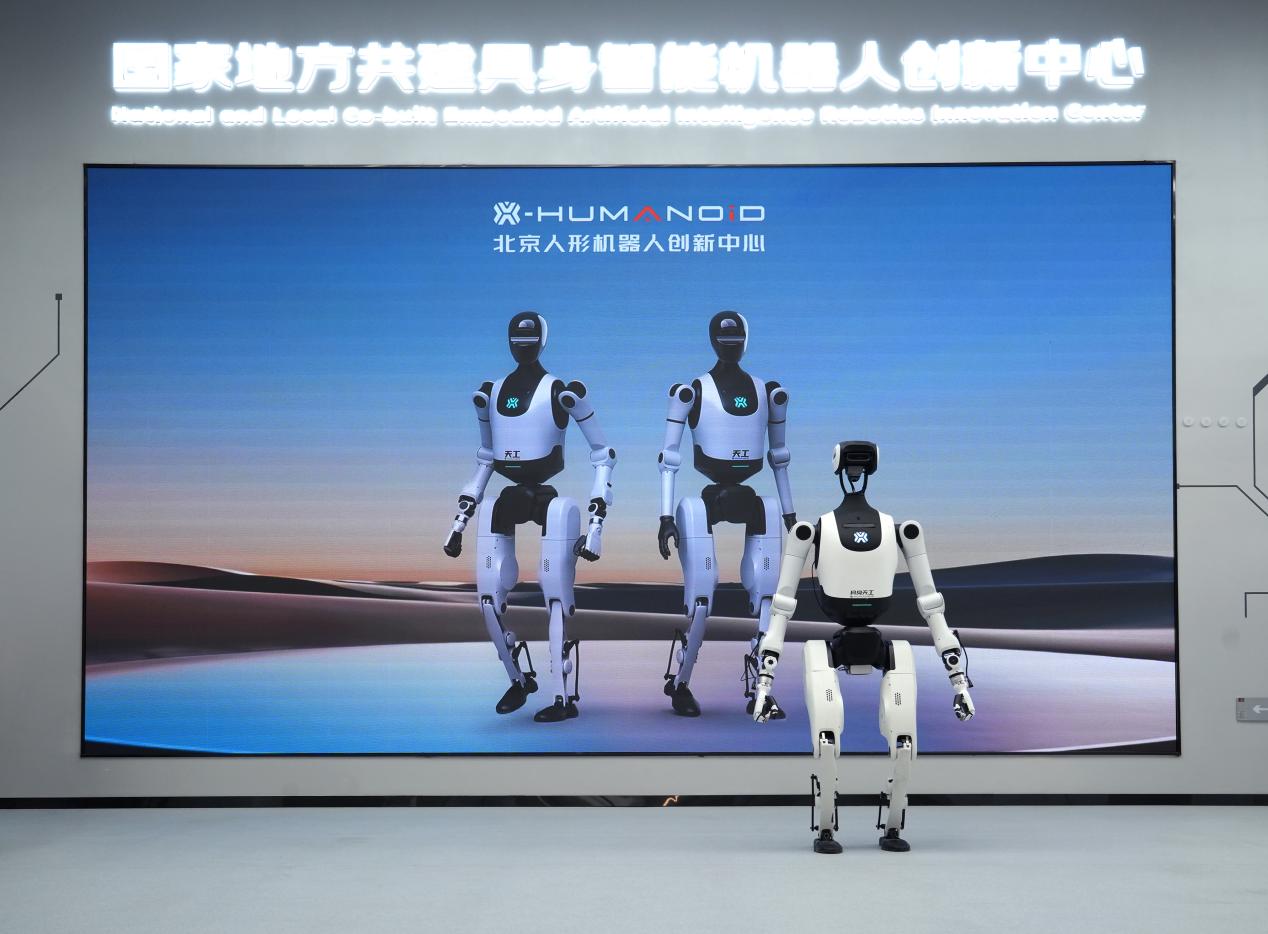
Core Insights - The Beijing Humanoid Robot Innovation Center has officially launched the next-generation general-purpose robot platform, "Embodied Tiangong 3.0," focusing on "more openness and better usability" [1] - The robot is built on the self-developed "Wisdom and Creation" general-purpose embodied intelligence platform, showing significant improvements in stability, motion control, and autonomous operation capabilities [1] - It is the first humanoid robot in the industry to achieve full-body high-dynamic motion control with tactile interaction [1] - The platform offers more open software and hardware interfaces, significantly reducing development costs and barriers across various industries [1]

北京人形发布具身天工3.0
Bei Jing Shang Bao· 2026-02-10 05:52
Core Viewpoint - The Beijing Humanoid Robot Innovation Center has launched the new generation general-purpose robot platform, "TianGong 3.0," focusing on being "more open and easier to use" [1] Group 1: Product Features - The TianGong 3.0 robot is based on the self-developed "HuiSi KaiWu" general-purpose embodied intelligence platform, which has significantly improved stability, motion control, and the collaboration between its large and small brains [1] - It is the first full-size humanoid robot in the industry to achieve interactive full-body high-dynamic motion control [1]
北京人形机器人创新中心发布具身天工3.0
Xin Lang Cai Jing· 2026-02-10 05:04
Core Insights - The Beijing Humanoid Robot Innovation Center has launched the next-generation general robot platform, "Embodied Tiangong 3.0," focusing on being "more open and user-friendly" [1][2] - The new platform is built on the self-developed "Wisdom Open Object" general embodied intelligence platform, showing significant improvements in stability, motion control, and autonomous operation [1][2] - Embodied Tiangong 3.0 is the first full-sized humanoid robot to achieve interactive full-body high-dynamic motion control [1][2] Industry Impact - The platform addresses compatibility and adaptability issues in the embodied intelligence sector by providing more open hardware and software interfaces, significantly reducing development costs and barriers across various industries [1][2] - As a practical and open ecosystem, Embodied Tiangong 3.0 is expected to accelerate the application of embodied intelligence in various sectors, enhancing productivity and efficiency [1][2]
“微”观行业之变|大场景 新应用 人形机器人产业2026年值得期待
Xin Hua She· 2025-12-29 05:21
Core Insights - The humanoid robot industry in China is expected to transition from technology validation to large-scale commercialization by 2025, driven by systematic policies that encourage and regulate the sector, leading to key breakthroughs in self-research algorithms and hardware [1] - The industry is supported by a multi-dimensional policy framework that includes national strategies and local government measures, creating a solid foundation for development [2] Policy Framework - In 2025, the national strategy will focus on establishing entry and exit mechanisms for the embodied intelligence industry to prevent market saturation and ensure fair competition [2] - Local governments are implementing targeted policies to address industry pain points, such as financial incentives for data collection and support for community development [2][3] Technological Advancements - The focus of humanoid robot technology has shifted from showcasing capabilities to scalable applications, with cost and reliability being the top priorities for enterprises [4] - The Beijing Humanoid Robot Innovation Center has developed a comprehensive intelligent platform that integrates perception, decision-making, and execution, facilitating multi-robot collaboration [4] Capital Investment - Significant capital investment is flowing into the humanoid robot sector, with companies like Xingdong Jiyuan and Leju Robotics securing substantial funding, indicating strong market confidence [5][6] - The recognition from local state-owned assets, industrial capital, and financial institutions highlights the solid groundwork laid by these companies in technology and market application [6] Market Trends and Future Outlook - By 2026, the humanoid robot industry is anticipated to experience a wave of large-scale deliveries, particularly in industrial, logistics, and commercial service sectors [7] - The industry is moving towards replicable and scalable applications, with humanoid robots set to replace humans in repetitive tasks, enhancing efficiency and safety [7] - Companies are also looking to expand into emerging markets, adapting products to meet local needs and participating in international standard-setting to enhance their global presence [8]
大场景,新应用!人形机器人产业2026年值得期待
Xin Lang Cai Jing· 2025-12-26 10:50
Core Insights - The humanoid robot industry in China is expected to transition from technology validation to large-scale commercialization by 2025, driven by supportive and regulatory policies that encourage self-research in algorithms and hardware [1][3][4] - The industry is witnessing a solid foundation for substantial breakthroughs in 2026, with a clear technological path and validated business models [1][3] Policy Framework - A multi-layered support system has been established, combining national strategic guidance with local government measures to address industry challenges [1][3] - The National Development and Reform Commission announced plans to create an entry and exit mechanism for the embodied intelligence industry to prevent market saturation and promote fair competition [1][4] - Local policies, such as Beijing's "Ten Measures for Embodied Intelligent Robots," provide targeted support, including training rewards and sales subsidies [3][4] Technological and Capital Development - The humanoid robot industry has made significant technological advancements, shifting focus from flashy demonstrations to scalable applications, with cost and reliability being top priorities [4][5] - Companies like Xingdong Jiyuan and Leju Robotics have secured substantial funding, indicating strong investor interest due to their self-research capabilities and clear commercialization results [7][8] Market Trends and Future Outlook - The 2025 World Artificial Intelligence Conference showcased robots ready for practical applications in manufacturing and logistics, indicating a clear path toward scalable deployment [8][10] - Predictions suggest that 2026 will see a wave of large-scale deliveries in sectors like logistics and industrial manufacturing, with humanoid robots increasingly taking over repetitive tasks [10][11] - Companies are also looking to expand internationally, targeting emerging markets with tailored products to meet specific regional needs [10][11]

北京人形机器人整机单位超过30家 位居国内前列
Xin Lang Cai Jing· 2025-12-25 15:19
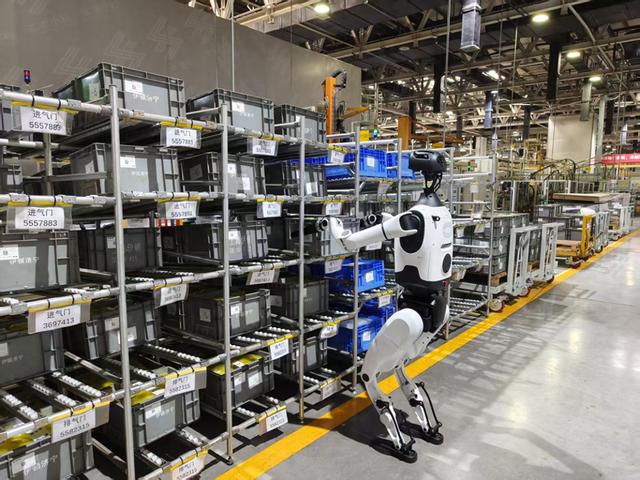
Core Insights - The 2026 Beijing Yizhuang Humanoid Robot Half Marathon press conference highlighted the rapid development of the humanoid robot industry in Beijing, with over 30 leading companies in the sector [1][3] Industry Development - Beijing has established itself as a national leader in technology and industrial innovation, housing top research institutes and platforms for robot standards and services [3] - The city has created the first provincial humanoid robot innovation center, aiming to upgrade it to a national manufacturing innovation center in embodied intelligence [3] - Various innovation entities are pursuing differentiated technological routes, focusing on areas such as prototype bodies, control systems, reinforcement learning algorithms, and bionic facial expressions [3] Technological Achievements - The "Tiangong" robot from the innovation center has won global championships in both half-marathon and sprint events, showcasing its advanced capabilities [3] - The "Wisdom and Material" platform supports diverse task execution across multiple robots, outperforming similar models like GPT-5 by 15% [3] - The N2 robot from Songyan Power secured the runner-up position in the half-marathon and won a long jump championship, while the T1 robot is noted for its high structural strength and rapid recovery capabilities [3][4] Application and Innovation - The first humanoid robot half-marathon and the inaugural World Humanoid Robot Games have been successfully held, demonstrating practical applications in various sectors such as industrial manufacturing and logistics [4] - The "Gai Bot" robot from Galaxy General has been deployed in unmanned pharmacies and retail scenarios, while the robots from Accelerated Evolution are utilized in football competitions [4] Policy Support - Beijing is focusing on high-quality industrial development, enhancing funding and policy support for humanoid robots, with a government investment fund totaling 100 billion yuan [5] - The city is promoting collaborative innovation among industry, academia, and research institutions, aiming to attract international cooperation and resources [5] Future Outlook - The year 2026 is identified as a critical period for the further application of humanoid robots, with an emphasis on accelerating prototype testing and mass production [5] - The government plans to enhance support in technology development, product supply, and ecosystem building, focusing on core technology breakthroughs and the establishment of a comprehensive industrial ecosystem [6]
没有人工遥控!全国首个全自主无人化人形机器人导览方案落地
机器人大讲堂· 2025-12-12 14:00
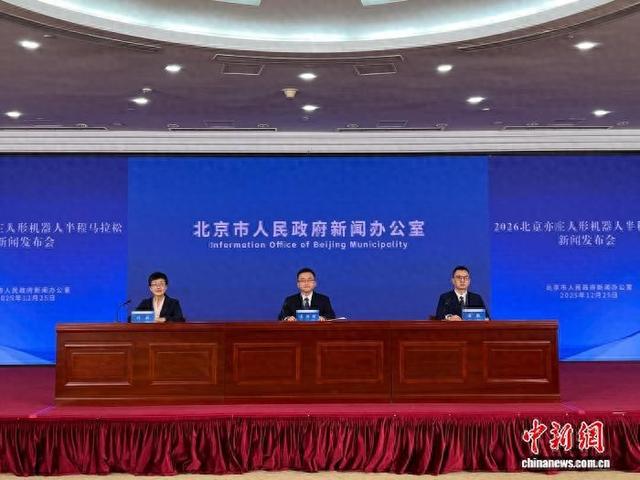
Core Viewpoint - The article discusses the launch of China's first fully autonomous humanoid robot navigation solution by the Beijing Humanoid Robot Innovation Center, which integrates various advanced technologies for diverse applications in exhibition halls, shopping malls, and cultural tourism [1]. Group 1: Technology Overview - The core technology of the solution is the "Wisdom Open Object" platform, which enables a closed-loop system for perception, decision-making, and execution, allowing the humanoid robots to operate independently without human control [3]. - The platform utilizes an AI-driven "big brain" for decision-making and a data-driven "small brain" for execution, enabling the robots to autonomously navigate and interact with users in real-time [5][7]. - The multi-modal fusion perception system captures environmental attributes and features, supporting high-precision navigation and stable movement for the robots [5]. Group 2: System Capabilities - The "Wisdom Open Object" platform serves as the central hub for global scheduling and multi-machine collaboration, allowing seamless integration with IoT devices and ensuring a smooth user experience with minimal response delay [8]. - The platform supports various robot types, including robotic arms and wheeled robots, and features a mature multi-agent collaboration mechanism, enhancing operational efficiency [8]. - The solution is designed to adapt to various tasks, such as guided tours, material handling, and intelligent sorting, breaking the limitations of single-robot functionality [8]. Group 3: Market Potential - The fully autonomous humanoid robot navigation solution is expected to accelerate expansion in the smart cultural tourism sector and penetrate additional fields such as government service centers and technology parks [10]. - As operational costs decrease and adaptability improves, demand from small and medium enterprises and smaller tourist attractions is anticipated to grow, leading to a wave of large-scale implementation [10].

晚报 | 12月12日主题前瞻
Xuan Gu Bao· 2025-12-11 14:34
Group 1: National Unified Market - The Central Economic Work Conference emphasized the need to establish a national unified market construction regulation and to address "involution" competition [1] - The construction of a national unified market is seen as a key economic engine, expected to release significant "institutional dividends" and "efficiency dividends" over the next 3-5 years [1] - The focus is on eliminating bottlenecks and reducing costs, which will benefit companies involved in resource integration and efficiency improvement [1] Group 2: Robotics - The Beijing Humanoid Robot Innovation Center launched the first fully autonomous humanoid robot navigation solution in China, integrating various capabilities for diverse applications [2] - The core technology relies on a closed-loop system that allows robots to operate independently without human control, enhancing the potential for widespread industrial applications [2] Group 3: Communication - Huawei, Alipay, and China Mobile Internet signed a cooperation agreement to initiate an intelligent communication era with "Communication as a Service" (CaaS) [3][4] - This collaboration aims to transform traditional communication into an intelligent service platform, enhancing user experience and expanding service capabilities [4] Group 4: Drones - The "Jiutian" drone successfully completed its first flight, featuring a modular design and advanced capabilities, positioning it as a leading product in the global market [5] - The drone is expected to fulfill military and civilian logistics needs, with significant market value anticipated as orders are fulfilled in the coming years [5] Group 5: Storage Chips - The storage chip market is experiencing a significant decline in transaction volume due to rising prices and limited supply, with NAND resource prices increasing by over 100% [6] - The shortage of NAND chips is expected to persist, with many manufacturers facing inventory challenges that could impact future supply [6] Group 6: Controlled Nuclear Fusion - Multiple new controlled nuclear fusion projects are set to launch, indicating a shift towards industrialization and increased demand within the sector [7] - The industry is entering a phase of intensive bidding, with significant capital expenditures expected to support ongoing project developments [7] Group 7: Tungsten - Prices for tungsten products have risen, driven by tightening supply and increasing demand across various sectors [8] - The global tungsten supply is expected to remain constrained, supporting high price levels in the coming years [8]
慧思开物全局调度 北京人形推出全自主无人化导览解决方案
Xin Hua Cai Jing· 2025-12-11 13:52
Core Insights - The Beijing Humanoid Robot Innovation Center has launched a fully autonomous humanoid robot navigation solution, which integrates key capabilities such as autonomous navigation, human-like interaction, multi-robot scheduling, and global IoT linkage [1][5]. Group 1: Technology and Capabilities - The solution is centered around the "Wisdom Open Object" platform, which creates a closed-loop technology system for perception, decision-making, and execution, allowing robots to operate independently without human control [1][5]. - A multi-modal fusion perception system serves as the foundation for the solution, enabling the robot to accurately capture semantic attributes and geometric features of the environment, which supports task planning and navigation decisions [3][5]. - The platform's ability to connect with mainstream protocols like MQTT and TCP/IP allows the robot to control IoT devices autonomously, facilitating seamless transitions between navigation and demonstrations with a response delay of less than 50 milliseconds [3][5]. Group 2: Multi-Robot Collaboration - The "multi-robot collaboration" capability allows the system to autonomously call other demonstration robots based on navigation scene requirements, upgrading the experience from single-point explanations to multi-robot interactions [5]. - The platform's "one brain, multiple machines" feature enables compatibility with various robot models, allowing for diverse tasks such as navigation, material handling, and sorting [5]. - This collaborative mode eliminates the need for human operators, enabling multiple robots to work together autonomously to complete navigation and demonstration tasks [5]. Group 3: Market Potential and Applications - The release of this solution highlights the potential for large-scale applications of humanoid robots in navigation and sales scenarios, marking a significant step towards fully autonomous and unmanned operations [5]. - Future applications of the solution are expected to span exhibition navigation, shopping guidance, business presentations, and cultural tourism, providing users with a more professional and engaging intelligent service experience [5].