
人形机器人热插拔自主换电系统

Search documents
全国首个“万亿城区”诞生 深圳南山“为什么能”?
Xin Hua She· 2026-01-28 02:31
Group 1 - Nanshan District in Shenzhen is set to become the first district in China with a GDP exceeding 1 trillion yuan by 2025, contributing approximately 25% to Shenzhen's overall economy despite occupying only 10% of its land area [1] - The strategic emerging industries in Nanshan account for 60% of its economic output, with over 200 listed companies, showcasing its robust economic dynamism [1][2] - The software and internet industry in Nanshan is projected to generate over 900 billion yuan in revenue by 2025, reinforcing its competitive advantage in industrial clustering [2] Group 2 - The continuous optimization of the business environment is a key factor in Nanshan's development as a "trillion district," with local government initiatives supporting startups and innovation [3][4] - The number of business entities in Nanshan has grown from 530,000 in 2020 to over 600,000 by 2025, and the number of listed companies increased from approximately 180 to 218 during the same period [4] - Nanshan's government has implemented a "six-in-one" action plan to support entrepreneurs, providing comprehensive services to facilitate innovation and entrepreneurship [3] Group 3 - Nanshan is focusing on industrial upgrades and the development of smart, green, and healthy industries, with plans to enhance its hardware support through projects like the Honghuailing Industrial Park [6] - The establishment of a regional venture capital fund with a target size of 50.45 billion yuan aims to support the development of new productive forces in the Guangdong-Hong Kong-Macao Greater Bay Area [7] - Nanshan's foreign trade import and export volume exceeded 900 billion yuan in 2025, highlighting its role as a significant player in international trade [9]
新华每日电讯聚焦:解锁“万亿城区”,深圳南山“为什么能”?
Xin Lang Cai Jing· 2026-01-27 23:43
Core Insights - Nanshan District in Shenzhen is set to become the first district in China to achieve a GDP exceeding 1 trillion yuan by 2025, accounting for approximately 25% of Shenzhen's total economic output [1][2] - The district has a strong focus on strategic emerging industries, with 60% of its economic output coming from these sectors, particularly in robotics and technology [1][2] Economic Development - The robotics industry in Nanshan is a significant driver of economic growth, with companies like UBTECH Robotics achieving nearly 1.4 billion yuan in orders for humanoid robots by the end of 2025 [1][2] - Nanshan's software and internet industry is projected to generate over 900 billion yuan in revenue by 2025, reinforcing its position as a hub for technological innovation [2] - The district has over 1,300 artificial intelligence enterprises and has nurtured more than 6,000 national high-tech enterprises, showcasing its robust industrial ecosystem [2] Business Environment - Continuous optimization of the business environment is a key factor in Nanshan's success, with local government initiatives providing comprehensive support for startups and established companies alike [3][4] - The number of business entities in Nanshan has grown from 530,000 in 2020 to over 600,000 by 2025, with the number of listed companies increasing from approximately 180 to 218 [4] Infrastructure and Innovation - Nanshan is enhancing its industrial infrastructure through initiatives like "industrial stacking," which aims to maximize the use of limited industrial land [6] - The district is committed to advancing smart, green, and health-oriented industries, with a focus on integrating AI into various sectors [6] Investment and Trade - Nanshan's foreign trade is thriving, with total import and export volume exceeding 900 billion yuan in 2025 [9] - The establishment of a global service center in Nanshan aims to facilitate international business operations, providing essential services for companies looking to expand globally [9]

【新华解读】全国首个“万亿城区”诞生 深圳南山“为什么能”?
Xin Hua She· 2026-01-27 22:40
Core Insights - Nanshan District in Shenzhen is set to become the first district in China with a GDP exceeding 1 trillion yuan by 2025, accounting for approximately 25% of Shenzhen's total economic output [1][2] - The district has a strong focus on strategic emerging industries, with 60% of its economic output coming from these sectors, particularly in robotics and technology [1][2] - Nanshan's software and internet industry is projected to generate over 900 billion yuan in revenue by 2025, showcasing its competitive advantage in industrial clustering [2] Industry Development - Nanshan is home to over 200 listed companies and has established itself as a hub for robotics, with companies like UBTECH and others contributing to its reputation as "Robot Valley" [1][2] - The district has seen significant growth in its artificial intelligence sector, with over 1,300 AI enterprises and more than 6,000 national high-tech companies [2][3] - The local government has implemented a "six-in-one" action plan to support startups, enhancing the entrepreneurial ecosystem [3][4] Economic Environment - Nanshan's business environment has been continuously optimized, facilitating rapid responses to entrepreneurs' needs, which has led to an increase in the number of operating entities from 530,000 in 2020 to over 600,000 by 2025 [4] - The district's government has established a dedicated team to assist businesses, resulting in over 10,000 service interactions and 1,074 requests processed in 2025 [4] Future Outlook - Nanshan aims to achieve reasonable growth in quantity and effective improvement in quality by 2026, focusing on smart, green, and health-oriented industries [6] - The establishment of a regional venture capital fund with a target size of 50.45 billion yuan aims to support the development of new productive forces in the Guangdong-Hong Kong-Macao Greater Bay Area [7] - Nanshan's foreign trade is projected to exceed 900 billion yuan in 2025, with initiatives to enhance international business services [9]
财经聚焦|全国首个“万亿城区”诞生 深圳南山“为什么能”?
Xin Hua Wang· 2026-01-27 14:39
Core Viewpoint - Nanshan District in Shenzhen is set to become the first district in China to achieve a GDP exceeding 1 trillion yuan by 2025, showcasing its robust economic growth and innovation-driven development [1][3]. Economic Growth and Industry Development - Nanshan occupies only 1/10 of Shenzhen's land area but contributes approximately 1/4 of the city's total economic output, with strategic emerging industries accounting for 60% of its value-added output [1]. - The software and internet industry in Nanshan is projected to generate over 900 billion yuan in revenue by 2025, reinforcing its industrial clustering advantages [3]. - The district has seen significant growth in its robotics sector, with companies like UBTECH Robotics achieving nearly 1.4 billion yuan in orders for humanoid robots by the end of 2025 [1]. Innovation and Entrepreneurship - Nanshan's continuous optimization of the business environment is a key factor in its development as a "trillion-yuan district," with initiatives like the "Six Ones" action plan supporting startups [5]. - The number of operating entities in Nanshan increased from 530,000 in 2020 to over 600,000 by 2025, and the number of listed companies grew from approximately 180 to 218 [6]. Technological Advancements - The district is home to over 1,300 large-scale artificial intelligence enterprises and has cultivated more than 6,000 national high-tech enterprises [3]. - Nanshan is focusing on the integration of AI into various industries, promoting both "AI industrialization" and "industrial AI" to enhance productivity and innovation [8]. Investment and Global Trade - Nanshan's foreign trade volume exceeded 900 billion yuan in 2025, reflecting its strong position in international markets [11]. - The establishment of the Guangdong-Hong Kong-Macau Greater Bay Area Venture Capital Fund, with a target size of 50.45 billion yuan, aims to support the development of hard technology in the region [9].


人形机器人企业频揽大单 加速“解锁”多元应用场景
Zheng Quan Ri Bao· 2025-07-21 16:43
Group 1 - The humanoid robot industry is entering a harvest period, with significant contracts awarded, including a 1.2 billion yuan deal for Zhiyuan Robotics and Yushu Technology, and a 90.51 million yuan procurement project won by UBTECH, marking the largest single bid in the industry to date [1][2] - The automotive industry is identified as a primary application area for humanoid robots due to its large market size, high automation awareness, and strong payment capability, with expectations for increased penetration in the next 3 to 5 years as costs decrease and efficiency improves [1][3] - UBTECH has been active in industrial applications, launching a world-first hot-swappable battery system for humanoid robots, enabling continuous operation without downtime, and signing contracts for humanoid robots to be used in automotive manufacturing [2][3] Group 2 - Policy incentives are continuously being released, providing strong momentum for the humanoid robot industry, with initiatives from the Ministry of Industry and Information Technology and local governments aiming to foster a trillion-yuan industry cluster by 2025 [3] - The rise of the "silver economy" is creating opportunities for humanoid robots in elder care, with companies like Stardust Intelligent collaborating with nursing homes to develop AI-assisted robots for various applications in elderly care [3]

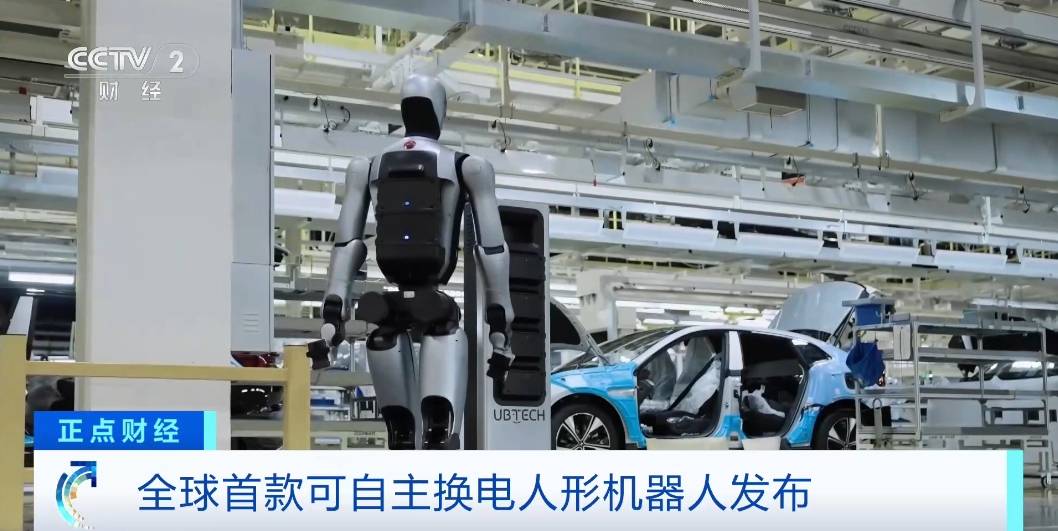
3分钟内实现自主换电!全球首款可自主换电人形机器人发布
Sou Hu Cai Jing· 2025-07-21 16:04
Group 1 - The world's first autonomous battery-swapping robot was launched in Shenzhen, significantly enhancing operational efficiency by enabling battery replacement in just 3 minutes [1][3] - This humanoid robot features a pioneering hot-swappable battery system that allows for battery changes without shutting down or human intervention, thus preventing task interruptions and reducing maintenance costs [3] - The introduction of this battery-swapping technology extends the continuous operational time of robots, making them viable options for production lines, particularly in manufacturing sectors like automotive and electronics [5] Group 2 - The humanoid robot market in China is projected to reach approximately 2.76 billion yuan in 2024 and could grow to 75 billion yuan by 2029, indicating a rapid development phase driven by policy support [7] - The industry is transitioning from showcasing robots as mere exhibits to commercial products, with manufacturing being the initial focus before expanding into service sectors and eventually households [7]
装备制造行业周报(7月第3周):工程机械销售保持增长趋势-20250721
Century Securities· 2025-07-21 01:19
Investment Rating - The report indicates a positive investment outlook for the equipment manufacturing industry, particularly in engineering machinery and automotive sectors, suggesting continued growth and resilience in these areas [1][2][3]. Core Insights - Engineering machinery sales are on an upward trend, with domestic sales of 12 types of machinery showing a year-on-year increase of 9% in June, particularly driven by excavators which saw a growth of 6.2% [2][3]. - The automotive market is also experiencing growth, with average daily retail sales of passenger cars increasing by 11% year-on-year in the second week of July, supported by promotional activities and strong export growth [2][3]. - In the photovoltaic sector, silicon wafer prices have risen, but there are concerns about weak downstream demand and potential downward pressure on prices in the second half of the year [2][3]. Market Performance Review - From July 14 to July 18, the indices for machinery equipment, electric power equipment, and automotive sectors increased by 2.91%, 0.57%, and 3.28% respectively, ranking 4th, 15th, and 3rd among 31 primary industries [7][8]. - The top-performing sub-sectors included commercial vehicles with a rise of 5.98% and other power equipment up by 4.76%, while photovoltaic equipment saw a decline of 2.01% [8]. Industry News and Key Company Announcements - A new low-carbon data center project in Ulanqab has commenced operations, marking a significant step in integrating renewable energy with data center operations [17]. - The launch of a new humanoid robot with a hot-swappable battery system by UBTECH aims to enhance productivity in smart manufacturing [17]. - Guizhou's green electricity trading volume has surged by 224% year-on-year in the first half of the year, reflecting the province's commitment to developing renewable energy sources [17].
断电?不存在!深圳人形机器人自己换“心脏”,24小时作业
Nan Fang Du Shi Bao· 2025-07-17 18:37
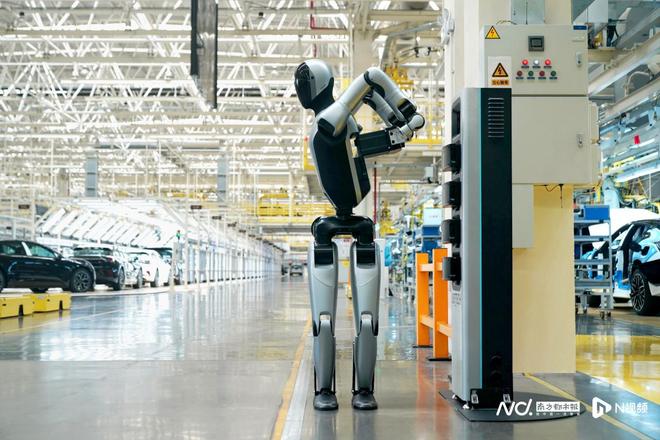
Core Viewpoint - The Walker S2 humanoid robot developed by UBTECH has introduced a groundbreaking hot-swappable battery system that allows for autonomous battery replacement in just three minutes, enabling continuous operation without human intervention [2][4]. Group 1: Technological Innovations - The hot-swappable battery system features three core technological highlights: 1. Original dual-battery power balance technology ensures seamless power switching during battery replacement, preventing current surges and arcing [3]. 2. Standardized battery compartment quick-change technology allows for rapid battery replacement and integrates the battery into the robot's structure [3]. 3. Dual-arm collaborative precise battery replacement technology enables the robot to autonomously align and swap batteries using advanced control algorithms [3]. Group 2: Practical Applications - The system demonstrates strong intelligent management capabilities, allowing the robot to autonomously decide between battery replacement and charging based on task priority, optimizing energy use dynamically [4]. - The dual-battery system provides redundancy, ensuring that if the main battery fails, the robot can instantly switch to a backup battery, enhancing safety and operational reliability in industrial environments [4]. - The widespread adoption of this technology is expected to revolutionize efficiency and productivity in the industrial sector, making continuous robotic operation a common reality [4].
7*24小时工作机器人要来了!优必选Walker S2全球首个实现自主换电
Zheng Quan Shi Bao Wang· 2025-07-17 06:53
Core Insights - The article highlights the groundbreaking autonomous battery swapping system for the Walker S2 humanoid robot developed by the company, enabling 24/7 uninterrupted operation without human intervention or shutdown [1][2] Group 1: Technology Highlights - The autonomous battery swapping system features three core technological innovations: - Original dual-battery power balancing technology allows for real-time monitoring and dynamic energy balancing, enabling seamless battery switching and safe operation [1] - Standardized battery compartment quick-change technology facilitates rapid battery replacement and integrates the battery as part of the robot's structure [1] - Dual-arm collaborative precise battery swapping technology ensures accurate alignment of the battery with the compartment using positioning accuracy and control algorithms [1] Group 2: Operational Benefits - The technology allows robots to autonomously choose between battery swapping and charging based on task priority, leading to dynamic energy management and increased operational efficiency [2] - The hot-swappable technology includes physical isolation and rapid disconnection mechanisms to prevent electric shock and explosions, enhancing safety and reliability during factory operations [2] - The dual-battery system provides redundancy, allowing seamless switching in case of primary battery failure, ensuring critical task execution [2]