
保鲜膜

Search documents
新疆乌苏市市场监管局关于春节期间餐饮具等产品消费提示
Zhong Guo Shi Pin Wang· 2026-02-12 07:11
Group 1 - The article emphasizes the importance of recognizing the attributes of food contact products, highlighting that not all containers and packaging are suitable for direct food contact. Items like bowls, chopsticks, and kitchenware must comply with mandatory standards such as GB 4806.1—2016 [1] - It advises consumers to purchase food-related products from reputable stores or e-commerce platforms and to check product labels for essential information, including product name, material, compliance with regulations, and whether it is marked for food contact use [1][2] Group 2 - The article outlines safety guidelines for using newly purchased food contact products, recommending thorough cleaning before first use and adherence to specified temperature and usage conditions. It also suggests regular inspection and replacement of items showing signs of wear or damage [2] - It encourages consumers to avoid excessive packaging when selecting gifts like tea or alcohol, promoting green consumption practices [2]
市场监管总局发布春节期间餐饮具等产品安全提示
Jing Ji Guan Cha Wang· 2026-02-11 11:52
Group 1 - The core message emphasizes the importance of selecting and using food contact products, such as bowls and chopsticks, that comply with safety standards to prevent health risks [1] - Consumers are advised to recognize the attributes of food contact materials and ensure they meet the national safety standards for food contact materials [1] - It is crucial to avoid using non-food contact items, such as regular plastic bags or industrial containers, for food handling to prevent harmful substance migration [1] Group 2 - When purchasing food-related products, consumers should choose reputable stores or e-commerce platforms and check product labels for essential information, including compliance with regulations and safety certifications [2] - Key details to look for include product name, material, compliance statements, producer information, production date, and specific markings indicating suitability for food contact [2] - Special attention should be given to the usage conditions of plastic and silicone utensils, particularly regarding their microwave and cooking safety [2] Group 3 - New food contact products should be thoroughly cleaned before first use, and users should adhere to the specified temperature and usage guidelines to avoid misuse [3] - Regular checks and timely replacements of utensils are recommended, especially for items showing signs of wear, such as mold on wooden chopsticks or discoloration of plastic products [4] - Consumers should avoid using non-heat-resistant containers in high-temperature scenarios and ensure that packaging for heated food is appropriately labeled [4]
2025年食品接触用纸容器等18种产品质量国家监督抽查情况通报
Yang Shi Wang· 2026-01-26 03:40
Core Insights - The State Administration for Market Regulation will conduct a national quality supervision and inspection of 18 types of food-related products in 2025, including food contact paper containers [1] Summary by Category General Overview - A total of 1,133 batches of products were inspected across 25 provinces, with 616 batches from sales units and 517 batches from production units. 30 batches were found to be non-compliant, including 4 batches of illegal products and 26 batches of inspection failures [1] Food Contact Paper Containers - 116 batches were inspected, focusing on 24 safety and performance criteria. Non-compliance was found in 5 batches, including issues with fluorescent substances and sensory indicators [2] Fresh-keeping Films - 33 batches were inspected, with no non-compliant products found among production units. However, 8 batches from sales units failed on oxygen and water vapor barrier performance [3] Dishwashing Detergents - 105 batches were inspected, revealing 3 batches of non-compliance, including issues with total effective content and microbial counts [4] Non-composite Film Bags - 109 batches were inspected, with 3 batches failing on oxygen barrier performance and 1 batch suspected of illegal production [5] Silicone Nipples - 30 batches were inspected, with 2 batches failing on volatile substances. No non-compliance was found among sales units [6] Glassware - 42 batches were inspected, with 1 batch failing on lead and cadmium migration. No issues were found among sales units [7] Pressure Cookers - 21 batches were inspected, with 1 batch failing on aluminum migration. No issues were found among production units [8] Composite Film Bags - 106 batches were inspected, and no non-compliant products were found [9] Melamine Plastic Tableware - 53 batches were inspected, with 1 batch found to have non-compliant material due to the addition of plant fibers [10] Disposable Plastic Tableware - 166 batches were inspected, with 1 batch suspected of illegal production [11] Baby Plastic Bottles - 31 batches were inspected, and no non-compliant products were found [12] Paper Straws - 33 batches were inspected, with 1 batch suspected of illegal production [13] Bamboo and Wooden Tableware - 87 batches were inspected, and no non-compliant products were found [14] Glass Wine Bottles - 43 batches were inspected, and no non-compliant products were found [15] Industrial and Commercial Electric Food Processing Equipment - 34 batches were inspected, and no non-compliant products were found [16] Mooncake Packaging - 15 batches were inspected, and no non-compliant products were found [17] Regulatory Requirements - Provincial market regulatory departments are required to address the issues found in the inspections, including taking legal actions against non-compliant products and ensuring corrective measures are implemented [12]
蛋炒饭好吃的秘诀找到了!科学家揭秘
Xin Lang Cai Jing· 2025-12-28 00:57
Group 1 - The article discusses the scientific principles behind common cooking techniques, such as using cold rice for fried rice, which enhances the texture and prevents clumping due to the molecular structure of starch [1][5] - It highlights the role of molecular physics in everyday cooking, explaining how the manipulation of molecular chains affects food preparation, such as the elasticity of noodles and the process of kneading dough [5][3] - The article also draws a connection between seemingly unrelated materials, such as cling film and bulletproof vests, both made from polyethylene, showcasing the versatility of molecular physics in material science [7] Group 2 - The insights provided by Wu Qi, a molecular physicist, reveal that cooking is not just an art but also a science, where understanding molecular interactions can lead to better culinary results [1][5] - The discussion emphasizes the importance of molecular structure in food preparation, indicating that traditional cooking wisdom is rooted in scientific principles [5][3] - The article suggests that knowledge of molecular physics can extend beyond cooking to other fields, such as the restoration of ancient texts, which relies on understanding the properties of paper fibers [5]


保鲜膜的这两种用法,真的可能释放有害物质
Xin Lang Cai Jing· 2025-12-21 02:11
Core Viewpoint - The article discusses the health risks associated with improper use of plastic wrap, highlighting the types of plastic wraps and their safety concerns, as well as providing guidelines for safe usage. Group 1: Types of Plastic Wrap - Plastic wraps are generally categorized into three types: Polyethylene (PE), Polyvinyl Chloride (PVC), and Polyvinylidene Chloride (PVDC) [2][4] - PE wraps are safe and do not contain plasticizers, but they are not heat-resistant and should not be used for heating [4] - PVC wraps have good transparency and flexibility but contain plasticizers that can release harmful substances when heated or in contact with fatty foods [4][5] - PVDC wraps have better barrier and moisture retention properties and can withstand high temperatures (140-180°C), making them suitable for heating [4] Group 2: Health Risks - The plasticizer, phthalate, found in PVC wraps can activate oxidative stress and inflammatory pathways in the body, leading to health issues [6][8] - Phthalates can interfere with the endocrine system, affecting lipid metabolism and blood pressure regulation, which may increase the risk of chronic inflammation and thrombosis [8] - While there is a certain tolerance level for phthalates in the human body, reducing exposure is still advisable [8] Group 3: Safe Usage Guidelines - It is recommended to remove the plastic wrap from store-bought cooked food immediately to avoid contamination from additives [17] - When microwaving, plastic wrap should not directly contact food; small holes should be made to allow steam to escape [18] - Hot food should not be covered with plastic wrap until it cools to below 60°C to prevent harmful substances from leaching [20] - Plastic wrap should not be reused to avoid cross-contamination, especially after wrapping raw meat [22] Group 4: Purchasing Recommendations - Consumers should look for specific product labels indicating food safety standards and check for transparency and stickiness of the wrap [14][16] - High-density polyethylene wraps are less likely to leach oil, while low-density polyethylene wraps may pose a risk when in contact with fatty foods [16]
2026年中国低密度聚乙烯行业发展现状、竞争格局及趋势预测
Sou Hu Cai Jing· 2025-12-13 05:31
Core Insights - The low-density polyethylene (LDPE) industry in China is experiencing steady growth in production capacity and output, but it still falls short of meeting domestic demand, leading to significant imports [1][16] - The market size for LDPE in China is projected to reach 61.193 billion yuan in 2024, reflecting a year-on-year growth of 13.36% [2][18] - The industry faces challenges such as product homogeneity and a lack of high-end products, necessitating continued imports [1][16] Group 1: Industry Overview - LDPE is characterized by its soft texture and high elasticity, making it dominant in the film products sector, including food and cosmetic packaging [1][14] - As of 2024, China's LDPE production is estimated at 3.6903 million tons, with apparent demand at 6.1034 million tons [1][14] - The production technology for LDPE in China is entirely imported, primarily from companies like LyondellBasell and ExxonMobil [7] Group 2: Import and Export Analysis - In 2024, China's LDPE imports are expected to be 2.9562 million tons, a decrease of 4.04% year-on-year, with an average import price of 8,388.81 yuan per ton, up 0.94% [1][16] - The export volume for LDPE in 2024 is projected at 243,100 tons, an increase of 2.82% year-on-year, with an average export price of 10,749.62 yuan per ton, down 5.26% [1][16] Group 3: Market Dynamics - The market price for LDPE in China has shown a trend of decline followed by growth, with an average price of approximately 10,026 yuan per ton in 2024, reflecting an 11.34% increase year-on-year [2][18] - The market dynamics are influenced by factors such as raw material prices, operating rates, downstream demand, and import/export prices [2][18] Group 4: Competitive Landscape - The production capacity in China's LDPE sector is predominantly held by state-owned enterprises, accounting for 59.04% of total capacity [20] - The largest LDPE producer in China is Yangzi-BASF Chemical Co., Ltd., with a market share of 7.28%, followed by Sinopec Beijing Yanshan Company at 6.92% [20][21]
辽宁省沈阳市市场监督管理局发布非复合膜袋产品抽查结果
Zhong Guo Zhi Liang Xin Wen Wang· 2025-10-22 08:45
Group 1 - The core point of the article is that all 35 batches of non-composite film bag products inspected in Shenyang, Liaoning Province, were found to be qualified [3][4][5]. Group 2 - The inspection results indicate that various manufacturers in Shenyang produced compliant products, including polyethylene and polypropylene films, with specifications such as 590×0.055 mm and 400×700×0.03 mm [4][5][6]. - The inspection was conducted by the Shenyang Market Supervision Administration, highlighting the regulatory efforts to ensure product quality in the packaging industry [3][4].

雷诺兹消费品被选入标普小型股600指数
Xin Lang Cai Jing· 2025-09-22 15:28
Core Viewpoint - Reynolds Consumer Products (REYN), a manufacturer of kitchen consumables such as aluminum foil, cling film, and garbage bags, saw a 4% increase in its stock price following its selection for inclusion in the S&P SmallCap 600 Index, effective September 24, reflecting the company's strong market performance [1]. Group 1 - Reynolds Consumer Products was selected for inclusion in the S&P SmallCap 600 Index [1]. - The inclusion is set to take effect on September 24 [1]. - The stock price of Reynolds Consumer Products increased by 4% in early trading [1].

关于“垃圾不够烧”的真相
Hu Xiu· 2025-09-02 01:57
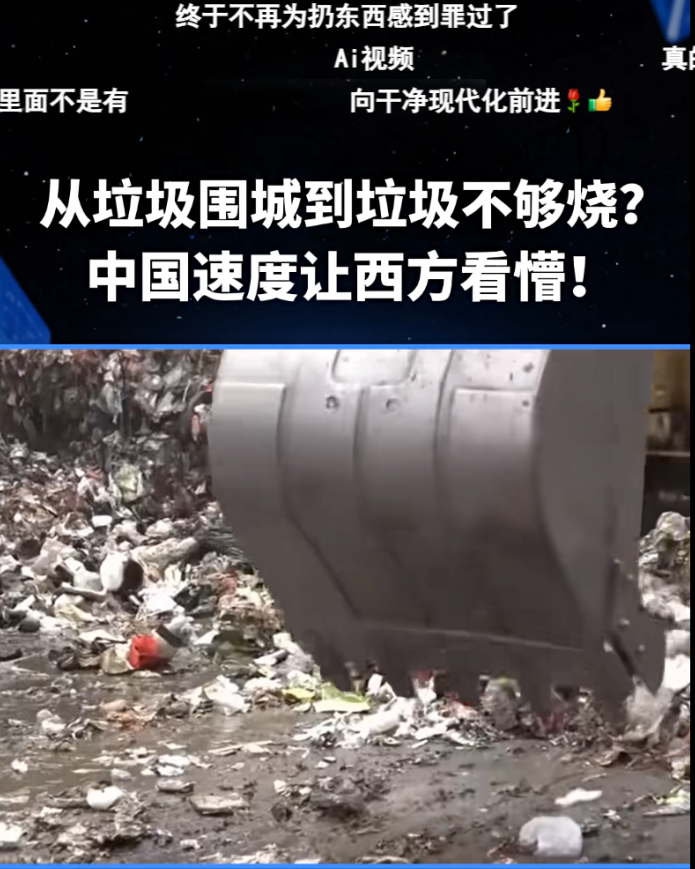
Group 1 - The article discusses the viral video claiming that China has a shortage of garbage for incineration, which has led to public excitement about producing more waste without guilt [1][7][11] - As of 2023, China has built over 1,000 waste incineration power plants, with a total incineration capacity exceeding that of the US, Japan, and Europe combined [20][11] - The public's perception of waste management is influenced by the efficiency and profitability of incineration, leading to misconceptions about the role of waste sorting and recycling [7][8][9] Group 2 - The current waste generation in major cities like Beijing and Shanghai is significantly high, with estimates of over 200 kg and 290 kg per person per year, respectively [11][12] - The overcapacity of incineration plants is a result of insufficient landfill space, prompting the construction of more incineration facilities [14][12] - The article emphasizes that incineration is not a comprehensive solution to waste management, as it generates greenhouse gases and does not address the root causes of waste production [22][47] Group 3 - Concerns about dioxin emissions from incineration are raised, highlighting that while technology has improved, monitoring and regulation are still inadequate [15][16][17] - The article points out that the current monitoring practices for dioxin emissions are not as frequent or effective as necessary, leading to potential environmental and health risks [16][18] - The discussion includes the need for stricter regulations and better management of waste incineration to ensure public health and environmental safety [18][47] Group 4 - The article advocates for a shift from incineration to waste reduction and recycling, emphasizing the importance of source reduction in waste management strategies [55][57] - It highlights the role of individuals and businesses in reducing waste, suggesting practices like reusing materials and minimizing single-use plastics [55][57] - The need for systemic changes in waste management policies and practices is emphasized, including higher costs for waste production to reflect the true social costs [48][54]
新疆乌苏市市场监管局开展食品相关产品质量安全专项检查
Zhong Guo Shi Pin Wang· 2025-08-05 10:20
Core Viewpoint - The Urumqi Municipal Market Supervision Bureau is actively implementing a quality safety inspection action for food-related products, focusing on ensuring the safety and quality of items closely related to daily life, such as disposable plastic tableware and food packaging materials [1] Group 1: Inspection Focus - The inspection targets disposable plastic tableware, paper cups, food packaging bags, and cling film, which are essential for daily life [1] - The bureau emphasizes strict checks on production sources and circulation links, ensuring the quality safety of food-related products [1] Group 2: Regulatory Measures - Inspectors are verifying that labels on products clearly indicate the product name, standards, manufacturer details, and production license numbers [1] - The bureau is urging sales units to implement strict incoming inspection systems to ensure traceability of product sources [1] Group 3: Future Actions - The bureau plans to conduct regular quality supervision and follow-up on problematic enterprises to ensure compliance and rectify issues [1] - There will be a focus on publicizing food safety knowledge to enhance the public's ability to identify counterfeit products, making regulation more transparent and aligned with community needs [1]