
信用付

Search documents
招联聘请董希淼为首席经济学家
2 1 Shi Ji Jing Ji Bao Dao· 2026-01-29 08:58
Group 1 - Zhaolian Consumer Finance Co., Ltd. has appointed Dong Ximiao as Chief Economist, strengthening their collaboration since his initial hiring as Chief Researcher in August 2020 [1] - Dong Ximiao is currently the Deputy Director and Researcher at the Shanghai Financial and Development Laboratory, with extensive experience in financial institutions and think tanks [1][2] - Zhaolian was established in March 2015, with a registered capital of 10 billion yuan, and is a leading player in the consumer finance sector in China [3] Group 2 - Zhaolian is the chair unit of the Consumer Finance Professional Committee of the China Banking Association and one of the first institutions to handle personal consumer loan fiscal subsidies [3] - The company emphasizes a development philosophy of "practicing inclusive finance through technology" and aims to support a wide range of consumer scenarios, including shopping, travel, education, and home renovation [3] - Zhaolian's main business indicators rank among the top in the industry, with products like "Haoqi Loan" and "Credit Pay" serving millions of customers nationwide [3]
镇江市第一人民医院持续改善就医感受提升患者体验
Xin Lang Cai Jing· 2026-01-27 22:08
Core Insights - The article highlights the efforts of Zhenjiang First People's Hospital to enhance patient experience through various innovative services and measures aimed at improving the overall healthcare process [1][2][4]. Group 1: Parking and Patient Experience - The new parking lot with 86 spaces has been officially opened to alleviate the parking difficulties faced by patients [1] - The hospital focuses on a patient-centered approach, addressing bottlenecks in the entire medical process from pre-diagnosis to hospitalization [1][2]. Group 2: Information Technology and Service Innovations - The hospital has implemented a "pre-visit" service model allowing stable patients to book appointments online, reducing the need for physical visits [2] - Various payment options such as "in-clinic code payment" and "insurance family payment" have been introduced to streamline the payment process for patients [2]. Group 3: Streamlining Examination Processes - Most examinations can now be booked online, with automatic scheduling and payment options available, enhancing convenience for patients [3] - The hospital provides real-time updates on waiting times and allows patients to reschedule appointments easily through mobile applications [3]. Group 4: Enhanced Emergency Services - The hospital has established a 24-hour electronic laryngoscope service to address urgent cases, significantly improving patient access to care during off-hours [4] - A multi-disciplinary team approach has been adopted to provide comprehensive care for complex health issues, including a weight management clinic and a pancreatic disease center [4]. Group 5: Emergency Response and Collaboration - The hospital is developing an integrated emergency response system to ensure rapid access to critical care facilities [5][6] - Collaboration with local emergency services aims to enhance the efficiency of emergency medical responses, allowing for better preparation before patient arrival [6]. Group 6: Patient-Centric Care and Rehabilitation - The hospital is enhancing inpatient services by streamlining processes and promoting same-day surgeries, improving patient flow and satisfaction [6] - Initiatives such as "warm pre-surgery companionship" for pediatric patients have been introduced to ease anxiety and improve surgical outcomes [7].
招联“十四五”发展答卷:以数智赋能为笔 绘就普惠新图景
Jin Rong Shi Bao· 2025-12-31 12:27
Core Viewpoint - The "14th Five-Year Plan" period marks a critical phase for the consumption finance industry in China, transitioning from "scale expansion" to "quality and quantity improvement," with 招联消费金融股份有限公司 (Zhaolian) emerging as a benchmark for high-quality development through digital innovation and social responsibility [1] Group 1: Digital Transformation and Innovation - Zhaolian has established itself as a pioneer in the digital transformation of the consumption finance sector, being the first to explore a fully online consumption finance model, significantly reducing operational costs and expanding access to credit services for underserved populations [2] - The company has developed a comprehensive consumption finance system based on cloud technology, achieving a "go IOE" status, which has set a standard for digital transformation in the industry [2] - In response to the AI revolution, Zhaolian launched the industry’s first open-source large model, "Zhaolian Zhilu," with 130 billion parameters, followed by iterations that enhanced its reliability in financial applications [3] Group 2: Consumer Protection and Satisfaction - Zhaolian has integrated its AI model with consumer rights protection, creating the first intelligent consumer protection system in the industry, which has led to a customer satisfaction rate of 98% and a complaint handling timely rate exceeding 99% [3] - The company’s innovative self-service system empowers consumers, allowing them to take the lead in financial services, enhancing user experience and engagement [5][6] Group 3: Social Responsibility and Community Engagement - Zhaolian actively participates in social responsibility initiatives, focusing on traditional industry empowerment, green development, and rural revitalization, thereby aligning its business growth with societal value creation [8] - The company has developed an intelligent traditional Chinese medicine diagnosis model to assist grassroots healthcare, addressing resource shortages and improving healthcare quality [8] - Zhaolian has launched the "Green Yuan" platform for smart waste management, promoting environmental sustainability and efficiency in waste collection [9] Group 4: Targeting New Citizen Demographics - Zhaolian has tailored its services to meet the financial needs of new citizens, providing targeted financial products and establishing a dedicated service area in its app to enhance accessibility and support for this demographic [6][7] - The company has implemented initiatives such as the "New Citizen Dream Action" to facilitate consumer convenience and security for new residents [6] Group 5: Future Outlook - As it moves into the "15th Five-Year Plan," Zhaolian aims to deepen digital innovation, expand inclusive services, and fulfill its social responsibilities, contributing to the construction of a financially strong nation and promoting common prosperity [10]
2025普惠金融报告|消费贷:不卷利率卷服务
Bei Jing Shang Bao· 2025-12-14 06:40
Core Insights - The consumer loan market in China has reached a balance of 21.29 trillion yuan by the end of Q3 2025, reflecting a year-on-year growth of 4.2% [4][5] - The era of aggressive expansion in consumer loans is over, with a shift towards quality development and compliance following the implementation of new lending regulations [4][8] - Financial institutions are now focusing on sustainable growth by enhancing their service offerings and optimizing their business structures [5][9] Market Expansion - Consumer loans have been viewed as a buffer for financial institutions amid slowing mortgage growth, with banks increasing their consumer loan balances significantly [4][5] - The total consumer loan balance for 41 A-share listed banks reached approximately 6.80 trillion yuan, with a growth rate of 5.37% in the first half of 2025 [4][5] - The growth is driven by government policies aimed at boosting consumption and proactive adjustments by financial institutions [4][5] Customer Segmentation and Rate Differentiation - There is a clear differentiation in customer segments and interest rates between banks and licensed consumer finance institutions [6][7] - Banks typically offer lower interest rates (3%-5%) due to their low-cost funding advantages, focusing on high-quality borrowers [6][7] - Licensed consumer finance institutions cater to underserved markets, charging higher rates (4%-24%) to cover risk costs, and targeting new citizens and blue-collar workers [6][7] Regulatory Environment - The trend of lowering interest rates is ongoing, but there is a need for balance to avoid financial arbitrage behaviors [8] - New regulations set a cap on comprehensive financing costs at 24% and emphasize the importance of responsible lending practices [8][9] - Institutions are encouraged to leverage financial technology to better match consumer needs and reduce issues like over-borrowing [8][9] Future Development - The industry must address three core issues for sustainable development: asset quality management, deepening customer value, and fulfilling social responsibilities [9] - Banks should focus on building ecosystem capabilities and enhancing data utilization, while consumer finance institutions need to strengthen their technological capabilities and explore new growth models [9]


消费贷 不卷利率卷服务
Bei Jing Shang Bao· 2025-12-10 12:00
Core Insights - The consumer loan market in China has reached a balance of 21.29 trillion yuan by the end of Q3 2025, reflecting a year-on-year growth of 4.2% [3][4] - The era of aggressive expansion in consumer loans is over, with a shift towards compliance and quality improvement in the industry [1][7] - Banks and licensed consumer finance institutions are now focusing on sustainable growth within regulatory frameworks, emphasizing the need for a balanced approach to risk and expansion [8] Market Expansion - Consumer loans have been viewed as a buffer for banks amid slowing mortgage growth, with a notable increase in loan balances driven by government policies and financial institutions adjusting their business structures [3][4] - The total consumer loan balance for 41 A-share listed banks reached approximately 6.80 trillion yuan in the first half of 2025, marking a 5.37% increase from the previous year [4] - Major banks like China Construction Bank and Postal Savings Bank have significant consumer loan balances, indicating a competitive landscape among financial institutions [4] Customer Segmentation and Rate Differentiation - The consumer loan market is characterized by a "dislocated competition" where banks and licensed consumer finance institutions target different customer segments and pricing strategies [5][6] - Banks typically offer lower interest rates (3%-5%) due to their low-cost funding advantages, focusing on high-quality borrowers [5][6] - Licensed consumer finance institutions cater to underserved markets, often charging higher rates (4%-24%) to cover risk costs while providing flexible loan options [5][6] Regulatory Environment - The adjustment of consumer loan interest rates has been a long-term trend, with a recent regulatory push to maintain rates around 3% to prevent financial arbitrage [7] - New regulations effective from October 1, 2025, set a cap on comprehensive financing costs at 24%, aiming to guide consumer loan rates into a compliant downward trajectory [7] Sustainable Development Challenges - The industry faces three core challenges for sustainable development: asset quality management, deepening customer value, and fulfilling social responsibilities [8] - Financial institutions are encouraged to leverage technology for better consumer demand analysis and to reduce costs, thereby enhancing the precision of credit approvals [8] - Banks should focus on building ecosystem capabilities and improving organizational agility, while consumer finance institutions need to strengthen their technological capabilities and explore new growth models [8]

网贷江湖变天:助贷新规下,没有侥幸者空间
3 6 Ke· 2025-10-14 00:15
Group 1 - The core viewpoint of the articles is that the new regulations on internet lending in China mark the end of the era of unregulated growth and the beginning of a stringent regulatory environment, impacting both banks and third-party lending platforms [1][13][19] - The new regulations require banks to take full responsibility for risk control and compliance, ending the previous model where banks acted as passive fund providers [1][2] - The shift from a "scale-oriented" to a "value-oriented" approach in the lending industry is emphasized, with a focus on sustainable profitability and risk management [1][7] Group 2 - Different banks face unique challenges under the new regulations, with China Merchants Bank (CMB) being recognized as a leader in retail banking, while Ningbo Bank represents a regional player [2][8] - CMB's online lending product, "Flash Loan," is under pressure as competition intensifies and interest rates decline, raising concerns about its profitability [2][3] - Ningbo Bank's consumer finance subsidiary, Ningyin Consumer Finance, has shown significant growth in net profit and total assets, but faces challenges in maintaining asset quality and reducing reliance on external funding [9][10] Group 3 - The performance of 招联金融 (Zhaolian Financial) has been declining, with revenue and net profit both experiencing significant drops in 2024 and the first half of 2025 [5][6] - Zhaolian Financial's reliance on its parent companies for customer acquisition and risk management is highlighted, indicating a need for improved self-sufficiency [6][7] - The overall market for internet lending is under pressure, with increased scrutiny on risk management capabilities across all players, including Zhaolian Financial and Ningyin Consumer Finance [7][10] Group 4 - Third-party lending platforms are facing more direct impacts from the new regulations, with a shift in focus towards risk pricing and compliance [13][14] - Companies like 奇富科技 (Qifu Technology) and 信也科技 (Xinye Technology) are adapting their business models in response to regulatory changes, increasing their risk provisions significantly [14][15] - The overall industry is expected to undergo a significant restructuring, with a focus on compliance and risk management becoming paramount for survival [19]


招联消金业绩延续“三降”:“清退高风险客户”,但增长没了
凤凰网财经· 2025-09-04 13:28
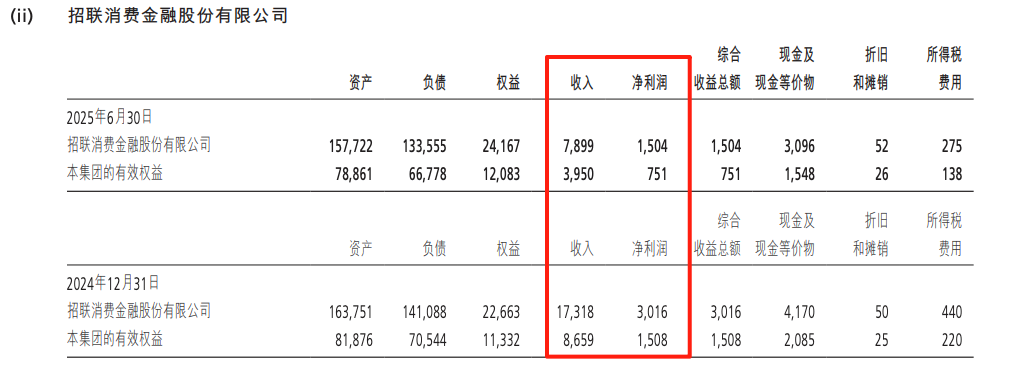
Core Viewpoint - The consumer finance industry is experiencing a shift, with most licensed consumer finance institutions showing growth in revenue and net profit, while Zhaolian Consumer Finance (Zhaolian) reports declines in total assets, revenue, and net profit for the first half of 2025, despite maintaining the highest net profit in the industry at 1.504 billion yuan [2][5]. Financial Performance - In the first half of 2025, Zhaolian's revenue was 7.899 billion yuan, a decrease of 14.77% year-on-year, and net profit was 1.504 billion yuan, down 12.76% year-on-year [2][3]. - As of June 30, 2025, Zhaolian's total assets were 157.722 billion yuan, a reduction of 60.29 billion yuan from the end of 2024, representing a decline of 3.68% [2][3]. - Zhaolian's performance has been declining since 2024, marking the first time in nine years that both revenue and net profit have decreased [2][5]. Market Environment - The complex macroeconomic environment is a significant external factor contributing to Zhaolian's performance decline, with slow recovery in consumer credit demand and increased caution among consumers regarding borrowing [5]. - The consumer finance industry has entered a phase of stock competition, limiting growth opportunities for leading institutions like Zhaolian, which has seen simultaneous declines in total assets, revenue, and net profit since 2024 [5]. Historical Growth Trends - Zhaolian previously maintained high growth rates, with revenue growth exceeding 50% from 2016 to 2019, peaking at 1070% in 2016 [6]. - However, revenue growth sharply declined to 9.8% in 2022, rebounded to 12% in 2023, and then fell again to -11.65% in 2024 [6]. Revenue Sources - In 2024, Zhaolian's net interest and fee income decreased by 11.63% year-on-year, primarily due to a reduction in business scale, although it remained the main source of operating income [6][9]. - The company also has a small amount of non-interest and fee income, mainly from government subsidies [6]. Product Performance - In 2024, Zhaolian's "Good Period Loan" balance decreased to 99.13 billion yuan, down 8.57%, and "Credit Payment" balance fell to 69.649 billion yuan, down 5.51% [9][11]. - The company faces significant customer acquisition and retention pressures in an increasingly competitive market [9]. Asset Quality and Risk Management - Zhaolian's debt scale decreased alongside its business scale, with interest expenses relative to average interest-bearing liabilities declining by 0.45 percentage points [13]. - The company's non-performing loan (NPL) ratio improved to 1.95% in 2024, a significant decrease of 0.5 percentage points from the previous year [13][14]. - Zhaolian actively wrote off high-risk customers and increased lending to low-risk customers to stabilize asset quality, with a 23.32% year-on-year increase in the write-off of non-performing loans [15].

招联消金业绩延续“三降”:“清退高风险客户”,但增长没了
Feng Huang Wang Cai Jing· 2025-09-04 06:58
Core Viewpoint - The consumer finance industry is experiencing a shift, with most licensed institutions showing growth in revenue and profit, while Zhaolian Consumer Finance has reported declines in total assets, revenue, and net profit for the first half of 2025, despite maintaining the highest net profit in the industry at 1.504 billion yuan [1][3]. Financial Performance - In the first half of 2025, Zhaolian Consumer Finance reported revenue of 7.899 billion yuan, a decrease of 14.77% year-on-year, and a net profit of 1.504 billion yuan, down 12.76% year-on-year [1][2]. - As of June 30, 2025, the total assets of Zhaolian Consumer Finance were 157.722 billion yuan, a reduction of 60.29 billion yuan from the end of 2024, representing a decline of 3.68% [1][2]. - The company has entered a downward performance cycle since 2024, marking its first instance of simultaneous revenue and profit decline in nine years, with annual revenue and net profit decreasing by 11.65% and 16.22% respectively [1][3]. Market Conditions - The macroeconomic environment has contributed to Zhaolian Consumer Finance's performance decline, with slow recovery in consumer credit demand and increased caution among consumers regarding borrowing [3]. - The consumer finance industry is now in a phase of stock competition, limiting growth opportunities for leading institutions like Zhaolian Consumer Finance, which has seen its total assets, revenue, and net profit decline since 2024 [3]. Historical Growth Trends - Zhaolian Consumer Finance previously experienced high growth rates, with revenue growth exceeding 50% from 2016 to 2019, peaking at 1070% in 2016 [3]. - The revenue growth rate fell to 9.8% in 2022, and while it rebounded to 12% in 2023, it dropped again to -11.65% in 2024 [3]. Product Performance - In 2024, the loan balance for Zhaolian Consumer Finance's "Good Period Loan" decreased to 99.13 billion yuan, down 8.57%, and the "Credit Payment" loan balance fell to 69.649 billion yuan, down 5.51% [5][6]. - The company faces significant customer acquisition and retention pressures in an increasingly competitive market [5]. Asset Quality and Financial Ratios - Zhaolian Consumer Finance's debt scale decreased alongside its business scale, with interest expenses relative to average interest-bearing liabilities declining by 0.45 percentage points [7]. - The company reported a non-performing loan (NPL) ratio of 1.95% in 2024, a significant decrease of 0.5 percentage points from the previous year, and a provision coverage ratio that increased by 107.58 percentage points to 471.63% [7][8]. Risk Management - Zhaolian Consumer Finance has actively written off high-risk customers and increased lending to low-risk customers to stabilize asset quality, with a total of 14.478 billion yuan in bad loans written off in 2024, a year-on-year increase of 23.32% [9]. - The overall recovery rate for overdue loans remains high, with overdue loans amounting to 6.404 billion yuan at the end of 2024, representing 3.79% of total loans, a decrease of 0.54 percentage points year-on-year [9].
消费金融公司提升专业服务能力
Jin Rong Shi Bao· 2025-08-08 07:52
Core Viewpoint - The consumption finance companies play a crucial role in connecting financial resources with consumer demand, actively exploring practices to enhance specialized service capabilities and expand financial supply in the consumption sector [1]. Policy Support and Market Dynamics - The "Guiding Opinions on Financial Support to Boost and Expand Consumption" has established a systematic policy framework for financial support in consumption, prompting companies to explore multi-level and differentiated paths to stimulate domestic demand [2]. - Consumption finance institutions are clearly positioned to provide credit services for retail financial consumers [2]. - Companies are focusing on upgrading traditional businesses and innovating through technology to create a financial service network that covers the entire lifecycle of urban and rural residents' consumption needs [2]. Innovations and Product Offerings - Companies like Zhaolian and Mashang have developed comprehensive product systems covering various consumption scenarios such as shopping, travel, education, and home decoration [2]. - Ant Financial has increased financial supply by targeting underserved populations, aligning with online consumption trends, and offering interest-free options to reduce consumer costs [2]. Self-Acquisition and Risk Management - The Opinions encourage consumption finance companies to enhance their self-acquisition and risk control capabilities while reasonably determining comprehensive loan interest rates [3]. - Companies are accelerating the development and optimization of self-operated channels due to the saturation of third-party channel traffic and rising customer acquisition costs [3]. - Digital transformation is emphasized to replace some manual judgment with digital models, adapting to the characteristics of small and scattered consumer finance businesses [3]. Customer Engagement and Technology Utilization - Companies like Zhaolian and Mashang have prioritized building self-operated capabilities, with Zhaolian's app now offering tailored loan proposals based on user profiles and credit status [4]. - Nanyin Fabao has enhanced customer research to provide customized discount policies, while Zhongyuan Consumer Finance has improved customer acquisition precision by aligning with key consumption periods [4]. - Haier Consumer Finance leverages its industrial background to expand scenario-based financial services, covering over 11,000 merchants and providing installment services to 3 million users [4]. Future Outlook - The future of consumption finance lies in accurately allocating financial resources to areas that create genuine consumer demand, utilizing technology to lower service costs, and enhancing user experience through scenario innovation [5].
消费金融公司提升专业服务能力 扩大消费领域金融供给
Jin Rong Shi Bao· 2025-06-26 01:39
Core Viewpoint - Consumer finance companies play a crucial role in connecting financial resources with consumer demand, actively exploring practices to enhance specialized service capabilities and expand financial supply in the consumption sector [1]. Group 1: Policy Support and Market Dynamics - The "Guiding Opinions on Financial Support to Boost and Expand Consumption" has established a systematic policy framework for financial support in consumption [2]. - Consumer finance institutions are focusing on upgrading traditional businesses and innovating through technology to create a financial service network that covers the entire lifecycle of urban and rural residents' consumption needs [2]. - Companies like Ant Financial are increasing financial supply by targeting underserved populations, aligning with online consumption trends, and providing interest-free options to reduce consumer costs [2]. Group 2: Self-Acquisition and Risk Management - The Opinions encourage consumer finance companies to enhance their self-acquisition and risk control capabilities while reasonably determining comprehensive loan interest rates [3]. - With third-party channel traffic becoming saturated and customer acquisition costs rising, consumer finance companies are accelerating the development and optimization of self-operated channels [3]. - Digital transformation is emphasized, with a focus on using digital models to replace some manual judgment, adapting to the characteristics of consumer finance business [3]. Group 3: Innovations in Customer Engagement - Companies like Zhaolian and Mashang are prioritizing self-operated capability development, with Zhaolian's app now in its 7.0 version, offering tailored loan proposals based on user profiles [4]. - Nanyin Fabao Consumer Finance is enhancing customer research to provide customized incentives, while Zhongyuan Consumer Finance is combining innovative consumption scenarios with inclusive finance to improve customer acquisition precision [4]. - Haier Consumer Finance leverages its industrial background to expand scenario-based financial services, covering over 11,000 merchants in various sectors and providing installment services to 3 million users [4]. Group 4: Future Directions and Social Impact - The future of consumer finance lies in accurately allocating financial resources to areas that create genuine consumer demand, utilizing technology to lower service costs and enhance user experience [5]. - The industry aims to achieve a balance between commercial value and social value through inclusive innovation and efficient resource utilization [5].