债券市场科技板

Search documents
一股一债,打通科创“钱”路|上海“十五五”开局
Guo Ji Jin Rong Bao· 2026-02-25 05:57
Core Viewpoint - The development of the Sci-Tech Innovation Board (STAR Market) and the "Tech Board" in the bond market is a key initiative for Shanghai to implement the "14th Five-Year Plan," enhance the coordination of investment and financing functions, and develop technology finance [1][5]. Group 1: Support for Sci-Tech Innovation Board - The "14th Five-Year Plan" emphasizes the need to improve the capital market functions that coordinate investment and financing, and to vigorously develop technology finance [3][5]. - Experts suggest that the STAR Market is currently facing pressure to shift from "incremental expansion" to "quality and efficiency improvement," requiring breakthroughs in mergers and acquisitions, long-term capital introduction, and pricing power construction [1][3]. - The STAR Market has become a core financing platform for hard technology enterprises, with 600 listed companies and nearly 1 trillion yuan raised by the end of last year, significantly contributing to sectors like semiconductors and biomedicine [7][8]. Group 2: Challenges in Bond Market "Tech Board" - The bond market "Tech Board," launched in May 2025, aims to raise long-term, low-interest, and easily accessible bond funds for technological innovation, with an issuance target of 2.3 trillion yuan annually [11]. - Challenges include an imbalance in issuance structure, low participation from private enterprises, and issues related to credit risk identification and pricing due to the unique characteristics of tech companies [11][12]. - Experts recommend transitioning from "subject credit" to "technology credit" to better align with the risk profiles of tech enterprises and to enhance the market's risk tolerance [12][13]. Group 3: Recommendations for Improvement - Suggestions for enhancing the STAR Market include strengthening the ecosystem for early, small, long-term investments, and optimizing information disclosure and investor rights protection [8][9]. - For the bond market "Tech Board," recommendations include improving technology recognition and disclosure templates, introducing risk-sharing mechanisms, and developing a more diverse product system [12][13]. - Shanghai should leverage its financial infrastructure and open financial environment to innovate products and optimize rules, aiming to become a global pricing and clearing center for sci-tech assets [13].
一股一债,打通科创“钱”路
Guo Ji Jin Rong Bao· 2026-02-25 05:57
Core Viewpoint - Shanghai's support for the development of the Sci-Tech Innovation Board and the "Tech Board" in the bond market is a key initiative to implement the "14th Five-Year Plan," enhance the coordination of investment and financing functions, and develop technology finance [1][4]. Group 1: Development of Sci-Tech Innovation Board - The "14th Five-Year Plan" emphasizes the need to improve the capital market functions that coordinate investment and financing, and to vigorously develop technology finance [2][4]. - Experts indicate that the Sci-Tech Innovation Board is transitioning from "incremental expansion" to "quality and efficiency improvement," requiring breakthroughs in mergers and acquisitions, long-term capital introduction, and pricing power construction [1][3]. - The Sci-Tech Innovation Board has become a core financing platform for hard technology enterprises, with 600 listed companies and nearly 1 trillion yuan raised by the end of last year [5][6]. Group 2: Bond Market "Tech Board" - The bond market "Tech Board" aims to provide long-term, low-interest, and easily accessible bond funding for technological innovation, with an issuance target of 2.3 trillion yuan for the year [8]. - Challenges faced by the "Tech Board" include structural imbalances in issuance, low participation from private enterprises, and issues related to credit risk identification and pricing [8][9]. - Experts suggest optimizing the "Tech Board" by improving technology recognition and disclosure templates, introducing risk-sharing mechanisms, and enriching the product system [9][10]. Group 3: Recommendations for Improvement - Recommendations for enhancing the Sci-Tech Innovation Board include strengthening the ecosystem for early, small, long-term investments, improving information disclosure, and optimizing refinancing and merger mechanisms [6][7]. - For the bond market "Tech Board," suggestions include developing innovative products, establishing specialized technology rating agencies, and enhancing transparency in information disclosure [9][10]. - Shanghai should leverage its advantages in financial infrastructure and open up to attract long-term capital from insurance and pension funds to participate in the "Tech Board" [10].
新华鲜报丨新增贷款超16万亿元!金融“活水”激发经济活力
Xin Hua Wang· 2026-01-15 13:29
Core Insights - The financial sector is crucial for the national economy, with the People's Bank of China reporting a total of 16.27 trillion yuan in new loans for 2025, reflecting the effectiveness of moderately loose monetary policies and sustained credit demand from businesses and households [1] - The total social financing increment for 2025 reached 35.6 trillion yuan, with broad money (M2) exceeding 340 trillion yuan and the RMB loan balance surpassing 270 trillion yuan, indicating a robust financial system supporting economic stability and internal demand [1] - Monetary policy measures included a 0.5 percentage point reduction in the reserve requirement ratio and a 0.1 percentage point cut in policy interest rates, contributing to a sustained low loan interest rate environment [1] Financial Performance - New corporate loans amounted to 15.47 trillion yuan in 2025, with over 90% of new loans directly addressing corporate needs, and more than half of these loans being medium to long-term, indicating a stable outlook for corporate financing [2] - Key sectors attracting significant credit include technology (11.5% growth), green initiatives (23%), inclusive finance (10.3%), elderly care (60.2%), and digital fields (14.6%), all surpassing the overall loan growth rate [2] Policy and Structural Changes - The optimization of structural monetary policy tools has led to increased support for technological innovation, agricultural financing, and small enterprises, alongside the introduction of a "technology board" in the bond market [4] - Continuous policy initiatives since 2025 have focused on enhancing financial services for high-quality economic development, with emerging industries like humanoid robotics and biomedicine gaining momentum [4] Economic Outlook - The People's Bank of China plans to maintain a moderately loose monetary policy in 2026, emphasizing counter-cyclical adjustments to stimulate domestic demand and optimize supply, thereby fostering stable economic growth and a favorable financial environment [4] - The ongoing improvement in financial support quality is expected to align financial supply with the high-quality development of the real economy, reinforcing the positive economic momentum [5]

解读·做好金融“五篇大文章” 多维度读懂2026年继续实施适度宽松货币政策
Yang Shi Wang· 2026-01-07 06:42
Core Viewpoint - The People's Bank of China (PBOC) will continue to implement a moderately accommodative monetary policy in 2026, focusing on stabilizing economic growth and ensuring reasonable price recovery while maintaining relatively loose social financing conditions [1][3][19]. Monetary Policy Implementation - In 2026, the PBOC will utilize various monetary policy tools, including reserve requirement ratio (RRR) cuts and interest rate reductions, to ensure ample liquidity [3][21]. - The growth of social financing and money supply will be aligned with economic growth and price level expectations [5][19]. Focus Areas for Financial Support - The PBOC will enhance financial services for high-quality development of the real economy, with a focus on expanding domestic demand, supporting technological innovation, and aiding small and medium-sized enterprises [7][9][19]. - Structural monetary policy tools will be emphasized to support consumption and effective investment, particularly in key areas such as green transformation and rural-urban integration [9][21]. Financial Market Opening - The PBOC plans to deepen the high-level opening of financial markets in 2026, optimizing mechanisms like "Bond Connect" and "Swap Connect" to facilitate cross-border use of the Renminbi [10][12]. - The expansion of cross-border financial services will include enhancing the cross-border wealth management connect and promoting the use of digital currency [14][19]. Support for Technological Innovation - The PBOC aims to provide robust financial support for high-level technological self-reliance, with a focus on developing a differentiated financial market ecosystem for technology enterprises [22][30]. - Initiatives such as the "Technology Board" in the bond market will be further developed to meet the financing needs of technology companies throughout their lifecycle [25][30].
向“新”集聚!货币政策“精准滴灌”发力 金融产品“量体裁衣”服务实体经济
Yang Shi Wang· 2025-08-03 03:46
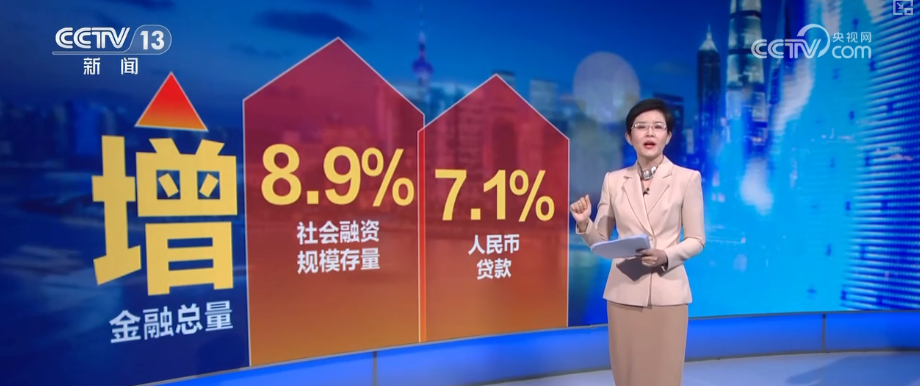
Group 1 - The core viewpoint emphasizes the importance of financial support for the real economy, with the People's Bank of China focusing on serving the real economy as a primary direction for its policies [1][5] - Key financial metrics show an increase in total financing, with social financing stock growing by 8.9% year-on-year and RMB loans increasing by 7.1% [5] - The reduction in financing costs is highlighted, with the average interest rate on new corporate loans at approximately 3.3%, down by about 45 basis points compared to the previous year [5] Group 2 - The support for small and micro enterprises is a significant focus, with a mechanism established to facilitate direct access to bank credit for these businesses [7][11] - The mechanism has successfully visited over 90 million small business entities, resulting in new credit issuance of 23.6 trillion yuan and new loans of 17.8 trillion yuan, with credit loans accounting for 32.8% [11] - The positive trend in financing for small and micro enterprises is attributed to three main factors: increased volume, expanded coverage, and reduced costs [11][13] Group 3 - Financial support for technological innovation is also a critical aspect, with measures introduced to optimize loans for technological innovation and establish a "technology board" in the bond market [14][17] - By the end of May, the amount of loans for technological innovation and technological transformation reached 1.7 trillion yuan, 1.9 times that of the end of 2024 [17] - Challenges remain for some tech enterprises in securing financing, primarily due to difficulties in assessing technological value and mismatches in risk and return [19]
央行、金监总局、证监会、外管局等金融监管部门齐聚陆家嘴论坛,若干重大政策发布在即
2 1 Shi Ji Jing Ji Bao Dao· 2025-05-30 06:17
Group 1 - The "2025 Lujiazui Forum" will be held from June 18 to 19, 2025, focusing on "Financial Openness and Cooperation in Global Economic Changes and High-Quality Development" [1] - Key speakers will include leaders from the People's Bank of China, the National Financial Regulatory Administration, the China Securities Regulatory Commission, the State Administration of Foreign Exchange, and the Shanghai Municipal Government [1] - Over 70 domestic and foreign guests from more than 10 countries and regions will participate, including officials from financial regulatory bodies and major financial institutions [1] Group 2 - The forum will feature eight plenary sessions covering topics such as global economic changes, monetary policy coordination, capital market development, and green finance [2] - In addition to the plenary sessions, three specialized events will focus on reinsurance market development, financial law, and technology finance [2] - The People's Bank of China will host the "2025 China International Financial Exhibition" during the forum, showcasing achievements in financial reform and innovation [3] Group 3 - The People's Bank of China is accelerating policies to support the construction of Shanghai as an international financial center, with several initiatives already announced [3] - Recent policies include enhancing cross-border financial services and supporting the establishment of a "Technology Board" in Shanghai's bond market [3] - Nearly 300 domestic and foreign institutions will participate in the financial exhibition, marking the highest number of exhibitors in history [3]

中央金融管理部门将发布若干重大金融政策
证券时报· 2025-05-30 02:57
Core Viewpoint - The Shanghai government announced significant financial policies to be released during the 2025 Lujiazui Forum, indicating a strong commitment to enhancing Shanghai's status as an international financial center [1]. Group 1: Financial Policies - The People's Bank of China (PBOC) is accelerating the development of policies to support the construction of Shanghai as an international financial center, with several initiatives already launched this year [4]. - Recent policies include the "Action Plan for Further Enhancing Cross-Border Financial Service Facilitation in Shanghai" and support for the establishment of a "Technology Board" in the bond market [4]. - The PBOC is also facilitating pilot programs for multinational companies' cross-border cash pool businesses and has introduced regulations to promote the development of free trade accounts in the Shanghai Free Trade Zone [4]. Group 2: Forum Participation - The PBOC Governor Pan Gongsheng will attend the forum's opening ceremony to deliver a keynote speech, alongside the PBOC Vice Governor and State Administration of Foreign Exchange Director Zhu Hexin [4].

科技金融新政重塑创新生态,专访FOST首席研究员冯建林博士
Guan Cha Zhe Wang· 2025-05-26 08:22
Core Viewpoint - The recent policy document issued by seven departments in China aims to accelerate the construction of a technology finance system to support high-level technological self-reliance and innovation, marking a new phase in the development of technology finance in the country [1][6]. Group 1: Policy Innovations - The establishment of a "Technology Board" in the bond market is a significant innovation aimed at providing long-term, low-interest, and easily accessible bond funding for technology innovation, directly addressing the financing challenges faced by tech companies [2][3]. - The creation of a National Venture Capital Guiding Fund is another key innovation, focusing on guiding social capital to invest early, small, long-term, and in hard technology, thereby alleviating financing difficulties for early-stage tech enterprises [2][3]. Group 2: Supporting Measures - The policy includes a series of supporting measures such as optimizing the re-lending tool for technology innovation, increasing its scale from 500 billion to 800 billion, and reducing the interest rate from 1.75% to 1.5% [3]. - It also emphasizes the need for "central and local collaboration" and a "virtuous cycle of technology finance and industry," reflecting a mature policy design [3][5]. Group 3: Implementation Challenges - The successful implementation of these policies will depend on overcoming challenges such as departmental coordination and avoiding "multiple authorities" issues [5]. - The policy aims to prevent excessive local competition in tax policies related to technology innovation, advocating for a unified national market approach [5]. Group 4: Long-term Impact - The technology finance policy is expected to reshape China's innovation ecosystem and economic structure, enhancing the financial support for technology-oriented SMEs and improving the efficiency of financial resource allocation [6][7]. - The policy aims to facilitate a deep integration of the innovation chain, industry chain, and capital chain, promoting a healthy cycle of technology, finance, and industry [7][8].

信息量巨大!科技部、金融监管部门,最新发声!
券商中国· 2025-05-22 10:04
Core Viewpoint - The article discusses the Chinese government's efforts to enhance the synergy between technology and finance, aiming to support high-level technological self-reliance and innovation through various financial mechanisms and policies. Group 1: Technology and Finance Collaboration - The development of technology finance is a complex system engineering that requires collaboration from various parties, emphasizing the need for synergy between technology and finance, as well as central-local coordination [2] - The policy document "Accelerating the Construction of a Technology Finance System" aims to establish a multi-departmental coordination mechanism for technology finance [2][16] Group 2: Bond Market Support - The bond market "technology board" will support leading equity investment institutions in issuing bonds, simplifying disclosure requirements and reducing transaction fees [3] - The technology board is crucial for equity investment institutions, which often face challenges due to their asset-light and long investment cycle characteristics [3] Group 3: Loan Growth and Support - As of March, the loan balance for technology-based SMEs reached 3.3 trillion, with a year-on-year growth of 24%, maintaining over 20% growth for three consecutive years [4] - The loan balance for specialized and innovative enterprises reached 6.3 trillion, significantly outpacing the average loan growth rate [4][7] Group 4: Cross-Border Financial Services - There is a focus on enhancing cross-border financial services for technology enterprises and steadily advancing the Qualified Foreign Limited Partner (QFLP) pilot program [5] Group 5: Risk Compensation and Financial Support - There is a push to increase risk compensation for technology finance, with an emphasis on utilizing existing policies like loan interest subsidies and risk compensation effectively [6] - The government aims to create a long-term investment mechanism to support technology innovation through financial means [16] Group 6: Support for High-Tech Enterprises - The loan balance for high-tech enterprises reached 17.7 trillion by the end of the first quarter, with a nearly 20% year-on-year increase [7] - Financial institutions are being guided to incorporate technology finance into their strategic planning and annual priorities [8][9] Group 7: Listing Support for Technology Companies - The regulatory body is committed to supporting high-quality unprofitable technology companies in going public, with a focus on identifying and supporting those that break through key core technologies [10] - The number of listed companies in strategic emerging industries is approaching 2,000, accounting for nearly 40% of the market capitalization [11] Group 8: Direct Financing Channels - The bond market has become an important channel for direct financing for technology companies, with a cumulative issuance of 1.2 trillion in technology innovation bonds [12] Group 9: Overseas Listing Support - The regulatory body is enhancing the transparency and efficiency of regulatory policies for technology companies seeking to list overseas, with 242 domestic companies completing overseas listing filings [13] Group 10: Fundraising Regulation - The regulatory body emphasizes the importance of strict regulation on the safety and proper use of funds raised by listed companies, ensuring funds are used for their intended purposes [14] Group 11: Optimizing Domestic Listing Environment - Efforts are being made to optimize the domestic listing environment for technology companies, including implementing flexible mechanisms for new stock issuance [15] Group 12: Innovation Scoring System - The "innovation scoring system" has helped over 7,000 technology enterprises sign loan contracts with banks, amounting to 88 billion [18] - An upgraded version of the innovation scoring system is planned to further enhance its effectiveness in identifying technology innovation attributes [19]