
光伏材料

Search documents
振石股份(601112):首次覆盖:创新型复材龙头,出海稀缺性凸显
GUOTAI HAITONG SECURITIES· 2026-03-19 08:29
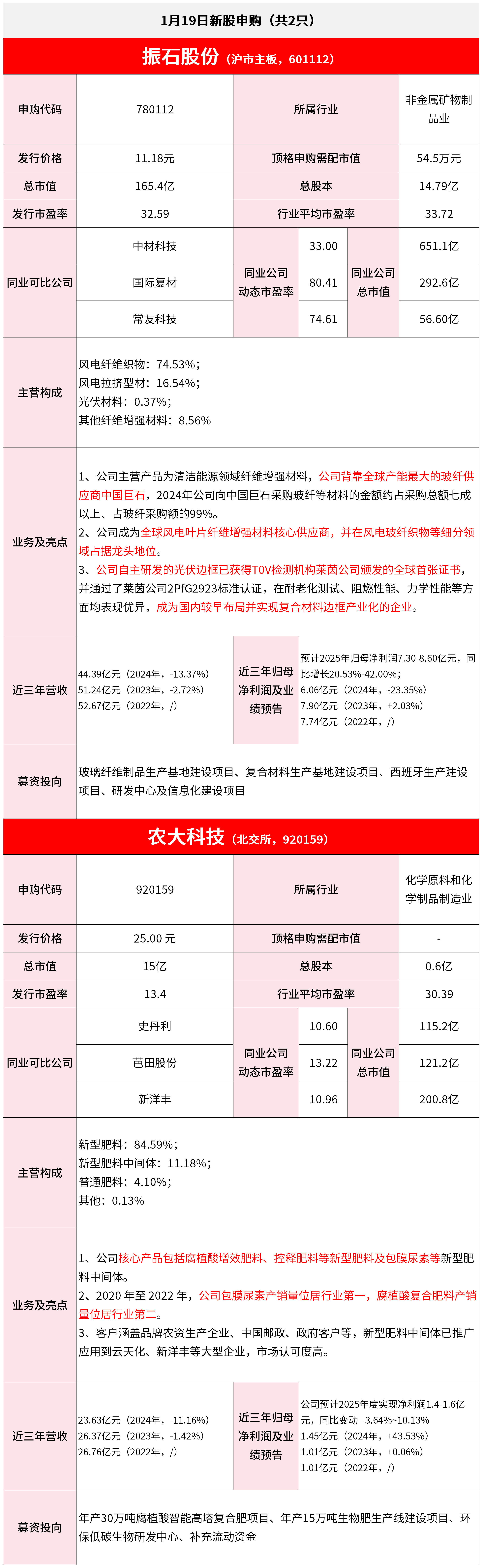
Investment Rating - The report assigns a rating of "Buy" for the company with a target price of 30.68 CNY, while the current price is 21.99 CNY [5][11]. Core Insights - The report highlights the company's strong governance capabilities validated through market and industry cycles, with a long-term positive outlook on its platform capabilities in the composite materials sector. In the short term, the focus is on the acceleration of offshore wind power layouts and the industrialization of photovoltaic frames [2][11]. - The company is recognized as a global leader in wind power composite materials, with a market share exceeding 35% in 2024, and is expected to see significant revenue and profit growth driven by increased wind power installations in 2025 [23][24]. Financial Summary - Total revenue projections are as follows: 5,124 million CNY in 2023, decreasing to 4,439 million CNY in 2024, then increasing to 7,373 million CNY in 2025, 8,327 million CNY in 2026, and 9,117 million CNY in 2027, reflecting a compound annual growth rate (CAGR) of 9.5% from 2025 to 2027 [4][12]. - Net profit attributable to shareholders is projected to be 790 million CNY in 2023, decreasing to 606 million CNY in 2024, and then increasing to 783 million CNY in 2025, 892 million CNY in 2026, and 1,042 million CNY in 2027 [4][12]. - Earnings per share (EPS) are expected to be 0.45 CNY in 2025, 0.51 CNY in 2026, and 0.60 CNY in 2027 [4][12]. Investment Logic - The company's competitive advantages in the composite materials sector stem from vertical integration capabilities, process efficiency, and governance mechanisms. The report emphasizes that the company should not be viewed solely through the lens of wind power but rather as a comprehensive composite materials company with a long-term platformization capability [15][33]. - The report identifies three key competitive factors: 1. Vertical integration capabilities that ensure profitability retention in the midstream sector [15]. 2. Process efficiency driven by proprietary technologies in critical manufacturing processes [15]. 3. Strong governance mechanisms that enhance strategic execution and customer responsiveness [15]. Wind Power Composite Materials - The company maintains a robust profitability in wind power composites, with net profit margins exceeding those of peers by 5-10 percentage points. The report notes that the company's overseas base layout is a significant growth driver, with operations in Turkey, Egypt, the USA, and Spain [16][23]. - The report anticipates that the global wind power supply chain will face increasing localization demands, enhancing the company's competitive position in international markets [16]. Non-Wind Sector Opportunities - The report highlights the potential for the photovoltaic frame market, driven by the widening price gap between metals and composites, and the recent breakthroughs in grid system certifications. It predicts that the market for photovoltaic composite frames could expand significantly, reaching 30 billion CNY in 2025, 50 billion CNY in 2026, and 100 billion CNY in 2027 [16][19]. Governance and Management - The company's governance model, led by its founders, has proven effective in navigating market cycles, establishing a strong strategic moat. The report emphasizes the importance of long-term vision and resilience in the face of industry fluctuations [27][29]. - The report also notes that the company's fundraising projects focus on expanding production capacity in wind power fabrics and photovoltaic frames, as well as accelerating overseas expansion [29][30].
中银证券:国内反内卷+马斯克太空光伏扩产共振 关键仍在设备、材料
智通财经网· 2026-01-30 02:56
Group 1 - The core viewpoint is that Musk plans to build 100GW of photovoltaic capacity, which may extend upstream to silicon materials and wafers, benefiting core equipment in silicon materials, wafers, batteries, and modules, with long-term market expansion potential for material companies [1][4] - The Ministry of Industry and Information Technology (MIIT) of China has reiterated the "anti-involution" theme in the photovoltaic industry, indicating a high probability of self-imposed production limits, which will optimize the battery and module landscape [1][4] - The meeting held by MIIT on January 28, 2026, emphasized the need for market-based and legal measures to promote healthy competition and rational development in the photovoltaic industry, aiming to prevent monopolistic risks and ensure price rationalization across the industry chain [1][3] Group 2 - Musk's announcement of expanding photovoltaic capacity is not limited to batteries and modules but may also include upstream silicon materials and wafers, which could lead to increased orders for domestic photovoltaic equipment manufacturers [2][4] - China's space photovoltaic industry is accelerating its commercialization, with various technological routes such as gallium arsenide, crystalline silicon, and perovskite being explored, indicating a diverse development landscape [3] - The report recommends several companies, including Foster, JinkoSolar, and LONGi Green Energy, as potential beneficiaries of the expanding photovoltaic market, while also suggesting to pay attention to other companies like Aotaiwei and Shuangliang Energy [4]


光伏行业动态点评:国内反内卷+马斯克太空光伏扩产共振,关键仍在设备、材料
Bank of China Securities· 2026-01-29 10:57
Investment Rating - The report maintains an "Outperform" rating for the photovoltaic industry, indicating that the industry index is expected to perform better than the benchmark index over the next 6-12 months [11]. Core Insights - The report highlights that Elon Musk has announced plans to build 100GW of photovoltaic capacity, which may extend upstream to silicon materials and wafers, benefiting core equipment in silicon materials, wafers, batteries, and modules. Long-term, material companies are expected to have market expansion opportunities [1][3]. - The Ministry of Industry and Information Technology of China has clarified the "anti-involution" theme for the photovoltaic industry, suggesting that the industry is likely to self-limit production, optimizing the battery and module landscape [1][3]. - The acceleration of the industrialization of space photovoltaic technology in China is noted, with multiple technological routes progressing simultaneously [1][3]. Summary by Sections Industry Dynamics - The report discusses the "anti-involution" strategy as a key theme for the photovoltaic industry, aiming to prevent monopolistic risks and promote rational development through capacity control and market-oriented measures. This is expected to lead to a self-limiting production scenario within the industry [5]. - The potential for Musk's integrated photovoltaic capacity expansion is emphasized, with expectations for increased orders for domestic photovoltaic equipment manufacturers as overseas manufacturers clarify their expansion plans [5]. Investment Recommendations - The report recommends several companies for investment, including Foster, JinkoSolar, JinDa Co., Maiwei, and others, while suggesting to pay attention to companies like Aotewi, Shuangliang Energy, and Dongfang Risen [3].
新材料50ETF(159761)涨超1%,产业迎来加速成长期
Mei Ri Jing Ji Xin Wen· 2026-01-28 06:41
Core Viewpoint - The new materials sector is identified as a crucial direction for the future development of the chemical industry, currently experiencing rapid growth in downstream demand, supported by policy initiatives and technological breakthroughs [1] Group 1: Industry Insights - The new materials industry is considered a foundational sector that underpins other industries [1] - Key areas of focus include: 1) Electronics Information Sector: Emphasis on semiconductor materials, display materials, and 5G materials 2) Aerospace Sector: Focus on PI films, precision ceramics, and carbon fibers 3) New Energy Sector: Attention on photovoltaics, lithium-ion batteries, proton exchange membranes, and hydrogen storage materials 4) Biotechnology Sector: Concentration on synthetic biology and scientific services 5) Energy Conservation and Environmental Protection Sector: Focus on adsorption resins, membrane materials, and biodegradable plastics [1] Group 2: Investment Opportunities - The New Materials 50 ETF (159761) tracks the New Materials Index (H30597), which focuses on the new materials industry [1] - The index includes representative companies from advanced basic materials, key strategic materials, and cutting-edge new materials, reflecting the overall performance of the new materials industry from research and development to application [1]

全球风电玻纤龙头振石股份沪主板上市在即!多元布局+出海扩产启增长新篇
Sou Hu Cai Jing· 2026-01-23 02:46
Core Viewpoint - Zhejiang Zhenstone New Materials Co., Ltd. is advancing its IPO process, aiming to issue 26,105.50 million shares, which will account for 15% of the total share capital post-issue, with a strategic placement of 7,831.65 million shares, approximately 30% of the total issuance [2] Financial Performance - Revenue from 2022 to 2024 was 526,743.69 million, 512,395.29 million, and 443,879.18 million respectively, while net profit for the same years was 77,444.59 million, 79,015.57 million, and 60,563.70 million, demonstrating resilience during industry adjustments [3] - For the first half of 2025, the company reported revenue of 327,500.17 million and net profit of 40,440.18 million, indicating a recovery trend [3] - The gross margin improved from 23.82% in 2022 to around 26% in 2024, significantly above the industry average [4] Market Position - Zhenstone holds the global market share of over 35% in wind power glass fiber fabric, ranking first worldwide [6] - The company’s revenue structure is stable, with wind power fiber fabric and pultruded profiles accounting for over 85% of total revenue [6] Growth Drivers - The company is benefiting from favorable policies that support wind energy, with targets for annual new installations set at 50 million kilowatts during the 14th Five-Year Plan [7] - Global wind power installations are projected to grow at a compound annual growth rate of 10.94% from 2024 to 2030, providing strong demand for wind power materials [8] Investment and Expansion Plans - The IPO proceeds will be allocated to four major projects, including the construction of glass fiber product production bases and composite material production bases, with total investments exceeding 398,107.31 million [9][10] - The new production bases are expected to increase wind power fiber fabric capacity by 21.5 million tons and photovoltaic frame capacity by 8.1 million tons [10] Research and Development - The company has consistently invested in R&D, with expenses reaching 16,228.52 million, 17,002.49 million, and 16,057.84 million from 2022 to 2024, reflecting a commitment to technological advancement [12] - Zhenstone has developed 32 invention patents and 210 utility model patents, showcasing its strong R&D capabilities [15]


【1月19日IPO雷达】振石股份、农大科技申购
Xuan Gu Bao· 2026-01-19 00:07
Group 1 - The core viewpoint of the article highlights the financial performance and market positioning of companies in the clean energy and agricultural sectors, focusing on their revenue trends and product offerings [4][5][6][7] Group 2 - Company A, known for its wind power fiber products, has a revenue composition where wind power fiber fabric accounts for 74.53% and wind power pultruded profiles for 16.54%, indicating a strong focus on clean energy materials [4] - Company A's revenue for the past three years shows a decline, with 44.39 billion yuan in 2024 (-13.37%), 51.24 billion yuan in 2023 (-2.72%), and 52.67 billion yuan in 2022 [5] - Company B specializes in new fertilizers, with 84.59% of its revenue coming from this segment, and has maintained a strong market position, ranking second in industry volume from 2020 to 2022 [6][7] - Company B's revenue for the last three years is reported as 23.63 billion yuan in 2024 (-11.16%), 26.37 billion yuan in 2023 (-1.42%), and 26.76 billion yuan in 2022 [7]
行业供需持续失衡,TCL中环2025年预亏82亿元至96亿元
Ju Chao Zi Xun· 2026-01-14 02:43
Core Viewpoint - TCL Zhonghuan forecasts a net loss of 8.2 billion to 9.6 billion yuan for 2025, showing a narrowing of losses compared to the previous year's loss of 9.818 billion yuan [2] Financial Performance - The expected net profit loss, excluding non-recurring gains and losses, is projected to be between 8.6 billion and 9.8 billion yuan, compared to a loss of 10.9 billion yuan in the previous year [2] - Basic earnings per share are anticipated to be a loss of 2.0535 to 2.4041 yuan, down from a loss of 2.4629 yuan per share in the prior year [2] Industry Context - Despite growth in new photovoltaic installations, the industry continues to face an imbalance in supply and demand, remaining at the bottom of the cycle [2] - The prices of main industry chain products are adjusting at low levels, leading to ongoing operational pressure for the company [2] Strategic Response - The company aims to address industry challenges by adhering to a philosophy of "solving problems in development and finding opportunities in overcoming difficulties" [2] - TCL Zhonghuan is implementing a demand-driven production model to assist in the restoration of supply-demand relationships [2] - The company is committed to moderate integration and globalization strategies to strengthen its photovoltaic materials business and enhance the competitiveness of its battery component products [2] Operational Improvements - During the reporting period, the company focused on improving operational management efficiency, optimizing product structure, and driving technological innovation [2] - Efforts are being made to strengthen organizational changes and cost control measures, maintaining a solid operational baseline [2] - The company has achieved positive operating cash flow, indicating improved relative competitiveness [2] Future Outlook - TCL Zhonghuan plans to continue strengthening its competitive position in photovoltaic materials and enhance the competitiveness of its new energy battery components [3] - The company aims to optimize its overseas business layout and global marketing capabilities, guided by technological innovation, product development, and quality improvement [3] - The goal is to achieve significant operational improvement by 2026 [3]

TCL中环新能源科技股份有限公司 2025年度业绩预告
Zheng Quan Ri Bao· 2026-01-13 22:41
Group 1 - The company expects a negative net profit for the fiscal year 2025, indicating ongoing financial challenges [1] - The solar industry continues to experience an imbalance in supply and demand, with product prices remaining low, which puts pressure on the company's operations [2] - The company is focusing on improving operational efficiency, optimizing product structure, and driving technological innovation to enhance its competitive position [2] Group 2 - The company maintains a positive operating cash flow during the reporting period, which is a sign of financial stability despite the challenges [2] - The company is committed to strengthening its photovoltaic materials business and enhancing the competitiveness of its new energy battery components [2] - The company aims for significant operational improvement by 2026 through a focus on technology innovation, product development, and quality enhancement [2]
明冠新材:公司尚未开展有关“高纯石英、锂云母”矿的矿产开采及提纯业务
Mei Ri Jing Ji Xin Wen· 2025-12-31 09:52
Core Viewpoint - The company is currently not engaged in the mining and purification of high-purity quartz and lithium mica, despite recent recruitment activities related to quartz mining in Mali County, which raised questions about vertical integration in securing upstream raw materials [1] Group 1 - Investors have noted the company's recent recruitment for positions related to quartz mining and purification processes [1] - The company is expanding its production of aluminum-plastic films and photovoltaic materials [1] - There is speculation that the recruitment is part of a strategy to secure key upstream raw materials [1] Group 2 - The company confirmed on the investor interaction platform that it has not yet started any mining or purification business for high-purity quartz and lithium mica [1]

东海证券晨会纪要-20251231
Donghai Securities· 2025-12-31 06:39
Group 1: AI-Driven Chemical Industry - The integration of AI in the chemical industry is expected to create investment opportunities across four key areas: research, production, operations, and supply chain management, leading to a data-driven and optimized system [5][6] - The demand for new chemical materials is driven by the energy consumption of AI data centers, with a projected compound annual growth rate of 44.8% in IT energy consumption from 2022 to 2027 [6] - The renewable energy generation in China is currently about 35%, with a future target of nearly 90%, emphasizing the need for green energy materials [7] - The new energy storage plan aims for a scale of 180 million kilowatts by 2027, with significant investments expected in lithium battery storage [8] - The manufacturing sector is poised for growth, particularly in high-end electronic resins and specialty engineering plastics, as domestic companies catch up with international standards [9] - The cooling materials market is projected to exceed $7 billion by 2034, with a compound annual growth rate of over 10% from 2024 to 2034, driven by the demand for AI-related cooling solutions [11] Group 2: Refrigeration Equipment Industry - The refrigeration and air conditioning industry in China is at a critical turning point, transitioning from a growth phase to a stable development phase dominated by replacement demand [12] - Strategic acquisitions in the HVAC sector are becoming common as companies seek to establish local distribution networks and adapt to market differences [13] - The commercial refrigeration sector, particularly in data center cooling, is highlighted as a growth area due to increasing demand for energy-efficient solutions [14] - Investment recommendations include focusing on leading companies in household refrigeration, specialized cooling solutions, and upstream components benefiting from data center demands [14]