光伏跟踪支架

Search documents
意华股份2025年净利同比预增149.66%至214.09% 技术卡位高景气赛道
Zheng Quan Ri Bao Wang· 2026-01-28 05:26
Core Viewpoint - Yihua Co., Ltd. (002897) is expected to achieve a net profit of 310 million to 390 million yuan for the year 2025, representing a year-on-year growth of 149.66% to 214.09% [1] Group 1: Financial Performance - The net profit attributable to shareholders is projected to be between 310 million and 390 million yuan, with a significant increase compared to the previous year [1] - The net profit after deducting non-recurring gains and losses is expected to be between 282 million and 362 million yuan, also reflecting a substantial year-on-year growth of 149.40% to 220.15% [1] Group 2: Business Growth Drivers - The growth in performance is primarily attributed to the court-approved restructuring of client SOLTECENERGIASRENOVABLES, S.L.U., eliminating the need for large bad debt provisions compared to the previous year [1] - As a leading enterprise in the domestic communication connector sector, Yihua's product orders for communication connectors have increased, serving as a core engine for performance growth [1] Group 3: Market Position and Technology - With the acceleration of AI technology iterations, the demand for servers and data centers is rising, which in turn boosts the market demand for connectors and other core components [2] - Yihua is one of the few companies in China to achieve mass production of high-speed connectors and optical modules, having overcome several key industry technologies and accumulated numerous core patents [2] Group 4: Product Matrix and Supply Chain - Yihua has established a product matrix covering various high-speed connectors and optical modules, which have been delivered in bulk and are applied in critical scenarios such as data centers and servers [3] - The company actively integrates into the supply chain of high-quality downstream customers, utilizing a customized R&D production model to quickly respond to customer needs, thereby enhancing its competitive advantage [3] Group 5: New Energy Business - Yihua's new energy business, primarily through its subsidiary Yihua New Energy Technology Co., Ltd., has shown steady growth in shipment volumes, with a solid partnership with leading global photovoltaic manufacturer NEXTracker [4] - The company has established an efficient production and supply network through overseas factories in the U.S. and Thailand, enhancing supply chain resilience and market service efficiency [4] Group 6: Synergies and Future Outlook - There are synergies between Yihua's communication and new energy businesses, as both rely on precision manufacturing capabilities, which can lower costs through shared production equipment and technology [4] - The company is positioned in high-growth sectors of computing power and new energy, with potential for long-term growth as technology evolves and production capacity expands [4]
中信博蔡浩:中国光伏今天的全球竞争力,依托于产业链的集体崛起
Zhong Guo Jing Ying Bao· 2025-12-04 11:03
Core Viewpoint - The company emphasizes the importance of a global strategy that goes beyond merely exporting products, advocating for deeper integration into local markets and building resilient global supply chains [1][4][11]. Group 1: Global Strategy and Market Integration - The company’s chairman, Cai Hao, articulates a "go global, dig deep locally" strategy, focusing on not just exporting products but also establishing local operations and integrating into local economies [1][5]. - The company has established three overseas regional headquarters, four service centers, and 17 branches, creating an efficient service network centered around customer needs [3]. - The company has achieved significant milestones, including securing multiple GW-level project orders globally and shipping over 103 GW across more than 40 countries [3]. Group 2: Competitive Positioning - The company has risen to the second position in the global tracking bracket market as per Wood Mackenzie’s report for 2024, marking its entry into the top three globally [3]. - The company’s competitive edge is attributed to its comprehensive approach, which includes not only selling products but also building networks and establishing local production bases [4][6]. Group 3: Risk Management and Resilience - The company has implemented a dynamic market insight and risk assessment mechanism, updating its "global risk map" quarterly to monitor political trade risks, supply chain risks, and operational compliance risks [11][12]. - The company adopts a strategy of integrating local suppliers into its supply chain, enhancing resilience by not solely relying on Chinese manufacturing [12]. - The company aims to bind its interests with local economic development, thereby increasing its operational resilience against geopolitical and market fluctuations [12]. Group 4: Collaboration and Industry Ecosystem - The company collaborates with other domestic firms in the solar industry, leveraging collective strength to enhance competitiveness in international markets [8]. - The company’s role as a "chain leader" involves setting standards and improving local suppliers' capabilities, thereby fostering a competitive local supply chain ecosystem [7][8]. Group 5: Challenges and Support Needs - The company faces challenges such as high funding pressure, foreign exchange risks, and difficulties in intellectual property protection when expanding overseas [12]. - The company advocates for greater support for outbound enterprises, including long-term low-cost financing tools and flexible foreign exchange risk management products [12].



城记 | 长三角光伏企业海外订单“井喷”,光储一体化“链”向全球
Xin Hua Cai Jing· 2025-11-20 12:14
Core Insights - The photovoltaic industry in the Yangtze River Delta is experiencing a significant surge in overseas orders, driven by a dual engine of traditional photovoltaic business and emerging energy storage solutions [1][3] - The integration of photovoltaic and energy storage businesses is enhancing the competitive edge of the entire industry chain in the region [1] Group 1: Traditional Photovoltaic Business - The Yangtze River Delta is a global hub for the photovoltaic industry, with companies like Suzhou Zhongtian Bo New Energy securing a 4.2GW project in Saudi Arabia, marking a record for the company [2] - Shanghai Electric's subsidiary, Hengxi Photovoltaics, signed a contract for a 33.07MW photovoltaic module supply in Sierra Leone, showcasing the international reach of Shanghai's advanced manufacturing capabilities [2] - Deep Sea Qiongjing New Energy Technology in Changzhou is fulfilling a 24MW order for Lebanon, with a 360% year-on-year increase in export orders [2] Group 2: Energy Storage Business - Energy storage is emerging as a new growth engine for Yangtze River Delta photovoltaic companies, with significant contracts being signed, such as Trina Solar's 2.66GWh sales contract across North America, Europe, and Latin America [3] - Canadian and German projects have also been secured by Suzhou Aters Energy, highlighting the growing importance of energy storage in the region's export strategy [3] - Dongfang Risheng from Ningbo has signed a substantial order for commercial energy storage systems with European clients, further emphasizing the region's capabilities in energy storage [3] Group 3: Regional Strengths and Strategies - Jiangsu province, accounting for over 40% of the national photovoltaic industry, has a robust cluster of companies, with 35 out of 129 compliant photovoltaic enterprises located there [5] - Changzhou has developed a complete industrial chain in photovoltaic manufacturing, while Suzhou is focusing on high-quality development plans to enhance its industry value to 180 billion yuan by 2026 [6][5] - Shanghai is leveraging its technological innovation to support high-end segments of the photovoltaic industry, with initiatives like the "Photovoltaic+" project to foster green technology [7] Group 4: Performance of Other Regions - Anhui province is also making strides in the photovoltaic and energy storage sectors, achieving a revenue of 328.46 billion yuan in 2024, while maintaining profitability amidst industry challenges [8] - The province's export value in the photovoltaic and energy storage sectors reached 43.87 billion yuan, ranking fifth nationally, with significant growth in key product exports [8]
再次斩获沙特大额光伏签单,光伏ETF华夏(515370)回调蓄势
Mei Ri Jing Ji Xin Wen· 2025-11-19 04:57
Core Viewpoint - The recent collaboration between CITIC Bo and China Energy Construction Group International Engineering Co., Ltd. for the Saudi PIF6 1.2GW photovoltaic project highlights the growing opportunities for Chinese photovoltaic companies in the Saudi market, driven by the country's clean energy goals under the "Vision 2030" initiative [1]. Group 1: Company Developments - CITIC Bo has signed a cooperation agreement for the tracking support of the 1.2GW photovoltaic project in Saudi Arabia, following a previous agreement for the 4.2GW PIF6AFIF project, bringing their total collaboration in the Saudi PIF6 project cluster to 5.4GW [1]. - The performance of the photovoltaic ETF Huaxia (515370) showed a slight decline of 0.52%, while CITIC Bo's stock rose over 2%, indicating positive market sentiment towards the company amidst these developments [1]. Group 2: Industry Insights - According to Zhongtai Securities, Chinese photovoltaic companies can leverage project signings and factory constructions in Saudi Arabia to tap into the growing demand for clean energy installations, thus creating new growth opportunities in the region [1]. - The Huaxia photovoltaic ETF tracks the CSI photovoltaic industry index, which encompasses upstream, midstream, and downstream enterprises in the photovoltaic supply chain, providing a comprehensive reflection of the overall industry performance [1].
中国为沙特带去了光伏制造业: 中信博15GW工厂落地
Xin Lang Cai Jing· 2025-11-03 05:02
Core Viewpoint - The establishment of a photovoltaic factory by China’s CITIC Bo in Jeddah, Saudi Arabia, marks a significant step in the rise of local photovoltaic manufacturing, aligning with the Belt and Road Initiative and Saudi Arabia's Vision 2030 [1][3][21]. Group 1: Project Overview - CITIC Bo's factory in Jeddah covers approximately 100,000 square meters and will have an annual delivery capacity of 15GW upon completion of its second phase [3][4]. - The first phase of the factory, which began production in 2024, has an annual capacity of about 3GW, focusing on high-quality photovoltaic brackets [3][4]. - The project is strategically located about 60 kilometers from Jeddah Port, facilitating logistics and supply chain integration [5]. Group 2: Strategic Importance - The project represents a milestone in CITIC Bo's global expansion strategy and is a response to the growing demand in the Middle East market [3][6]. - The collaboration with China Energy Engineering Group highlights the integration of Chinese technological advantages with Saudi national strategic needs [3][21]. - The factory's development aligns with Saudi Arabia's Vision 2030, which aims for renewable energy to account for 50% of the energy structure by 2030, with a target of 40GW of cumulative photovoltaic installed capacity [6][21]. Group 3: Market Dynamics - As of the end of 2024, Saudi Arabia has operational photovoltaic projects totaling 6.15GW, with an average annual installation requirement of 6.8GW over the next five years [7]. - The rise of the photovoltaic market in Saudi Arabia presents significant opportunities for Chinese companies, given the lack of local photovoltaic giants and the strong demand for high-end products [16][17]. - CITIC Bo has achieved over 50% market share in the Middle East since entering the market in 2017, driven by technological leadership and superior service [18]. Group 4: Technological Edge - CITIC Bo's core competitiveness lies in its photovoltaic tracking bracket system, which utilizes multi-point parallel drive technology and AI algorithms to enhance power generation efficiency by approximately 8% [9][18]. - The company has secured over 15GW of photovoltaic project orders, with significant contracts in Saudi Arabia, including a recent 1.75GW project [11][21]. Group 5: Future Outlook - The completion of the Jeddah factory will enhance CITIC Bo's service capabilities in the Middle East and globally, contributing to Saudi Arabia's clean energy development [21][22]. - The factory is expected to play a crucial role in meeting the anticipated increase in photovoltaic installations in Saudi Arabia, projected to reach 16.4GW by 2025 [22]. - The collaboration between CITIC Bo and China Energy Engineering Group exemplifies a successful model of "Chinese factories + Chinese construction" in the Middle East [8][20].

两年营收增百倍,光热发电龙头可胜技术能否保持高增长?
Zhi Tong Cai Jing· 2025-09-28 09:47
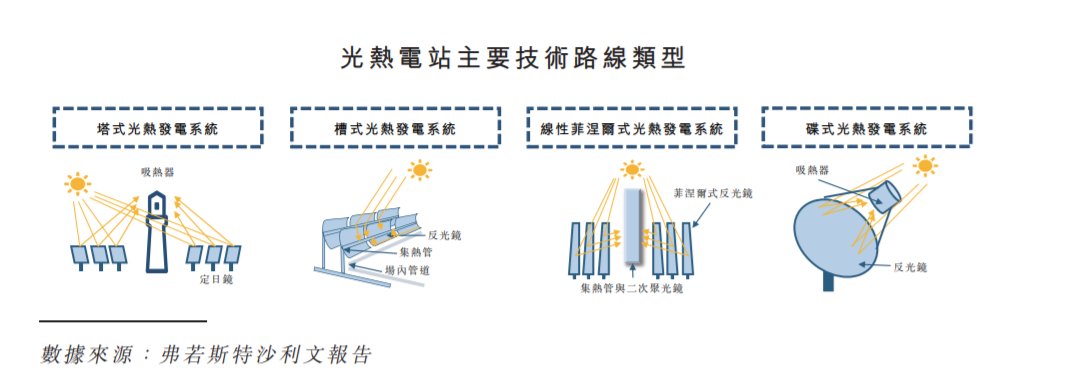
Core Viewpoint - The news highlights the significant advancements and market position of Kesheng Technology in the concentrated solar power (CSP) sector, particularly through its successful projects and upcoming IPO, amidst a rapidly growing industry in China. Company Overview - Kesheng Technology has established itself as a leader in the CSP industry, with a total designed capacity of 1,250 MW, capturing a market share of 47.2% [2][15][16]. - The company has been involved in the development and operation of significant projects, including the first commercial CSP plant in China, demonstrating its strong technical capabilities [5][15]. Industry Growth - The CSP sector in China is experiencing rapid growth, with 26 projects expected to commence between 2021 and 2024, and Kesheng Technology is a key supplier for many of these projects [2][6]. - The market for CSP in China is projected to grow from 1.9 billion RMB in 2022 to 16 billion RMB by 2024, reflecting a compound annual growth rate (CAGR) of 102.7% [12]. Technological Advantages - Tower-type CSP plants, which Kesheng Technology specializes in, have become the mainstream technology in China, accounting for 83.7% of CSP projects from 2022 to 2024 due to their superior heat storage capacity and lower generation costs [3][5]. - The cost of electricity generated from CSP is expected to decrease significantly as technology advances, making it more competitive compared to photovoltaic and wind energy systems [8][9]. Financial Performance - Kesheng Technology's revenue is projected to grow from 20.85 million RMB in 2022 to 2.189 billion RMB in 2024, with net profits turning from a loss of 91.25 million RMB in 2022 to a profit of 540 million RMB in 2024 [6][7]. - The company reported a revenue of 980.94 million RMB in the first half of 2025, marking a year-on-year growth of 31.54% [6]. Market Position and Competition - Kesheng Technology's leading position is bolstered by its extensive experience and successful project implementations, but it faces potential risks from reliance on government policies and competition from other firms in the industry [16][17]. - The company is currently the only supplier with a cumulative service performance exceeding 1 GW in molten salt tower CSP plants, highlighting its unique market position [2][15].
电力设备及新能源行业之光伏跟踪支架专题报告:亚非拉美晴川阔,银线追光越八荒
Dongguan Securities· 2025-08-28 11:09
Investment Rating - The industry investment rating is "Overweight" [70] Core Viewpoints - The photovoltaic support structure is a crucial component of photovoltaic power generation systems, directly impacting the efficiency and investment returns of solar power plants [6][16] - The global photovoltaic market is experiencing significant growth, with an expected increase in global installed capacity to approximately 530 GW in 2024, representing a year-on-year growth of 35.9% [50] - The domestic market for tracking supports is anticipated to benefit from the development of centralized photovoltaic power plants, with a notable increase in installed capacity [32] Summary by Sections 1. Photovoltaic Support Structures - Fixed supports are the primary application type in domestic photovoltaic power plants, while tracking supports are gaining traction due to their ability to adjust to the sun's angle, enhancing energy capture [30][32] - The market for tracking supports is expected to grow significantly, with a projected compound annual growth rate (CAGR) of approximately 13.4% from 2024 to 2027 [54] 2. Global Photovoltaic Development - The global demand for tracking supports is driven by the increasing installation of large ground-mounted photovoltaic power plants, with a projected market size of approximately 797 billion yuan in 2024 [54] - The penetration rate of tracking supports is expected to rise from 52% in 2024 to 64% by 2027, indicating a growing acceptance of this technology [54] 3. Key Companies - The report highlights the competitive landscape, noting that domestic companies like Zhongxinbo and Trina Solar are enhancing their international competitiveness and market positions [64][68] - Zhongxinbo is positioned as a leading global provider of photovoltaic support systems, with a strong focus on technological innovation and market expansion [66][68]

中信博20250805
2025-08-05 15:42
Summary of the Conference Call Company and Industry Overview - The conference call focuses on the photovoltaic (PV) tracking bracket market, specifically discussing the company CITIC Bo and its competitive position within the industry [2][3][4]. Key Points and Arguments Market Growth and Demand - The global PV tracking bracket market is experiencing rapid growth, driven by significant demand for ground power stations, although regional penetration rates vary widely [2]. - The demand for tracking brackets is projected to reach approximately 111 GW in 2024, with penetration rates still below 50% in many regions, particularly in the Middle East and India [3]. - China has a high demand for ground power stations but a low penetration rate for tracking brackets, indicating substantial growth potential [3][12]. Competitive Advantages of CITIC Bo - CITIC Bo holds a competitive advantage in emerging markets like the Middle East and India due to its Chinese background, integrated R&D and manufacturing model, and first-mover advantage [2][4]. - The company is expected to increase its market share to over 20% in 2024, driven by increased shipments in these regions [3][4]. Financial Performance and Stock Price - CITIC Bo's stock price has underperformed since 2025, influenced by factors such as lower-than-expected orders and tariff impacts [2][5]. - Despite stock price declines, the company achieved a record high in new orders in Q1, totaling 4.3 billion yuan, with a backlog of 7.3 billion yuan [5][11]. - The company is currently trading at a reasonable valuation of 13-14 times PE, compared to 15-20 times for US peers [7][24]. Industry Dynamics and Challenges - The tracking bracket industry has experienced cyclical fluctuations, with component price declines and recovering overseas demand contributing to industry recovery [2][8]. - Steel price fluctuations pose a risk to profit margins, although the overall impact is mitigated by stable delivery conditions across the industry [10][21]. Regional Market Insights - The US and Europe are mature markets with high penetration rates but slowing growth, while the Middle East and India are emerging markets with significant growth potential [13][14]. - In 2024, India's ground power station installations are expected to grow by 185%, reaching 18.5 GW, with CITIC Bo delivering nearly 10 GW [13][19]. Future Growth and Profitability - The company anticipates a slowdown in tracking bracket shipment growth in 2025 and 2026, following a 128% increase in 2024 [20]. - Long-term growth will depend on maintaining a strong presence in emerging markets and expanding into Europe, Latin America, and the US [25]. - Profitability is projected to exceed 1.5 billion yuan, contingent on global demand growth and steel price stability [25]. Additional Important Insights - The tracking bracket market is characterized by a significant disparity in profit margins between US and Chinese companies, with US firms benefiting from subsidies that enhance their margins [17]. - CITIC Bo's integrated production model allows for faster product iteration and lower costs compared to competitors who separate design and manufacturing [18]. - The company has successfully increased its tracking bracket delivery ratio from 40-50% to around 80%, with margins improving as steel prices decline [8][21]. This summary encapsulates the key insights from the conference call, highlighting the competitive landscape, market dynamics, and future outlook for CITIC Bo and the PV tracking bracket industry.
主动作为 助力外贸企业“逐浪前行”
Su Zhou Ri Bao· 2025-05-20 22:52
Core Viewpoint - The development of foreign trade is a crucial engine driving high-quality urban economic growth, with Suzhou actively responding to national policies to stabilize foreign trade growth through innovative financial services [1][9]. Group 1: Financial Innovation - Financial innovation is a strong support for foreign trade enterprises to explore international markets, with Suzhou financial institutions focusing on actual enterprise needs to launch specialized financial products and services [2][3]. - Jiangsu Zhongxin Bo New Energy Technology Co., Ltd. exemplifies the empowerment of foreign trade enterprises by Suzhou financial institutions, achieving rapid growth with significant support from banks [3]. Group 2: Service and Product Innovation - Various financial institutions in Suzhou are innovating services and products to meet diverse enterprise needs, with the Industrial and Commercial Bank of China Suzhou Branch establishing a special credit limit of 300 billion yuan and launching unique products to assist enterprises in expanding globally [4]. - Agricultural Bank of China Suzhou Branch has introduced over ten hedging products to meet different risk management needs of enterprises, while other banks are enhancing support for small and medium-sized enterprises [4]. Group 3: Currency Risk Management - Currency fluctuations pose significant risks for foreign trade enterprises, and Suzhou financial institutions are helping businesses improve their currency risk management capabilities through innovative service models [5][6]. - The Agricultural Bank of China Suzhou Branch established the province's first "Small and Micro Enterprise Currency Risk Hedging Service Center" to provide one-stop services for local enterprises [5]. Group 4: Tailored Services - Suzhou financial institutions are actively providing tailored services to meet the personalized needs of foreign trade enterprises, including dedicated financial advisory services [8]. - Export credit insurance plays a crucial role in stabilizing enterprises' order and export confidence, while domestic trade insurance helps mitigate credit risks in domestic trade [8]. Group 5: Future Outlook - Facing complex international economic conditions, Suzhou financial institutions aim to continuously inject "financial vitality" into the sustainable operation and stable development of foreign trade enterprises [9].