
农畜产品

Search documents
巴彦淖尔市成立农推官工作室
Xin Lang Cai Jing· 2026-02-27 18:26
(来源:内蒙古日报) "我市将以农推官工作室成立为契机,加强对农推官队伍的管理,扎实推进农推官'四个一行动',即培 育一批农推官、成立一个工作室、建立一系列机制、开展一系列活动,持续推进全市农推官品牌建 设。"巴彦淖尔市农牧局相关负责人介绍。 转自:内蒙古日报 本报巴彦淖尔2月27日电 (记者 薛来)记者从巴彦淖尔市农牧局获悉,巴彦淖尔市农推官工作室日前 在"天赋河套"总部基地正式挂牌成立。该市围绕11条重点产业链、品牌建设等内容,发布了第一批《巴 彦淖尔市"农推官"宣介"菜单"》。 "农推官"是"农畜产品推介官"的简称,是近年来兴起的网络热词,也是一支助力乡村振兴的新力量。他 们可以是新农人、返乡大学生、基层干部,也可以是懂农业、爱农村、会直播的网红达人。 农推官的核心任务是通过短视频、直播、图文等多种形式,将本地优质农畜产品、农牧业品牌和乡村文 旅资源推介出去,实现"讲好产品故事、卖好家乡好物"的目标。 农推官作为宣传推介巴彦淖尔农牧业的重要力量,其队伍需要持续壮大。成立工作室旨在搭建一个更专 业、更系统的平台,构建宣传矩阵,形成合力,共同做好巴彦淖尔现代农牧业的宣传推广工作。 ...
鄂尔多斯旗区也派消费红包!家政年货都实惠
Nei Meng Gu Ri Bao· 2026-02-13 08:51
Group 1 - The core idea of the news is the launch of a comprehensive consumer subsidy program in Ordos City, aimed at boosting spending during the upcoming Spring Festival with significant financial incentives for various sectors [1][2] - The program includes a vehicle trade-in subsidy of up to 20,000 yuan and a maximum subsidy of 1,500 yuan for energy-efficient home appliances and digital products, encouraging consumers to upgrade their purchases [1] - Multiple rounds of consumer vouchers will be distributed, covering shopping, dining, cultural tourism, and home services, effectively reducing costs for consumers and stimulating spending [1] Group 2 - The East Victory District will issue 2 million yuan in consumer vouchers weekly, covering supermarkets and restaurants, along with an additional 3 million yuan in vehicle trade-in subsidies to enhance consumer experience [2] - The Yijinhuoluo Banner focuses on cultural tourism with a 5 million yuan subsidy benefiting scenic spots and lantern festivals, allowing residents and tourists to enjoy discounts while exploring the city [2] - The Ordos City has planned nearly 100 Spring Festival consumer activities, catering to various needs from purchasing New Year goods to leisure and quality upgrades, ensuring a comprehensive approach to meet festive demands [2]

海南州:回望皆精彩 前行皆可期
Xin Lang Cai Jing· 2026-02-06 17:54
Economic Performance - Hainan Prefecture achieved a total GDP of 109.44 billion, with total fixed assets reaching 105.25 billion and local general public budget revenue at 10.31 billion during the 14th Five-Year Plan period [1] - Grain production remains stable at over 170,000 tons, with barley planting area accounting for 45% of the province and livestock inventory representing 25% [2] Ecological Development - Significant progress in ecological protection with three major ecological functional areas, including Sanjiangyuan, Qinghai Lake, and the Yellow River basin, showing improved environmental quality [1] - The region has seen a total of 28,200 species of birds and a fish stock of 127,500 tons of naked carp in Qinghai Lake, with grassland vegetation coverage reaching 60.08% [1] Industrial Transformation - Hainan Prefecture is focusing on upgrading traditional industries and expanding emerging sectors, with notable projects like the Taratand photovoltaic park and Longyangxia water-solar complementary project [1] - The region is integrating into national strategies such as "East Data West Computing" and developing a green computing industry park [1] Social Welfare - The government has committed to 20 annual public welfare projects, with fiscal spending in the welfare sector maintained above 80% for five consecutive years [2] - The urban registered unemployment rate is controlled within 3.5%, indicating a stable employment situation [2] Future Development Goals - Hainan Prefecture aims to deepen green development, focusing on ecological safety, high-quality economic growth, and technological innovation [3] - The region plans to enhance its reform and opening-up levels, improve the business environment, and promote social harmony and stability [4][5]
热贡艺术之乡交出亮眼五年“答卷”:步入发展最快 惠民最多时期
Xin Lang Cai Jing· 2026-02-05 14:04
Core Insights - Over the past five years, Huangnan Prefecture has successfully completed the main objectives of the 14th Five-Year Plan, achieving significant improvements in economic strength, ecological environment, urban-rural appearance, and public welfare, being recognized as a period of "best development, greatest changes, and most benefits for the people" [1] Economic Development - The region's GDP surpassed 12 billion yuan, increasing by 1.48 billion yuan compared to the end of the 13th Five-Year Plan [2] - Total fixed asset investment reached 28.12 billion yuan [2] - Per capita disposable income for urban and rural residents grew annually by 4.1% and 7.1%, respectively, with rural income growth outpacing urban income [2] Ecological Protection - Huangnan Prefecture has implemented multiple ecological protection regulations and established a collaborative mechanism for river and lake management, leading to a more complete ecological civilization system [2] - A total of 4 million acres of land were afforested, and 369 square kilometers of soil erosion were managed [2] Industrial Development - The modern industrial system in Huangnan is accelerating, with green agriculture achieving organic certification and quality traceability across all areas [4] - The clean energy sector is rapidly growing, with an additional 1.78 million kilowatts of installed capacity in wind and solar energy, bringing the total to 4.18 million kilowatts [4] - Cultural tourism is deeply integrated, with annual tourist numbers exceeding 10 million and total tourism expenditure reaching 3.64 billion yuan [4] Infrastructure and Urbanization - Significant improvements in infrastructure, achieving the goal of "highways connecting every county," with the urbanization rate of the permanent population rising to 45.96% [4] - Substantial progress in rural living conditions, including improvements in housing, drinking water, transportation, and communication [4] Social Welfare - Fiscal spending has consistently favored public welfare, maintaining over 80% allocation [5] - Notable advancements in employment, education, healthcare, and social security, with new facilities such as hospitals and schools being established [5]

2025年西宁农村居民收入同比增长6.0%
Xin Lang Cai Jing· 2026-01-27 22:08
Core Insights - In 2025, the per capita disposable income of rural residents in Xining is projected to reach 19,369 yuan, reflecting a year-on-year growth of 6.0% [1] Income Composition - All four major income sources—wage income, operating net income, property net income, and transfer income—show positive growth, with notable differences in growth rates, characterized as "two fast, one stable, one slow" [1] - Wage income increased by 1.0% year-on-year, serving as a stabilizing factor for rural residents' income [1] - Operating net income for rural residents grew by 25.0% year-on-year, driven by the enhancement of specialty planting industries and the recovery of tourism [2] - Property net income emerged as a new growth engine, increasing by 39.3% year-on-year, supported by initiatives to activate idle assets and the growth of collective economy [2] - Transfer income saw a steady increase of 8.5% year-on-year, bolstered by various social security policies and agricultural subsidies [3]
以提振消费激活经济发展潜能
Xin Lang Cai Jing· 2026-01-11 18:13
Core Insights - The article emphasizes the importance of boosting consumption as a key driver for economic growth and structural optimization in Inner Mongolia, aligning with national strategies to enhance domestic circulation and sustainable development [1][2][3] Group 1: Policy Direction and Economic Strategy - The 20th Central Committee of the Communist Party of China highlights the need to prioritize consumption as a strategic foundation for economic development, integrating consumer needs with supply-side reforms to stimulate domestic demand [2][4] - Inner Mongolia is encouraged to leverage its unique resources and ecological advantages to enhance market competitiveness and support national consumption initiatives, thereby facilitating a transition from resource dependency to market creation [4][5] Group 2: Consumption as a Growth Driver - Consumption is identified as the core force driving economic growth and supply transformation, particularly in resource-dependent regions like Inner Mongolia, which must cultivate internal growth dynamics through consumption [3][5] - The region aims to modernize its industrial system and promote new productive forces by aligning consumption with supply, thereby fostering a high-quality development path driven by consumer demand [3][6] Group 3: Market Dynamics and Consumer Behavior - The consumption market in Inner Mongolia is experiencing significant growth, with retail sales of consumer goods increasing by 7.2% in the first three quarters of 2025, driven by policy support for sectors like automotive and home appliances [6][7] - The increase in disposable income, particularly in rural areas, is expected to further stimulate consumption potential, contributing to a more balanced economic landscape [7][8] Group 4: Strategic Initiatives for Consumption Enhancement - The article outlines several strategic initiatives to enhance consumption, including improving the consumer environment, optimizing service supply, and creating diverse consumption scenarios to boost consumer confidence and spending [8][10] - Collaboration across various sectors is emphasized to create a supportive ecosystem for consumption, including financial incentives, infrastructure development, and regulatory improvements to ensure a safe and trustworthy market environment [9][10]
上巴塘村的勃勃生机
Xin Lang Cai Jing· 2026-01-04 19:01
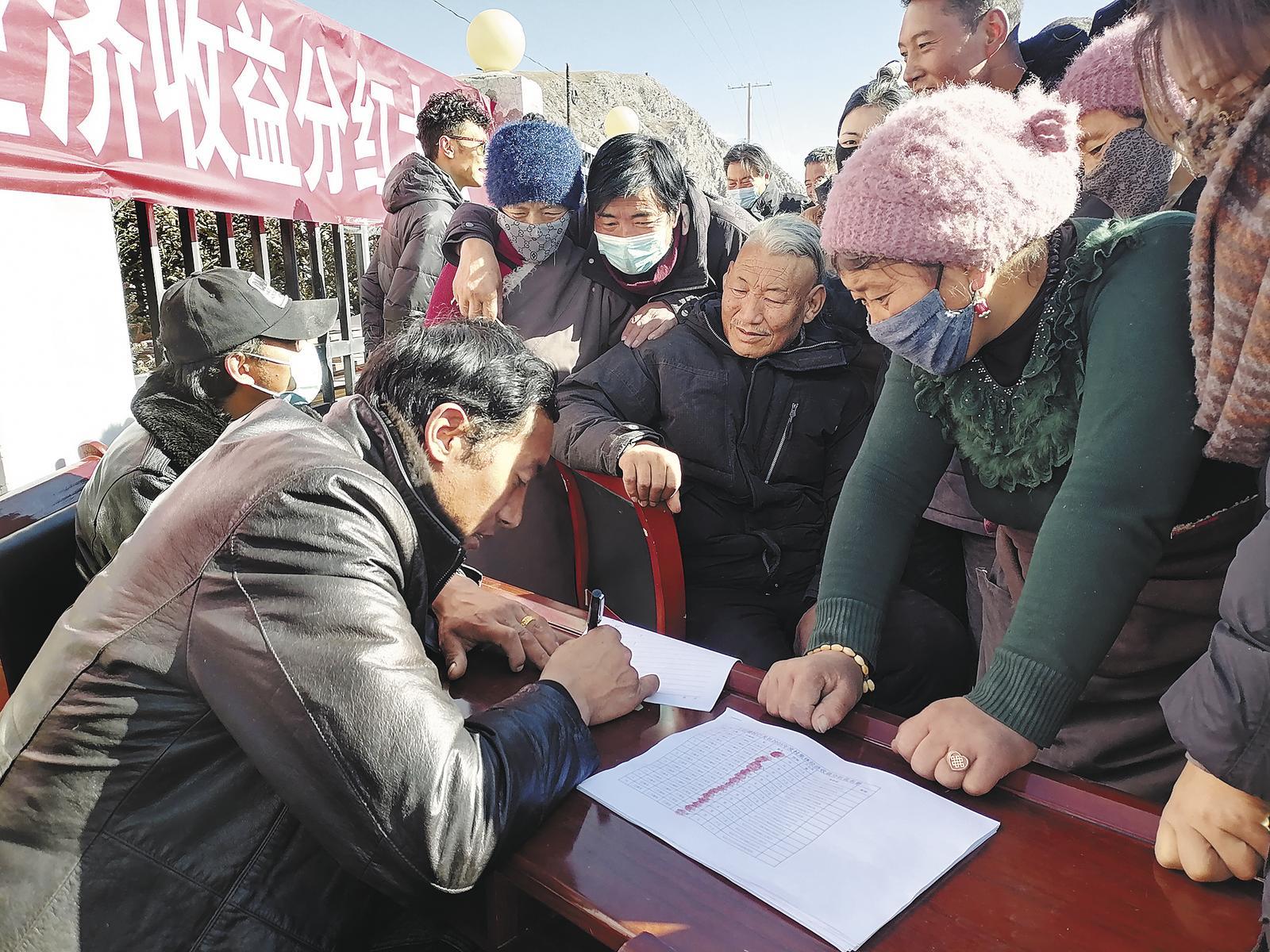
Core Insights - The article highlights the successful implementation of a collective economic dividend distribution in Shangbatang Village, which is a part of the local community's economic development strategy [3][4]. Group 1: Economic Development - The collective economic dividend of 241,500 yuan was generated from a 3 million yuan livestock purchase project in 2025, benefiting 508 households [3]. - The village has diversified its economic activities, including solar power stations, resort projects, and retail shops, to enhance collective economic growth [4][5]. - The village's strategic location along the G214 national highway and proximity to the Yushu Batang Airport provide a solid foundation for future economic development [5][6]. Group 2: Community Welfare - The village organized free health check-ups for residents aged 65 and above, demonstrating a commitment to community health alongside economic initiatives [3]. - The implementation of agricultural insurance policies has provided financial security for local livestock farmers, with significant government subsidies covering over 80% of insurance costs [5]. - The establishment of a comprehensive transportation service station aims to enhance local services and boost income for impoverished households [6]. Group 3: Future Projects - A new project, the "Comprehensive Transportation Service Station," has been planned to provide accommodation and dining services, further integrating local agricultural products into the market [6]. - The project received over 3 million yuan in funding and is expected to contribute to the village's economic revitalization and modernization efforts [6].
为了百万甘孜群众的幸福生活—— 写在甘孜藏族自治州成立70周年之际
Si Chuan Ri Bao· 2026-01-04 06:14
Core Viewpoint - The Ganzi Tibetan Autonomous Prefecture has achieved significant development milestones over the past 70 years, culminating in its complete poverty alleviation in 2020, marking a new chapter in its history [1][2]. Economic Development - Ganzi's economic total has grown from 34 million yuan in 1950 to 38.846 billion yuan in 2019, representing a substantial increase [2]. - Per capita GDP rose from 66 yuan in 1950 to 32,440 yuan in 2019, indicating a significant improvement in living standards [2]. - Urban residents' disposable income increased from 253 yuan in 1950 to 34,831 yuan in 2019, while rural residents' disposable income grew from 88 yuan to 12,808 yuan in the same period [2]. Infrastructure and Transportation - Ganzi has implemented a "Transportation Battle" resulting in a total road mileage of 34,263 kilometers, with rural roads being the most extensive in the province [3]. - The region is the only one in the country with three branch airports above 4,000 meters, showcasing its unique geographical advantages [3]. Industrial Growth - Ganzi has seen a leap in industrial development, with the primary industry value increasing from 29.85 million yuan in 1950 to 6.652 billion yuan in 2019, a 222.8-fold increase [6]. - The secondary industry value rose from 2 million yuan to 8.902 billion yuan, a 4,451-fold increase, while the tertiary industry value surged from 1.67 million yuan to 23.292 billion yuan, a 13,947.8-fold increase [6]. - The region is focusing on tourism, clean energy, and modern agriculture, aiming to create a comprehensive tourism development framework and a green modern industrial system [5]. Ecological Protection - Ganzi has established an ecological protection red line of 69,700 square kilometers, the largest in the province, and has the highest number and area of nature reserves [9]. - The forest area has expanded from 2.838 million hectares at the founding of New China to 5.3097 million hectares, with a forest coverage rate increasing from 19% to 35% [10]. - The region is committed to ecological civilization and environmental protection, implementing various ecological construction projects and promoting sustainable practices [8][10].
守底线 兴产业 促振兴
Xin Lang Cai Jing· 2025-12-24 19:52
Core Viewpoint - Inner Mongolia is focusing on consolidating poverty alleviation achievements while effectively connecting with rural revitalization strategies, emphasizing industry development, infrastructure improvement, and cultural tourism integration to enhance the livelihoods of rural residents [1] Group 1: Poverty Alleviation and Support Mechanisms - The region has implemented a robust monitoring and support mechanism to prevent poverty, ensuring that 99.6% of the 73,000 households and 153,000 individuals identified as at risk receive targeted assistance [4] - Inner Mongolia has established a dynamic monitoring system that reduces the identification time for at-risk households from one month to 15 days, with 13,155 new monitoring subjects identified in 2025 [3] - Various support measures have been put in place, including employment assistance for 20,000 individuals annually, with the employment scale increasing from 203,000 in 2021 to 243,200 in 2025 [7] Group 2: Industry Development - Inner Mongolia is focusing on specialized and differentiated development, promoting rural characteristic industries to drive income growth, with over 20,000 industry support projects implemented [6][7] - The region has seen a significant increase in funding for industry development, rising from 60% in 2021 to over 70% currently, enhancing economic vitality in poverty-stricken areas [7] - The establishment of a "company + base + farmer" model in livestock farming has led to the acquisition of 54,000 lambs and the signing of contracts with 1,250 cooperative farmers [6] Group 3: Rural Revitalization and Infrastructure - Inner Mongolia is enhancing rural living conditions through comprehensive infrastructure improvements, including the construction of clean roads and community service centers, contributing to a better quality of life for residents [8][10] - The region has initiated a "rural beautification" campaign, achieving a 50.8% toilet coverage rate and improving waste management in 97.2% of administrative villages [10] - The average disposable income for rural residents in Inner Mongolia is projected to reach 22,543 yuan in 2024, ranking first among 12 western provinces and showing a growth rate above the national average for five consecutive years [10]
内蒙古积极融入京津冀协同发展成效卓著
Xin Lang Cai Jing· 2025-12-20 10:54
Core Viewpoint - Inner Mongolia is actively integrating into the Beijing-Tianjin-Hebei coordinated development strategy, leveraging its resource advantages to support high-quality development in the region [1][2]. Group 1: Energy Cooperation - Inner Mongolia has successfully completed its first cross-province green electricity transaction with Beijing and Tianjin, marking a significant milestone in renewable energy collaboration [2]. - The region is advancing the construction of the Ulanqab to Yanshan Petrochemical hydrogen pipeline project, which is included in the national key work arrangements for 2025 [2]. Group 2: Economic Collaboration - From January to October 2025, agricultural and livestock product sales to Beijing and beyond reached 30.2 billion yuan [3]. - Inner Mongolia has established a comprehensive cooperation mechanism with Beijing, focusing on mutual needs and capabilities, and is implementing a "six-fold increase plan" and "four actions" to enhance collaboration [2]. Group 3: Cultural and Tourism Development - Inner Mongolia has hosted successful performances of original dramas in Beijing, contributing to a 25.09% year-on-year increase in tourist visits from Beijing, totaling 14.96 million visitors [3]. - The total expenditure by tourists from Beijing reached 22.808 billion yuan [3]. Group 4: Technological and Infrastructure Development - Inner Mongolia has initiated 45 key research and development projects, with 75% of the collaborating units based in Beijing [3]. - The latency between the integrated computing power network hub in Inner Mongolia and the Beijing-Tianjin-Hebei hub is maintained at under 5 milliseconds, facilitating efficient data exchange [3]. Group 5: Future Outlook - Inner Mongolia aims to continue aligning with national strategic deployments and enhance comprehensive cooperation with Beijing and Tianjin, focusing on innovation and industrial chain collaboration [4].