冷冻食品

Search documents
万辰集团(300972):2025年年报点评:业务持续扩张,效率加速提升
Changjiang Securities· 2026-03-30 09:07
Investment Rating - The investment rating for the company is "Buy" and it is maintained [5]. Core Insights - The company reported a total revenue of 51.459 billion yuan in 2025, representing a year-on-year increase of 59.17%. The net profit attributable to shareholders was 1.345 billion yuan, up 358.09%, while the net profit excluding non-recurring items reached 1.277 billion yuan, an increase of 395.03% [1][3]. - In Q4 2025, the total revenue was 14.897 billion yuan, reflecting a growth of 27.15%. The net profit attributable to shareholders for this quarter was 490 million yuan, a 133.76% increase, and the net profit excluding non-recurring items was 471 million yuan, up 159.36% [1][3]. Summary by Relevant Sections Business Expansion - As of the end of 2025, the company had a total of 18,314 stores nationwide, with 4,720 new stores opened and 602 closed, resulting in a net increase of 4,118 stores. The closure rate was 3.18%, an increase of 1.07 percentage points year-on-year [10]. - The company is strategically expanding its "snack+" product matrix, introducing low-temperature short-shelf-life food and beverages, frozen foods, and licensed IP products, with plans to further expand into household cleaning and personal care sectors [10]. Profitability Improvement - The net profit margin for 2025 increased by 1.71 percentage points to 2.61%, and the gross profit margin rose by 1.64 percentage points to 12.4%. The expense ratio decreased by 1.52 percentage points to 6.07% [10]. - In Q4 2025, the net profit margin improved by 1.5 percentage points to 3.29%, and the gross profit margin increased by 2.8 percentage points to 14.15% [10]. Financial Forecast - The company is expected to achieve net profits attributable to shareholders of 2.349 billion yuan, 3.114 billion yuan, and 3.815 billion yuan for the years 2026, 2027, and 2028, respectively. The corresponding price-to-earnings ratios at the current stock price are projected to be 15x, 11x, and 9x [10].
购买力持续下降 日元实际有效汇率指数创53年来新低
Bei Jing Shang Bao· 2026-02-23 12:25
Group 1 - The actual effective exchange rate index of the Japanese yen has reached a 53-year low, indicating a continuous decline in the purchasing power of the yen [1][6] - The index fell to 67.73 in January 2023, the lowest level since Japan adopted a floating exchange rate system in 1973 [1] - The persistent decline in the yen's purchasing power is attributed to structural issues in the Japanese economy and passive macroeconomic policy adaptations [4][6] Group 2 - Japan's economic growth momentum is insufficient, leading to stagnant productivity and industrial upgrades, which fail to support the actual value of the currency [4] - The long-term maintenance of extremely low interest rates aimed at stimulating the economy has compressed the returns on holding yen, reducing international capital's willingness to hold yen [4] - A survey indicated that from January to April 2026, 3,593 food items in Japan are expected to increase in price, with an average increase of 14% [4] Group 3 - In 2025, Japan's average monthly real wages decreased by 1.3% after adjusting for inflation, marking the fourth consecutive year of decline [5] - The nominal cash wages increased by 2.3% in 2025, but the consumer price inflation rate of 3.7% outpaced wage growth, leading to a continued decline in real income [5] - Japan's manufacturing sector is facing challenges due to the relocation of production, resulting in decreased export competitiveness and a normalized trade deficit [5][6] Group 4 - Japan's GDP experienced a decline of 1.8% in Q3 2025, marking the first negative growth in six quarters, influenced by external demand and minimal growth in personal consumption [5][6] - The aging population and labor shortages are contributing to rising business costs and further shrinking the consumer market, weakening the internal growth dynamics of the economy [6] - The yen's decline reflects not just market fluctuations but also exposes deep-rooted structural issues within the Japanese economy, including crises in currency credibility, industrial competitiveness, and institutional vitality [6]


哈根达斯母公司大幅下调2026年业绩预期,利润降幅扩大至20%,消费者不愿花钱了
Jin Rong Jie· 2026-02-17 14:59
Group 1 - General Mills has lowered its sales and profit expectations for fiscal year 2026, adjusting the organic sales growth target from a previous range of "down 1% to up 1%" to "down 1.5% to 2%" due to persistently weak consumer sentiment [1] - The company expects a more significant decline in profit, with adjusted operating profit and adjusted earnings per share projected to decrease by 16% to 20%, compared to the earlier forecast of a 10% to 15% decline, indicating a notable deterioration in profitability outlook within a few months [1] - As one of the largest food companies globally, General Mills owns well-known brands such as Häagen-Dazs, Wanchai Ferry, and Betty Crocker, with products spanning various categories including breakfast cereals, frozen foods, baking goods, snacks, and pet foods, reflecting the overall consumer environment [1] Group 2 - The core issue behind the lowered expectations is weak demand, as consumers are becoming more cautious with their food spending, leading to a decline in purchasing willingness that directly impacts product sales [1] - The North American packaged food industry is experiencing a demand cooling cycle, with rising consumer sensitivity to prices and increased competition from private labels and discount channels against traditional brand manufacturers [2]

从多头跑到一次办
Xin Lang Cai Jing· 2026-01-25 22:24
Core Viewpoint - The integrated service reform in Fujian Province's market supervision department aims to streamline processes for businesses, enhancing market vitality and optimizing the business environment for high-quality economic development [2] Group 1: Opening and Licensing Efficiency - The "one-stop" service window for opening supermarkets and convenience stores in Zhangzhou's Changtai District has been officially launched, allowing operators to complete all necessary permits in a streamlined manner [3] - Before the reform, opening a supermarket required interaction with multiple departments, taking 10 working days; now, it takes only 6 working days with a significant reduction in required documents from 95 to 43 [3][8] - The reform emphasizes "reducing materials, reducing steps, and reducing time limits," enabling applicants to submit materials once and receive automatic updates to relevant departments [3][4] Group 2: Annual Report Submission - The annual report public notice work for 2025 has commenced, with efforts to assist businesses in completing their reports efficiently, addressing common challenges such as confusion and misinformation [5] - The "multi-report integration" reform allows businesses to submit various annual report requirements through a single online platform, significantly improving efficiency and data consistency [6] Group 3: Comprehensive Service for Specific Industries - The "one-stop" service for frozen food processing businesses in Fuzhou City has been introduced, allowing companies to complete all necessary registrations and permits in one go, thus facilitating immediate operation [7] - The reform aims to reduce the approval process from 24 working days to 7, with a decrease in required documents from 95 to 33, enhancing the overall efficiency of business operations [8]

特朗普所言不实:食品杂货价格仍在上涨
Xin Lang Cai Jing· 2026-01-15 13:08
Core Insights - The core inflation rate in the U.S. for December increased by 2.6% year-on-year, which is lower than expected [1] - Food prices have significantly risen, contradicting claims from the Trump administration that grocery prices are decreasing [3][13] Food Price Trends - Over the past year, beef prices rose by 16.4%, coffee by 19.8%, lettuce by 7.3%, and frozen fish by 8.6% [3][13] - The overall cost of household food consumption increased by 2.4% in the past 12 months, with a monthly increase of 0.7% in December, marking the largest monthly rise since October 2022 [4][14] - Despite some food categories like eggs seeing a price drop of 20.9%, five out of six tracked food categories experienced price increases [5][15] Consumer Behavior Changes - Low-income consumers are prioritizing essential items and opting for cheaper alternatives, reducing their purchase quantities and increasing shopping frequency [5][15] - Middle-class consumers are also shifting their purchasing habits, focusing on promotions and store-brand products to save costs [5][15] Impact of Tariffs and Policies - Tariff policies have had a limited direct impact on most food prices, as the majority of food consumed in the U.S. is domestically produced [5][15] - Imported goods like coffee and tropical fruits have seen price increases due to tariffs, with bananas rising by 5.9% year-on-year in December [7][16] Labor Market and Agricultural Costs - Labor shortages in agriculture are exacerbated by tightened immigration policies, affecting the availability of workers for harvesting crops [10][20] - Agricultural labor costs are a significant driver of overall industry expenses, accounting for about 50% of total spending [20] - The U.S. Department of Agriculture projects a 2.3% increase in household food prices by 2026, maintaining a similar growth rate as in 2025 [19] Economic Outlook - The current inflation data suggests that while inflation is not spiraling out of control, the claims of decreasing food prices by the government are unfounded [4][14] - The ongoing labor shortages and rising costs of agricultural inputs may continue to pressure food prices in the near future [20]

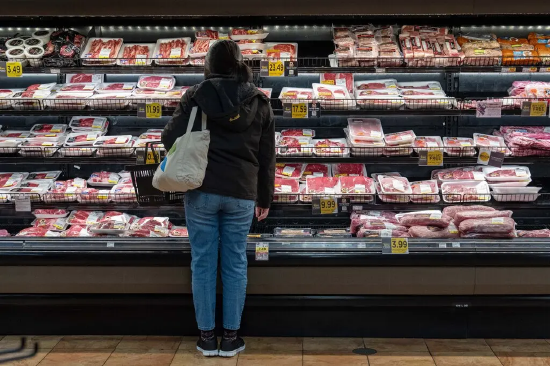
调查显示日本2026年约1.5万种食品将涨价
Xin Lang Cai Jing· 2026-01-08 00:26
Core Viewpoint - The ongoing price increase in Japan's food sector is expected to intensify in 2026, with approximately 15,000 food items projected to see price hikes, further burdening consumers [1] Group 1: Price Increases - From January to April 2026, 3,593 food items are set to increase in price, with an average rise of 14%, including frozen foods, rice products, and instant noodles [1] - Starting in May 2026, around 1,000 food items are expected to increase in price each month, leading to a total of approximately 15,000 items for the entire year [1] Group 2: Causes of Price Increases - The primary reasons for the food price hikes include rising raw material costs, increased logistics expenses, and higher labor costs [1] - The company anticipates that food price increases will become "normalized" in 2026 [1] Group 3: Historical Context - The last significant food price surge in Japan occurred in 2023, where over 32,000 food items experienced price increases, marking the highest number in 30 years [1]
日本大米制品将涨价
Xin Lang Cai Jing· 2026-01-07 13:07
Core Viewpoint - The price increase trend in Japan's food sector is expected to continue into 2026, with approximately 15,000 food items projected to rise in price, further burdening consumers [1] Group 1: Price Increases - From January to April 2026, 3,593 food items are set to increase in price, with an average increase of 14%, including frozen foods, rice products, and instant noodles [1] - Starting in May 2026, around 1,000 food items are expected to increase in price each month, leading to a total of approximately 15,000 items for the entire year [1] Group 2: Causes of Price Increases - The primary reasons for the food price hikes include rising raw material costs, increased logistics expenses, and higher labor costs [1] - The trend of food price increases is anticipated to become "normalized" in 2026 [1] Group 3: Historical Context - The previous wave of food price increases in Japan occurred in 2023, where over 32,000 food items saw price hikes, marking the highest number in 30 years [1] - Factors contributing to the 2023 price increases included significant rises in raw material prices and the depreciation of the yen, which increased import costs [1]
Conagra(CAG) - 2026 Q2 - Earnings Call Transcript
2025-12-19 15:32
Financial Data and Key Metrics Changes - The company expects organic net sales growth in the second half of the fiscal year, with positive momentum observed in December [11][12] - Operating profit and margin performance in the first half of the year has been good, with favorable tariff timing and chicken inflation, although there are offsets with beef and pork [21][22] - The company maintains its inflation guidance of 7% for the year, with core inflation above 4% and gross tariff inflation around 3% [42][44] Business Line Data and Key Metrics Changes - The frozen and snacks segments are identified as growth domains, with snacks already showing robust growth and frozen aiming to reclaim market share lost due to previous supply constraints [31][32] - The company is focusing on high-quality promotional activities in the frozen segment, which were limited last year due to supply issues [32][33] Market Data and Key Metrics Changes - The company has seen a return to growth in the frozen and snacks categories, with strong marketing plans in place for the second half of the year [31][33] - The market share in frozen single-serve meals is approaching 53%, indicating a recovery in that segment [32] Company Strategy and Development Direction - The company is implementing Project Catalyst, which focuses on re-engineering core business processes using technology, particularly AI, to improve efficiency and effectiveness [25][26] - The company is committed to margin expansion, particularly in the frozen segment, through productivity improvements and supply chain resiliency investments [52][53] Management's Comments on Operating Environment and Future Outlook - Management acknowledges the volatility in the operating environment and has guided a wider range for EPS to navigate uncertainties [23][83] - The company is optimistic about the second half of the fiscal year, expecting strong underlying trends and promotional activities to drive growth [85] Other Important Information - The company has completed the baked chicken facility, which is expected to enhance production efficiency and margins [100][101] - An impairment charge was taken due to a sustained decline in stock price, which required a reassessment of goodwill and brand values [102][104] Q&A Session Summary Question: Expectations for organic sales growth in fiscal Q3 - Management expects positive organic net sales growth in the second half, with momentum building in December [11][12] Question: Clarification on annual outlook and EPS impact from Ardent - Management believes they can offset the shortfall from Ardent and maintain EPS guidance despite a wider range due to market volatility [22][23] Question: Insights on Project Catalyst and cost savings - Project Catalyst aims to automate core business processes, with expected costs and returns being evaluated as the project progresses [25][26] Question: Consumption trends and growth outlook for fiscal 2027 - Management sees potential for growth in frozen and snacks, with strong marketing plans and market share recovery [31][33] Question: Impact of competitors' price cuts on the company - The company has not rolled back prices to move volume but has maintained pricing to support promotional activities [40][41] Question: Inflation guidance and its implications - The company maintains its inflation guidance of 7% for the year, with expectations for inflation to normalize in the future [42][44] Question: Repatriation of production and margin improvement - The transition to in-house production is underway, with expectations incorporated into the fiscal guidance [100][101] Question: Details on impairment charge - The impairment charge was due to a decline in stock price, necessitating a reassessment of goodwill and brand values [102][104]

聚焦大湾区农交会 | “媒体+”大湾区农交会VIP采购商产销对接区重磅来袭
Nan Fang Nong Cun Bao· 2025-12-09 13:08
Core Insights - The 2025 Greater Bay Area Agricultural Products Trade Fair will take place from December 12 to December 14 in Guangzhou [4] - A VIP procurement area will be established to facilitate direct negotiations between exhibitors and major buyers, enhancing the efficiency of agricultural product supply and demand matching [6][12] - The event aims to leverage the Greater Bay Area's platform to improve resource allocation and foster high-quality cooperation [6][8] Event Details - The VIP procurement area will be located in Hall 11.1, featuring 30 independent negotiation zones to ensure privacy and efficiency [17][18] - Negotiation times are scheduled from December 12 to 13, between 10:00 AM and 4:00 PM [19][20] - Priority will be given to matching exhibitors with core procurement needs to increase the success rate of collaborations [21][22] Participation Guidelines - Exhibitors are encouraged to arrive early to register for valuable negotiation opportunities with major buyers [26][27] - The event aims to support the realization of agricultural product supply and sales cooperation [28] VIP Procurement Schedule - A detailed schedule of participating companies and their procurement needs has been provided for December 12 and 13, including major companies like Alibaba and various agricultural logistics firms [34][35]

特朗普称美国生活成本危机是“骗局”,但数据显示民众正涌向一元店
第一财经· 2025-12-05 09:54
Core Viewpoint - The article discusses the ongoing inflation crisis in the U.S. and its political implications, particularly for former President Trump, who claims that prices are falling despite data indicating otherwise. The article highlights the growing popularity of dollar stores as consumers seek affordable options amid rising living costs [3][4][5]. Inflation and Economic Data - Inflation pressures remain significant in the U.S., with the Consumer Price Index (CPI) rising by 0.3% in September, leading to an annual inflation rate increase from 2.9% to 3%, the highest since January [6][7]. - The average American household is spending an additional $208 per month compared to the previous year due to inflation, and $1,043 more than in early 2021 [7]. - Gasoline prices surged by 4.2% in September, contributing significantly to the overall price increase [6][7]. Political Implications - Inflation has become a focal point in recent local elections, with Democrats winning in states like New York and New Jersey by emphasizing the cost of living issue [4]. - Trump's approval ratings have dropped from over 50% to 42.4%, with voters indicating inflation as their primary concern [4]. Dollar Store Performance - Dollar General reported a 2.5% increase in same-store sales for the third quarter, while Dollar Tree saw a 4.2% increase, indicating strong performance amid economic pressures [11]. - High-income households are increasingly shopping at dollar stores, with 60% of new customers earning over $100,000 annually [11][12]. - Kroger, a major supermarket chain, reported a 2.6% increase in comparable sales, noting differences in spending patterns across income groups [12].