节日装饰品

Search documents
义乌圣诞货卖不动了?美国87%玩具靠中国,60%相关企业已裁员
Sou Hu Cai Jing· 2025-12-28 00:00
Core Viewpoint - The ongoing trade tensions between the U.S. and China, particularly due to increased tariffs, are significantly impacting the holiday season in the U.S., leading to higher prices and supply chain disruptions for Christmas goods and toys [1][3][19]. Price Increases and Consumer Impact - American consumers are facing higher prices for holiday items, with costs rising significantly due to tariffs imposed on Chinese imports, which are essential for products like artificial Christmas trees and toys [5][7]. - Retailers are struggling with stock shortages and increased logistics costs, leading to a challenging holiday sales season [7][9]. Supply Chain Disruptions - The increase in tariffs has forced U.S. businesses to pass on costs to consumers, resulting in price hikes that can be double or more compared to previous years [5][9]. - Many small retailers and distributors are being squeezed out of the market due to these pressures, leading to layoffs and business scale reductions [9][15]. Shifts in Export Strategies - Yiwu, known as the "global Christmas factory," is adapting by reducing reliance on the U.S. market and shifting focus to other regions like Latin America and Europe, indicating a strategic pivot in response to U.S. tariffs [3][11]. - The ability of Yiwu's businesses to adjust quickly is attributed to a well-established supply chain that allows for efficient production and distribution [11][13]. Long-term Implications of Tariffs - The tariff increases are not leading to a significant return of manufacturing to the U.S., as domestic production capabilities in sectors like toys and holiday goods remain limited [13][15]. - The trade tensions are reshaping global supply chains, but the core manufacturing capabilities in China are still vital, suggesting that tariffs may not be an effective long-term solution [17][19]. Employment and Economic Effects - The cost pressures from tariffs are leading to job losses, particularly among small retailers and independent sellers who lack the financial resources to absorb these changes [15][19]. - Despite reduced exports to the U.S., Chinese manufacturers are maintaining stable trade levels by exploring new markets and adjusting their product offerings [15][19].


市场采购贸易方式助中小微企业抢抓“节日经济”机遇
Zhong Guo Xin Wen Wang· 2025-12-24 11:04
Core Viewpoint - The market procurement trade model is facilitating small and micro enterprises in seizing opportunities from the "holiday economy" by simplifying export processes and enhancing efficiency in exporting holiday goods [1][3]. Group 1: Market Procurement Trade Model - The market procurement trade model allows for flexible export methods, simplified declaration procedures, exemption from value-added tax, and flexible foreign exchange collection, making it an ideal solution for small and micro enterprises exporting holiday products [1][3]. - A batch of holiday decorations worth 12,000 yuan was quickly exported to Singapore through this model, highlighting its efficiency in meeting the short sales window for holiday goods [1]. Group 2: Export Statistics and Support - In the first 11 months of the year, the Guangzhou Customs reported that the market procurement trade model facilitated the export of holiday goods worth 39.898 million yuan, representing a year-on-year increase of 104% [3]. - The Guangzhou Customs is actively supporting local small and micro enterprises by forming specialized teams to assist with on-site operations and providing real-time solutions for classification and declaration issues through interactive WeChat groups [3].

US tariffs are having an uneven effect on holiday prices and purchases
The Economic Times· 2025-12-16 04:44
Core Insights - The holiday shopping season is facing challenges due to high tariffs on imported goods, leading to increased prices and cautious consumer spending [1][4][20] - Consumers are opting for less expensive gift options, with a notable decrease in estimated gift budgets [2][5][20] - Despite initial fears, the worst-case impact of tariffs on consumer prices has not fully materialized, although certain categories have seen significant price increases [6][20] Consumer Behavior - There is a noticeable shift in consumer behavior, with many choosing lower-priced items, such as a $100 gift basket instead of a $150 one [2][4] - A Gallup index indicates a decline in consumer confidence, reaching a 17-month low, with gift budgets decreasing by $229 from October to November [5][20] Product Categories Affected - **Games and Toys**: Prices for toys have increased by 5% to 20% due to tariffs, with some items seeing price hikes from $20-$25 to $30-$35 [7][8][20] - **Electronics**: In 2023, China accounted for 78% of U.S. smartphone imports and 79% of laptop imports, with companies like Best Buy adjusting their inventory to cater to lower-income shoppers [9][10][20] - **Jewelry**: Price increases are more influenced by rising gold prices than tariffs, although tariffs on imports from countries like Switzerland and India are expected to affect prices in the future [12][14][20] - **Holiday Decorations**: Tariffs have slowed production and increased prices for holiday decor items, with some products seeing price increases from $8.95 to $10.95 [15][16][20] Strategic Shopping Recommendations - Consumers are advised to explore secondhand stores and discount retailers to avoid tariff-related price increases, as these stores often have inventory that predates the tariffs [17][20] - Domestically produced goods such as books, food, and beverages are suggested as good gift options to mitigate the impact of tariffs [18][20]


特朗普称美国生活成本危机是“骗局”,但数据显示民众正涌向一元店
第一财经· 2025-12-05 09:54
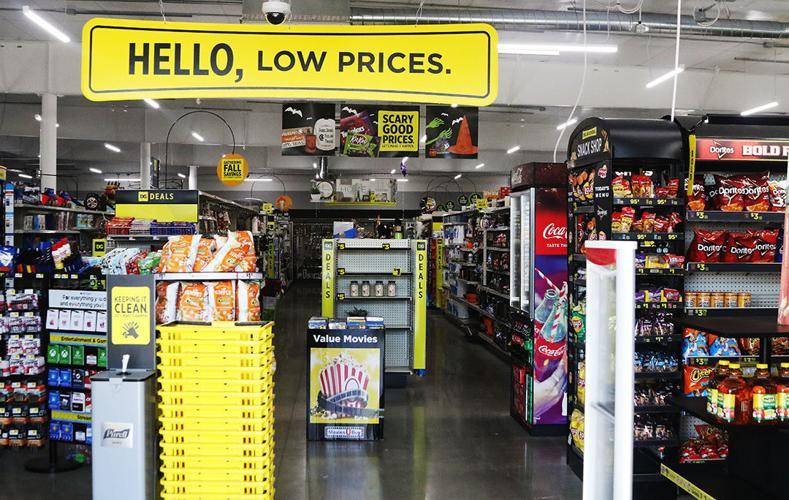
Core Viewpoint - The article discusses the ongoing inflation crisis in the U.S. and its political implications, particularly for former President Trump, who claims that prices are falling despite data indicating otherwise. The article highlights the growing popularity of dollar stores as consumers seek affordable options amid rising living costs [3][4][5]. Inflation and Economic Data - Inflation pressures remain significant in the U.S., with the Consumer Price Index (CPI) rising by 0.3% in September, leading to an annual inflation rate increase from 2.9% to 3%, the highest since January [6][7]. - The average American household is spending an additional $208 per month compared to the previous year due to inflation, and $1,043 more than in early 2021 [7]. - Gasoline prices surged by 4.2% in September, contributing significantly to the overall price increase [6][7]. Political Implications - Inflation has become a focal point in recent local elections, with Democrats winning in states like New York and New Jersey by emphasizing the cost of living issue [4]. - Trump's approval ratings have dropped from over 50% to 42.4%, with voters indicating inflation as their primary concern [4]. Dollar Store Performance - Dollar General reported a 2.5% increase in same-store sales for the third quarter, while Dollar Tree saw a 4.2% increase, indicating strong performance amid economic pressures [11]. - High-income households are increasingly shopping at dollar stores, with 60% of new customers earning over $100,000 annually [11][12]. - Kroger, a major supermarket chain, reported a 2.6% increase in comparable sales, noting differences in spending patterns across income groups [12].

“美国中产、富裕阶层也去1元店消费”,特朗普还嘴硬
Sou Hu Cai Jing· 2025-12-05 08:44
Core Insights - The growth of dollar stores in the U.S. is attracting shoppers from various income levels, indicating a tightening consumer budget [1][2] - Dollar General reported a same-store sales increase of 2.5% for the third quarter, while Dollar Tree reported a 4.2% increase [1] - Dollar Tree's sales are primarily priced at $2 or below, with 85% of sales falling within this range [1] Company Performance - Dollar General's revenue grew by 4.6% to $10.6 billion, with a net profit increase of 44% to $282.7 million [7] - Dollar Tree attracted 3 million new households, with 60% of these coming from families earning over $100,000 annually [1][2] - Both companies have raised their same-store sales growth forecasts for the year, with Dollar General adjusting its expectations from 2.1%-2.6% to 2.5%-2.7% [7] Market Trends - Higher-income households are increasingly shopping at Dollar Tree, while lower-income families are relying on these stores more than ever [2] - Kroger, the largest supermarket chain in the U.S., noted a spending disparity among income groups, with middle-income families feeling more financial pressure [2] - The rising cost of living has become a focal point in recent local elections, impacting consumer behavior and spending patterns [4]


Adobe数据:美国10月电商销售额大幅增长 AI驱动流量增长并提高转化率
智通财经网· 2025-11-11 04:18
Group 1: E-commerce Growth - In October, U.S. consumer online spending increased by 8.2% year-over-year, reaching $88.7 billion [1] - Mobile devices dominated online spending, accounting for 51.4% of total sales, up 11.6% from the previous year [1] - The "buy now, pay later" model contributed $7.1 billion in spending, reflecting a 7.6% increase as consumers seek greater budget flexibility [1] Group 2: Seasonal Sales Trends - During Amazon's "Prime Day" event on October 7-8, online spending surged, with total consumer spending reaching $9.1 billion due to competitive discounting, with discounts up to 18% [1] - Holiday decorations saw a significant online sales increase of 130%, while home goods also experienced substantial growth as consumers upgraded their items [2] Group 3: Product Category Performance - Online sales of hand tools rose by 83%, and power tools increased by 62%, indicating a rise in DIY projects, which may benefit companies like Home Depot and Lowe's [2] - Sales of refrigerators and freezers grew by 55%, potentially aiding appliance-related companies such as Whirlpool and Best Buy [2] - Other strong-performing categories included e-readers (up 81%), headphones and speakers (up 52%), mobile accessories (up 51%), and video games (up 41%) [2] Group 4: Impact of Generative AI - Traffic from generative AI channels increased by 1200% year-over-year, with a 16% higher conversion rate compared to non-AI-driven traffic [3] - Shoppers from generative AI channels showed 13.6% more engagement, browsing more content and exhibiting a 31% lower bounce rate [3] - The report is positive news for many retailers, including Amazon, eBay, Walmart, Target, Dick's Sporting Goods, Macy's, Wayfair, and Etsy [3]

福建:“圣诞订单”提前到 企业创新拓市场
Xin Hua Wang· 2025-10-08 08:18
Group 1 - The core viewpoint of the articles highlights the significant growth in Christmas product exports from Fujian Yinghao Cultural Creative Co., Ltd., with a year-on-year increase of approximately 12% in Christmas goods exports as of this year [1] - The company experienced an earlier production and shipping peak by 1 to 2 months compared to previous years, driven by overseas clients' concerns over logistics delays and changing trade environments, leading them to place orders earlier [1] - The growth in Christmas orders is attributed to the company's development of green technology, utilizing recycled plastic materials, which are well-received in the European market, and the integration of traditional Chinese cultural elements into Western Christmas products [1] Group 2 - The textile and apparel sector is also a significant category for Christmas orders, with an early export period leading to increased export value and a slight recovery in the foreign trade situation [2] - Companies are actively innovating and expanding into diverse international markets, maintaining traditional markets like the EU and Japan while exploring emerging markets in Africa and Latin America [2] - Some companies have achieved breakthroughs through product innovation and brand building, contributing to the overall positive trend in Christmas product exports [2]
漫评美国物价上涨:“节日不快乐”
人民网-国际频道 原创稿· 2025-09-12 01:42
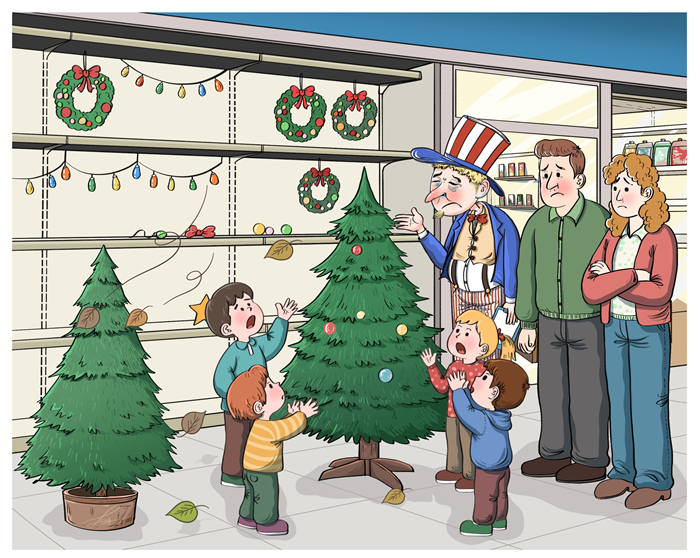
Core Insights - A recent survey by PwC indicates that U.S. consumer holiday spending is expected to see the largest decline since the pandemic due to rising tariffs and living costs [2] - U.S. retailers are significantly impacted by local tariff policies, with companies importing and selling Christmas trees and holiday decorations resorting to layoffs, reducing imports, and increasing prices to cope with tariff-related threats [2] - The Federal Reserve's recent national economic conditions report shows that from mid-July to the end of August, all Federal Reserve districts experienced price increases related to the imposition of tariffs, adding to the financial pressure on American consumers [2]
美国人的家里,竟有这么多东西来自中国
Huan Qiu Shi Bao· 2025-04-29 00:58
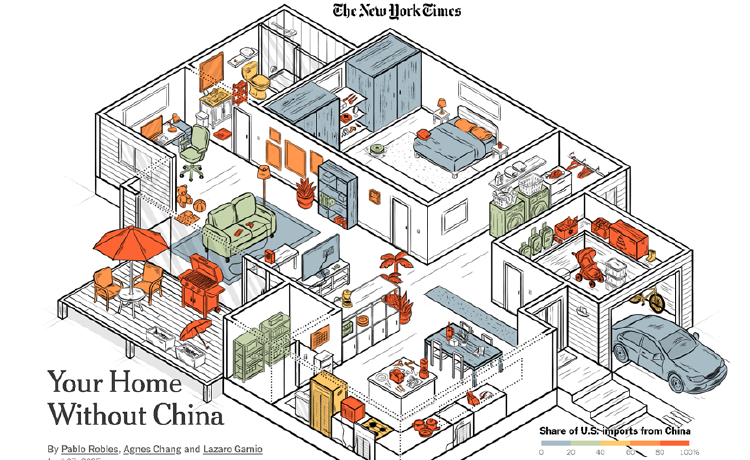
Core Insights - The article highlights the significant reliance of American households on products imported from China, as illustrated by a visual representation in The New York Times [1][20] Group 1: Product Dependency - Kitchen products such as scissors, can openers, thermos cups, plates, utensils, frying pans, and steamers have over 70% dependency on imports from China [4] - Major appliances like microwaves have over 90% reliance on Chinese imports, while refrigerators and stoves have 52% and 51% dependency, respectively [5] - In the living room, products like lamps, gaming consoles, picture frames, toys, wall clocks, children's books, and artificial plants also show over 70% reliance on Chinese imports [8] Group 2: Other Areas of Dependency - In the balcony area, items such as chairs, umbrellas, and charcoal grills have a dependency rate of 70% to 90% on Chinese imports [10] - Office supplies like computers and desk lamps exceed 70% reliance on imports from China, while bathroom items such as mirrors, scales, nail clippers, and sinks also show over 50% dependency [12] - In the bedroom, products like cosmetics, first aid kits, hair dryers, combs, blankets, and alarm clocks have over 70% reliance on Chinese imports, with pillows exceeding 60% [15] Group 3: Seasonal and Miscellaneous Items - Laundry items such as electric irons and hangers have over 90% dependency on Chinese imports, while storage items like flashlights, strollers, and holiday decorations also exceed 90% [18] - The article emphasizes that without Chinese products, even celebrating national holidays would be challenging for Americans [18] Group 4: Automotive Dependency - Although American cars are not directly imported from China, many components, including batteries for electric vehicles, are sourced from China, indicating that tariffs will increase costs for American consumers when buying or repairing vehicles [21]