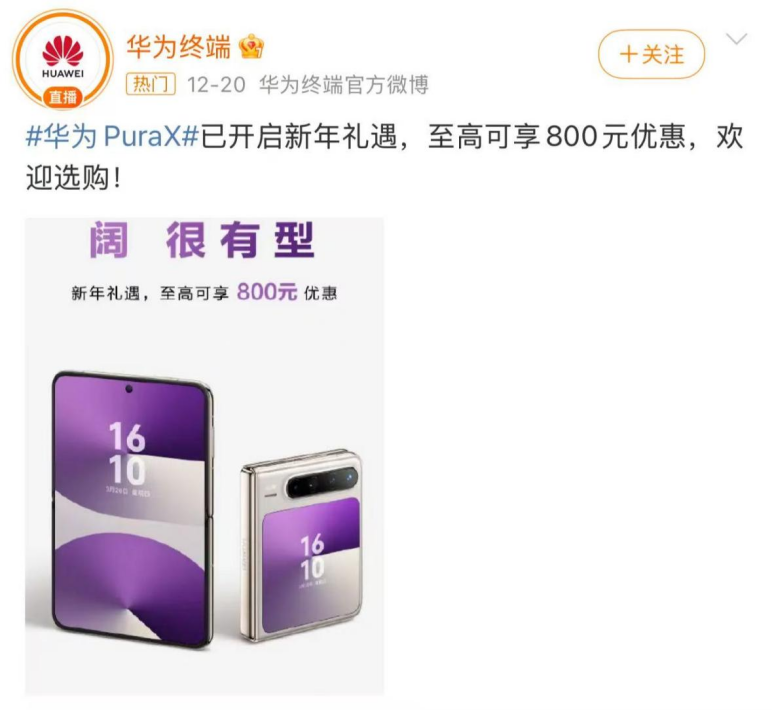
华为Pura X

Search documents
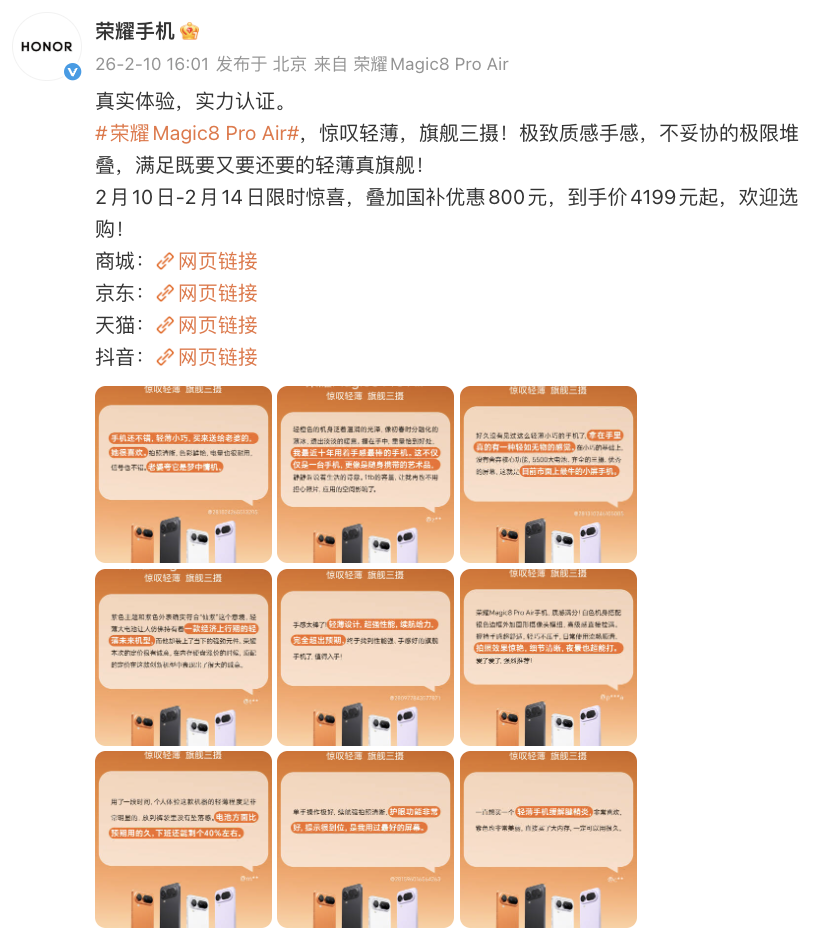
荣耀Magic8ProAir降价300 | 曝某大厂新机要做阔屏幕 16:10复古回归?
Xin Lang Cai Jing· 2026-02-11 10:33
Core Insights - The recent price drop of Apple's ultra-thin flagship iPhone Air by 2000 yuan has sparked discussions, leading to a promotional price cut of 300 yuan for Honor's Magic8 Pro Air [1][7]. Group 1: Promotional Activities - Honor Magic8 Pro Air is running a Valentine's Day limited-time promotion from February 10 to February 14, offering a discount of 300 yuan, which, when combined with national subsidies, totals an 800 yuan discount [2][8]. - The promotional prices for the Magic8 Pro Air after the discount are as follows: - 12+256GB version originally priced at 4999 yuan is now 4699 yuan, with a final price of 4199 yuan after subsidies - 12+512GB version originally priced at 5299 yuan is now 4999 yuan, with a final price of 4499 yuan after subsidies - 16+512GB version originally priced at 5599 yuan is now 5299 yuan, with a final price of 4799 yuan after subsidies [5][11]. Group 2: Product Specifications - The Honor Magic8 Pro Air features a lightweight design at 155g, a slim profile of 6.1mm, and a 6.31-inch display with a 1.5K resolution and 1-120Hz LTPO technology [5][11]. - It is powered by the MediaTek Dimensity 9500 processor, equipped with a 5500mAh battery, and supports 80W wired and 50W wireless charging. The camera setup includes a 50MP front camera and a triple rear camera system [5][11]. Group 3: Industry Trends - There is a growing interest in "wide foldable" devices, with expectations that three smartphone brands will launch such models by 2026, following the trend initiated by Huawei's Pura X [11][12]. - Additionally, a new "wide screen" straight phone with a 16:9 or 16:10 aspect ratio is reportedly in development by a top five smartphone manufacturer, indicating a shift in design trends within the industry [12].

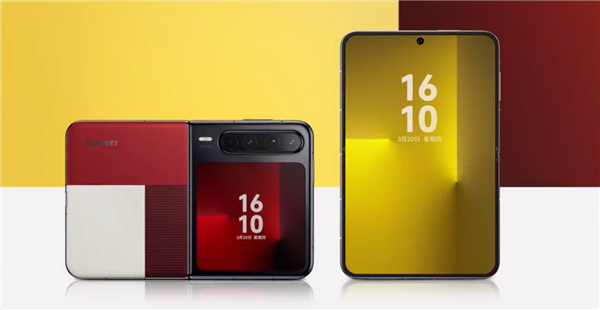
全球首台“阔大折”Pura X2细节:屏幕、续航、性能全升级 华为却欲调低售价
Xin Lang Cai Jing· 2026-02-11 10:32
Core Insights - Huawei's "Pura X" has achieved significant market success with cumulative activation sales surpassing 1 million units, prompting the company to consider an iterative upgrade with the new model [1][4]. Product Upgrades - The upcoming "Pura X2" will feature substantial upgrades in screen size and battery life, while maintaining a more affordable price compared to its predecessor [5]. - The internal display of the Pura X2 will be upgraded to a 7.69-inch WQHD+ resolution panel, a significant increase from the 6.3-inch internal display of the Pura X [5]. - The external display size will also increase from 3.5 inches in the Pura X to 5.5 inches in the Pura X2, continuing the 16:10 "wide ratio" design [5]. Technical Specifications - The Pura X2 is expected to be powered by the Kirin 9030 chip and will likely feature the "Red Maple Four Photography System," which includes a 50-megapixel main camera, a 40-megapixel ultra-wide-angle lens, an 8-megapixel telephoto lens, and a 1.5-megapixel multi-spectral channel camera [5]. Release Timeline and Pricing - The Pura X2 is anticipated to be released in the first half of 2026, with some reports suggesting a possible launch in the second quarter of 2026 [5]. - The initial pricing for the Pura X was set at 7499 yuan, and there is speculation that the starting price for the Pura X2 could be around 6999 yuan [5].
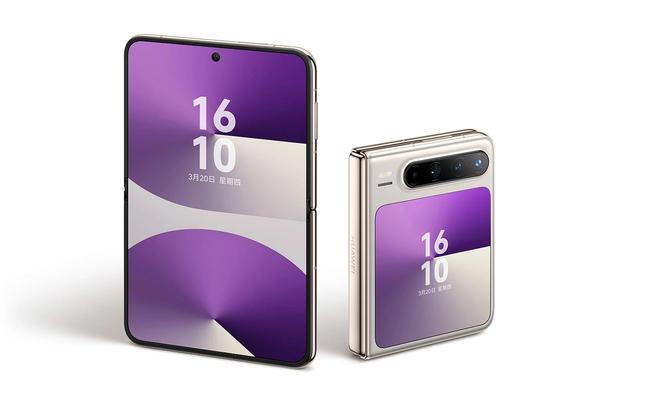
华为“阔屏直板机”被曝已立项
Guan Cha Zhe Wang· 2026-02-11 07:59
Core Viewpoint - The upcoming "wide-screen flat phone" is officially in development, expected to be released in Q4 2026, likely as a continuation of Huawei's Pura X model, which features a unique screen ratio advantageous for media consumption [1][2]. Group 1: Product Development - The new device is speculated to have an aspect ratio of approximately 16:9 or 16:10, which aligns with current media standards [1]. - The Huawei Pura X, launched on March 20 last year, was the first phone to fully integrate HarmonyOS 5 and featured a 6.3-inch screen with a resolution of 2120×1320 [1][2]. Group 2: Market Reception - Many consumers expressed interest in the Pura X but were hesitant about the foldable design, indicating a potential market for a non-foldable wide-screen option [2]. - The Pura X has reportedly achieved over one million cumulative activations, suggesting a strong demand for wide-screen devices [2]. Group 3: Competitive Landscape - The introduction of the flat-screen model may attract users who prefer wide screens but are deterred by the high costs and repair challenges associated with foldable phones [2]. - It is anticipated that three manufacturers will launch new wide-foldable devices this year, with additional domestic brands expected to join next year [2].
AI助力,我国手机行业攀高向优
Xin Hua She· 2026-01-28 12:48
Core Insights - The Chinese smartphone market is projected to exceed 1 trillion yuan in 2025, driven by the trade-in policy for consumer goods and advancements in technology such as AI and foldable screens [1] Group 1: Market Performance - In 2025, Honor's smartphone shipments surpassed 71 million units, marking a 9% year-on-year increase [2] - From January to November 2025, the domestic smartphone shipment reached 282 million units, a 0.9% increase year-on-year, with 5G smartphones accounting for 244 million units, up 1.3% [2] - The number of new smartphone models launched in the domestic market reached 474, reflecting a 14.5% increase year-on-year [2] Group 2: Innovation and Technology - Huawei launched the industry's first wide-foldable smartphone, the Huawei Pura X, which combines the features of an e-reader and a foldable device [3] - The foldable smartphone market is expected to see shipments of 9.47 million units in 2025, a 3.3% increase [4] - Companies are focusing on differentiating factors such as satellite communication, design, battery technology, and camera capabilities to enhance product competitiveness [4] Group 3: AI Integration - AI is reshaping user experience, with new AI smartphones like the Doubao AI phone from ByteDance and ZTE expected to drive a new wave of innovation [5] - The integration of AI in smartphones is becoming a key focus for manufacturers, with advancements in systems like Huawei's HarmonyOS and Honor's Magic8 Pro [6] - By 2025, AI smartphone shipments in China are projected to exceed 118 million units, capturing 40.7% of the overall market [7] Group 4: Market Trends and Challenges - The Chinese smartphone market is entering a critical adjustment phase in 2026, characterized by total pressure and structural differentiation [8] - The high-end market is expected to expand due to innovation, while the low-end market may shrink due to price sensitivity [8] - By 2026, the market share for smartphones priced above $600 is projected to reach 35.9%, a 5.4 percentage point increase year-on-year [8] Group 5: Consumer Behavior - Emotional consumption is reshaping purchasing logic, with design and brand emotional connections becoming as important as technical performance [10] - Manufacturers are expected to invest more in differentiated designs and collaborations to meet consumer emotional value needs [10]
市场最前沿丨AI助力,我国手机行业攀高向优
Xin Hua Wang· 2026-01-28 12:28
Core Viewpoint - The Chinese smartphone industry is expected to reach a market size of over 1 trillion yuan by 2025, driven by the trade-in policy for consumer goods and advancements in AI and foldable screen technology [1]. Group 1: Market Growth and Product Innovation - In 2025, smartphone shipments in China are projected to exceed 71 million units, marking a 9% year-on-year increase [2]. - The domestic smartphone market saw a shipment of 282 million units in the first 11 months of 2025, reflecting a 0.9% year-on-year growth, with 5G smartphones accounting for 244 million units, a 1.3% increase [3]. - The number of new smartphone models launched in China reached 474, representing a 14.5% year-on-year growth [3]. Group 2: Competitive Landscape and Technological Advancements - Innovation is crucial for smartphone manufacturers to differentiate themselves in a saturated market, with Huawei launching the first wide foldable phone, the Huawei Pura X, in March 2025 [4]. - The foldable smartphone market in China is expected to see shipments reach 9.47 million units in 2025, a 3.3% increase [5]. - Key areas of differentiation include satellite communication, design, battery technology, and camera capabilities, with various brands introducing advanced features such as eSIM support and self-developed chips [6]. Group 3: AI Integration and User Experience - AI is transforming user experience, with features that allow smartphones to assist in navigation and shopping [7]. - Major manufacturers are integrating AI into their systems, with Huawei upgrading its HarmonyOS and Honor enhancing its products with AI capabilities [8]. - The AI smartphone market in China is projected to reach over 118 million units by 2025, capturing 40.7% of the overall market [10]. Group 4: Market Adjustments and Future Projections - The Chinese smartphone market is entering a critical adjustment phase in 2026, with expected declines in overall shipments due to rising component costs [11]. - The high-end smartphone market is anticipated to expand, while the low-end market may shrink, indicating a shift towards a more diversified market structure [11]. - AI smartphones are expected to become mainstream by 2026, with projected shipments of 147 million units, a 31.6% increase, representing 53% of the overall market [12]. Group 5: Consumer Behavior and Emotional Value - Emotional consumption is reshaping purchasing logic, with design and brand connection becoming as important as technical performance [13].
市场最前沿|AI助力,我国手机行业攀高向优
Xin Hua She· 2026-01-28 12:27
Core Insights - The Chinese smartphone market is projected to exceed 1 trillion yuan by 2025, driven by the trade-in policy for consumer goods and advancements in AI and foldable screen technology [1] - The market is shifting from incremental competition to stock competition as smartphone penetration exceeds 80% and the average replacement cycle lengthens [1] Group 1: Market Performance - In the first 11 months of 2025, the domestic smartphone shipment reached 282 million units, a year-on-year increase of 0.9%, with 5G smartphones accounting for 244 million units, up 1.3% [1] - Honor's smartphone shipments surpassed 71 million units in 2025, marking a 9% year-on-year growth [1] - The number of new smartphone models launched in the domestic market reached 474, reflecting a 14.5% increase [1] Group 2: Innovation and Technology - Huawei launched the industry's first wide foldable smartphone, the Huawei Pura X, which combines the reading experience of an e-book with the convenience of a foldable device [2] - The foldable smartphone market in China is expected to reach 9.47 million units by 2025, growing by 3.3% [2] - Companies like OPPO, vivo, and Xiaomi are enhancing product capabilities with innovations such as eSIM support, semi-solid state battery technology, and self-developed chips [2] Group 3: AI Integration - AI is becoming a core capability in smartphones, with features like route planning and price comparison being automated [3] - By 2025, AI smartphone shipments are expected to exceed 118 million units, capturing 40.7% of the overall market [3] - The integration of AI is seen as a transformative force, with companies like ByteDance and ZTE collaborating to create AI smartphones that enhance user experience [3] Group 4: Market Trends and Future Outlook - The Chinese smartphone market is entering a phase of adjustment characterized by total pressure and structural differentiation, with a forecasted decline in overall shipment volume due to rising component costs [4][5] - The high-end smartphone market is expected to expand, while the low-end market will shrink, indicating a shift towards a more diversified market structure [4] - By 2026, the market share for smartphones priced above $600 is projected to reach 35.9%, while the share for those below $200 is expected to decrease by 4.3% [5] - Emotional consumption is reshaping purchasing logic, with design and brand connection becoming as important as technical performance [5]
华为折叠屏国内份额超70%,坐等苹果入局
Guan Cha Zhe Wang· 2026-01-22 09:16
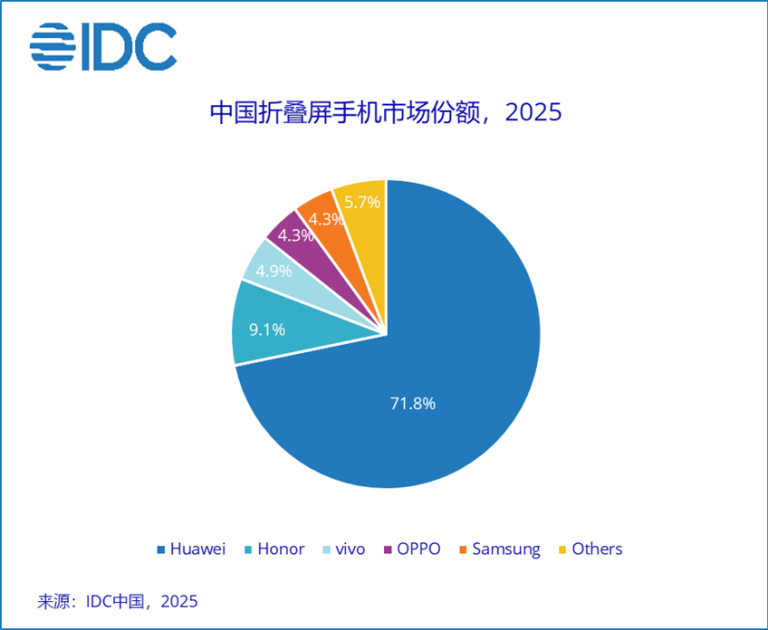
Core Insights - The Chinese foldable smartphone market is projected to see a shipment of approximately 10.01 million units in 2025, reflecting a year-on-year growth of 9.2%, contrasting with a slight decline of 0.6% in the overall smartphone market [1] - Huawei leads the market with a significant share of 71.8%, while other brands like Honor, Vivo, and OPPO have much smaller shares, indicating Huawei's dominant position [1][3] - Despite the emergence of competitive products from other manufacturers, Huawei's comprehensive product lineup and brand strength have solidified its market leadership [4][6] Market Dynamics - The foldable smartphone segment has reached a bottleneck since 2019, with manufacturers struggling to drive sales through hardware improvements alone, leading to a decline in the overall market in Q4 of the previous year [3][4] - Brand strength is increasingly influencing consumer preferences in the high-end market, with Huawei's focus on balanced capabilities and innovative designs contributing to its market share growth of over 20 percentage points in 2025 [4] - The foldable smartphone market still represents only 3.5% of total smartphone shipments in China, prompting some manufacturers to reconsider their strategies in this niche segment [4][6] Technological Innovations - Manufacturers are exploring soft-hard collaboration as a breakthrough direction, with Huawei's MateX7 focusing on AI integration rather than just hardware enhancements [6] - Other brands like OPPO and Vivo are also attempting to bridge compatibility with Apple ecosystems, indicating a trend towards cross-platform functionality [6] Future Outlook - The anticipated entry of Apple's foldable smartphone, expected to be released in the fall of 2026, is generating significant market interest, particularly regarding its potential to enhance hardware and software integration [7][8] - The overall smartphone market in China may face challenges in 2026 due to rising storage costs, which could lead to a noticeable decline in shipments [8]


华为折叠屏国内份额超70%,苹果今年能带来惊喜吗?
Guan Cha Zhe Wang· 2026-01-22 09:12
Core Insights - The Chinese foldable smartphone market is projected to see a shipment of approximately 10.01 million units in 2025, marking a year-on-year growth of 9.2%, contrasting with a slight decline of 0.6% in the overall smartphone market [1] - Huawei leads the market with a significant share of 71.8%, while other brands like Honor, Vivo, and OPPO have much smaller shares, with Xiaomi dropping out of the top five [1][3] - The foldable smartphone segment is experiencing a bottleneck phase, with hardware improvements no longer sufficient to drive significant sales growth, leading to a decline in market performance [3][4] Market Dynamics - Huawei's dominance is attributed to its comprehensive product lineup, including various foldable designs and a focus on balanced capabilities rather than just lightweight models [4] - Other manufacturers have introduced innovative products, such as OPPO's Find N5 and Vivo's lightweight foldable, but these have not significantly challenged Huawei's market position [3][4] - The foldable smartphone market only accounts for 3.5% of total smartphone shipments in China, leading some companies like Xiaomi to reconsider their strategies in this niche [4][6] Technological Innovations - Manufacturers are focusing on soft-hard collaboration to enhance user experience, with Huawei's MateX7 introducing AI capabilities to improve functionality [6] - Competitors like OPPO and Vivo are also exploring compatibility with Apple ecosystems to attract users [6] - The anticipated entry of Apple's foldable phone, expected in 2026, is generating significant market interest, with expectations for superior hardware and software integration [7][9] Future Outlook - The smartphone market is expected to face cost pressures due to rising storage prices, potentially leading to a noticeable decline in shipments in 2026 [9] - The success of Apple's foldable device and its impact on the market remains a key point of interest for industry stakeholders [9]
一个生态,一场革命:鸿蒙跑出“中国速度”
Xin Jing Bao· 2025-12-30 03:54
Core Insights - The article highlights the significant progress of Huawei's HarmonyOS, transitioning from a nascent stage to a mature ecosystem within a year, emphasizing its role in China's technological self-reliance and security [1][4][11]. Group 1: Development Timeline - HarmonyOS was initiated in 2015 but gained momentum after Huawei faced challenges in 2019, leading to its official launch in August 2019 [2]. - The system has evolved rapidly, with HarmonyOS 4 being released in October 2024, marking a complete transition away from Android's open-source code [2][3]. - By March 2025, the first phone fully equipped with HarmonyOS 5, the Huawei Pura X, was launched, indicating a significant milestone for Huawei's ecosystem [3]. Group 2: User Adoption and Market Response - As of August 2025, the number of devices running HarmonyOS 5 surpassed 10 million, showcasing strong market acceptance [3]. - The growth accelerated, with the total number of HarmonyOS devices reaching 32 million by December 2025, indicating a rapid adoption rate [7]. Group 3: Features and Innovations - HarmonyOS 6, released in October 2025, focused on enhancing user experience through intelligent features, improved security, and seamless connectivity across devices [5][6]. - The system introduced an AI assistant capable of various tasks, enhancing user interaction and service [6]. - The security architecture was upgraded to proactively protect users from fraud, showcasing a commitment to user safety [7]. Group 4: Ecosystem Development - Huawei invested significantly in developer support, launching initiatives to encourage application development and user engagement, resulting in over 35,000 applications available in the ecosystem [8][9]. - The collaborative efforts of developers and partners have been crucial in refining the user experience and expanding the application landscape [8][9]. Group 5: Strategic Importance - The development of HarmonyOS aligns with China's national strategy for technological self-reliance, addressing long-standing challenges in the software industry [11]. - The system's success is seen as a foundation for a robust digital economy, enhancing security and fostering innovation across various sectors [12]. Group 6: Future Outlook - Looking ahead, Huawei aims to deepen user experience and expand HarmonyOS's global reach, emphasizing collaboration with developers worldwide [12][13]. - The achievements of HarmonyOS in 2025 are viewed as a significant chapter in China's narrative of technological advancement and self-sufficiency [12].
华为阔折叠手机Pura X官方降价,最高降800元|实探
Guo Ji Jin Rong Bao· 2025-12-22 14:07
Group 1 - Samsung plans to launch its first "wide-foldable" smartphone in the fall of 2026, featuring an inner screen size of 7.6 inches and an outer screen of 5.4 inches, both made of OLED material with a 4:3 aspect ratio [1] - The current market for wide-foldable smartphones is dominated by Huawei's Pura X, which recently underwent its first major price adjustment since launch, attracting significant market attention [1][3] - The Pura X was released in March this year, running on HarmonyOS 5, with initial prices set at 7499 yuan for the standard version and 9999 yuan for the top-tier version [6][9] Group 2 - Huawei has reduced the price of the Pura X by 600 yuan for the standard version, bringing the lowest configuration to 6899 yuan, while the premium version saw a reduction of 800 yuan [3] - In-store promotions include an additional discount of 100 yuan for on-site activation, with reports of increased customer inquiries and purchases following the price drop [3] - Huawei's executive previously stated that the Pura X would be a product that "everyone can afford," but the initial pricing has sparked discussions due to its high cost relative to expectations [9]