台球杆

Search documents
05后重塑二手消费市场:从“省钱”到“悦己”的兴趣经济崛起
Zhong Guo Jing Ji Wang· 2026-01-21 07:01
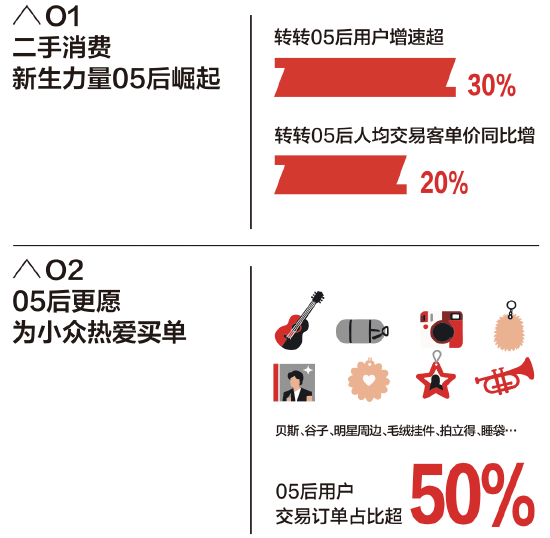
Group 1 - The core viewpoint of the articles highlights the transformation of second-hand consumption from a "tool for saving money" to a "projection of lifestyle," driven by the post-2005 generation's emergence as a significant force in the market [1][2] - The report indicates that the user growth rate for the post-2005 demographic on the platform exceeds 30% in 2025, with their transaction behavior showing a clear "interest-oriented" trend, particularly in categories like trendy toys and celebrity merchandise [1] - The average transaction value per user in the post-2005 group has increased by 20% compared to 2024, with orders for celebrity merchandise growing by 800% in 2025, indicating a shift towards "treasure hunting" for unique items rather than merely saving money [1] Group 2 - The circular economy is evolving from traditional essential consumption to a comprehensive lifestyle approach, with cross-category transaction users on the platform growing over 116% year-on-year in 2025 [2] - The report notes that users engaging in both buying and selling behaviors on the platform have increased by over 30%, reflecting a more mature and interesting consumption philosophy of "saving where possible, spending where necessary" [2] - Different age groups exhibit distinct preferences, with the 18-24 age group more inclined to buy second-hand items for enjoyment, while the 25-34 age group tends to sell unused items [2] Group 3 - The boundaries of second-hand consumption are rapidly expanding, with significant user growth in third-tier and lower cities, such as Jin Cheng and Yili, indicating strong purchasing demand in these regions [3] - The perception of second-hand goods as merely "depreciated" is challenged by data showing that certain second-hand items can retain or even increase in value, with high-end products like HERMES bags achieving a preservation rate of 271% [3] - Emerging consumer trends, such as cycling and sports, have led to a surge in the trading volume of specific categories like domestic road bikes and popular collectible figures, showcasing their strong market value [3]
二手消费年度洞察:循环经济步入“理智与情感”共存新周期
Huan Qiu Wang· 2026-01-19 08:13
Group 1 - The core viewpoint of the articles highlights the transformation of second-hand consumption from a "tool for saving money" to a "projection of lifestyle," driven by the post-2005 generation [1][2] - The post-2005 generation has emerged as a significant force in the second-hand market, with a user growth rate exceeding 30% on platforms like Zhuanzhuan in 2025 [1] - The transaction behavior of post-2005 users is characterized by a strong "interest orientation," with over 50% of users in categories like trendy toys and celebrity merchandise being from this demographic [1] Group 2 - The report indicates that the average transaction value per user in the post-2005 group increased by 20% compared to 2024, with a notable 800% growth in orders for celebrity merchandise in 2025 [1] - The circular economy is evolving from traditional essential consumption to a new lifestyle approach, with cross-category trading users on Zhuanzhuan increasing by over 116% in 2025 [2] - Emerging consumer trends, such as cycling and sports, have led to a surge in the trading volume of specific categories like domestic road bikes and popular IP figurines, showcasing strong circulation value [2]
转转发布2025二手消费年度洞察:05后用户占增速超30%
Xin Lang Cai Jing· 2026-01-19 03:58
Core Insights - The report from Zhuanzhuan Group indicates that by 2025, the user growth rate among post-2005 generation will exceed 30%, with over 50% of users in interest-based transactions being from this demographic [1][5] - The average transaction value per user in the post-2005 generation has increased by 20% compared to 2024, with a notable 800% growth in transaction orders for celebrity merchandise [1][5] - Cross-category transaction users on the Zhuanzhuan platform have grown by over 116% year-on-year, indicating a trend of users exploring multiple second-hand categories after initial purchases [1][5] User Demographics - Different generational and regional user preferences are evident, with individuals aged 18-24 primarily acting as buyers to enjoy affordable goods, while those aged 25-34 are more likely to sell second-hand items [1][5] - Rapid user growth is observed in third-tier and lower cities, with cities like Jincheng, Yili, Kashgar, Zhoushan, and Yichang ranking in the top 10 for user growth [2][6] Market Trends - Users in first-tier and new first-tier cities tend to supply idle resources to the second-hand market, while third and fourth-tier cities show strong purchasing demand [2][6] - The report highlights a significant transaction that spanned 5,684 kilometers, showcasing the extensive reach of the platform [2][6] Offline Expansion - Zhuanzhuan is accelerating the expansion of its offline store network, particularly in third and fourth-tier cities, enhancing the richness of offline consumption scenarios [2][6] - The first multi-category second-hand circular warehouse store, Super Zhuanzhuan, opened in Beijing in June 2025, covering over 3,000 square meters, followed by a store in Zhengzhou focusing on 3C digital products and leisure items in October 2025 [2][6][7] - The company has established over 1,100 small stores nationwide that integrate retail and recycling services, further penetrating third and fourth-tier cities [7] Emerging Consumption Trends - New consumption hotspots are emerging, with increased interest in cycling, sports consumption, and trendy collectibles, leading to a surge in transaction volumes for domestic road bikes, pool cues, and popular IP figurines like Labubu and Starry People [3][7]

不再去KTV的年轻人,涌进了商场30元一小时的台球厅
Hu Xiu· 2025-10-15 08:15
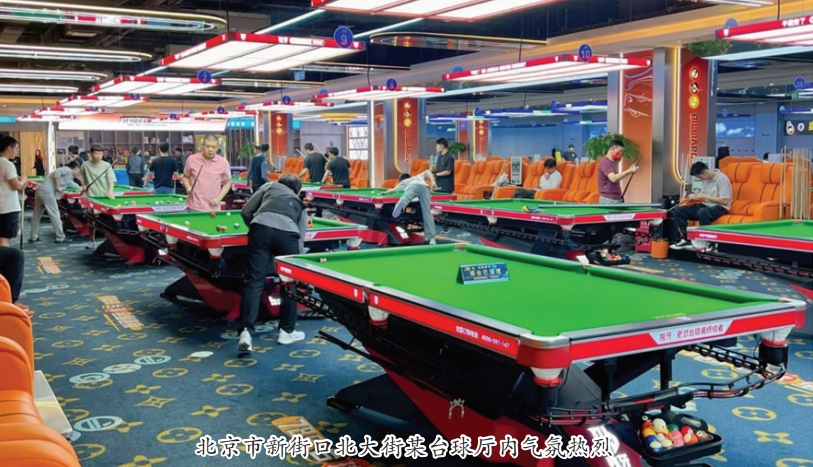
Core Insights - The billiards industry is experiencing growth despite economic downturns, with increasing consumer interest and investment opportunities [5][6][8] Group 1: Industry Trends - Billiard halls are evolving from traditional venues to self-service, smoke-free environments, catering to a wider demographic [3][4] - The consumer base is diversifying, with a mix of competitive players and those seeking leisure, leading to varied pricing models from low-cost to premium offerings [4][8] - The number of registered billiard-related businesses in China reached 55,000 in 2024, a year-on-year increase of 33.39% [8] Group 2: Investment and Events - Significant investments in billiard brands have been made, including over 100 million yuan in funding for self-service billiard brand Xiao Tie by Tencent in 2023 [6] - Billiards will be featured as an official event in the 2025 Chengdu World Games, with high-profile competitions attracting international players [7] Group 3: Consumer Behavior - The target demographic for billiards primarily consists of young adults aged 18-30, who view billiards as a social and recreational activity [2][10] - Billiard venues are increasingly seen as affordable social spaces, with prices comparable to casual dining options [44] - The rise of self-service billiard halls aligns with consumer preferences for convenience and cost-effectiveness [12][45] Group 4: Market Adaptation - Shopping malls are shifting from traditional retail to experiential consumption, incorporating billiard halls to attract foot traffic and enhance customer engagement [9][40] - The demand for low-cost, high-frequency entertainment options is driving the integration of billiards into shopping centers [38][42] - Billiard venues are adapting to consumer needs by offering diverse experiences and maintaining competitive pricing [30][34]
研判2025!中国台球杆行业产业链、市场规模、出口数量、竞争格局及发展趋势分析:台球消费持续升温,带动台球杆行业规模上涨[图]
Chan Ye Xin Xi Wang· 2025-09-12 01:17
Core Insights - The inclusion of billiards in the "National Fitness Public Service System" has led to a surge in billiards consumption, driving the growth of billiard halls and clubs, as well as the B-end market for billiard equipment like cues [1][7] - The billiard cue industry in China has seen a significant increase in market size, growing from 720 million yuan in 2018 to an expected 1.744 billion yuan by 2024, indicating a promising future for the industry [1][8] - The rise in disposable income and consumer spending among Chinese residents has contributed to the growing popularity of billiards as a leisure activity, further increasing the demand for billiard cues [5][6] Billiard Cue Industry Overview - Billiard cues are essential tools for playing billiards, typically measuring between 1.3m and 1.5m in length, with a diameter of 9-12mm at the tip. They consist of various components including the tip, ferrule, shaft, and butt [3][4] - The cue market is categorized into three main types: English cues, American cues, and Chinese cues, each designed for different styles of play [3][4] Market Dynamics - The number of billiard halls in China has rapidly increased, with 55,300 new halls expected by 2024, marking a 33.3% year-on-year growth, which presents opportunities for the supporting equipment market [6][7] - The export of billiard products and accessories has shown recovery, with a significant increase of 55.7% expected in 2024 compared to the previous year, indicating a rebound in international demand [9] Competitive Landscape - Historically, the billiard cue market has been dominated by foreign brands, but domestic brands are beginning to emerge, particularly in the mid-range market, while high-end segments remain largely occupied by international companies [9][10] Industry Trends - Innovations in materials such as carbon fiber and titanium alloys are being adopted to enhance cue performance, with ongoing research into new composite materials to meet the demands of competitive play [11][12] - Customization services for billiard cues are becoming more prevalent, driven by consumer demand for personalized products that reflect individual style and improve performance [13] - The trend towards smart design in billiard cues is emerging, with companies investing in technology to create cues equipped with sensors that track and analyze player performance [14]

重新走进台球厅的年轻人,把台球杆买成爆款
3 6 Ke· 2025-05-22 01:27
Core Insights - The billiard cue market is emerging as a significant gift-giving trend, with sales on platforms like Dewu exceeding 10 million in just five months for a brand [1][3] - The popularity of billiard cues as gifts is reflected in social media, with over 3.4 million notes recommending cues on Xiaohongshu, surpassing recommendations for sneakers [1][2] Industry Trends - The number of billiard enthusiasts in China is projected to exceed 210 million by 2025, indicating strong demand for billiard-related products [3] - The number of billiard halls in China has been increasing post-pandemic, with new openings expected to reach 5.53 thousand by 2024 [3] - The growth of billiard halls is driving the demand for billiard cues and related equipment, with a notable shift towards individual consumer purchases [3][5] Consumer Behavior - A significant portion of billiard players, particularly younger individuals aged 20-29, are investing in personal cues, moving away from public cues that are often of lower quality [8][9] - The social value of billiard cues is rising, as they are seen as a means of self-expression and identity among younger consumers [11][12] Market Dynamics - Brands are adapting to the changing consumer landscape by offering trendy designs and limited editions to attract younger buyers [12][15] - The market features a range of brands, from affordable options to high-end custom cues, catering to diverse consumer preferences [14][15] - The trend of personalized and high-quality cues is growing, with younger consumers increasingly interested in custom-made products [15][17] Social Media Influence - Billiards content is thriving on social media platforms, with significant engagement levels, particularly on short video platforms like Douyin [10][11] - The rise of social media has enhanced the visibility and appeal of billiards, contributing to its transformation into a more youthful and trendy sport [17]

台球运动“撞”出千亿元新业态
Xiao Fei Ri Bao Wang· 2025-05-14 02:31
Core Insights - Zhao Xintong's victory at the 2025 World Snooker Championship marks a historic moment as he becomes the first Asian player to win the title, significantly boosting the popularity of snooker in China [1][2] - The "champion effect" has led to a surge in demand for snooker tables, with many venues reporting full bookings and requiring reservations up to three days in advance [2][3] - The snooker training market is experiencing a positive shift, as parents are increasingly supportive of their children taking up the sport, recognizing its potential as a viable career [3] Industry Growth - The number of snooker-related enterprises in China has surpassed 400,600, with 137,100 new registrations in 2024, reflecting a year-on-year growth of 28.57% [6] - The Chinese snooker market is projected to reach a scale of 100 billion yuan by 2025, with segments like "smart snooker tables" and "event live streaming" expected to grow at a compound annual growth rate exceeding 25% [6] - The transformation of traditional snooker halls into multi-functional entertainment complexes is evident, with venues integrating food, live streaming, and AI training systems to enhance customer experience [6][7] Consumer Behavior - The average cost for a single visit to a snooker hall ranges from 20 to 40 yuan, with many young consumers opting for group purchases [7] - The number of snooker enthusiasts in China has exceeded 210 million, with an annual growth rate of 18%, indicating a robust increase in interest and participation in the sport [7] - High-end and personalized snooker equipment is becoming a market trend, as consumers increasingly invest in their own snooker cues, with prices ranging from 3,000 to over 8,000 yuan [7] Future Outlook - Industry experts express confidence in the future of the snooker market, emphasizing the importance of professional, differentiated, and meticulous service to change the public's perception of snooker venues [8]