
启境首款车型

Search documents
广汽集团锚定产销重回200万辆级 1月销量增18.5%自主品牌占42.4%
Chang Jiang Shang Bao· 2026-03-02 00:26
Core Viewpoint - GAC Group aims to achieve a sales target of 2 million vehicles by 2026, with a focus on transformation and modernization to enhance its competitiveness in the automotive industry [1][2][9]. Sales Performance - In January, GAC Group's sales reached 116,600 units, a year-on-year increase of 18.47%, with its self-owned brand sales accounting for 42.41% of total sales [1][5][7]. - For 2024, GAC Group's sales were 2,003,100 units, a decline of 20.04% year-on-year, while 2025 sales were 1,721,500 units, down 14.06% [3]. Strategic Goals - GAC Group's sales growth target for 2026 requires an increase of 16.2% to meet the 2 million vehicle goal [1][9]. - The company plans to expand its overseas sales to 200,000 units by focusing on key regions and local production [3][4]. Product Development - GAC's new high-end intelligent electric vehicle brand, "Qijing," is set to launch its first model in June 2026, which will feature advanced autonomous driving technology [9][10]. - The first model of Qijing is positioned as a luxury smart electric vehicle, with plans for a nationwide rollout of over 300 stores by June [9]. Competitive Advantages - GAC Group possesses a robust industrial chain, strong manufacturing capabilities, and diverse service ecosystems, which are seen as advantageous for overcoming current market challenges [4]. - The company has received strong support from national and local governments, enhancing its operational environment [4].



前瞻全球产业早报:中国手机厂商或将集体涨价
Qian Zhan Wang· 2026-02-27 10:43
Group 1 - The core viewpoint of the news highlights the significant growth in foreign trade import and export values in the Beijing-Tianjin-Hebei region, which increased by 25.7% over 12 years, reaching 4.7 trillion RMB by 2025 from 3.74 trillion RMB in 2014 [2] - Guangzhou is planning to establish a 10 square kilometer deep cooperation zone for the horse industry with Hong Kong, aiming to create a world-class horse industry hub and tapping into the high-end consumer market potential of the Guangdong-Hong Kong-Macau Greater Bay Area [2] - The German Chancellor visited Yushu Technology, emphasizing the potential for collaboration between German companies and the Chinese robotics industry, particularly in smart robotics and AI [3] Group 2 - Zhejiang Province aims to enhance support for technology finance, targeting a technology loan balance exceeding 4.2 trillion RMB by 2026, while promoting innovation and the establishment of various technology platforms [3][4] - The smartphone industry is expected to see a collective price increase due to rising costs of memory and storage chips, with procurement costs reportedly up over 80% compared to the previous year [4] - The launch of the first model from the high-end intelligent electric vehicle brand "Qijing" is anticipated in June 2026, with the first model already completing critical performance tests [5][6] Group 3 - Tencent's virtual currency "Yuanbao" has returned to the top 10 in the Apple App Store, with monthly active users reaching 114 million and daily active users exceeding 50 million [7] - Samsung Electronics plans to cease production of 2D NAND flash memory by March, transitioning its production line to focus on 1c nm DRAM memory manufacturing [7] - Google has re-integrated its robotics software subsidiary Intrinsic into its main operations, marking a strategic shift towards a more focused investment in physical AI [8][9]
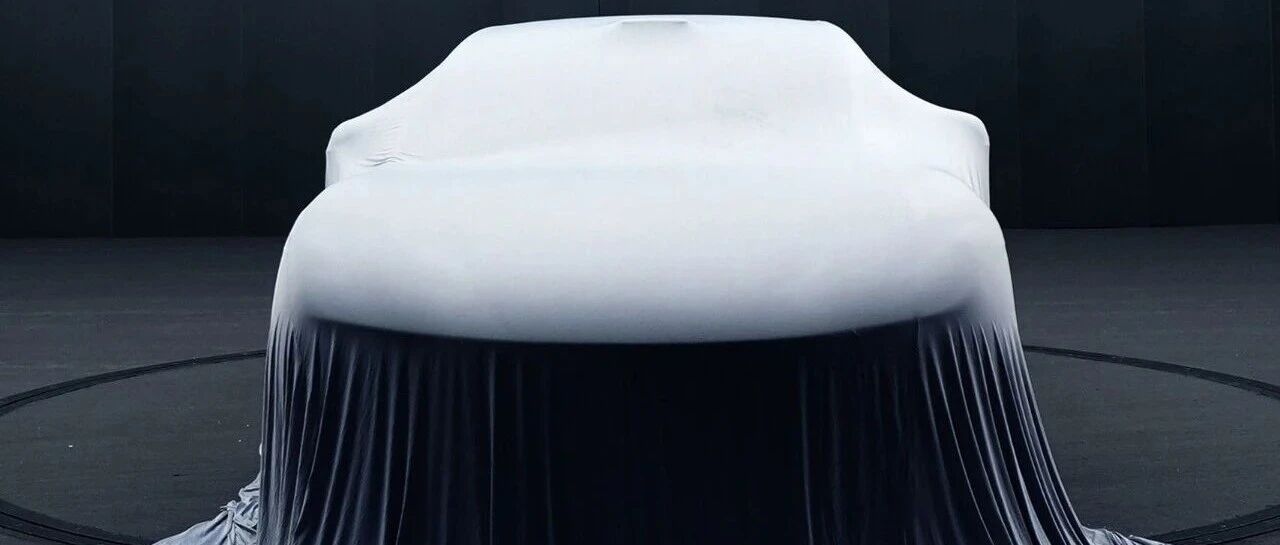
启境首款车型开启全国路测
Zheng Quan Shi Bao Wang· 2025-12-22 11:53
Group 1 - The core announcement is that Qijing Automotive's CEO Liu Jiaming has officially launched the nationwide road testing of the company's first model, which is positioned as a shooting brake coupe [1] - The vehicle is planned to be launched in June 2026 [1]
引爆资本市场,启境的野心,藏不住了
Feng Huang Wang Cai Jing· 2025-11-27 14:34
Core Viewpoint - The recent significant movements in the capital market have refocused attention on GAC Group (601238), driven by two major positive developments regarding the company [1][2]. Group 1: Breakthroughs in Solid-State Battery Technology - GAC Group has achieved a major breakthrough in solid-state battery technology, successfully establishing the full-process manufacturing capability for automotive-grade solid-state batteries with a capacity of over 60Ah. This technology can nearly double battery energy density, extending vehicle range from 500 kilometers to 1000 kilometers, with plans for small-scale vehicle trials starting in 2026 [4][5]. Group 2: Collaboration with Huawei and the Launch of the Qijing Brand - The market has shown strong approval for GAC's collaboration with Huawei, which aims to create a new category of smart vehicles. The Qijing brand was officially unveiled at Huawei's Qian Kun Ecological Conference on November 20, 2023, targeting the mid-to-high-end smart electric vehicle market with a focus on youth, fashion, and high performance [4][5]. - The Qijing brand is not just another new car; it represents a new "species" that integrates Huawei's advanced technology and research capabilities deeply into the collaboration, showcasing a unique approach to product development and market promotion [6][7]. Group 3: Innovative Development and Market Positioning - Qijing aims to set high standards with its products, targeting "three million-level" benchmarks: aesthetics, driving control, and intelligence, all at a more accessible price point compared to traditional luxury vehicles [8][9]. - The first model, described as the "most beautiful hunting-style coupe" in the Huawei series, is set to launch in June 2026, aiming to fill a market gap for high-end smart electric vehicles priced above 350,000 yuan [11]. Group 4: Market Dynamics and Future Outlook - The optimistic market outlook for Qijing is supported by the strong growth of the high-end smart electric vehicle market in China since 2025, reflecting robust consumer demand for intelligent and high-end electric models [11][12]. - The current macroeconomic environment highlights the importance of the electric vehicle industry as a core pillar for stable growth, prompting a reassessment of traditional automakers like GAC that embrace technological transformation and open collaboration [12].
启境登场:高端智能出行的“华系”范本
Zhong Guo Qi Che Bao Wang· 2025-11-21 01:33
Core Insights - The launch of the Qijing brand at Huawei's QianKun Ecological Conference marks a significant milestone in the deep integration of technology companies and mainstream automotive manufacturers, combining GAC's decades of manufacturing experience with Huawei's substantial investment in smart technology development [1][11] Group 1: Strategic Collaboration - The establishment of Qijing is a result of a deep strategic alignment between Huawei and GAC Group, formalized through a cooperation agreement signed in November 2024, leading to the brand's official announcement in September 2025 [3] - The collaboration model of Qijing breaks traditional boundaries by implementing a "co-location, synchronized decision-making" system, moving beyond the typical "technology supplier + manufacturer" relationship [3][5] - Since early 2025, hundreds of Huawei QianKun team members have been integrated into Qijing, participating in all aspects of product definition, development, testing, and marketing, creating an "embedded collaboration" framework [3][5] Group 2: Technological Innovations - Huawei's full-stack intelligent solutions serve as the technical foundation for Qijing, with an annual R&D investment exceeding 10 billion and a dedicated team of over 8,000 [6] - The first model features advanced perception systems, including a 192-line LiDAR with a detection range of 250 meters and a 4D millimeter-wave radar with a maximum range of 280 meters, enhancing driving safety even in extreme weather conditions [6][7] - The digital chassis innovation integrates centralized control of vehicle components, improving traffic efficiency by 20% and reducing emergency braking rates by 30% [7] Group 3: Market Positioning and Product Strategy - Qijing's product definition logic focuses on user scenarios, aiming to capture the needs of young consumers for a balance between stability and individuality, with plans to launch its first model in mid-2026 [8][10] - The design philosophy emphasizes a balance between aesthetics and practicality, achieving a drag coefficient as low as 0.23Cd while ensuring ample interior space [8] - The first model will offer both pure electric and range-extended versions, addressing urban commuting and long-distance travel needs, with the range-extended version achieving over 1,200 kilometers under CLTC conditions [10] Group 4: Competitive Advantage - Qijing's differentiation strategy leverages Huawei's ecosystem for seamless connectivity between vehicles, smartphones, and smart home devices, enhancing user experience [10] - The combination of Huawei's IPMS system and GAC's manufacturing strengths has resulted in a 40% increase in pre-sale conversion rates compared to traditional models [10] - The collaboration exemplifies a shift in the smart automotive industry from single-point technology competition to ecosystem-based competition, showcasing the potential of deep integration between traditional manufacturing and advanced technology [11]

任正非定调,启境锁定年轻与科技标签,将于11月20日正式发布
华尔街见闻· 2025-11-19 06:14
Core Viewpoint - The emergence of the "Qijing" brand, a collaboration between GAC Group and Huawei, signifies a strategic shift in the Chinese smart automotive market, emphasizing youthfulness and technology as key differentiators in a competitive landscape [2][4][5]. Group 1: Brand Development - The "Qijing" brand was born from a strategic meeting between GAC Group's chairman and Huawei's founder, where the need for a younger and more tech-oriented brand was emphasized [2]. - The brand aims to leverage Huawei's technological expertise and GAC's manufacturing capabilities to create a new category of high-end smart electric vehicles [4][30]. - The first model of "Qijing" is expected to launch in mid-2026, with significant anticipation surrounding its design and technological integration [20][21]. Group 2: Market Insights - The target demographic for "Qijing" includes young consumers, with 41.5% of internet users aged 20 to 29 already utilizing generative AI products, indicating a strong inclination towards technology [9]. - By 2025, the penetration rate of new energy vehicles in China is projected to exceed 52%, highlighting a significant shift towards smart and electric vehicles among younger consumers [10]. - The increasing popularity of smart vehicles among younger generations is evident, with 48.2% of new users of smart car apps being born in the 1990s and 2000s [10]. Group 3: Strategic Collaboration - The partnership between GAC and Huawei is characterized by a deep integration of their operations, moving beyond traditional client-supplier relationships to a collaborative model that enhances product development and marketing [12][13]. - Huawei's extensive experience in smart technology, combined with GAC's 28 years of automotive manufacturing expertise, positions "Qijing" to potentially disrupt the high-end electric vehicle market [17][30]. - The collaboration includes the implementation of Huawei's integrated product development and marketing services, ensuring that user needs are central to the product development process [13][14]. Group 4: Leadership and Management - Liu Jiaming has been appointed as the CEO of "Qijing," bringing over 25 years of automotive industry experience to lead the brand's strategic direction and market expansion [22][25]. - The leadership team is focused on creating a product that embodies technology, fashion, and sports elements, aiming for a strong market impact upon launch [21][29]. Group 5: Future Outlook - The upcoming launch of "Qijing" is anticipated to set a new standard for traditional manufacturing companies transitioning to smart technology, with expectations for it to become a model for future collaborations in the automotive industry [29][31]. - The competitive landscape for smart vehicles is expected to intensify by the time "Qijing" enters the market, but the combination of Huawei's technology and GAC's manufacturing experience may provide a unique advantage [30][31].
广汽集团前三季每卖一辆车亏3643元 力争2027年自主品牌销量达200万辆
Chang Jiang Shang Bao· 2025-10-27 01:41
Core Viewpoint - GAC Group reported a decline in performance for the first three quarters of 2025, with revenue of 66.929 billion yuan, a year-on-year decrease of 10.45%, and a net loss of 4.312 billion yuan [1][5][6] Financial Performance - In the first three quarters of 2025, GAC Group's automotive sales reached 1.1837 million units, down 11.34% year-on-year [2][8] - The company incurred a loss of 3,643 yuan for each vehicle sold during this period [2][10] - GAC Group's net profit has declined for two consecutive years, with revenues of 129.706 billion yuan in 2023 and 107.784 billion yuan in 2024, reflecting a year-on-year growth of 17.62% and a decline of 16.90%, respectively [6] Sales Breakdown - GAC Honda sold 223,900 units, down 27.58%, while GAC Toyota sold 543,200 units, up 4.89%, together accounting for 64.81% of total sales [8] - GAC's own brand, GAC Trumpchi, sold 233,100 units, down 15.84%, and GAC Aion sold 181,400 units, down 19.99% [8] - Other subsidiaries saw a significant decline in sales, with a total of 2,057 units sold, down 51.82% [8] Strategic Initiatives - GAC Group is accelerating its internationalization strategy, viewing overseas markets as key to overcoming current challenges [12] - The company aims to achieve a sales target of 2 million units for its self-owned brands by 2027, focusing on technology, safety, and high-quality products [3][14] - GAC Group plans to invest over 10 billion yuan in R&D in 2025 to enhance its capabilities in smart driving, smart cockpits, and electronic architecture [12] Partnerships and New Developments - GAC Group has partnered with Huawei to create a new high-end smart electric vehicle brand called "Qijing," with the first model expected to launch in mid-2026 [13][14] - The company is building a robust ecosystem around its automotive business, including investments in parts, energy, and financial services to support its growth [11]
启境首款车明年中上市!广汽冯兴亚:与华为联合作战不分彼此
Nan Fang Du Shi Bao· 2025-10-22 14:18
Core Insights - GAC Group is advancing its reform and restructuring efforts under a "wartime state" to create a "New GAC" with a focus on three major battles: user demand, product value, and service experience [2][4] Group 1: R&D Investment and Strategy - GAC has cumulatively invested over 58 billion yuan in R&D, with plans to exceed 10 billion yuan in 2025, averaging daily investments of 20 to 30 million yuan [2][6] - The company is adopting a dual approach of "independent R&D + open cooperation," collaborating with tech giants like Huawei and Tencent to meet market competition needs [2][5] Group 2: Product Development and User Engagement - GAC is shifting from a purely technology-driven approach to a "market + technology" dual strategy, focusing on user-centered product development [4][6] - The first model under the new high-end smart brand "Qijing" is set to launch in June 2026, featuring Huawei's intelligent solutions throughout its development and marketing processes [5][6] Group 3: Market Position and Future Goals - GAC aims to achieve sales exceeding 3 million units in three years, with a target of 60% from its own brands [7][8] - The company is actively expanding into international markets, currently present in 85 countries, with a 45.8% year-on-year increase in overseas sales for its self-owned brands in the first half of 2025 [7]
启境首款车型将于明年年中推出;中汽协:9月我国新能源汽车出口同比增长1倍
Mei Ri Jing Ji Xin Wen· 2025-10-21 22:57
Group 1 - GAC Group and Huawei are collaborating to launch a new brand "Qijing," with the first model expected to be released in mid-2026, featuring Huawei's advanced technology [1] - The name "Qijing" symbolizes a new beginning and a higher realm, reflecting the focus on youth and technology [1] - Huawei has deployed hundreds of personnel to work on the "Qijing" project, indicating a deep partnership in technology and market strategy [1] Group 2 - As of the end of September, China's electric vehicle charging infrastructure reached 18.063 million units, a year-on-year increase of 54.5% [2] - Public charging facilities accounted for 4.476 million units, growing 40% year-on-year, while private charging facilities reached 13.587 million units, up 60% [2] - The rapid expansion of charging infrastructure is driven by both policy support and market demand, positively impacting related industries [2] Group 3 - In September, China's automobile exports exceeded 600,000 units, with a year-on-year increase of 21%, and a notable doubling in the export of new energy vehicles [3] - New energy vehicle exports reached 222,000 units, reflecting strong international competitiveness despite a slight month-on-month decline [3] - The growth in exports indicates global market recognition of Chinese automobiles and ongoing innovation within the industry [3] Group 4 - CATL announced that its "Chocolate" battery swap stations have surpassed 700 locations, with plans to reach 1,000 by 2025 [4] - The expansion of the battery swap network enhances CATL's competitive position in charging infrastructure [4] - The promotion of battery swap models is expected to drive growth in battery manufacturing and related services, improving supply chain efficiency [4]


启境首款车型将于明年年中推出;中汽协:9月我国新能源汽车出口同比增长1倍 | 汽车早参
Mei Ri Jing Ji Xin Wen· 2025-10-21 22:33
Group 1 - GAC Group and Huawei are collaborating to launch a new brand called "Qijing," with the first model expected to be released in mid-2026, featuring Huawei's advanced technology [1] - The name "Qijing" was inspired by a suggestion from Huawei's founder, emphasizing a youthful and technological image, with "Qi" representing new beginnings and "Jing" symbolizing new realms [1] - Huawei has deployed hundreds of personnel to work on the "Qijing" project, indicating a deep partnership in technology and market strategy between the two companies [1] Group 2 - As of the end of September, China's electric vehicle charging infrastructure reached 18.063 million units, marking a 54.5% year-on-year increase [2] - Public charging facilities accounted for 4.476 million units, up 40% year-on-year, while private charging facilities reached 13.587 million units, reflecting a 60% increase [2] - The growth in charging infrastructure is driven by both policy support and market demand, positively impacting related industries such as charging equipment manufacturing and energy management [2] Group 3 - In September, China's automobile exports exceeded 600,000 units, with a year-on-year increase of 21%, highlighting the strong international competitiveness of the Chinese automotive industry [3] - New energy vehicle exports reached 222,000 units, showing a remarkable year-on-year growth of 100%, despite a slight month-on-month decline [3] - The growth in exports indicates global market recognition of Chinese automobiles and reflects ongoing innovations and breakthroughs in the industry [3] Group 4 - CATL announced that its "Chocolate" battery swap stations have surpassed 700 locations, with plans to accelerate towards a target of 1,000 stations by 2025 [4] - The expansion of the battery swap network enhances CATL's competitiveness in charging infrastructure and demonstrates proactive market positioning [4] - The promotion of battery swap models is expected to boost the battery manufacturing and related service markets, improving overall supply chain efficiency [4]