
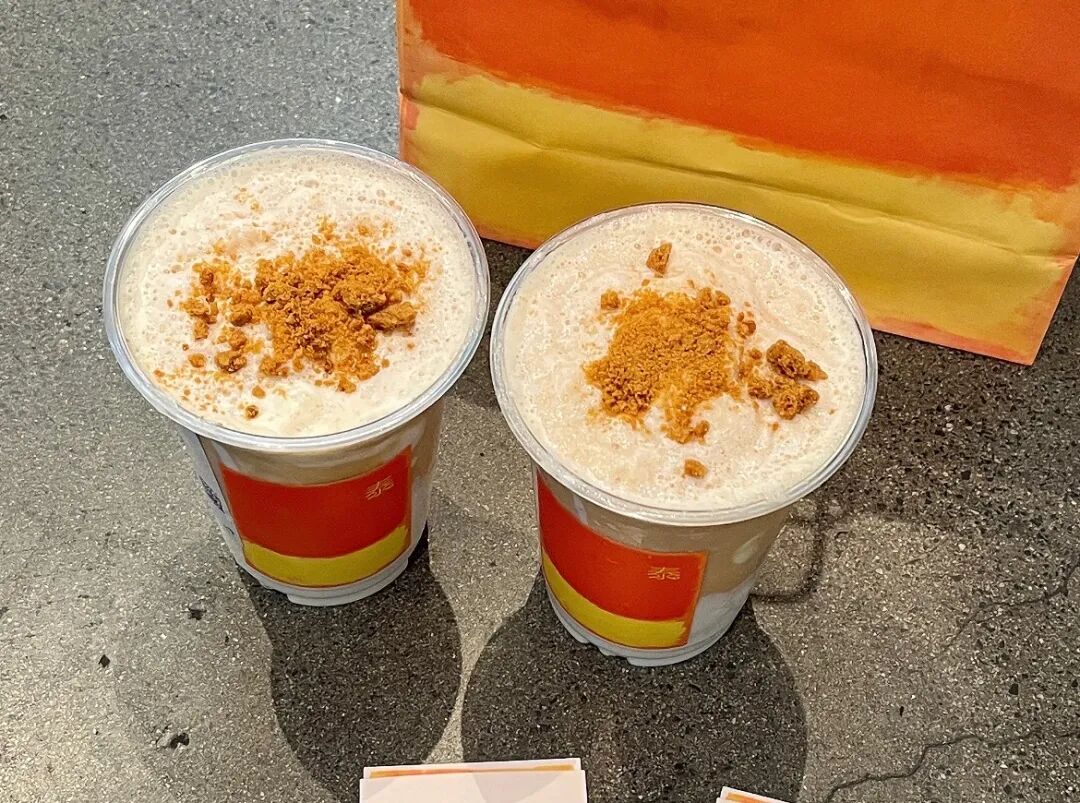
咸酪泰奶冰

Search documents
新茶饮集体去美国开店
Di Yi Cai Jing Zi Xun· 2025-12-25 14:56
Group 1: Industry Overview - The new tea beverage industry in China is expected to reach a market size of over 200 billion yuan by 2025, driven by increasing consumer demand and the entry of multiple brands into the capital market [3][4] - The industry is transitioning from incremental competition to stock competition, with a common phenomenon of "ten tea shops on one street" leading brands to seek differentiation [3][4] - New trends include the solidification and dessertification of beverages, with products like "solid mango sago" gaining popularity among consumers [4][5] Group 2: Market Dynamics - The launch of solid products like "solid mango sago" has led to significant sales, with one brand reporting over 8 million cups sold since its introduction [5] - The trend towards solid and dessert-like beverages aligns with younger consumers' preferences for health-conscious options, incorporating nutritious ingredients [5][6] - The competition in the Southeast Asian market has intensified, prompting brands to shift their focus to North America, where there is perceived growth potential [7][8] Group 3: International Expansion - Brands like Mixue Ice City have opened stores in North America, with strategic locations in Los Angeles and New York, marking a shift from previous focus on Southeast Asia [7][8] - The complexity of establishing overseas supply chains poses significant challenges for brands looking to expand internationally [8] - Successful internationalization requires understanding and catering to local consumer preferences, moving beyond just serving Chinese customers [8][9]

新茶饮集体去美国开店
第一财经· 2025-12-25 14:40
Core Viewpoint - The new tea beverage industry in China is experiencing two main paths of breakthrough in 2025: expanding internationally towards stronger consumer markets in Europe and America, and innovating product forms by solidifying and sweetening beverages to broaden consumption scenarios [3][5]. Group 1: Market Expansion and Capital Trends - 2025 is marked as the "capital year" for Chinese tea beverages, with four companies going public, including popular brands like Mixue Ice City and Bawang Tea [5]. - The domestic new tea beverage market is expected to exceed 200 billion yuan in 2025, indicating significant growth in consumer demand [5]. - The market is shifting from incremental competition to stock competition, with a saturation of tea shops in urban areas, leading brands to seek differentiation [6]. Group 2: Product Innovation and Consumer Trends - Brands are increasingly introducing differentiated products such as Thai milk tea and solid desserts, responding to the saturated market and changing consumer preferences [6]. - The popularity of solid desserts like "solid mango sago" has surged, with sales exceeding 8 million cups since its launch, indicating a shift towards more visually appealing and substantial products [7]. - The trend of "light health" among younger consumers is driving the popularity of sugar water products, which are perceived as healthier alternatives compared to traditional milk teas [7]. Group 3: International Expansion Strategies - New tea brands are increasingly targeting North America for expansion, moving away from the highly competitive Southeast Asian market [10][11]. - The establishment of a robust overseas supply chain is identified as a significant challenge for brands looking to expand internationally [11]. - Successful internationalization requires understanding and catering to local consumer preferences, with a focus on creating a genuine global brand presence [12].

年终盘点 | 新茶饮“红海”中求生存:抢滩北美市场、产品从“喝”拓展到“吃”
Di Yi Cai Jing· 2025-12-25 11:37
Group 1: Industry Trends - The new tea beverage industry is experiencing a dual path of expansion and internal competition, with brands seeking global presence while innovating product offerings to differentiate themselves in a saturated market [1][2] - The market size for new tea beverages in China is expected to exceed 200 billion yuan in 2025, indicating significant growth potential despite increasing competition [2] - The trend of "solidifying" and "dessertifying" beverages is emerging, with products like solid mango sago and various dessert teas gaining popularity among consumers [3][4] Group 2: Market Dynamics - The competition in the tea beverage market is shifting from incremental growth to a focus on existing market share, leading to a proliferation of similar stores in close proximity [2] - Brands are increasingly introducing differentiated products, such as salty milk tea and dessert-style offerings, to attract consumers and stand out in a crowded market [2][3] - The popularity of solid dessert drinks is linked to a growing consumer preference for visually appealing and ingredient-rich products, reflecting a shift towards "light health" trends [4] Group 3: International Expansion - The North American market is becoming a preferred destination for Chinese tea brands, moving away from the previously favored Southeast Asian markets due to intense competition [7][8] - Companies like Mixue Ice City and Bawang Chaji are establishing their first stores in the U.S., indicating a strategic shift towards markets with higher consumer spending power [6][7] - Successful internationalization requires a comprehensive approach involving the entire supply chain, rather than just individual brands attempting to enter foreign markets [8]
“殉葬风”页面引热议,喜茶为何总在“阴间”营销上翻车?
凤凰网财经· 2025-10-16 10:24
Core Viewpoint - The recent "funeral style" design of Heytea's new product has sparked significant public debate, with mixed reactions from consumers regarding its aesthetic and appeal [1][2][9]. Product Launch and Consumer Reaction - Heytea's new product "碎银子糯糯" (Shattered Silver Sticky) is based on Yunnan black gold Pu'er tea, and the black-and-white design was intended to align with its visual theme [2][3]. - Despite the controversy, some consumers expressed a desire to try the product, while others criticized the design as inappropriate for a brand like Heytea [2][8]. Marketing Strategy and Brand Image - This is not the first time Heytea has faced backlash for its "funeral style" designs; a previous product, "咸酪泰奶冰" (Salty Cheese Thai Milk Ice), also drew similar criticism [9][17]. - The brand's use of "negative energy marketing" aims to stand out in a saturated market, appealing to younger consumers who resonate with "mourning culture" as a form of emotional expression [20][21]. Company Background and Market Position - Founded in 2012, Heytea gained popularity with its innovative cheese tea and has undergone significant growth, attracting substantial investment and expanding its market presence [22][24]. - However, the brand has faced challenges in maintaining its premium image amid increasing competition and a shift towards lower-priced offerings [26][27]. - In response to market pressures, Heytea has made strategic decisions to lower prices and open franchises, but this has led to concerns about brand dilution and quality control [26][27]. Future Outlook - As the market landscape evolves, Heytea is at a crossroads, needing to balance its brand identity with competitive pressures while considering the potential for a return to its premium roots [27][28].

奶茶悄悄变“浓”,喜茶、沪上阿姨、1点点都在推这款
3 6 Ke· 2025-09-06 03:04
Core Insights - The tea beverage industry is experiencing a clear trend towards "richness" in product offerings for the autumn and winter seasons, with major brands launching new "rich" products [1][2][11] Product Innovations - Leading brands like Heytea and Shàngshàng Āyí are introducing new products that emphasize a rich flavor profile, utilizing ingredients such as cheese, butter, and yogurt to enhance the creamy taste [3][5] - The introduction of rich tea bases, such as matcha and Thai tea, is becoming increasingly popular, with brands like Heytea and Starbucks incorporating these flavors into their offerings [7][9] Consumer Preferences - The shift towards richer flavors reflects a change in consumer preferences, moving away from the previously dominant refreshing beverages to more satisfying and indulgent options [13][25] - The current trend emphasizes a balance of flavors, incorporating salty elements to avoid excessive sweetness and enhance the overall taste experience [14][16] Market Trends - The popularity of grain-based beverages, such as corn and rice drinks, is rising, as they provide a natural richness that aligns with consumer desires for satisfying yet not overly sweet options [22][24] - The "richness" trend is also creating opportunities for classic beverages to be reimagined, with brands focusing on high-value, regionally distinct ingredients to enhance product appeal [25] Future Outlook - The industry is expected to continue innovating around the themes of "rich dairy products + health-conscious ingredients + original tea bases + herbal elements," catering to evolving consumer tastes while maintaining a focus on richness [25]
肯德基 “殡葬风” 被嘲,市场部天塌了!
Xin Lang Cai Jing· 2025-09-01 19:23
Core Viewpoint - KFC's unconventional marketing strategy during the Ghost Festival has sparked significant online engagement and humor, contrasting with the traditional avoidance of ghost-related themes in Chinese culture [1][4][18]. Group 1: Marketing Strategy - KFC launched a "ghostly flavor" limited marketing campaign, which included a white cloth barrier resembling a funeral setting, leading to widespread social media reactions [1][2][4]. - The black-and-white barrier design, perceived as visually shocking, was quickly replaced with a more traditional red and white design after public backlash [16][18]. - This incident reflects KFC's long-standing approach of engaging consumers through dark humor and unconventional marketing tactics, which have previously included bizarre campaigns like the "finger" series and a mock funeral for soggy fries in Canada [19][21][30]. Group 2: Consumer Engagement - The humorous reactions from consumers included memes and jokes about the "death" of KFC chickens, showcasing the brand's ability to generate organic engagement through unexpected marketing [6][12][31]. - The incident has led to a broader discussion about how brands navigate cultural sensitivities, with some consumers questioning KFC's understanding of local customs [14][40]. - The spontaneous nature of the online discussions surrounding KFC's marketing highlights the effectiveness of creating controversy that encourages consumer participation, aligning with the current marketing trend of "black-red is still red" [39][40]. Group 3: Cultural Sensitivity - The juxtaposition of KFC's marketing with local cultural practices, especially during sensitive periods like the Ghost Festival, raises questions about brand awareness and cultural appropriateness [14][40]. - Similar to KFC, another brand, Heytea, faced unintended associations with ghostly themes due to its product packaging, demonstrating how brands can inadvertently tap into cultural narratives [32][39].

