
商业票据

Search documents
美元流动性紧张局面的成因与展望
Xin Lang Cai Jing· 2025-12-10 05:56
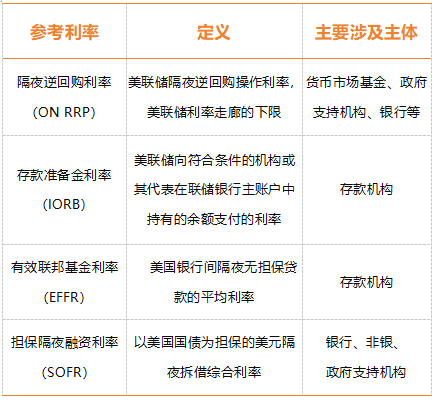
Core Viewpoint - Since 2025, the liquidity in the US money market has shifted from relative abundance to a phase of tightness, influenced by the Federal Reserve's quantitative tightening (QT) policy and US fiscal factors. However, factors causing dollar liquidity tightness are showing signs of improvement moving forward [1][18]. Group 1: Current State of Dollar Liquidity - The US money market liquidity has been tightening since 2025, primarily reflected in increased volatility and marginally higher financing costs in the repurchase (repo) market [2][20]. - The secured overnight financing rate (SOFR) has consistently exceeded the effective federal funds rate (EFFR) since September, indicating liquidity pressure in the repo market [2][21]. - The SOFR-EFFR spread reached 36 basis points (BP) on October 31, the highest since October 1, 2019, and has shown signs of remaining elevated, with an average of 9 BP as of November 21, compared to just 1 BP in August [2][20]. Group 2: Causes of Liquidity Tightness - The ongoing impact of the Federal Reserve's QT since June 2022 has transitioned from a quantitative to a qualitative effect, leading to a significant reduction in liquidity [6][27]. - The US Treasury General Account (TGA) balance has fluctuated significantly, with a notable decrease from $818 billion in February to around $3 billion, contributing to liquidity withdrawal from the market [8][26]. - The usage of the Standing Repo Facility (SRF) has surged, with daily averages of $11.5 billion and $6.5 billion during two periods of heightened market tension in 2025, indicating increased reliance on this tool amid tightening conditions [4][22]. Group 3: Implications and Future Outlook - The tightening of dollar liquidity is expected to impact financial markets, with potential adjustments in asset prices across equities, bonds, and cryptocurrencies due to rising financing costs [12][31]. - The Federal Reserve's recent decision to halt QT and the resumption of normal fiscal spending are expected to alleviate liquidity pressures in the near term [15][33]. - Future measures may include enhancing the effectiveness of the SRF and potentially resuming asset purchases to stabilize liquidity conditions, with indications that the Fed is closely monitoring the evolving liquidity landscape [16][34].

中资券商“必答题”:中信建投证券蒋月勤详解国际化破局之道
2 1 Shi Ji Jing Ji Bao Dao· 2025-12-07 01:49
Core Viewpoint - Internationalization is a crucial strategy for Chinese securities firms to achieve the goal of becoming world-class investment banks, as emphasized by the chairman of CITIC Securities International, Jiang Yueqin [1][2]. Group 1: Internationalization Strategy - Jiang Yueqin highlighted that the internationalization process of Chinese securities firms is aligned with national strategies and industry development, marking it as a necessary path to achieve international competitiveness [1][2]. - The China Securities Regulatory Commission has set a goal to establish 2 to 3 investment banks with international competitiveness by 2035, indicating that internationalization is not optional but essential for achieving top-tier status [1][2]. - As of mid-2025, the total assets of leading securities firms' overseas subsidiaries have increased by over 20%, reaching HKD 1.64 trillion, with most firms experiencing year-on-year growth in international business revenue [3]. Group 2: Historical Context and Current Opportunities - The internationalization of American investment banks began in the 1960s and 1970s, driven by internal competition and external globalization opportunities, which created significant demand for cross-border financial services [2]. - Chinese securities firms are currently facing unprecedented strategic opportunities for internationalization, responding to high-level opening-up policies and serving national strategies, with Hong Kong as the starting point for their international expansion [2]. Group 3: Practical Implementation - CITIC Securities International has successfully executed several high-impact projects, showcasing its cross-border comprehensive service capabilities, including significant IPOs and bond issuances [3][4]. - The firm has played a leading role in the Hong Kong IPO market, with notable projects such as the listing of "Lao Pu Gold" and "Horizon Robotics," achieving record speeds and substantial oversubscriptions [3][4]. Group 4: Future Development Trends - The development of internationalization should focus on becoming a "value investment bank," integrating financial functionality with profitability while creating comprehensive value for stakeholders [5][6]. - The transition to a "new quality investment bank" is necessary, emphasizing a shift from traditional services to a partnership model that supports clients throughout their lifecycle [7][8]. - Embracing the "digital investment bank" concept is essential, where data becomes a core asset, and leveraging AI and adaptive algorithms enhances decision-making precision [9]. Group 5: Pathways for Internationalization - The first pathway involves focusing on core advantages and developing differentiated strategies based on unique market positioning and resource endowments [11]. - The second pathway emphasizes strengthening local connections, moving from mere physical presence to deep integration within local business ecosystems [12]. - The third pathway stresses the importance of establishing compliance and risk management frameworks to navigate complex international environments effectively [13].

2025年有价证券诈骗罪十大无罪案例及无罪理由解析
Sou Hu Cai Jing· 2025-08-26 09:46
Group 1 - The core viewpoint of the cases is that the actions of the companies involved, while potentially misleading or resulting in losses for investors, do not constitute securities fraud due to lack of intent to illegally possess investors' funds [26][27]. - Companies facing allegations of fraud often demonstrate a willingness to communicate and resolve issues with investors, indicating no fraudulent intent [26][27]. - The judicial recognition of securities fraud requires clear evidence of both the subjective intent to illegally possess funds and objective fraudulent actions, with doubts leading to a presumption of innocence [26][27]. Group 2 - Misleading sales practices, such as exaggerating expected returns or failing to disclose risks, are categorized as sales misguidance rather than securities fraud, provided there is no intent to defraud [7][12]. - Companies that experience operational difficulties or system failures are not automatically deemed fraudulent, especially when they take corrective actions and communicate with affected parties [18][22]. - Regulatory bodies typically address violations of industry norms through administrative penalties rather than criminal charges, emphasizing the importance of evidence in fraud determinations [26][27].

摩根大通:多家企业出售商业票据来增加现金
news flash· 2025-05-05 18:16
Core Insights - The article highlights a significant increase in short-term debt issuance by companies in April, driven by economic uncertainty stemming from the Trump administration's tariff policies [1] Group 1: Debt Issuance - In April, non-financial commercial paper issuance surged by $100 billion, exceeding the average monthly issuance of $27 billion from 2019 to 2024 (excluding 2020) [1] - The spread between the highest-rated notes (referred to as Tier 1 bonds) and Treasury bills reached its widest level since August 2022 [1] - The spread between lower-rated notes (referred to as Tier 2 bonds) also hit its highest level since June 2023 [1]