
商品CTA

Search documents
金工策略周报-20260125
Dong Zheng Qi Huo· 2026-01-25 11:42
1. Report Industry Investment Rating - No relevant information provided. 2. Core Viewpoints - Last week, all Treasury bond futures contracts closed higher, with the 30 - year, 10 - year, 5 - year, and 2 - year main contracts rising by 1.24%, 0.14%, 0.09%, and 0.02% respectively. The basis of each variety widened. The sentiment slightly recovered, driving the strength of each Treasury bond variety. With the continuous policy support since the beginning of the year and the overall stable economic operation, the short - term upward momentum is strong, and the core factors such as intraday technology and basis are still dominated by bulls [6]. - In the domestic commodity market last week, there were more rising varieties. The top risers were lithium carbonate, styrene, silver, PTA, synthetic rubber and other precious metals and some energy - chemical products, while the biggest decliners were caustic soda, glass, and coking coal, with a decline of more than 3%. Commodity factors generally performed strongly, with the average return of factors reflecting long - term price trends exceeding 1%, and the long - short strength ratio of the change in the positions of leading members in the position - related factors also having a return of more than 1% last week. The two - year value factor and some volatility factors also showed strong performance. Due to external market disturbances, the volatility of commodity factor returns is increasing. Investors are advised to focus on several types of commodity factors with long - term expected return capabilities [26][29]. 3. Summary by Relevant Catalogs 3.1 Treasury Bond Futures Quantitative Strategy - **Market Review**: The 30 - year main contract rose 1.24%, the 10 - year main contract rose 0.14%, the 5 - year main contract rose 0.09%, and the 2 - year main contract rose 0.02% last week. The basis of each variety widened. The 10 - year CTD bond was 250018, with a basis of about 0.05 yuan on the 23rd, slightly lower than the seasonal level; the 30 - year CTD bond was 210005, with a basis of 0.35 yuan on the 16th, lower than the seasonal level [6]. - **Factor Sharpe Ratio**: For the 10 - year Treasury bond, the Sharpe ratios of the basis factor, risk asset, and member position in 2025 are 1.68, 1.93, and 0.59 respectively. For the 5 - year Treasury bond, the Sharpe ratios of high - frequency capital flow, intraday volume - price, risk asset, member position, and basis factor in 2025 are 2.51, 2.27, 1.71, 1.33, and 0.78 respectively. For the 2 - year Treasury bond, the Sharpe ratios of high - frequency capital flow, basis factor, intraday volume - price, and member position in 2025 are 2.45, 1.82, 1.59, and 0.82 respectively [6][18][19][20]. 3.2 Commodity CTA Factor and Strategy Performance - **Commodity Factor Performance**: Last week, there were more rising varieties in the domestic commodity market. The top risers were lithium carbonate, styrene, silver, PTA, synthetic rubber and other precious metals and some energy - chemical products, while the biggest decliners were caustic soda, glass, and coking coal, with a decline of more than 3%. Commodity factors generally performed strongly, with the average return of factors reflecting long - term price trends exceeding 1%, and the long - short strength ratio of the change in the positions of leading members in the position - related factors also having a return of more than 1% last week. The two - year value factor and some volatility factors also showed strong performance. The volatility of commodity factor returns is increasing [26][29]. - **Tracking Strategy Performance**: - CWFT strategy: Annualized return of 9.3%, Sharpe ratio of 1.60, Calmar of 1.06, maximum drawdown of - 8.81%, recent one - week return of 0.62%, and year - to - date return of 0.83% [27]. - C_frontnext & Short Trend strategy: Annualized return of 11.2%, Sharpe ratio of 1.71, Calmar of 1.67, maximum drawdown of - 6.72%, recent one - week return of - 0.48%, and year - to - date return of - 0.07% [27]. - Long CWFT & Short CWFT strategy: Annualized return of 12.1%, Sharpe ratio of 1.36, Calmar of 0.92, maximum drawdown of - 13.07%, recent one - week return of 0.45%, and year - to - date return of 0.71% [27]. - CS XGBoost strategy: Annualized return of 5.4%, Sharpe ratio of 0.90, Calmar of 0.28, maximum drawdown of - 19.39%, recent one - week return of - 0.68%, and year - to - date return of - 3.16% [27]. - RuleBased TS Sharp - combine strategy: Annualized return of 11.6%, Sharpe ratio of 1.52, Calmar of 1.41, maximum drawdown of - 8.26%, recent one - week return of - 1.04%, and year - to - date return of - 0.59% [27]. - RuleBased TS XGB - combine strategy: Annualized return of 11.4%, Sharpe ratio of 1.99, Calmar of 2.54, maximum drawdown of - 4.49%, recent one - week return of - 0.63%, and year - to - date return of - 1.92% [27]. - CS strategies, EW combine strategy: Annualized return of 12.6%, Sharpe ratio of 1.80, Calmar of 1.71, maximum drawdown of - 7.38%, recent one - week return of 0.30%, and year - to - date return of 0.91% [27]. - **Strategy Position Details**: Each strategy has specific position details such as the number of position varieties, net position, total position return, winning rate, and performance of individual varieties last week, as well as the number of position varieties, net position, number of varieties to be rolled over, and total turnover capital ratio this week [34][36][38][40][42][44]. - **Best - Performing Strategies**: The best - performing strategy last week and year - to - date was CWFT. The equal - weighted composite strategy of the above cross - sectional strategies has an annualized return of 12.6%, a Sharpe ratio of 1.80, a Calmar of 1.71, a maximum drawdown of - 7.38%, a recent one - week return of 0.30%, and a year - to - date return of 0.91% [47].
CTA和CTA之间为啥差距那么大?4个维度理清楚
雪球· 2026-01-24 03:50
Core Viewpoint - The article discusses the differentiation within CTA (Commodity Trading Advisor) products, emphasizing that not all CTA products perform equally due to their varied classifications and strategies [3]. Group 1: Dimensions of CTA Products - Dimension One: Asset Class - Stock index CTAs face a limited market with few varieties, leading to constrained strategy space, while commodity CTAs benefit from a diverse market with over 50 varieties, allowing for various strategies [7][11]. - Stock index CTAs are influenced by policies, which can restrict their operational space, but they can provide stable strategies during certain market conditions [9][10]. - Dimension Two: Strategy Type - Trend strategies focus on price momentum over time, while arbitrage strategies focus on relative price relationships between different assets [13]. - The ideal environment for trend strategies is characterized by volatility expansion and strong trends, while arbitrage strategies thrive in low correlation and structural differentiation [15][18]. - Dimension Three: Decision-Making Approach - Subjective CTAs rely heavily on the fund manager's judgment and typically have higher volatility, while quantitative CTAs focus on statistical advantages and tend to have lower volatility [19][20]. - The performance distribution of subjective CTAs is wider, indicating greater variability in returns compared to quantitative CTAs [21][23]. - Dimension Four: Risk Exposure - The leverage level in CTA products is crucial, as it determines the risk and potential returns. Lower leverage results in more stable returns, while higher leverage can amplify both gains and losses [25][28]. Group 2: Performance and Strategy Analysis - The article highlights that different CTA strategies have low correlations, which can provide diversification benefits in various market conditions [29][30]. - It emphasizes the importance of understanding which specific dimension of a CTA product is performing well or poorly, as this can indicate whether the strategy is suitable for current market conditions [31][32]. Group 3: Investment Strategy Recommendations - Investors are advised to consider a diversified approach by selecting multi-asset and multi-strategy products, balancing between trend, arbitrage, commodity, and stock index CTAs [33][34]. - The article suggests that investors should align their CTA selections with their overall investment portfolio, ensuring that they understand their own needs and risk tolerance [34].


基金早班车丨新债中签收益率创八年新高,可转债打新难度同步升级
Jin Rong Jie· 2025-12-26 00:51
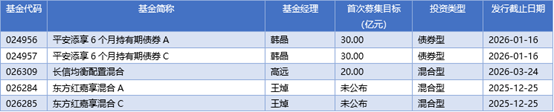
Group 1: Market Overview - The A-share market has shown signs of recovery, positively impacting the convertible bond market, with new bonds achieving record performance. The average first-day increase for convertible bonds listed in 2025 reached 37%, marking the highest yield since 2018. The subscription rate has dropped to 0.0048%, indicating a significant increase in the difficulty of new bond issuance [1] - On December 25, the Shanghai Composite Index opened lower but closed higher, recording a seven-day winning streak. The index rose by 0.47% to 3959.62 points, while the Shenzhen Component Index and the ChiNext Index increased by 0.33% and 0.3%, respectively. The total trading volume in both markets reached 19,245.23 billion yuan, an increase of 44.3 billion yuan from the previous trading day [1] Group 2: Fund News - On December 25, five new funds were launched, primarily mixed and bond funds. The Ping An Tianxiang 6-month holding period bond A fund aimed to raise 3 billion yuan. A total of 77 funds distributed dividends, with the highest dividend payout being 6.5420 yuan per 10 fund shares from the Shanghai 5-year Treasury ETF [2][4] - The bond market in 2025 is expected to have thin yields and increased volatility, highlighting the value of "fixed income +". This strategy, which includes a small equity position to hedge against rising interest rates, has yielded returns of 4%-6%, outperforming pure bond indices by over 3 percentage points [2] Group 3: Performance of Multi-Asset Strategies - As of December 12, nearly 1500 multi-asset strategy products reported an average annual return of 19.55%, with over 90% achieving positive returns. Leading institutions have consistently surpassed 30% returns for two consecutive years, indicating strong performance in this strategy [3] - Looking ahead to 2026, top private equity firms anticipate a complex macro environment with continued high volatility in stock, bond, and commodity prices. They plan to enhance strategy diversification and dynamically adjust risk budgets to capture absolute returns through various assets, including convertible bonds and REITs [3]
东证期货金工策略周报-20251130
Dong Zheng Qi Huo· 2025-11-30 12:52
1. Report Industry Investment Rating No relevant content provided. 2. Core Viewpoints of the Report - The stock index futures market rebounded significantly last week, with different industries contributing to the gains of various indices. The trading volume of each variety decreased month - on - month, and the basis weakened. It is recommended to pay attention to the inter - period positive arbitrage opportunities, and the roll - over strategy recommends going long on the near - term contract and short on the far - term contract. The cross - variety arbitrage time - series synthetic strategy's net value remained flat last week, and new signals were given. The daily timing strategy generally made profits last week, but the new signals of the timing model showed a significant increase in the degree of bearishness [3][4][5][6][7]. - In the bond futures market, the IRR of bond futures decreased this week, the basis strengthened, and the inter - period spread fluctuated weakly. Attention can be paid to the positive arbitrage space caused by the slight expansion of the inter - period spread. The daily timing strategy signals were mainly long last week, and the interest rate timing signals predicted an upward trend in interest rates [42][43][44]. - In the commodity market, last week, the commodity market generally had more gains than losses. The momentum and term - structure factors performed well, and the volume - price trend and some value - based factors had the largest increase. There may be a risk of factor return retracement in the short term, but the long - term performance of commodity factors is still optimistic. Different tracking strategies have different performance indicators [57][58]. 3. Summaries According to Relevant Catalogs 3.1 Stock Index Futures 3.1.1 Market Review - The market rebounded significantly last week. Electronics and non - ferrous metals contributed to the main gains of the SSE 50; electronics and communications contributed to the main gains of the CSI 300; electronics and power equipment contributed to the main gains of the CSI 500 and CSI 1000 [3]. - The trading volume of each variety decreased month - on - month, and the basis weakened. IF maintained a shallow discount, while IC and IM maintained a deep discount [4]. 3.1.2 Basis Strategy Recommendation - The basis of each variety weakened. It is expected that the deep discount pattern of IC and IM will continue. It is recommended to pay attention to the inter - period positive arbitrage opportunities, and the roll - over strategy recommends going long on the near - term contract and short on the far - term contract [4]. 3.1.3 Arbitrage Strategy Tracking - In the inter - period arbitrage strategy, the net value of each strategy generally made profits last week. The annualized basis rate, positive arbitrage, and momentum factor made profits of 0.4%, 0.1%, and 0% (6 - times leverage) respectively. The annualized basis rate factor turned to a positive arbitrage signal [5]. - The cross - variety arbitrage time - series synthetic strategy's net value remained flat last week. The new cross - variety signals recommend a 50% position to go long on IF and short on IC, and a 100% position to go long on IM and short on IC [6]. 3.1.4 Timing Strategy Tracking - The daily timing strategy generally made profits last week. The SSE 50, CSI 300, CSI 500, and CSI 1000 had losses of 1.0%, 0.4%, and profits of 1.0%, 0.6% respectively. The new signals of the timing model showed a significant increase in the degree of bearishness, and the model was bearish on the SSE 50, CSI 300, and CSI 500 [7]. 3.2 Bond Futures 3.2.1 Basis and Inter - period Spread - The IRR of bond futures decreased this week, the basis strengthened, and the inter - period spread fluctuated weakly. Attention can be paid to the positive arbitrage space caused by the slight expansion of the inter - period spread [42]. 3.2.2 Unilateral Strategy - The bond futures market fluctuated last week. The daily timing strategy signals were mainly long. The main bullish factors included the basis, intraday volume - price, and high - frequency capital flow, while the main bearish factors included daily technicals and member positions [43]. 3.2.3 Interest Rate Timing Signal - The interest rate timing signals predicted an upward trend in interest rates, with a relatively high proportion of long positions in the production factor and inventory factor [44]. 3.3 Commodity Market 3.3.1 Commodity Factor Performance - Last week, the commodity market generally had more gains than losses. Glass, polysilicon, methanol, and silver had significant increases, while coking coal had a significant decline. The momentum and term - structure factors performed well, and the volume - price trend and some value - based factors had an average increase of more than 0.5%. The warehouse - receipt factors also increased slightly, while other factors decreased slightly. There may be a risk of factor return retracement in the short term, but the long - term performance of commodity factors is still optimistic [57]. 3.3.2 Tracking Strategy Performance - Different tracking strategies have different performance indicators. For example, the CWFT strategy has an annualized return of 9.4%, a Sharpe ratio of 1.62, a Calmar ratio of 1.07, a maximum drawdown of - 8.81%, a recent one - week return of 0.11%, and a year - to - date return of 4.53% [58].