四足机器人A2

Search documents
5家坤元资产FOF生态伙伴闪耀CES 2026 中国智造称霸国际舞台
Cai Fu Zai Xian· 2026-01-13 08:58
Core Insights - The 2026 International Consumer Electronics Show (CES) showcased groundbreaking technologies and products, highlighting the advancements in AI, robotics, and smart living, with a significant presence of Chinese manufacturing companies [1][2][10]. Group 1: Event Overview - CES 2026 featured over 4,500 companies from more than 150 countries, focusing on AI, chips, automotive, and robotics, with a notable emphasis on the integration of AI and hardware [2]. - Chinese exhibitors numbered 942, accounting for 22% of the total, reflecting a new landscape of "full industry chain coverage" and increased global influence of Chinese manufacturing [2]. Group 2: Key Exhibitors and Technologies - Cloudwalk Technology showcased its UP robot, marking the first large-scale service by a Chinese service robot at a global landmark [4]. - Yushun Technology presented a series of humanoid robots, including the G1 combat robot, which drew significant attention for its agility and performance [4]. - Hesai Technology displayed its upgraded ATX laser radar, featuring enhanced performance metrics, including a range of 230 meters and a point frequency of 3.84 million points per second [7][8]. Group 3: Market Position and Growth - Hesai Technology announced plans to double its laser radar production capacity from 2 million units in 2025 to 4 million units in 2026, with a new factory in Bangkok expected to start production in early 2027 [8]. - Black Sesame Intelligence demonstrated its A2000 driving assistance chip and showcased its multi-dimensional intelligent computing platform, emphasizing its role in the smart automotive sector [9]. Group 4: Industry Trends and Future Outlook - The collective presence of Chinese tech firms at CES 2026 signifies a shift from "individual efforts" to "ecosystem collaboration," showcasing a higher maturity and openness in global operations [10]. - The report indicates that by 2025, China's overseas sales of automobiles, particularly electric vehicles, are expected to reach 2.32 million units, marking a 52% year-on-year increase [11]. - The global market for humanoid robots is projected to see over 13,300 units shipped in 2025, with Chinese manufacturers contributing over 90% [11]. Group 5: Capital and Investment - The success of Chinese tech firms at CES 2026 is attributed to long-term capital support, with 90% of companies on the Sci-Tech Innovation Board receiving venture capital investments [13]. - The Chinese government is focusing on integrating technology innovation with industrial development, emphasizing early and sustained investment in hard tech [13][14]. - Kun Yuan Asset has supported 95 companies in entering capital markets, with a significant portion in the hard tech sector, demonstrating a strong ecosystem effect [14].


向“新”而行 加“数”奔腾
Ren Min Ri Bao· 2025-12-25 20:34
Group 1 - The core viewpoint of the article emphasizes the rapid development of China's digital economy and the integration of digital technologies across various industries, leading to significant advancements in artificial intelligence, robotics, and digital infrastructure [6][7][10][12][14]. Group 2 - In 2025, the wave of digitalization continues, with humanoid robots increasingly integrated into diverse scenarios, from performances to sports, showcasing accelerated application [6]. - The comprehensive strength of artificial intelligence in China has seen a systematic leap, with new infrastructure construction progressing in an orderly manner [7]. - The DeepSeek model, launched in January, gained over 22.15 million active users within 21 days, demonstrating significant user engagement and technological advancement [8]. - China has become the largest holder of AI patents globally, accounting for 60% of the total, indicating a strong position in AI technology [8]. - By the end of November, China had 4.83 million 5G base stations, a net increase of 579,000 from the previous year, representing 37.4% of all mobile base stations [9]. - The total number of intelligent computing centers in China reached 10.85 million standard racks, with a computing power scale of 788 EFLOPS [9]. - The digital economy in China remains the second largest in the world, with significant improvements in technological innovation, industrial competitiveness, and international influence [9]. Group 3 - The digitalization of various industries is reshaping China's economic landscape, with significant growth in high-tech manufacturing and smart consumer devices [11]. - The production value of high-tech manufacturing increased by 9.2% year-on-year from January to November, while the production of industrial robots surged by 29.2% [11]. - The integration of digital technologies in traditional and emerging industries is driving new growth momentum, with over 7,000 advanced intelligent factories established nationwide [12]. - The agricultural sector is also experiencing innovation, with 62 types of intelligent equipment achieving breakthroughs, enhancing productivity [13]. Group 4 - Digital services are enhancing public welfare, with initiatives like the two-way referral information platform improving healthcare access for patients [14]. - The implementation of self-service terminals in public service centers is streamlining processes, allowing citizens to access services more efficiently [15]. - Digital technologies are transforming daily life and leisure activities, with smart community services and digital consumption trends emerging [16][17]. Group 5 - China is actively promoting international cooperation in digital economy, with the "Suhao Cloud" platform facilitating cross-border e-commerce and achieving over 220% growth in trade volume [18][19]. - The establishment of partnerships with 36 countries under the "Silk Road e-commerce" initiative is enhancing global e-commerce collaboration [19]. - China is participating in the construction of digital rules on a multilateral stage, signing memorandums of understanding with multiple countries to strengthen digital economic cooperation [20][21].

世界机器人大会看点多 中国逆势增长成最大亮点
智通财经网· 2025-08-09 23:36
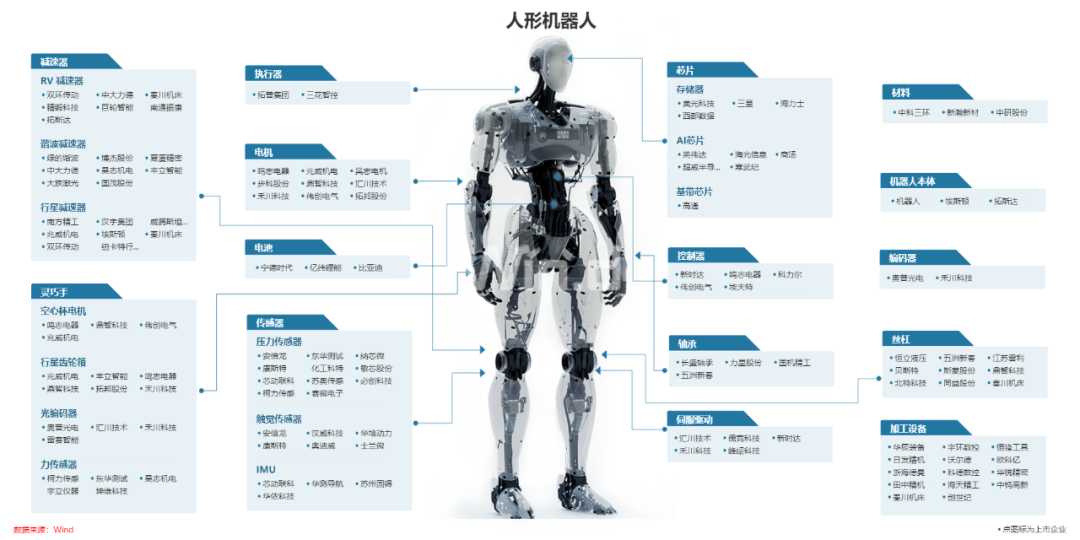
Group 1: Event Overview - The 2025 World Robot Conference gathered over 200 domestic and international robot companies showcasing more than 1,500 exhibits, including over 100 new product launches and 50 humanoid robot manufacturers, marking a record for similar events [1] Group 2: Industry Insights - The global industrial robot installation volume decreased by 3% last year, totaling approximately 523,000 units, with declines in Asia (2%), Europe (6%), and the Americas (9%), while China emerged as the only growth market [4] - China's industrial robot installation volume is expected to reach around 290,000 units in 2024, representing a 5% increase and raising its global market share from 51% in 2023 to 54% [4] - The sales volume of industrial robots in China is projected to reach 302,000 units in 2024, maintaining its position as the largest industrial robot market globally for 12 consecutive years [5] - China is the world's largest robot producer, with industrial robot production increasing from 33,000 units in 2015 to 556,000 units in 2024, and service robot production reaching 10.519 million units, a year-on-year growth of 34.3% [6] Group 3: Company Developments - JD.com, as the exclusive global strategic partner of the conference, announced an investment of over 10 billion yuan in the smart robot sector, aiming to assist 100 robot brands in achieving sales of over 1 billion yuan within three years [7] - New products showcased by Yushu Technology included humanoid robot R1 and quadruped robot A2, with R1 priced at 39,900 yuan and capable of complex actions like punching and running [8] Group 4: Technological Advancements - The humanoid robot AI development is currently at a stage similar to the early years before the launch of ChatGPT, with expectations that a breakthrough could occur within the next 1 to 5 years [2][3] - The National and Local Co-built Humanoid Robot Innovation Center presented the "Qinglong" humanoid robot product matrix, including the first full-size open-source humanoid robot [9] Group 5: Industry Chain - The humanoid robot industry chain consists of over 10 major component categories, including reducers, dexterous hands, actuators, motors, sensors, chips, and controllers, involving more than a hundred related companies [10] - Long-term industry growth is anticipated due to optimization of the supply chain and enhancement of global competitiveness, with a focus on core components and application scenarios like logistics and healthcare [12]


最新动态速览!世界机器人大会看点多
Wind万得· 2025-08-09 22:39
Core Viewpoint - The 2025 World Robot Conference showcased over 1,500 exhibits from more than 200 domestic and international robot companies, highlighting the latest technological achievements and industry solutions in robotics [1] Group 1: Industry Trends - The global industrial robot installation volume decreased by 3% last year, totaling approximately 523,000 units, with declines in Asia (2%), Europe (6%), and the Americas (9%). In contrast, China is the only market showing growth, with an expected increase of 5% in 2024, reaching around 290,000 units [5] - China's share of the global industrial robot market is projected to rise from 51% in 2023 to 54% in 2024, maintaining its position as the largest industrial robot market for 12 consecutive years [5] - The production of industrial robots in China has surged from 33,000 units in 2015 to an estimated 556,000 units in 2024, while service robot production reached 10.52 million units, marking a year-on-year growth of 34.3% [5] Group 2: Technological Developments - The founder of Yushu Technology, Wang Xingxing, emphasized that the current limitations in humanoid robots stem from insufficient embodied intelligence AI, which restricts large-scale applications [3] - The development of humanoid robot AI is likened to the early years before the emergence of ChatGPT, indicating that the industry is on the verge of a breakthrough within the next 1 to 5 years [3] - Yushu Technology aims to create versatile humanoid robots applicable in various scenarios, including factories, performances, and homes, rather than being limited to single-use cases [3] Group 3: Exhibits and Innovations - JD.com, as the exclusive global strategic partner, announced a plan to invest over 10 billion yuan in the smart robot sector, aiming to help 100 robot brands achieve sales exceeding 1 billion yuan within three years [7] - The conference featured innovative products such as the humanoid robot R1, priced at 39,900 yuan, capable of complex actions like punching and running, showcasing advancements in multi-modal AI integration [8] - The National and Local Joint Human-Robot Innovation Center presented the "Qinglong" humanoid robot product matrix, including the first full-size open-source humanoid robot, indicating significant progress in domestic robotics innovation [10] Group 4: Industry Chain Insights - The humanoid robot industry involves over 100 companies across various components, including reducers, dexterous hands, actuators, motors, sensors, chips, and controllers, with many listed companies participating in the market [11] - Long-term industry growth is anticipated due to optimization of the supply chain and enhancement of global competitiveness, with a focus on core components and application scenarios like logistics and healthcare [13]

王兴兴:当机器人能大量劳作的时候 机器人企业应缴纳“劳作税”
Jing Ji Guan Cha Bao· 2025-08-09 10:13
Group 1 - The core viewpoint of the article is that the global robotics industry is experiencing explosive growth, with an average increase of 50%-100% in the first half of the year, driven by policy support and market demand [2] - The main challenge for robotics companies is not hardware but the development of AI intelligent models, which are crucial for enhancing the capabilities of robots to perform tasks autonomously [2][3] - Current AI models in robotics are still in their early stages, comparable to the period 1-3 years after the release of ChatGPT, indicating significant room for improvement [2] Group 2 - The focus of intelligent robotics technology should be on end-to-end embodied intelligent AI models, lower-cost and longer-lasting hardware, and distributed large-scale computing power [3] - The company aims to make robots more productive and accessible, with a pricing strategy that encourages wider adoption [4] - The company has introduced two new products, the humanoid robot R1 and the quadruped robot A2, and is considering the economic implications of robots replacing human labor, including taxation based on the value generated by robots [5] Group 3 - The company is preparing for an IPO, viewing it as a significant milestone in its growth and management maturity, marking over nine years since its establishment [5]

新展品 新玩家 新业态 新趋势 机器人总动员:一场科技的盛宴
Shang Hai Zheng Quan Bao· 2025-08-08 18:55
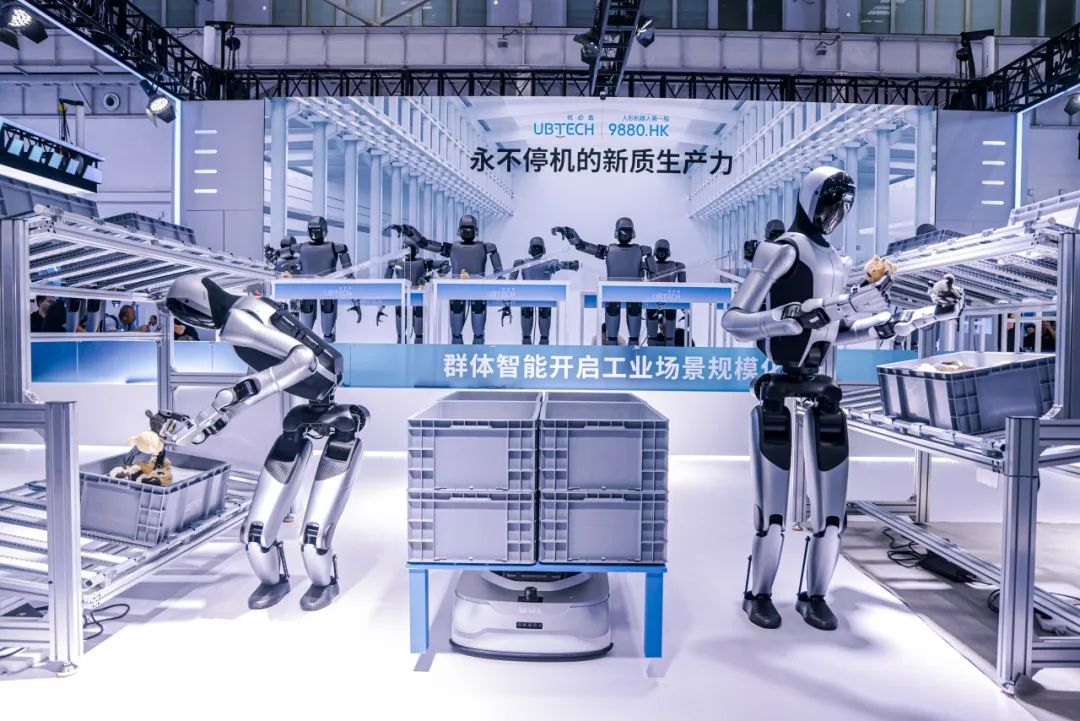
Core Insights - The 2025 World Robot Conference (WRC) opened with over 200 companies showcasing more than 1,500 exhibits, emphasizing the rapid development of a complete industrial chain in embodied intelligence [5][7] - Major players like UBTECH and Yushutech presented innovative humanoid robots, highlighting advancements in automation and the growing demand for industrial humanoid robots [6][12] - The event marked a shift from showcasing technology to practical applications, indicating that robots are moving from mere demonstrations to real-world problem-solving capabilities [12][13] Company Highlights - UBTECH showcased five humanoid robots and introduced a group intelligence technology for multi-task industrial scenarios, predicting a delivery volume of around 500 industrial humanoid robots in 2025, a 50-fold increase from 2024 [6][12] - Yushutech launched its A2 quadruped robot and R1 humanoid robot, with the R1 priced at 39,900 yuan, demonstrating advanced movement capabilities [7][8] - JD.com made a significant presence at WRC, announcing an investment of over 10 billion yuan in the smart robot sector and setting ambitious sales targets for robot brands [8][10] Industry Trends - The conference highlighted a trend towards integrating embodied intelligence across various sectors, with companies like Hesai Technology and Suteng Technology showcasing laser radar products for humanoid robots [8][9] - The emergence of the Robot Mall, a 4S store for robots, signifies a new retail model that combines sales, service, and customer experience in the robotics industry [10][11] - The focus of the conference shifted from flashy demonstrations to practical applications, with robots now capable of performing complex tasks, indicating a maturation of the industry [12][13]


宇树科技新品,全球首秀
Shang Hai Zheng Quan Bao· 2025-08-08 13:23
Core Insights - The 2025 World Robot Conference (WRC) opened with over 200 companies showcasing more than 1,500 exhibits, focusing on the theme of making robots smarter and bodies more intelligent [1][9] - Leading companies in the robotics sector presented their latest innovations, highlighting advancements in humanoid robots and their applications in various industries [3][5] Group 1: Key Exhibitors and Innovations - UBTECH showcased five humanoid robots and introduced group intelligence technology for industrial applications, predicting a delivery volume of 500 humanoid robots by 2025, a 50-fold increase from 2024 [5] - Unitree Technology presented its quadruped robot A2 and humanoid robot R1, with R1 priced at 39,900 yuan and capable of complex movements like handstands [7] - Galaxy General demonstrated multiple applications for its robots, including parts sorting and automated bottle collection, with a focus on enhancing operational efficiency [9] Group 2: New Market Players and Collaborations - JD.com made a significant presence at WRC, launching an "Intelligent Robot Industry Acceleration Plan" with over 10 billion yuan investment aimed at helping 100 robot brands achieve over 1 billion yuan in sales within three years [12] - Laser radar companies like Hesai Technology and SUTENG showcased their products for humanoid robots, emphasizing the importance of laser radar in enhancing robot perception and decision-making capabilities [12] Group 3: Emerging Business Models - The "Robot Restaurant" opened at WRC, featuring various types of robots for service and entertainment, enhancing customer interaction [16] - The world's first humanoid robot 4S store, Robot Mall, commenced operations, offering a comprehensive service model that includes sales, spare parts, and after-sales service for over 50 robot products [17]