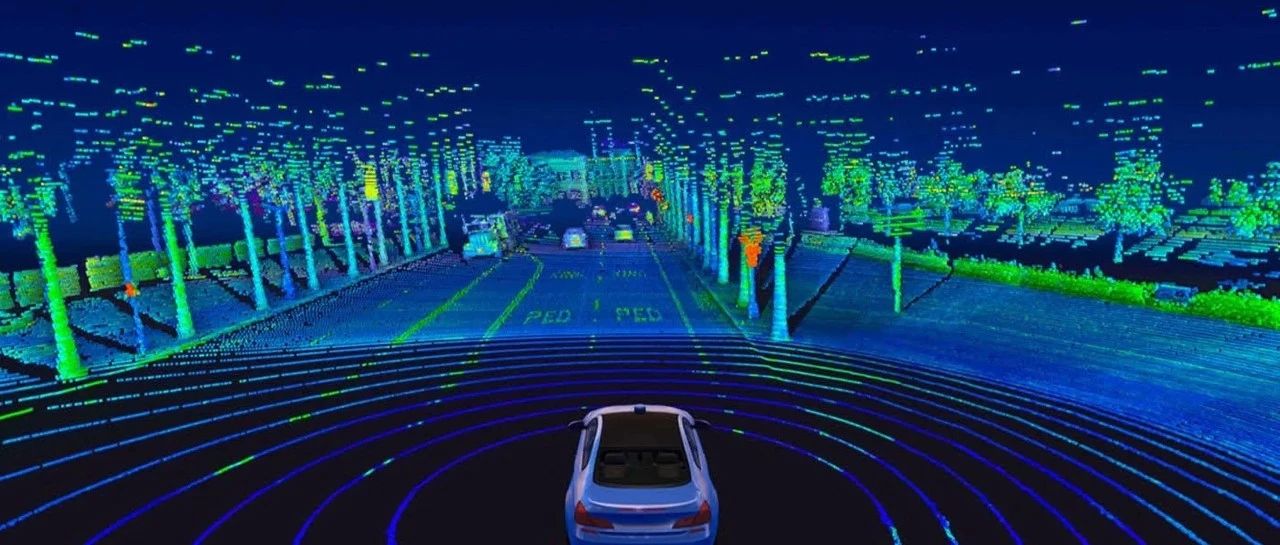
地平线J6M芯片

Search documents
深蓝汽车L06搭载地平线芯片 余凯与邓承浩直播测试
Zhong Guo Jing Ying Bao· 2025-11-22 05:54
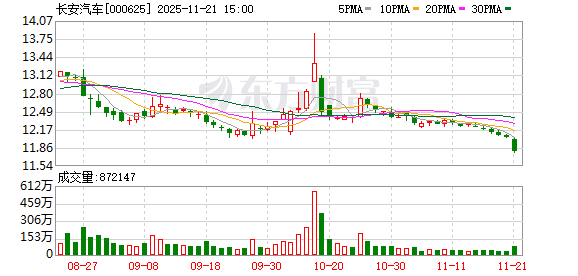
Core Insights - The launch of the Deep Blue L06 at the 2025 Guangzhou Auto Show marks a significant step in the integration of advanced intelligent driving technologies in mainstream vehicles [2][3] - The DEEPAL AD Max system, developed through collaboration between Horizon, Deep Blue, and Changan, utilizes advanced algorithms to provide comprehensive intelligent driving assistance [2] - The automotive industry is witnessing a shift towards the democratization of high-level intelligent driving technologies, with a goal to make these features accessible to ordinary consumers by 2025 [3] Company Developments - Deep Blue has introduced four models of the L06, priced between 132,900 and 154,900 yuan, all equipped with laser radar and advanced driving assistance systems [2] - Horizon's market share in China's autonomous driving computing solutions for domestic brands has reached 32.4% as of mid-2025, indicating strong growth and adoption of their technology [3] - Despite a revenue increase of 67.6% to 1.567 billion yuan in the first half of 2025, Horizon reported an expanded loss of 5.233 billion yuan, highlighting the challenges faced in achieving profitability [4] Industry Trends - The intelligent driving sector is rapidly evolving, with increasing competition and technological breakthroughs driving the adoption of these systems in non-premium vehicles [3] - The collaboration among multiple automotive manufacturers, including Changan, Chery, Volkswagen, and NIO, reflects a broader industry trend towards providing mature and efficient intelligent driving solutions [3] - The emphasis on user experience is becoming a key differentiator in the automotive market, as companies strive to enhance the practical application of intelligent driving technologies [3]

聊过十多位大佬后的暴论:自动驾驶还有很多事情没做,转行具身大可不必!
自动驾驶之心· 2025-07-09 12:56
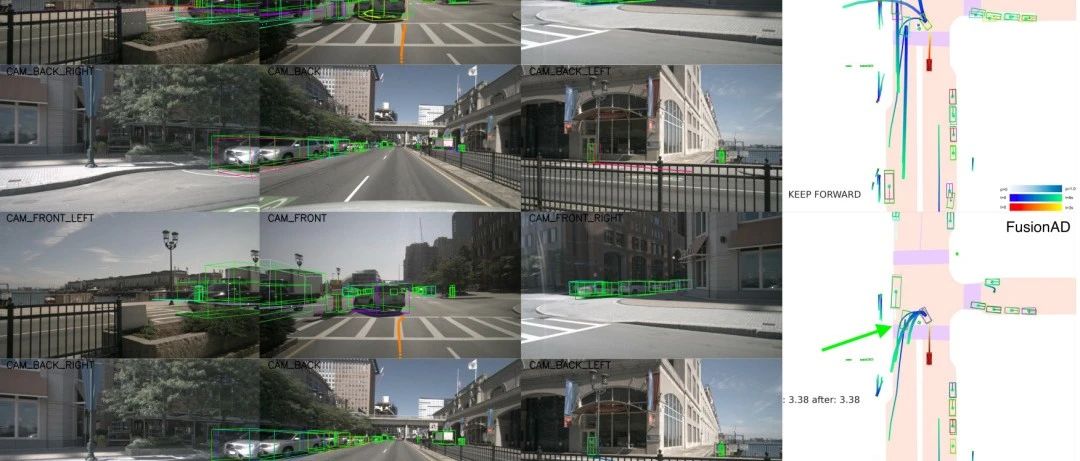
Core Viewpoint - The article discusses the current state and future directions of autonomous driving technology, emphasizing the maturity of certain technologies like BEV and the emerging focus on VLA/VLM, while highlighting the challenges in corner case handling and the need for robust models [2][11][37]. Group 1: Current Technology Maturity - The BEV (Bird's Eye View) perception model is considered fully mature and widely adopted in the industry, effectively handling dynamic and static perception tasks [11][45]. - The introduction of VLA (Vision-Language Alignment) is seen as a promising approach to address corner cases, although its practical effectiveness remains under scrutiny [4][28]. - There is a consensus that while end-to-end models are usable, they cannot be solely relied upon for production due to their limitations in handling complex scenarios [37][45]. Group 2: Emerging Technologies - New technological directions such as VLA/VLM (Vision-Language Model) and diffusion models are being explored to enhance the capabilities of autonomous driving systems, particularly in complex environments [16][18][42]. - The integration of world models is recognized as essential for improving data generation and model training, addressing the high costs associated with real data collection [42][49]. - The industry is also focusing on closed-loop simulations to validate models before deployment, which is crucial for ensuring safety and reliability [44][48]. Group 3: Challenges and Gaps - A significant challenge remains in effectively addressing corner cases, with many companies still struggling to demonstrate robust performance in these scenarios [11][33]. - There is a noted gap between academic research and industrial application, particularly in data sharing and validation of new models like VLA [4][28]. - The efficiency of models is a critical concern, as larger models may not meet latency requirements while smaller models may lack necessary capabilities [5][37]. Group 4: Future Directions - The future of autonomous driving technology is expected to focus on enhancing safety, user experience, and comprehensive scene coverage, with a shift towards data-driven approaches [26][30]. - The industry is likely to see a transition from algorithm-centric development to data-driven efficiency, emphasizing the importance of robust data operations [26][30]. - There is an ongoing debate about whether to deepen expertise in autonomous driving or pivot towards embodied intelligence, with both fields offering unique opportunities [21][41].
高通,被中国车圈“卷”飞
虎嗅APP· 2025-07-04 13:50
Core Insights - Qualcomm's historical performance in specific sectors often depends on external factors, as seen in the smartphone and PC markets, where partners like Samsung and Xiaomi played crucial roles in establishing Snapdragon's dominance [1][2] - In the smart automotive sector, the decision-making power has shifted to numerous Chinese players in the intelligent driving space, indicating a change in the dynamics of industry leadership [2][4] Qualcomm's Position in the Automotive Industry - Qualcomm's recent Automotive Technology and Cooperation Summit showcased a comprehensive map of the Chinese smart automotive industry, highlighting the involvement of various key players from OEMs to software partners [4] - Unlike its previous role in the smartphone era, Qualcomm now finds itself propelled by the strength of its Chinese partners, who are becoming the main drivers of the ecosystem [4] Chip Development and Market Dynamics - The newly released Snapdragon 8797 chip represents a shift from Qualcomm's traditional product positioning, serving as a flexible "integrated central computing platform" rather than a dedicated driving chip [7] - The Snapdragon 8797 boasts an estimated sparse equivalent computing power exceeding 700 TOPS, meeting the performance needs for both cockpit and driving functions [7] - Chinese partners are pushing for stronger AI performance, leading some to adopt the more powerful 8797 chip for cockpit solutions instead of the previously announced 8397 [7][10] Competitive Landscape - The competitive landscape is characterized by a mix of Qualcomm's and Nvidia's offerings, with Qualcomm's 8620 and 8650 chips becoming popular choices among traditional automakers seeking cost-effective solutions [12][14] - Despite Qualcomm's slower product rollout compared to competitors, its mid-tier advantages in cost and energy efficiency are notable, especially in the 100-250 TOPS range [14][15] Innovation and Market Strategy - The intense competition in the Chinese market is driving a global automotive revolution, with local companies rapidly advancing in areas like urban navigation assistance [18][19] - Major global players are increasingly focusing on the Chinese market, with strategies that involve local partnerships and independent operations to enhance competitiveness [20][21]

理想AD团队的人如何理解老车型没标配激光雷达?
理想TOP2· 2025-06-03 12:57
Core Viewpoint - The article discusses the strategic decisions made by Li Auto regarding its autonomous driving technology, particularly the choice to standardize laser radar in its vehicles and the implications of chip selection on performance and safety. Group 1: Decision on Autonomous Driving Features - Li Auto decided not to support high-level urban auxiliary driving in certain models due to a significant market demand for lower-cost options, indicating that consumers are willing to forgo advanced features for a lower price [1] - The company compared various autonomous driving chips and chose the J5 chip, which, while not suitable for laser radar, was deemed the best option at the time. The J6M chip, although having similar computing power, will not be available until 2025, making it impractical for the 2023-2024 models [1][3] Group 2: Rationale for Laser Radar Standardization - The decision to standardize laser radar was influenced by advancements in the industry, which have made the immediate safety benefits of laser radar significant enough to warrant its inclusion. This shift is expected to reach a critical point by the second half of 2024 [1][6] - Li Auto's confidence in the safety value of laser radar led to its decision to include it as standard equipment, taking into account the overall industry progress and the company's own product update cycle [1] Group 3: Technical Considerations of Chips - The J6M chip's architecture, including CPU, bandwidth, and AI capabilities, has been significantly upgraded compared to the J5, allowing it to effectively integrate with laser radar, despite both chips having the same computing power [4] - The J5 chip was chosen for its visual-centric design and was considered adequate for the entry-level autonomous driving configuration, utilizing a 10-camera setup, which was competitive at the time [3] Group 4: Customization of Laser Radar - The ATL laser radar used by Li Auto is a customized version that offers superior performance compared to standard models, with better resolution and detection capabilities, tailored specifically for Li Auto's algorithms [5] - The collaboration between Li Auto and the radar manufacturer has led to optimizations that enhance the product's effectiveness, making it unique to Li Auto's vehicles [5] Group 5: Safety as a Priority - The inclusion of laser radar in the new model is primarily for safety reasons, as it performs better in challenging conditions such as low light and glare, thus enhancing overall vehicle safety [6][7] - Li Auto emphasizes that the addition of laser radar does not increase the vehicle's price, reflecting a commitment to providing enhanced safety features without additional costs to consumers [7]