埃安RT

Search documents
2025年Automechanika Shanghai以创纪录规模盛大开幕
Zhong Guo Qi Che Bao Wang· 2025-11-26 15:43
Core Insights - The 2025 Automechanika Shanghai exhibition opened on November 26, showcasing significant growth in participation and exhibition space, with 7,465 exhibitors from 44 countries, a 10% increase year-on-year, and a 9% expansion in exhibition area to 383,000 square meters [3][10]. Group 1: Exhibition Overview - The exhibition features a record number of exhibitors and has expanded its international participation, attracting 15 national and regional exhibition groups, enhancing its role as a global professional service platform [3][5]. - The event includes 94 concurrent activities, gathering over 450 industry leaders to explore market developments in China and globally, aiming to build resilient supply chains and efficient international cooperation networks [7][9]. Group 2: Industry Participation - Major automotive brands such as GAC Aion, Li Auto, Chery, and Tesla are participating, alongside key companies from the automotive supply chain, showcasing diverse products and solutions across fuel and new energy vehicles [10][11]. - The new energy and intelligent connected vehicle sector has expanded by 50%, featuring core components and systems, with nearly 30 new brands participating for the first time [13]. Group 3: International Influence - The exhibition's international appeal continues to grow, with a 20% increase in exhibition area from international groups, and a 25% rise in pre-registered attendees from nearly 160 countries [16]. - Over 24,000 professional buyers from 50 countries are expected to attend, marking a record high in both scale and international participation [16]. Group 4: Concurrent Activities - The flagship event, the 2025 Automechanika Shanghai International Development Conference, will feature high-quality forums and workshops covering various industry topics, including technology trends and talent development [18]. - Other key activities include forums on intelligent connected vehicles, automotive aftermarket, and electric vehicle innovation, aimed at fostering collaboration within the industry [19]. Group 5: Special Exhibits and Innovations - The exhibition will showcase a "Technology, Innovation, Trends" concept area with over 30 technical lectures, and a startup area to support emerging brands [21]. - The green repair area will focus on practical workshops to enhance professional service capabilities in the automotive aftermarket, promoting sustainable practices [21].


与京东合作,昔日“网约车之王”埃安的艰难变革 | 电厂
Xin Lang Cai Jing· 2025-11-13 10:41
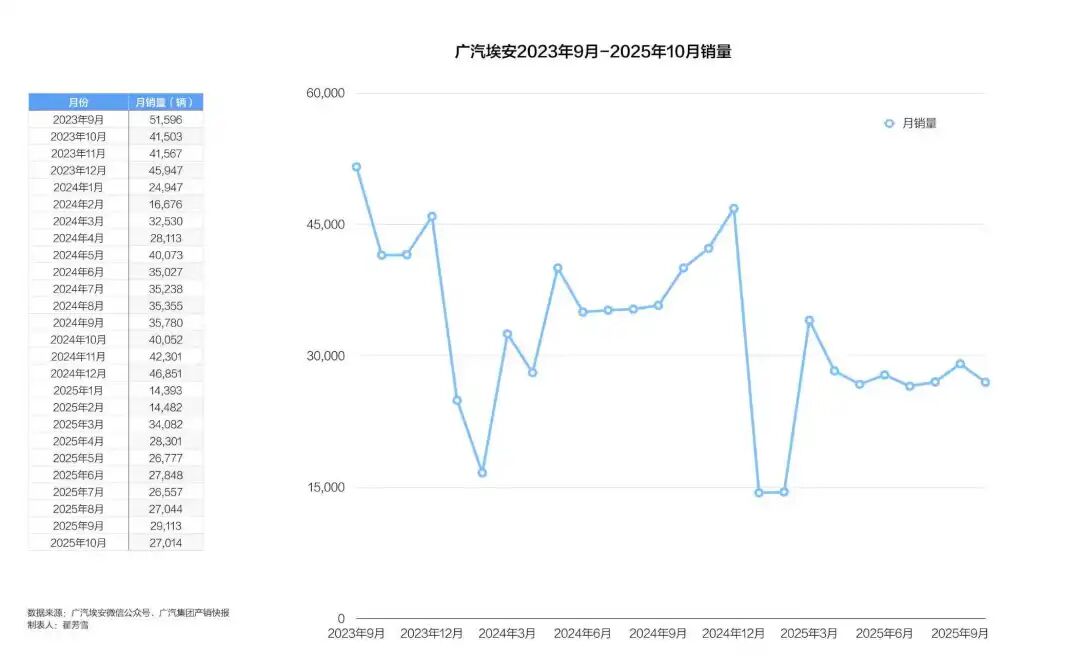
Core Insights - The automotive industry is experiencing a surge in sales due to increased promotional efforts and the impending expiration of tax exemption policies, with many companies achieving record sales in October [1] - GAC Aion, however, reported a decline in sales, contrasting with the overall industry trend, and faced significant financial losses in Q3 [1][2] Sales Performance - SAIC Passenger Cars saw a 234.4% increase in domestic market sales, while BYD's sales grew approximately 11.47%, both reaching new highs for the year [1] - GAC Aion's October sales were 27,014 units, a 7.2% decrease month-on-month and a 32.6% year-on-year decline [1] - GAC Group's Q3 revenue was 24.106 billion yuan, down 14.62% year-on-year, with a net loss of 1.774 billion yuan, worsening from the previous year [1] Market Dynamics - GAC Aion's struggles are attributed to intense competition in the domestic automotive market and rapid changes in consumer demand [2] - The brand's reliance on the ride-hailing market has left it vulnerable as the market contracts, with a significant drop in ride-hailing orders reported [10] Sales Trends - GAC Aion's monthly sales have seen a dramatic decline from over 50,000 units in September 2023 to around 27,000 units by October 2025 [5][7] - The average monthly sales dropped from over 40,000 units in 2023 to approximately 30,000 units, and then to 20,000 units [5] Competitive Challenges - GAC Aion's pricing strategy has been less aggressive compared to competitors like BYD, which has affected its market position [10][11] - The brand's focus solely on pure electric vehicles limits its appeal in certain markets, particularly in northern regions where hybrid models are preferred [11] Strategic Adjustments - GAC Aion is attempting to shift its strategy towards private consumers, aiming for a 75% sales share in the C-end market by 2025, but current models have not met sales expectations [11] - The company is undergoing internal restructuring to improve cost management and marketing efficiency, with plans to integrate resources across its brands [12][15] Future Prospects - GAC Aion has launched new models like the Aion UT Super in collaboration with JD.com and CATL, aiming to enhance its market presence, although immediate sales impact is uncertain [18] - The company is facing challenges in adapting to market changes and improving its competitive edge amid a rapidly evolving automotive landscape [14][15]


与京东合作,昔日“网约车之王”埃安的艰难变革
3 6 Ke· 2025-11-13 10:33
Core Viewpoint - The automotive industry is experiencing a surge in sales due to increased promotional efforts and the impending expiration of tax exemption policies, with many companies achieving record sales in October. However, GAC Aion's performance stands out negatively, showing significant declines in both sales and financial results [1][2]. Sales Performance - SAIC Passenger Cars saw a substantial increase in domestic market sales by 234.4%, while BYD's sales grew approximately 11.47%, reaching a new high for the year. Geely's monthly sales exceeded 300,000 units for the first time, and Chery's new energy vehicle sales rose by 54.7% year-on-year, surpassing 110,000 units in a single month [1]. - GAC Aion's October sales were 27,014 units, reflecting a 7.2% decrease month-on-month and a 32.6% year-on-year decline, contrasting sharply with the overall industry growth [1][2]. Financial Results - GAC Group reported third-quarter revenue of 24.106 billion yuan, a year-on-year decline of 14.62%, with a net loss attributable to shareholders of 1.774 billion yuan, worsening from the previous year. For the first three quarters, revenue decreased by 10.49%, and net profit turned from a profit of 120 million yuan to a loss of 4.312 billion yuan, a staggering drop of 3693.3% [1][2]. Market Dynamics - GAC Aion's struggles are attributed to intense competition in the domestic automotive market and rapid changes in demand structure. The brand, once dominant in the ride-hailing market, is now facing unique challenges as the market evolves [2][6]. - The ride-hailing market saw a significant slowdown, with GAC Aion's share of new ride-hailing vehicles dropping as the overall market contracted. In 2023, GAC Aion accounted for 220,000 of the 850,000 new ride-hailing vehicles, representing 45% of its total sales for the year [6]. Product Strategy and Challenges - GAC Aion's sales have halved over two years, with average monthly sales dropping from over 40,000 units in 2023 to 20,000 units in 2025. The brand's reliance on pure electric vehicles limits its competitiveness, especially in northern markets where hybrid models are preferred [3][7]. - Despite launching new models aimed at private consumers, such as Aion Bawanglong, Aion RT, and Aion UT, these vehicles have not met sales expectations, with monthly sales remaining between 3,000 and 6,000 units [8][12]. Organizational Changes and Future Outlook - GAC Group is undergoing internal reforms to enhance efficiency, including the integration of marketing resources across brands. However, the pace of these reforms has been slow, leading to challenges in decision-making and execution [11][12]. - The introduction of a new brand focused on B-end markets (ride-hailing and taxis) is planned, but has yet to materialize. Meanwhile, GAC Aion has partnered with JD.com and CATL to launch the Aion UT Super, which has generated significant market interest despite potential infrastructure limitations [13][15].
新能源车企“银十”成绩单普涨,广汽埃安却掉队了
Feng Huang Wang Cai Jing· 2025-11-13 06:47
Group 1: Industry Performance - Leap Motor achieved a significant milestone by delivering over 70,000 vehicles in October, marking a year-on-year growth of over 84% [1] - Hongmeng Zhixing, which includes brands like AITO and Zhijie, also set a record with 68,216 vehicles delivered in October, surpassing a cumulative delivery of 1 million vehicles [1] - NIO, Xiaomi, and Xpeng all entered the "40,000 club" in October, with Xpeng delivering 42,013 vehicles, a historical high, and a year-to-date total of 355,209 vehicles, reflecting a 190% increase year-on-year [1] Group 2: Company-Specific Insights - NIO delivered 40,397 vehicles in October, a year-on-year increase of 92.6%, with a total of 913,182 vehicles delivered to date [1] - Ideal Auto reported a decline in deliveries, with 31,767 vehicles delivered in October, a drop of 38% year-on-year and 6.43% month-on-month, but sees the new Ideal i6 as a key growth driver [2][3] - GAC Aion experienced a notable decline, with October sales at 27,014 vehicles, down 32.55% year-on-year and 7.2% month-on-month, marking six consecutive months of year-on-year decline [3][4] Group 3: Strategic Responses - GAC Aion is attempting to rebrand and expand its market appeal by launching new models priced between 70,000 to 150,000 yuan, but market response has been lukewarm [4] - The company has introduced significant price adjustments for models like AION UT, reducing the starting price by 16,000 yuan, yet this strategy has not effectively stimulated sales [4]
新能源车企“银十”成绩单普涨,广汽埃安却掉队了
凤凰网财经· 2025-11-13 06:36
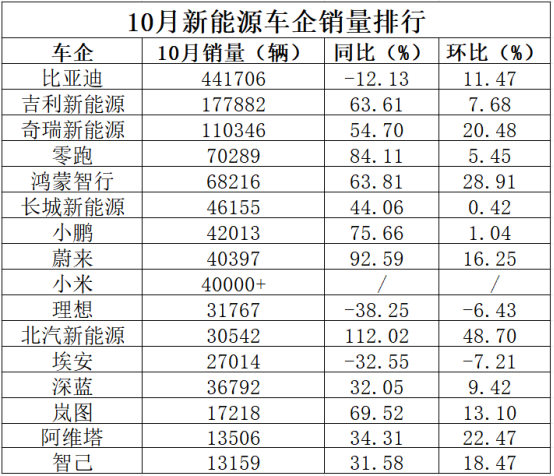
Core Insights - The article highlights the sales performance of various electric vehicle manufacturers in October, showcasing significant growth for many domestic brands and new energy vehicle startups [2][4]. Sales Performance Summary - BYD sold 441,706 units in October, experiencing a year-on-year decline of 12.13% but a month-on-month increase of 11.47% [1]. - Geely New Energy reported sales of 177,882 units, marking a year-on-year increase of 63.61% and a month-on-month increase of 7.68% [1]. - Chery New Energy achieved sales of 110,346 units, with a year-on-year growth of 54.70% and a month-on-month increase of 20.48% [1]. - Leap Motor surpassed 70,000 units for the first time, delivering 70,289 vehicles, a year-on-year increase of over 84% [4]. - Hongmeng Zhixing delivered 68,216 units, also achieving a record high for monthly deliveries [4]. - Great Wall New Energy sold 46,155 units, with a year-on-year increase of 44.06% [1]. - NIO delivered 40,397 units, reflecting a year-on-year growth of 92.59% [4]. - Xiaomi's sales exceeded 40,000 units, continuing a strong performance from September [5]. - Li Auto's sales fell to 31,767 units, down 38.25% year-on-year and 6.43% month-on-month [6]. - Aion's sales were 27,014 units, down 32.55% year-on-year and 7.21% month-on-month [6]. Market Trends and Challenges - 75% of the 16 automotive companies reported both year-on-year and month-on-month growth in October, indicating a robust market recovery [6]. - Li Auto's decline is attributed to recent controversies, but the company is optimistic about the upcoming launch of the Li i6 model, which has already received over 70,000 orders [6][4]. - Aion's continuous decline over six months is linked to its brand positioning and market strategy, which has not resonated well with personal consumers despite initial success in the ride-hailing segment [7][8].
新能源乘用车又降价了!六年来均价首次跌破16万元
Mei Ri Jing Ji Xin Wen· 2025-10-22 13:49
Core Insights - The recent price reductions in the Chinese new energy vehicle (NEV) market are significant, with average prices for NEVs dropping below 160,000 yuan for the first time in six years, reaching 158,000 yuan in September [1][5] - The average discount for NEVs in September was 10.2%, with an average price drop of 19,000 yuan, indicating a competitive pricing environment [2][3] - The decline in prices is attributed to structural changes in the product mix, with an increase in entry-level pure electric vehicles and a decrease in higher-priced hybrid and extended-range models [5][6] Pricing Strategies - Various NEV models are offering substantial cash discounts and financing options, such as zero-interest loans, to attract buyers [1][2] - The average price of pure electric vehicles in September was 190,000 yuan, with some models seeing price reductions exceeding 10% compared to their minimum guidance prices [2][3] - The trend of "adding features while lowering prices" is becoming a common strategy among popular models to enhance market competitiveness [4] Market Dynamics - The penetration rates for micro and A0-level NEVs have reached 100% and 80%, respectively, indicating strong market adoption [5] - Sales of NEVs priced below 50,000 yuan have shown significant growth, with 670,000 units sold in the first nine months of this year, reflecting a broader market expansion [5] - The decline in battery material costs, particularly lithium carbonate, which has dropped approximately 65% from the previous year, is contributing to the overall reduction in vehicle prices [6] Future Outlook - The ongoing price competition is seen as a short-term strategy to manage inventory and capitalize on subsidy benefits, while long-term trends may stabilize as production scales and technology advances [6] - Companies will need to balance price competition with technological development to maintain sustainable growth in the NEV market [6]
又降价了,新能源乘用车均价跌破16万元,六年来首次,纯电动车降得最狠,为什么?
3 6 Ke· 2025-10-21 12:23
Core Insights - Recent price reductions in the new energy vehicle market indicate a significant shift, with average prices for new energy passenger cars dropping below 160,000 yuan for the first time in six years [3][8] - The average price of new energy passenger cars in September was reported at 158,000 yuan, reflecting a decrease of 9.8% compared to previous periods [4][8] Price Reductions - Multiple popular new energy models have seen varying degrees of price cuts, with promotional discounts averaging 10.2% in September, an increase of 2.6 percentage points year-on-year [4][5] - The average price reduction for new energy passenger cars in September was approximately 19,000 yuan, with pure electric models experiencing the most significant price drops [4][5] Market Dynamics - The number of models experiencing price cuts remained stable at 23 in September, with 14 being new energy passenger cars [5] - The price competition is primarily driven by the introduction of new models that break previous price barriers rather than merely enhancing configurations without lowering prices [6][8] Sales Trends - The sales volume of new energy vehicles priced below 50,000 yuan has shown a steady increase, with 670,000 units sold in the first nine months of this year [10] - The penetration rates for micro and A0-level new energy passenger cars have reached 100% and 80%, respectively, indicating strong market acceptance [8] Cost Factors - The decline in battery-grade lithium carbonate prices, which are projected to average around 91,000 yuan per ton in 2024, has contributed to the overall reduction in new energy vehicle prices [10] - Factors such as technological advancements, supply chain cost reductions, and economies of scale are driving the price reductions in the new energy vehicle market [10]
首次跌破16万元!新能源车降价了,纯电降得最狠
Mei Ri Jing Ji Xin Wen· 2025-10-21 09:13
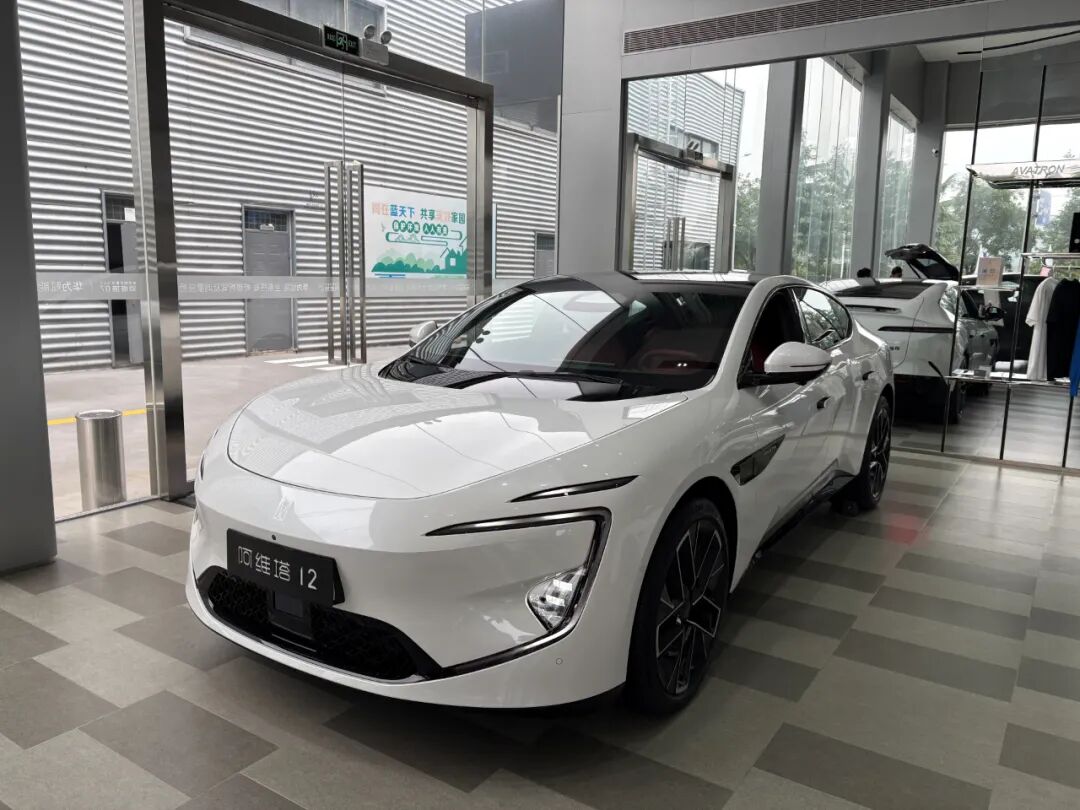
Core Insights - The recent trend in the Chinese electric vehicle (EV) market shows significant price reductions across various models, with some manufacturers offering substantial cash discounts and financing options to stimulate sales [1][2]. Group 1: Price Reductions and Promotions - The IM L6 model has introduced a cash discount of 3,000 yuan with additional promotional offers, including a 5,000 yuan prepayment exchange for a cash coupon worth 17,000 yuan [1]. - The Avita 12 2025 model has also seen a price adjustment, offering a cash discount of 30,000 yuan, bringing the base price below 250,000 yuan, along with a two-year interest-free financing option [1]. - In September, the average price of new energy passenger vehicles dropped to 158,000 yuan, marking the first time in six years that the average price fell below 160,000 yuan [1][2]. Group 2: Market Trends and Data - The average promotional discount for new energy passenger vehicles in September reached 10.2%, an increase of 2.6 percentage points compared to the same period last year [2]. - The average price reduction for new energy passenger vehicles in September was 19,000 yuan, with a reduction rate of 9.8% [2]. - A total of 23 models experienced price cuts in September, with 14 being new energy passenger vehicles, including 7 pure electric models [2]. Group 3: Structural Changes in Pricing - The average price of pure electric passenger vehicles in September was 190,000 yuan, with some models seeing price drops exceeding 10% compared to their minimum guidance prices for 2023-2024 [2]. - The average price of new energy passenger vehicles has fluctuated over the past six years, with the current average at 160,000 yuan [6]. - The increase in the proportion of entry-level pure electric vehicles has contributed to the overall decline in average prices, as higher-priced hybrid and extended-range models have decreased in market share [6]. Group 4: Market Dynamics and Future Outlook - The sales volume of new energy vehicles priced below 50,000 yuan has shown growth, with 670,000 units sold in the first nine months of this year [8]. - The decline in battery-grade lithium carbonate prices, which are projected to average around 91,000 yuan per ton in 2024, is expected to further influence EV pricing [8]. - Factors driving the price reductions include decreasing battery costs, technological advancements, supply chain efficiencies, and the need for manufacturers to address inventory pressures [8].
新能源乘用车又降价,六年来均价首次跌破16万元,纯电动车降得最狠
Mei Ri Jing Ji Xin Wen· 2025-10-21 08:35
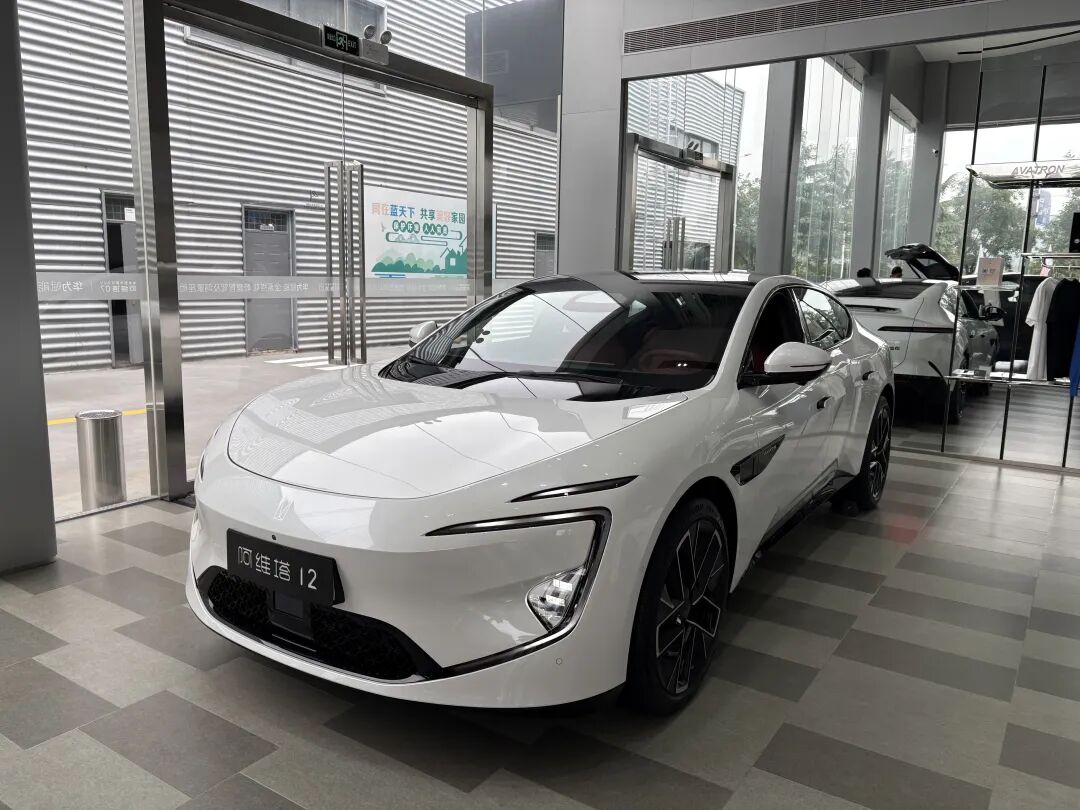
Core Insights - The recent price reductions in the new energy vehicle (NEV) market are significant, with various models offering cash discounts and financing options to attract buyers [1][4][5] Group 1: Price Reductions and Promotions - The IM L6 has introduced a cash discount of 3,000 yuan with additional promotional offers, including a 5,000 yuan prepayment exchange for a cash coupon worth 17,000 yuan [1] - The Avita 12 2025 model has seen a price adjustment with a cash discount of 30,000 yuan, bringing the net price below 250,000 yuan, along with a two-year interest-free financing option [1] - In September, the average price of new energy passenger vehicles dropped to 158,000 yuan, marking the first time in six years that the average price fell below 160,000 yuan [4][9] Group 2: Market Trends and Data - The average promotional discount for new energy passenger vehicles in September reached 10.2%, an increase of 2.6 percentage points year-on-year [5] - The average price reduction for new energy passenger vehicles in September was 19,000 yuan, with an overall discount rate of 9.8% [5] - A total of 23 models experienced price reductions in September, with 14 being new energy passenger vehicles, including 7 pure electric models [6] Group 3: Structural Changes in the Market - The average price of pure electric passenger vehicles in September was 190,000 yuan, with some models seeing price drops exceeding 10% compared to the lowest guidance prices for 2023-2024 [6] - The decline in average prices is attributed to a shift in product structure, with an increase in the proportion of entry-level pure electric vehicles and a decrease in higher-priced hybrid and extended-range models [9] - The penetration rates for micro new energy passenger vehicles reached 100%, while A0 and A-level new energy passenger vehicles had penetration rates of 80% and 44%, respectively [9] Group 4: Market Dynamics and Future Outlook - The sales of new energy vehicles priced below 50,000 yuan have shown significant growth, with 670,000 units sold in the first nine months of this year [13] - The decline in battery-grade lithium carbonate prices, which are projected to average around 91,000 yuan per ton in 2024, is contributing to the overall reduction in costs for new energy vehicles [13] - The ongoing price competition is seen as a strategy for automakers to manage inventory pressures and adapt to subsidy changes, while long-term trends suggest that technological advancements and economies of scale will continue to drive prices down [13]
新能源乘用车又降价了!六年来均价首次跌破16万元,纯电动车降得最狠
Mei Ri Jing Ji Xin Wen· 2025-10-21 08:06
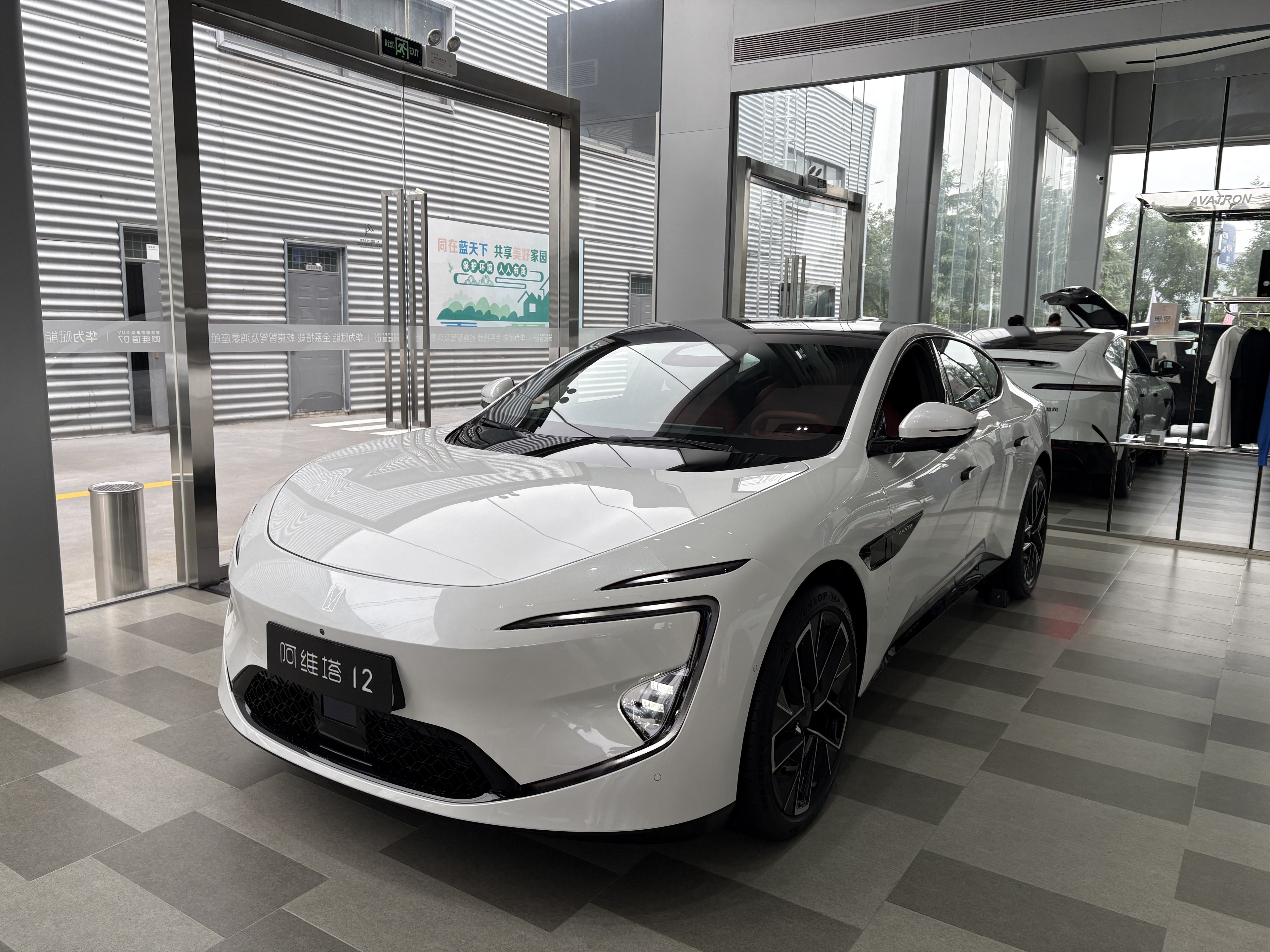
Core Insights - The recent price reductions in the new energy vehicle (NEV) market are significant, with various models offering cash discounts and financing options to attract buyers [1][3][4] Group 1: Price Reductions and Promotions - The IM L6 has introduced a cash discount of 3,000 yuan with additional promotional offers, including a 5,000 yuan prepayment exchange for a cash coupon worth 17,000 yuan [1] - The Avita 12 2025 model has also seen a price adjustment, offering a cash discount of 30,000 yuan, bringing the net price below 250,000 yuan, along with two years of interest-free financing [1] - In September, the average price of new energy passenger vehicles dropped to 158,000 yuan, marking the first time in six years that the average price fell below 160,000 yuan [3][9] Group 2: Market Trends and Data - The average promotional discount for new energy passenger vehicles in September reached 10.2%, an increase of 2.6 percentage points year-on-year [4] - The average price reduction for new energy passenger vehicles in September was 19,000 yuan, with an overall discount rate of 9.8% [4] - A total of 23 models experienced price cuts in September, with 14 being new energy vehicles, including 7 pure electric models, which saw the largest reductions [6] Group 3: Structural Changes and Market Dynamics - The average price of pure electric passenger vehicles in September was 190,000 yuan, with some models seeing price drops exceeding 10% compared to the lowest guidance prices for 2023-2024 [6] - The decline in average prices is attributed to a shift in product structure, with an increase in the proportion of entry-level pure electric vehicles and a decrease in higher-priced hybrid and extended-range models [9] - The penetration rates for micro new energy passenger vehicles reached 100%, while A0 and A-level new energy vehicles had penetration rates of 80% and 44%, respectively [9] Group 4: Cost Factors and Future Outlook - The average price of battery-grade lithium carbonate is projected to drop by approximately 65% in 2024 compared to 2023, contributing to lower production costs for electric vehicles [13] - The price competition in the NEV market is driven by multiple factors, including declining battery costs, technological advancements, and supply chain efficiencies [13] - Companies are expected to balance price competition with technological development to sustain long-term growth in the NEV sector [13]