墨茵

Search documents
中国车企和特斯拉的下一战,战场已定
虎嗅APP· 2026-01-30 13:58
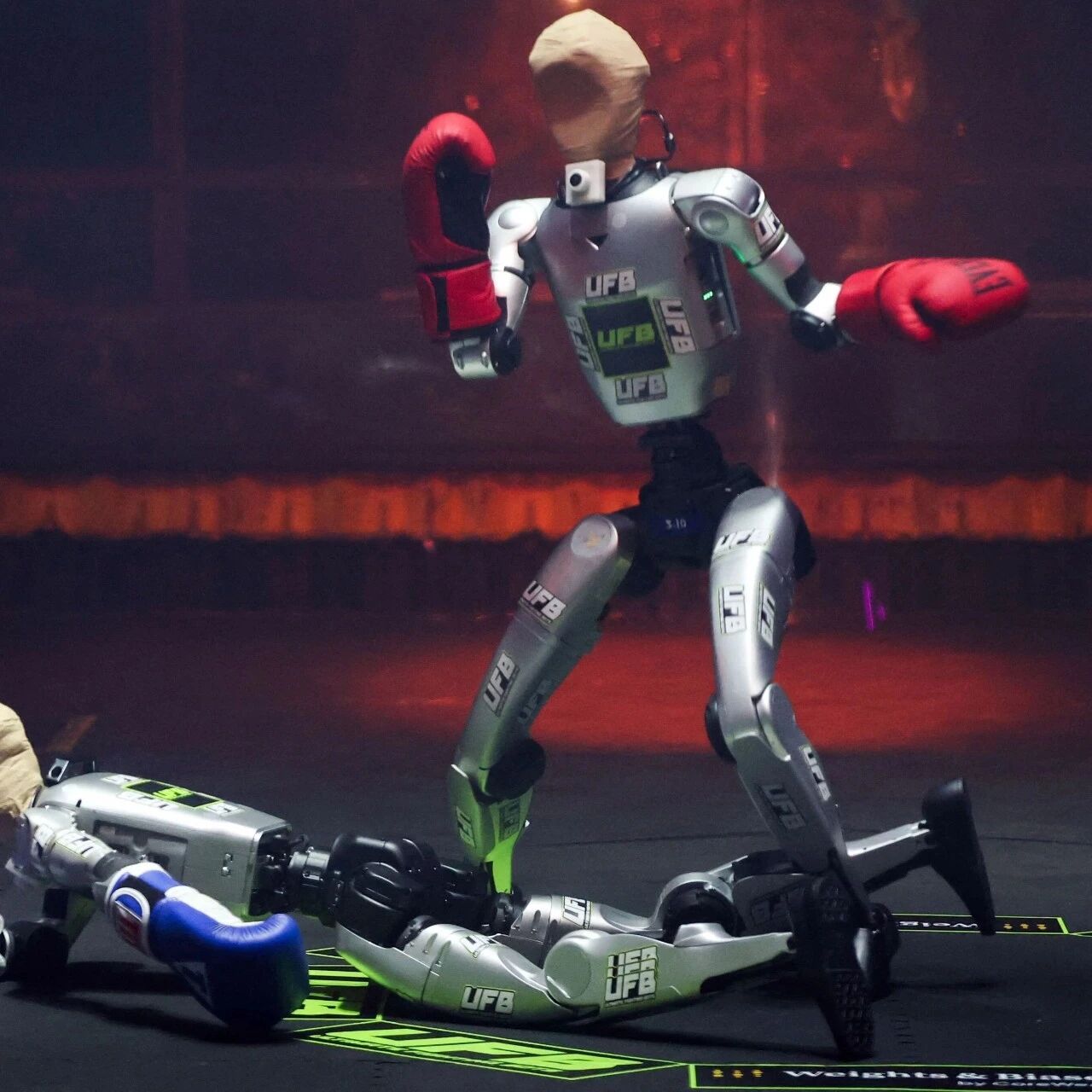
Core Viewpoint - Tesla is shifting its focus towards humanoid robots, with CEO Elon Musk stating that the production of Model S and Model X will be phased out to prioritize the development of the Optimus robot, which Musk believes will underpin 80% of Tesla's future market value [2][3]. Group 1: Tesla's Strategic Shift - Tesla plans to cease production of Model S and Model X, transitioning the Fremont factory to produce Optimus robots [3]. - The introduction of humanoid robots is seen as a critical component of Tesla's new mission, which aims to create a "prosperous and extraordinary world" [2]. - Musk acknowledges that Tesla's main competition in the humanoid robot sector will come from Chinese companies, which are rapidly advancing in AI and robotics [3]. Group 2: Chinese Automakers' Robotics Initiatives - Chinese automakers are actively investing in humanoid robotics, with companies like Li Auto and BYD announcing plans to develop their own humanoid robots [5][6]. - The competitive landscape is intensifying, with various Chinese companies, including Chery and Xpeng, setting timelines for humanoid robot production by 2026 and 2028 [12][13]. - The overlap in technology between electric vehicles and humanoid robots is significant, with around 70% of automotive technology being applicable to robotics [8]. Group 3: Market Potential and Investment Outlook - The global market for humanoid robots is projected to reach $25 trillion by 2050, indicating a massive growth opportunity compared to the automotive sector [9]. - The high degree of technological overlap allows automakers to pivot towards robotics without substantial additional investment, making it a low-cost, high-reward opportunity [9]. - Morgan Stanley reports that China holds a dominant position in the humanoid robot supply chain, accounting for 63% of the market, which could drive down manufacturing costs [14]. Group 4: Competitive Landscape and Challenges - The competition between Tesla and Chinese automakers in the humanoid robot space is expected to intensify by 2027, with both sides having distinct advantages [12][14]. - Tesla's strength lies in its advanced AI algorithms and extensive real-world data, while Chinese companies have demonstrated rapid iteration and cost control capabilities [14]. - Talent acquisition is crucial for success in the humanoid robot sector, with both Tesla and Chinese firms vying for top talent amidst a competitive automotive landscape [17].


加速向科技出行企业转身 2026奇瑞汽车AI之夜正式启幕
Zhong Guo Zhi Liang Xin Wen Wang· 2026-01-30 07:50
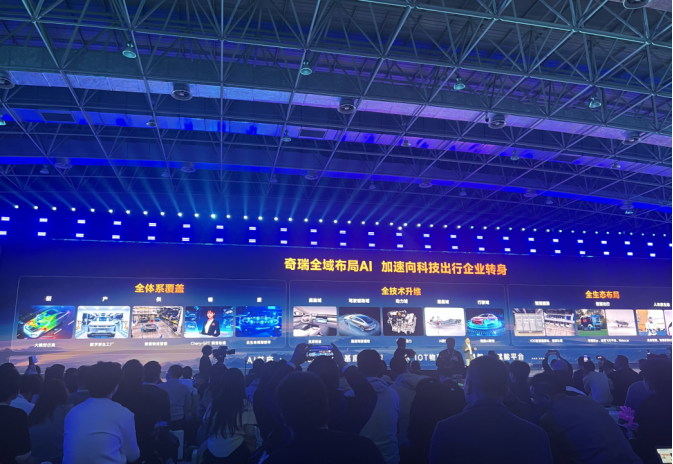
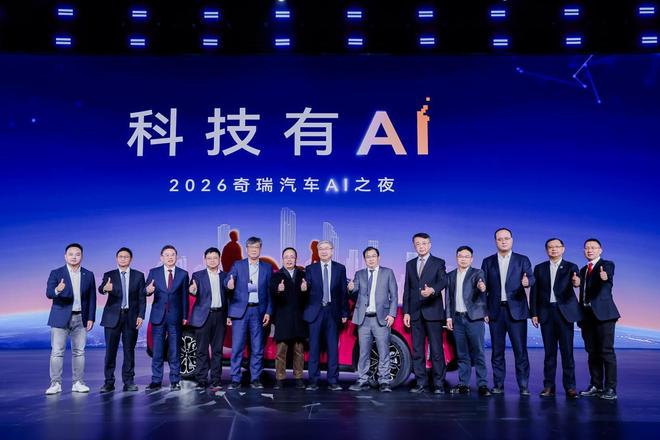
Core Viewpoint - Chery Automobile is officially entering the AI 2.0 (AI+) era, showcasing its full-domain AI strategy and core AI achievements at the 2026 Chery AI Night, aiming to transition from a "technology Chery" to a "global AI technology company" [1][3][21] Group 1: AI Strategy and Vision - Chery emphasizes a commitment to "AI must continue unabated," focusing on a bottom line of "people-oriented" principles while promoting AI empowerment across various sectors, including smart cabins, smart driving, and manufacturing [5][21] - The company aims to achieve "AI equity" by ensuring that AI technology is accessible and beneficial to all, enhancing user experience and emotional connection with AI [5][21] Group 2: AI Product Innovations - The event highlighted advancements in Chery's AI products, including the Falcon Smart Driving, Lingxi Smart Cabin, and Flying Fish Smart Chassis, showcasing a comprehensive evolution from technology to user experience [7][9] - The Falcon Smart Driving system has been upgraded to include urban navigation assistance, while the Lingxi Smart Cabin introduces a new AI architecture for improved interaction and privacy protection [9][11] Group 3: Future Industry Layout - Chery is expanding its AI applications beyond automotive, making strides in humanoid robots and collaborative technologies, positioning itself as a significant player in various industries [13][15] - The company has successfully commercialized its humanoid robot, Meiyin, which has been deployed in over 30 countries for various applications, indicating a new growth trajectory for Chery [15] Group 4: Upcoming Product Launches - New AI-enabled models, including the Fengyun T9L and Fengyun A9, were showcased, featuring advanced AI energy management and personalized driving experiences [18][20] - Chery plans to implement upgrades across its product lines, including smart cabin enhancements and driving assistance features, with over 35 models expected to incorporate the Falcon Smart Driving system by 2026 [20]
集体跨界“造人”!最新回应来了
Zhong Guo Ji Jin Bao· 2026-01-20 09:55
Core Insights - The automotive industry is increasingly venturing into humanoid robotics, with companies like Chery, Chang'an, Xiaopeng, and GAC making significant investments in this area since 2025 [2][3] - Chery's approach to robotics focuses on addressing societal pain points and fulfilling specific scene requirements, differentiating it from traditional robotics companies [3][9] Group 1: Company Developments - Chery's humanoid robot, "Wuyou" Intelligent Traffic Police R001, has been deployed for traffic enforcement, showcasing the practical application of robotics in real-world scenarios [5][10] - The company aims to develop a series of robots that serve as work and life assistants, with a focus on various sectors including police collaboration, medical services, and elder care [8][12] Group 2: Market Outlook - Industry experts predict that 2026 will mark the "commercialization year" for the robotics sector, with Chery's subsidiary, Moja Robotics, planning to focus on six core products and establish a domestic channel network [10][11] - A Morgan Stanley report forecasts that the humanoid robotics market could reach $5 trillion by 2050, with a deployment of 1 billion units, indicating a significant growth potential in the industry [11] Group 3: Competitive Landscape - The competition in the humanoid robotics market is just beginning, with many companies still in the early stages of development [11][12] - Chery's existing automotive technology, such as visual perception and battery management, can be leveraged in the robotics sector, providing a competitive edge [12][13] Group 4: Financial Position - Moja Robotics has completed its first round of financing and is not currently facing financial constraints, benefiting from Chery's established global R&D capabilities and supply chain [14][15]
集体跨界“造人”!最新回应来了
中国基金报· 2026-01-20 09:48
Core Viewpoint - The article discusses the recent entry of automotive companies into the humanoid robot industry, highlighting the competitive landscape and the unique advantages these companies bring to the market [2][3]. Group 1: Industry Trends - Major Chinese automotive companies such as Chery, Changan, Xiaopeng, and GAC are increasingly investing in humanoid robots since 2025, aiming to create new growth avenues beyond traditional automotive sales [2]. - The humanoid robot market is predicted to reach a market size of $5 trillion by 2050, with an estimated deployment of 1 billion units, suggesting a significant growth potential in the sector [17]. Group 2: Company Insights - Zhang Guibing, General Manager of Moja Robotics, emphasizes that the company's approach to robotics is distinct, focusing on addressing societal pain points and fulfilling specific scene requirements [5][12]. - Moja Robotics has launched its humanoid robot "Wuyou" Smart Police R001, which is designed to assist in traffic management and has already been deployed in real-world scenarios [9][11]. Group 3: Competitive Landscape - The competition in the humanoid robot industry is just beginning, with industry experts predicting that 2026 will mark the "commercialization year" for the sector [14][17]. - Moja Robotics aims to establish a comprehensive product line and channel network, focusing on six core products to enhance its market presence [17]. Group 4: Strategic Advantages - Automotive companies possess unique advantages in the humanoid robot sector, such as advanced technology in visual perception, battery management, and power systems, which can be adapted from the automotive industry [19]. - Moja Robotics benefits from Chery's global research capabilities, mature supply chain, and established sales network, allowing for rapid development without significant additional costs [19].

“一个底线,三大方向”,奇瑞AI要“继续不客气”
Guan Cha Zhe Wang· 2026-01-19 03:28
Core Insights - Chery Automobile held the "AI Night" event on January 17, 2026, focusing on its comprehensive AI strategy and showcasing key AI innovations such as the super AI assistant "Xiao Qi," Falcon Intelligent Driving, Lingxi Intelligent Cockpit, and Mocha Robot [1][3] Group 1: AI Strategy and Focus Areas - Chery's AI strategy emphasizes "people-oriented" principles, aiming to empower intelligent cockpit, intelligent driving, and chassis systems, while promoting AI product equity [3] - The company aims to meet real user needs by developing AI that understands emotions and provides resonance, thus advancing emotional equity in AI [3] - Chery plans to integrate AI throughout its industrial manufacturing chain, enhancing internal engineering, innovation, and operational management, and expanding AI applications across various industries [3] Group 2: AI Innovations and Product Developments - Chery's exploration of intelligence began in 2003, leading to a comprehensive intelligent system covering R&D, manufacturing, supply chain, sales, and service [3] - The Falcon Intelligent Driving system has been upgraded, with the Falcon 500 introducing urban navigation assistance and the Falcon 700 enhancing product series for higher-level driving solutions [3] - The Lingxi Intelligent Cockpit features a new AI architecture for interaction, human-like memory, and privacy protection, including the launch of the super AI assistant "Xiao Qi" [5] Group 3: Robotics and Commercial Applications - Chery has made rapid advancements in humanoid robots and quadruped robotic dogs, with the humanoid robot "Mo Yin" being the first globally to receive dual CE certification, now operating in over 30 countries [6] - Mo Yin has been involved in various international applications, including factory inspections and event hosting, and a traffic management robot has been deployed in Wuhu, Anhui [6] Group 4: Upcoming Product Launches and Upgrades - New AI-enabled vehicle models such as the Fengyun T9L, Fengyun A9, and iCAR V27 were showcased, with the Fengyun T9L starting pre-orders [8] - Chery announced three major upgrade plans for its intelligent cockpit, driving assistance, and range capabilities, with full implementation expected by Q1 2026 [8]
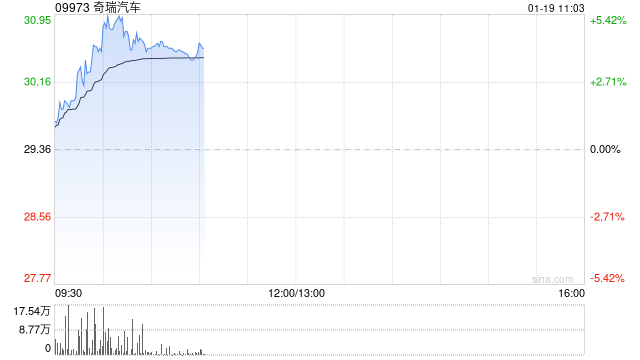
奇瑞汽车盘中涨超5% 灵犀智舱计划于2026年一季度实现全品牌全系主力车型全面上车
Xin Lang Cai Jing· 2026-01-19 03:04
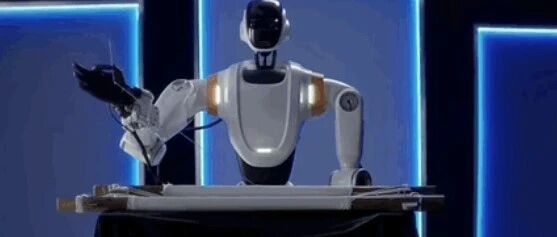
Core Viewpoint - Chery Automobile has officially entered the AI 2.0 (AI+) era, showcasing its comprehensive AI strategy and core AI achievements at the 2026 Chery AI Night event, aiming to transition from a "technology Chery" to a "global AI technology company" [2][6]. Group 1: AI Strategy and Product Launches - Chery presented its full AI strategy blueprint, featuring key AI products such as the super AI assistant "Xiao Qi," Falcon Intelligent Driving, Lingxi Intelligent Cabin, and Mocha Robot [2][6]. - The Lingxi Intelligent Cabin is set to be implemented across all major models by Q1 2026, while over 35 models will feature Falcon Intelligent Driving in 2026 [2][6]. - Hybrid models are expected to achieve a pure electric range of over 200 km [2][6]. Group 2: AI Employee and Global Expansion - The event featured Chery's first AI employee, Mo Yin, who is the world's first humanoid robot certified by both EU hardware and software standards, now operating in over 30 countries [3][7]. - Mo Yin has been utilized in more than 100 scenarios, including factory inspections and showroom services, contributing to Chery's new growth trajectory since its global delivery began in April 2025 [3][7].
港股异动 | 奇瑞汽车(09973)涨超5% 灵犀智舱计划于26年一季度实现全品牌全系主力车型全面上车
智通财经网· 2026-01-19 02:48
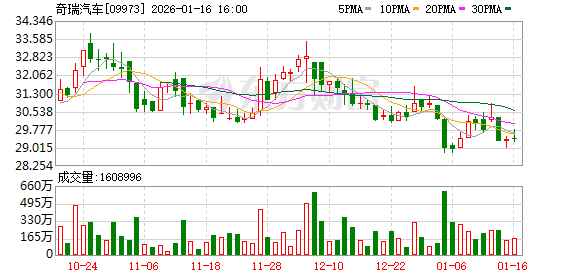
Group 1 - Chery Automobile's stock rose over 5%, currently at 30.58 HKD with a trading volume of 90.87 million HKD [1] - At the AI Night event on January 17, Chery showcased its comprehensive AI strategy, marking the transition to the AI+ era with key technologies such as the AI assistant "Xiao Qi," Falcon Intelligent Driving, Lingxi Smart Cabin, and Mocha Robot [1] - The Lingxi Smart Cabin is set to be implemented across all major models by Q1 2026, while over 35 models will feature Falcon Intelligent Driving in 2026, and hybrid models will achieve over 200 km of pure electric range [1] Group 2 - The event featured Chery's first AI employee, Mo Yin, who is a humanoid robot certified by the EU for both hardware and software, successfully deployed in over 30 countries [2] - Mo Yin has been utilized in more than 100 scenarios, including factory inspections and showroom services, contributing to Chery's new growth trajectory since its global delivery began in April 2025 [2] - The robot has participated in international events such as the GIIAS 2025 in Indonesia and the Dubai Asian Para Games, showcasing Chery's commitment to innovation and international presence [2]
奇瑞AI核心成果亮相
Xin Lang Cai Jing· 2026-01-18 05:43
Core Viewpoint - Chery Automobile is advancing its AI strategy, transitioning from a technology-focused company to a global AI technology firm, as showcased during the 2026 Chery AI Night event in Wuhu, Anhui [1] Group 1: AI Strategy and Developments - Chery highlighted its comprehensive AI strategic technology blueprint, marking the official entry into the 2.0 (AI+) phase of its AI intelligence [1] - The company presented several AI core achievements, including the AI assistant "Xiao Qi," Falcon Intelligent Driving, Lingxi Smart Cabin, and Mocha Robot [1] Group 2: AI Employee and Global Reach - Chery's AI employee, Mo Yin, hosted the event and is recognized as the world's first humanoid robot to receive dual CE certification from the EU for both hardware and software [1] - Mo Yin has successfully entered over 30 countries and regions globally, being utilized in more than 100 scenarios such as factory inspections and showroom services [1]
奇瑞AI核心成果 亮相
Shang Hai Zheng Quan Bao· 2026-01-18 03:01
Core Viewpoint - Chery Automobile is advancing its AI strategy, transitioning from a technology-focused company to a global AI technology firm, as showcased during the 2026 AI Night event in Wuhu, Anhui [2][10]. Group 1: AI Strategy and Developments - Chery unveiled its comprehensive AI strategy, highlighting key technologies such as the AI assistant "Xiao Qi," Falcon Intelligent Driving, Lingxi Smart Cabin, and Mocha Robot, marking the entry into the AI 2.0 phase [2]. - The company introduced its first AI employee, the humanoid robot "Mo Yin," which has been deployed in over 30 countries for various applications, including factory inspections and exhibition services [4]. - Chery's AI strategy will focus on three main directions: AI for Product, AI for Soul, and AI for Industry, aiming to enhance smart vehicle capabilities, improve user interaction, and reshape enterprise boundaries through AI integration [7][8]. Group 2: Challenges in AI Integration - Chery's Chairman, Yin Tongyue, identified three major challenges in AI development: safety concerns due to the complexity of training data, legal and ethical issues surrounding data privacy and algorithm fairness, and the need for a new quality management framework for AI systems [6]. - The company emphasizes the importance of overcoming these challenges to ensure the safe and effective integration of AI in the automotive industry [6]. Group 3: Industry Context and Competitiveness - The automotive industry is increasingly focusing on AI, with many companies ramping up investments in smart cockpit technologies, operating systems, and intelligent driving [11]. - Competitors like Geely are also advancing their AI capabilities, with plans to launch new models and achieve significant sales targets, indicating a competitive landscape driven by AI innovation [11]. - Industry experts suggest that the future competitiveness of the automotive sector will hinge on manufacturing, digital technology, and AI, forming a new triangular model of competition [12].
机器人赛道挤满了车圈大佬
阿尔法工场研究院· 2026-01-16 05:37
Core Viewpoint - The article discusses the migration of talent from the intelligent driving sector to the robotics industry, highlighting the emergence of new startups and the potential for innovation in the field of embodied intelligence [2][9]. Group 1: Talent Migration - A significant number of industry leaders from intelligent driving are transitioning to the robotics sector, with over 30 notable figures making this shift [8]. - Startups like Zhihui Square, founded by Guo Yandong, have quickly gained traction, raising substantial funding and achieving unicorn status within a short period [3]. - Other notable startups include Zhijian Power, founded by former Li Auto executives, and Tashizhi Hang, co-founded by Huawei alumni, both of which have secured significant investments [4][6]. Group 2: Investment Landscape - The investment community is optimistic about teams with intelligent driving backgrounds, as they possess experience in scaling products and managing resources effectively [9]. - The robotics industry is witnessing a "talent war," with headhunters offering salary increases of around 50% for candidates with intelligent driving experience [10]. Group 3: Technological Synergies - Companies like Tesla and Xiaopeng are leveraging their existing automotive technologies to develop robots, indicating a convergence of intelligent vehicles and humanoid robots [12][13]. - The technology used in electric vehicles, such as high-density motors and battery management systems, is being adapted for robotic applications, enhancing their capabilities [17]. Group 4: Challenges and Future Outlook - Despite the technological overlap, the robotics sector faces unique challenges, particularly in achieving the dexterity and interaction capabilities required for humanoid robots [18]. - The commercial viability of robots remains uncertain, with many companies still exploring sustainable business models [20][21]. - The influx of companies into the robotics space may lead to market saturation and potential issues with quality and trust in robotic technologies [29][30].