IRON

Search documents
XPENG(XPEV) - 2025 Q4 - Earnings Call Transcript
2026-03-20 13:02
Financial Data and Key Metrics Changes - XPeng achieved total revenues of CNY 22.25 billion for Q4 2025, representing a 38.2% year-over-year increase and a 9.2% quarter-over-quarter increase [34] - Vehicle sales revenues were CNY 19.07 billion for Q4 2025, up 30% year-over-year and 5.6% quarter-over-quarter, primarily due to higher deliveries [34] - Gross margin for Q4 2025 was 21.3%, compared to 14.4% in Q4 2024 and 20.1% in Q3 2025 [35] - Net profit for Q4 2025 was CNY 0.38 billion, marking the first positive net profit for a single quarter, compared to a net loss of CNY 1.33 billion year-over-year [38] Business Line Data and Key Metrics Changes - Annual delivery reached 42,945 units, a 126% increase year-over-year, with significant contributions from the MONA M03 and P7+ models [5] - Revenues from services and others were CNY 3.18 billion for Q4 2025, a 121.9% year-over-year increase, driven by technical R&D services to Volkswagen and increased parts sales [35] Market Data and Key Metrics Changes - Overseas deliveries nearly doubled to 45,000 units, contributing over 15% of total revenue [5] - The company aims to double overseas deliveries in 2026, targeting international business to contribute over 20% of total revenue [14] Company Strategy and Development Direction - XPeng plans to launch four new models in 2026, expanding into both large and compact vehicles, designed for global markets [11] - The company is focusing on enhancing its AI capabilities and aims to push the technological frontier in autonomous driving and smart cockpit systems [9] - XPeng's strategy includes significant investment in physical AI R&D, with a planned increase to CNY 7 billion in 2026 [30] Management's Comments on Operating Environment and Future Outlook - Management expressed confidence in achieving fully autonomous driving capabilities within the next one to three years, with VLA 2.0 expected to enhance user experience and retention [10][48] - The company anticipates strong quarter-over-quarter growth in vehicle deliveries and revenue in 2026, driven by new model launches and technological advancements [31] Other Important Information - XPeng's cash position at the end of 2025 was CNY 47.66 billion, providing robust financial support for ongoing investments in AI R&D [38] - The company has established a full stack in-house developed technology system, including SoC and AI infrastructure, to support its autonomous driving initiatives [9] Q&A Session Summary Question: What type of major upgrade should we expect for XPeng's VLA 2.0 in the coming months? - Management expects at least one major version of OTA each quarter, with enhancements in road coverage and AI capabilities [42][44] Question: What is the deployment roadmap for XPeng Ultra model and VLA 2.0 in the overseas market? - VLA 2.0 testing is set to begin by the end of this year, with plans for gradual rollout in international markets [52] Question: What is the current progress of Robotaxi testing? - Management indicated that fully autonomous driving capability is expected within one to three years, with ongoing R&D for global operations [81]

XPENG(XPEV) - 2025 Q4 - Earnings Call Transcript
2026-03-20 13:02
Financial Data and Key Metrics Changes - XPeng achieved total revenues of RMB 22.25 billion for Q4 2025, representing a year-over-year increase of 38.2% and a quarter-over-quarter increase of 9.2% [32] - Vehicle sales revenues were RMB 19.07 billion for Q4 2025, up 30% year-over-year and 5.6% quarter-over-quarter, primarily due to higher deliveries [33] - Gross margin for Q4 2025 was 21.3%, compared to 14.4% in Q4 2024 and 20.1% in Q3 2025 [34] - Net profit for Q4 2025 was RMB 0.38 billion, marking the first positive net profit for a single quarter [37] Business Line Data and Key Metrics Changes - Annual delivery reached 42,945 units, a 126% increase year-over-year [5] - Revenues from services and others were RMB 3.18 billion for Q4 2025, up 121.9% year-over-year, driven by technical R&D services to Volkswagen and increased parts sales [34] Market Data and Key Metrics Changes - Overseas deliveries nearly doubled to 45,000 units, contributing over 15% of total revenue [5] - The company aims to double overseas deliveries in 2026, targeting international business to contribute over 20% of total revenue [13] Company Strategy and Development Direction - XPeng plans to launch four new models in 2026, expanding into both large and compact vehicles, designed for global markets [10] - The company is focusing on enhancing its AI capabilities and aims to push the technological frontier in autonomous driving and smart cockpit systems [8] - XPeng's strategy includes significant investment in physical AI R&D, with a planned increase to RMB 7 billion in 2026 [28] Management's Comments on Operating Environment and Future Outlook - Management expressed confidence in achieving significant growth in the physical AI market, which is expected to surpass the automotive industry in the next 5-10 years [26] - The company anticipates that the VLA 2.0 will enhance user retention and conversion rates, with expectations of higher sales volumes [45] - Management highlighted the importance of addressing safety issues and weaknesses in their technology before scaling up operations globally [47] Other Important Information - XPeng's cash position at the end of 2025 was RMB 47.66 billion, providing strong financial support for ongoing investments [37] - The company has begun mass production of its Turing AI SoC and has shipped over 200,000 units [19] Q&A Session Summary Question: What type of major upgrade should we expect for XPeng's VLA 2.0 in the coming months? - Management expects at least one major version of OTA each quarter, with enhancements in autonomous driving capabilities and multi-language support [42][44] Question: What is the deployment roadmap for XPeng Ultra model and VLA 2.0 in the overseas market? - VLA 2.0 testing is set to begin by the end of this year, with plans for gradual rollout in international markets [52] Question: What are the key markets for achieving 100% volume growth overseas this year? - Europe and Southeast Asia are identified as key markets, with local production efforts underway to support growth [71][74] Question: What is the current progress of Robotaxi testing? - Management indicated that fully autonomous driving capability is expected in 1-3 years, with ongoing testing and regulatory compliance efforts [83]
XPENG(XPEV) - 2025 Q4 - Earnings Call Transcript
2026-03-20 13:00
Financial Data and Key Metrics Changes - XPeng's total revenues for Q4 2025 were RMB 22.25 billion, an increase of 38.2% year-over-year and 9.2% quarter-over-quarter [32] - Vehicle sales revenue was RMB 19.07 billion, up 30% year-over-year and 5.6% quarter-over-quarter, primarily due to higher deliveries [32] - Gross margin for Q4 2025 was 21.3%, compared to 14.4% in Q4 2024 and 20.1% in Q3 2025 [33] - Net profit for Q4 2025 was RMB 0.38 billion, marking the first positive net profit for a single quarter [36] Business Line Data and Key Metrics Changes - Annual delivery reached 42,945 units, a 126% increase year-over-year [5] - Revenues from services and others were RMB 3.18 billion, representing a 121.9% year-over-year increase [33] - Vehicle margin for Q4 2025 was 13%, up from 10% in Q4 2024 [34] Market Data and Key Metrics Changes - Overseas deliveries nearly doubled to 45,000 units, contributing over 15% of total revenue [5] - The company aims to double overseas deliveries in 2026, targeting international business to contribute over 20% of total revenue [13] Company Strategy and Development Direction - XPeng plans to launch four new models in 2026, expanding into both large and compact vehicles [11] - The company is focusing on enhancing its global market share and expanding its AI vehicle offerings [12] - XPeng's strategy includes significant investment in R&D, with CNY 9.5 billion allocated in 2025, including CNY 4.5 billion for AI [26] Management's Comments on Operating Environment and Future Outlook - Management expressed confidence in achieving significant growth in the physical AI market, which is expected to surpass the automotive industry in the next 5-10 years [26] - The company anticipates that the VLA 2.0 will enhance user retention and conversion rates, with expectations of higher sales volume [44] - Management highlighted the importance of addressing safety issues and weaknesses in their technology before global deployment [46] Other Important Information - XPeng's cash position as of December 31, 2025, was RMB 47.66 billion, providing robust financial support for ongoing investments [36] - The company has begun construction of a humanoid robot mass production base in Guangzhou, targeting over 1,000 units per month by the end of 2026 [25] Q&A Session Summary Question: What type of major upgrade should we expect for XPeng's VLA 2.0 in the coming months? - Management indicated that they expect at least one major version of OTA each quarter, with significant improvements in autonomous driving capabilities [40][41] Question: What is the deployment roadmap for XPeng Ultra model and VLA 2.0 in the overseas market? - Management confirmed that VLA 2.0 testing is underway, with plans for gradual rollout in international markets by the end of the year [48][50] Question: What are the key markets for achieving 100% volume growth overseas this year? - Europe and Southeast Asia were identified as key markets, with local production efforts underway to support growth [67][70] Question: What is the current progress of Robotaxi testing? - Management stated that fully autonomous driving capability is expected to be achieved in 1-3 years, with ongoing testing and regulatory compliance efforts [78]
车企最强“实习生”上岗
汽车商业评论· 2026-03-19 23:07
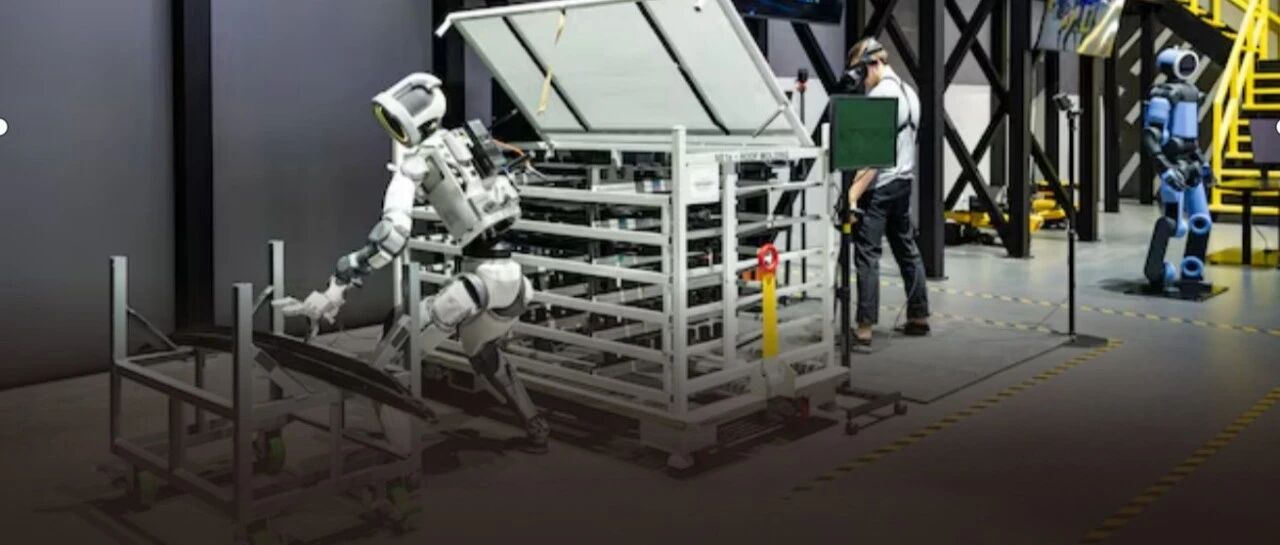
撰 文 | 杜 咏 芳 编 辑 | 黄 大 路 设 计 | 甄 尤 美 过去几年,人形机器人被拉出来,往往是在镁光灯和音乐声中一顿折腾,掌声响完就回实验室吃灰。那种热闹,更像是给投资人看的汇报演出。 而现在,它们开始戴上工牌,正式走进汽车工厂成为蓝领工人。 相比更加复杂多变的家庭场景,汽车工厂凭借标准化的流程、确定性的任务,以及比实验室更严苛的试用期,成为人形机器人规模化落地的首 选"练兵场"。 2026年开年,这一幕已经批量上演。 1月5日开幕的美国拉斯维加斯CES 2026上,现代汽车首次公开展示了新一代全电动人形机器人Atlas.《汽车商业评论》注意到,为了强化外界对它 的期待,现代汽车更是在现场拉起了巨型帷幕。 据称,2028年起,波士顿动力的Atlas将在现代汽车美国佐治亚工厂大规模上岗,主要从事零件排序、物料搬运等工作。并且,他们还打算在2028 年建一座年产3万台机器人的工厂。 2月19日,丰田宣布把Agility Robotics的Digit机器人请进加拿大工厂。 2月27日,宝马也在德国莱比锡工厂启动了欧洲首个人形机器人试点。从瑞典请来的AEON,身高1.65米,干的是高压电池装配。 而在中 ...

从汽车到人形机器人,产业链大象轻盈起舞
机器人大讲堂· 2026-03-02 11:23
Core Insights - The article emphasizes that successful cross-industry breakthroughs are not zero-sum games but rather involve the transfer of core competencies based on first principles, transforming existing barriers into new competitive advantages [1] Industry Trends - The price curve for humanoid robots is becoming increasingly clear, with models like Unitree R1 starting at 29,900 yuan and others like Bumi priced under 10,000 yuan, indicating a significant reduction in industry costs [2][3] - By 2025, the expected shipment of humanoid robots is around 20,000 units, increasing to 62,500 units in 2026, with optimistic estimates reaching 100,000 to 200,000 units, which could lead to a dramatic drop in costs due to economies of scale [4][6] Technological and Supply Chain Insights - The core challenge for mass production of humanoid robots lies in the dual constraints of insufficient technological maturity and high costs, with the automotive industry's established technology and supply chain capabilities providing a key solution [8] - The synergy between automotive and robotics industries is highlighted, with companies like Tesla successfully demonstrating the feasibility of vehicle-robot collaboration, which has been validated by various enterprises [8][9] - The average Bill of Materials (BOM) cost for humanoid robots is projected to drop to around 400,000 yuan by 2025, a reduction of over 90% compared to earlier models, thanks to the advantages of the automotive supply chain [9] Company Case Study: Top Group - Top Group, with 40 years of experience in the automotive parts industry, has positioned itself as a leader in the humanoid robot supply chain, leveraging its core competencies to facilitate the transition into robotics [7][13] - The company's platform-based approach allows it to cover eight major automotive product lines, enhancing its value proposition to robot manufacturers by reducing supply chain complexity [13][15] - Top Group's strategic investments, such as a 5 billion yuan production base for robot components, aim to align with the mass production schedules of major players like Tesla, ensuring efficient delivery and cost control [15][16] Future Outlook - The humanoid robot industry is expected to enter a phase of explosive growth as production lines ramp up, with Top Group's case illustrating that true cross-industry winners are those who build core capabilities and strategically migrate them at the right time [19]

人形机器人春晚“火出圈” 车企加速布局
Zhong Guo Jing Ying Bao· 2026-02-27 19:38
中经记者 陈靖斌 广州报道 "小鹏内部对机器人的投入是持续性的,并不是最近才加码。"小鹏汽车相关负责人在接受《中国经营 报》记者采访时表示,过去几年,团队围绕形态设计、运动控制与大模型能力持续迭代,"外界可能更 2026年除夕夜,中央广播电视总台春节联欢晚会舞台上,一群人形机器人惊艳亮相,与真人演员同台献 艺,完成高难度舞蹈与武术表演。机械关节精准卡点、动作流畅丝滑,与传统年俗节目在同一空间实现 节奏高度协同,这一画面迅速席卷社交平台,成为全民热议的"顶流"现象。 对普通公众而言,这是具象而震撼的技术落地瞬间;对产业界而言,则标志着具身智能正式突破实验室 与专业圈层的边界,第一次大规模进入社会主流认知与情感共鸣层面。 春晚热度尚未消退,人形机器人赛道便迎来密集的资本与产业信号释放。短短数周内,2月中下旬多家 头部企业接连公布完成数亿至十亿级大额融资。 与此同时,整车巨头也加速布局:自2025年起,它们不仅高调发布新一代人形机器人产品、公布清晰的 量产时间表,更首次将其纳入企业最高战略规划。与前几年车企聚焦"车内智能"(自动驾驶、智能座 舱)的竞争逻辑不同,本轮动作已显著外溢至"车外具身终端",人形机器人成为车 ...



中国AI拒绝仰视
3 6 Ke· 2026-02-05 12:58
Group 1 - The core event involves the merger of xAI and SpaceX, resulting in a new entity valued at $1.25 trillion, with xAI's valuation prior to the merger reaching $200 billion to $230 billion [1] - The valuation disparity between Chinese and American AI companies is highlighted, with xAI's valuation significantly exceeding that of all Chinese AI startups combined [1] - The article discusses the systemic undervaluation of Chinese tech companies compared to their American counterparts, with Nasdaq's median valuation at 34 times earnings versus Hong Kong's at 18-19 times [7] Group 2 - The article argues that the valuation differences reflect a deeper "capital hegemony," where American investors are willing to pay a premium for potential market-defining technologies [9][10] - It contrasts the "ecosystem pricing" approach of the U.S. market with China's "efficiency pricing," which focuses on tangible results and financial visibility [12] - The historical context of American tech dominance is presented, suggesting that past successes have led to a biased perception of future potential [14] Group 3 - The financial performance of xAI is scrutinized, revealing a cash burn rate of approximately $1 billion per month, indicating challenges in achieving self-sustainability [15] - In contrast, Chinese AI companies are noted for their rapid technological advancements and practical applications, with significant growth in open-source model downloads [17][24] - The article emphasizes that Chinese AI firms are not merely low-cost alternatives but are becoming essential components of the global developer ecosystem [24] Group 4 - The narrative suggests a shift in capital market perceptions, with increasing recognition of the core competencies of Chinese tech firms, such as engineering talent and comprehensive industrial support [26] - It predicts a potential turning point in profitability for Chinese tech giants, with AI adoption expected to enhance their valuations by 15% to 20% [26] - The conclusion posits that the future of technology investment should focus on practical applications and real-world value creation rather than speculative narratives [27][28]
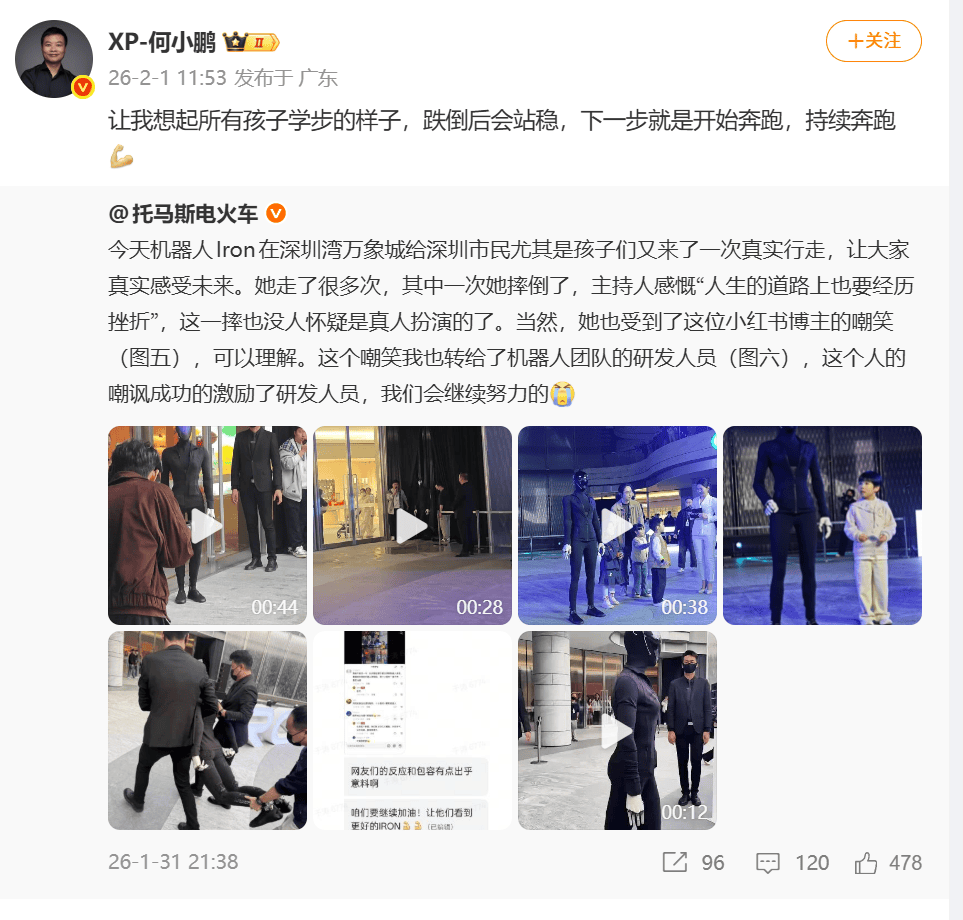
机器人社死现场,小鹏却“赢麻了”?
Sou Hu Cai Jing· 2026-02-03 11:50
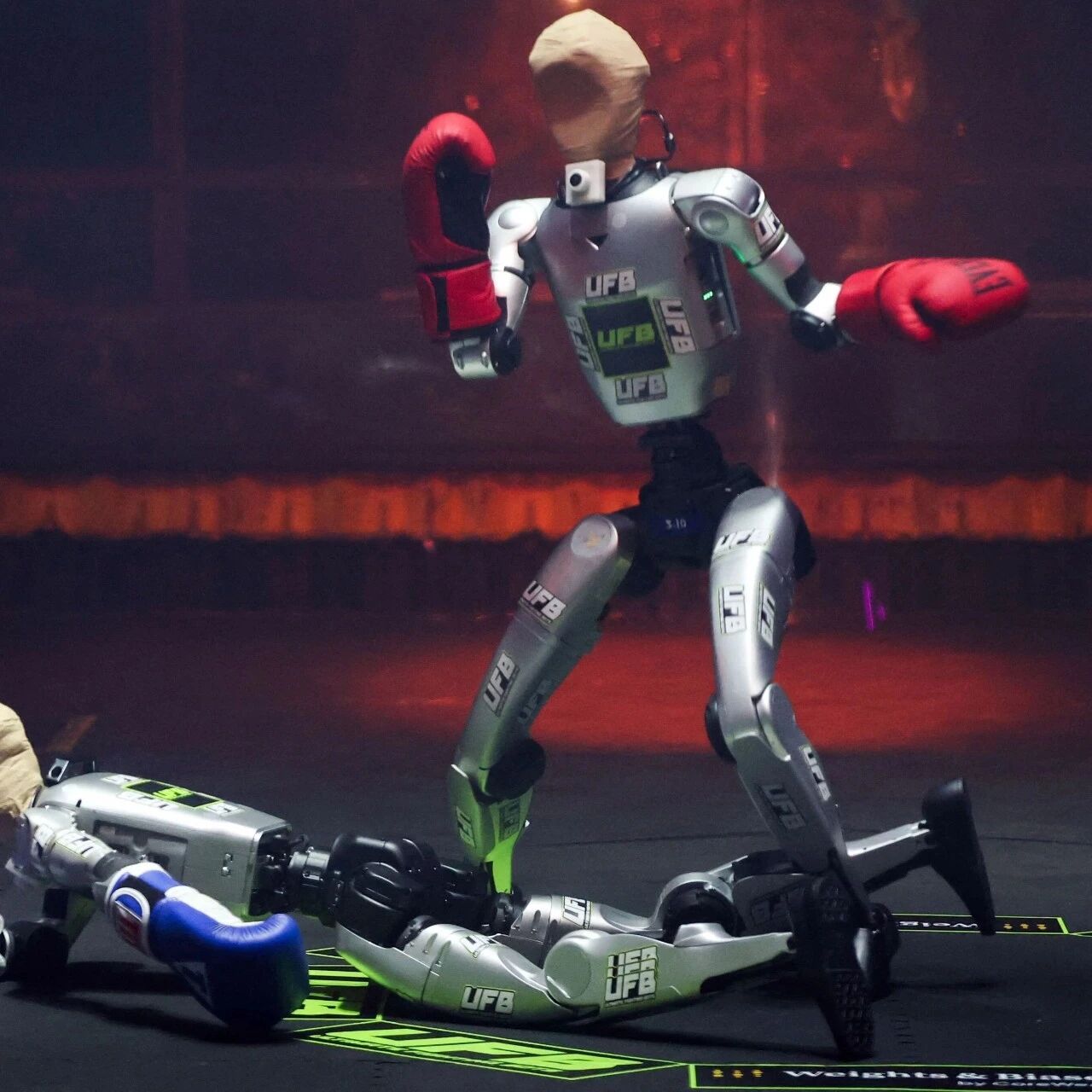
Core Insights - The incident of the robot falling during its public demonstration has paradoxically increased public confidence in its authenticity, as it contrasts with its previously flawless performance [4][6] - The fall is seen as a part of the iterative process of technological development, with the company framing it as a natural step in the learning curve of robotics [4][6] Group 1: Incident and Public Reaction - The robot "IRON" fell during its first offline public walking demonstration, which was dramatically perceived as a "large-scale social death scene" [1] - Prior to the fall, IRON had impressed audiences with its graceful movements, leading to skepticism about its authenticity [4] - The CEO of the company, He Xiaopeng, used social media to liken the fall to a child learning to walk, suggesting that setbacks are part of the growth process [4][6] Group 2: Strategic Context and Technological Development - The fall of IRON occurred at a critical juncture in the company's strategic transformation towards becoming a "global embodied intelligence company" [6] - The company has divided its business into four main lines: smart electric vehicles, autonomous taxis, flying cars, and humanoid robots, all sharing the same AI technology framework [6][8] - The humanoid robot IRON features 82 degrees of freedom and 22 degrees of freedom in its hands for dexterous operations, powered by three self-developed Turing AI chips with a total computing power of 2250 TOPS [6][8] Group 3: Industry Trends and Competitive Landscape - The elevation of humanoid robots to a strategic level alongside automobiles reflects the company's belief that AI will be a dominant technology in the coming decades [8] - The company aims for humanoid robots to be its "third growth curve," with plans for mass production by the end of the year [8] - Over 20 automotive companies, including Tesla, Xiaomi, and BYD, are entering the humanoid robot sector, seeking technological spillover and new growth opportunities [8]
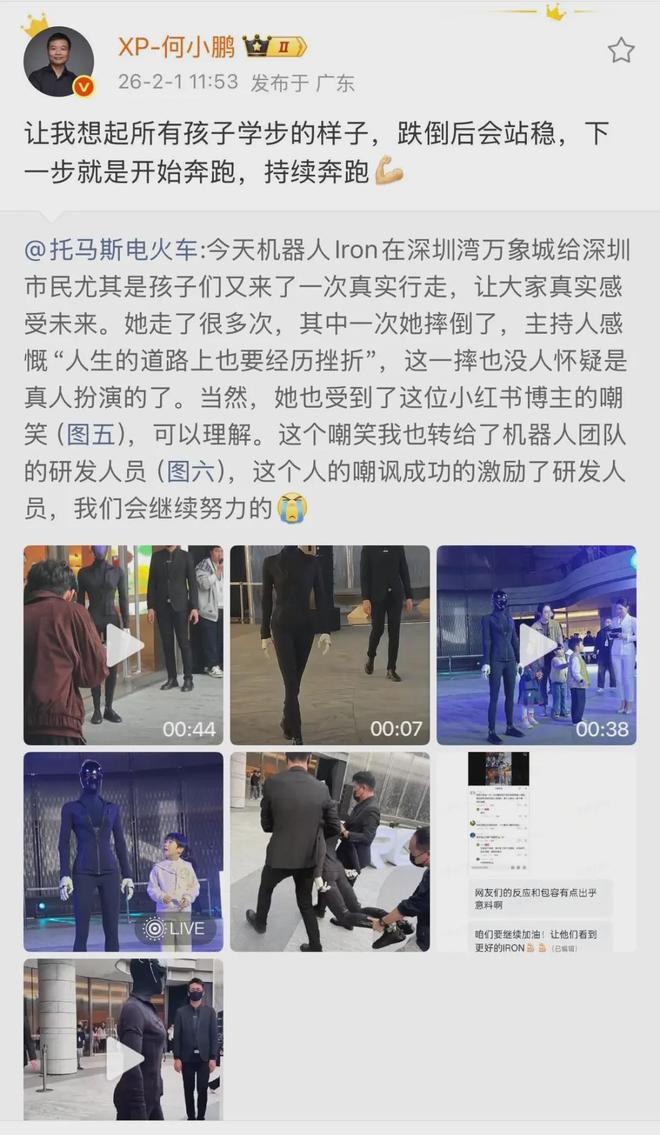
机器人深圳首秀摔了,被抬走!何小鹏回应
Nan Fang Du Shi Bao· 2026-02-01 13:31
Core Viewpoint - The recent incident involving Xpeng Motors' humanoid robot IRON falling during a public demonstration has sparked widespread attention and discussion, with the company's CEO likening the fall to a child's learning to walk, emphasizing resilience and progress [1][4]. Group 1: Incident and Response - On January 31, IRON showcased its walking capabilities in Shenzhen, but during an interaction with the audience, it unexpectedly fell over after performing a smooth "catwalk" [4]. - Xpeng's CEO, He Xiaopeng, responded to the incident by drawing parallels to children learning to walk, highlighting the importance of perseverance [1]. - The incident has shifted public perception, as it dispelled previous doubts about whether the robot was operated by a human, turning criticism into motivation for the development team [4]. Group 2: Technical Development and Future Prospects - This is not the first time IRON has attracted public scrutiny; in November 2025, it faced skepticism regarding its human-like movements, prompting He Xiaopeng to demonstrate the robot's mechanical structure to prove its authenticity [5][6]. - The robot's ability to mimic human-like walking is attributed to breakthroughs in hardware design and intelligent control technology, with a focus on the core architecture of its waist and spine, and the addition of freedom in its forefoot [6]. - Currently, IRON utilizes a third-generation controller, with preliminary success in developing a fourth-generation controller, which aims to enhance its movement capabilities [7]. - The humanoid robot business is considered one of Xpeng's three core growth areas, with expectations that it could surpass the automotive sector in scale, potentially selling over 1 million units in the next decade [7]. - Xpeng aims to achieve mass production of L3-level humanoid robots for industrial applications by 2026, leveraging its advancements in autonomous driving and modeling technologies [7].
中国车企和特斯拉的下一战,战场已定
虎嗅APP· 2026-01-30 13:58
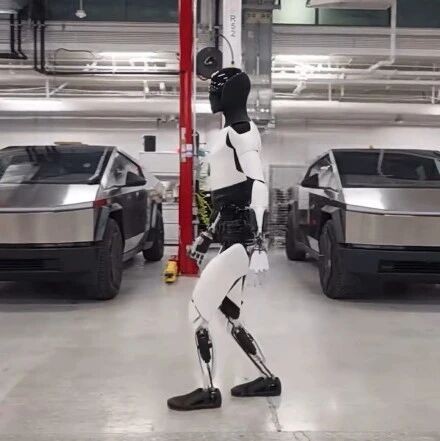
Core Viewpoint - Tesla is shifting its focus towards humanoid robots, with CEO Elon Musk stating that the production of Model S and Model X will be phased out to prioritize the development of the Optimus robot, which Musk believes will underpin 80% of Tesla's future market value [2][3]. Group 1: Tesla's Strategic Shift - Tesla plans to cease production of Model S and Model X, transitioning the Fremont factory to produce Optimus robots [3]. - The introduction of humanoid robots is seen as a critical component of Tesla's new mission, which aims to create a "prosperous and extraordinary world" [2]. - Musk acknowledges that Tesla's main competition in the humanoid robot sector will come from Chinese companies, which are rapidly advancing in AI and robotics [3]. Group 2: Chinese Automakers' Robotics Initiatives - Chinese automakers are actively investing in humanoid robotics, with companies like Li Auto and BYD announcing plans to develop their own humanoid robots [5][6]. - The competitive landscape is intensifying, with various Chinese companies, including Chery and Xpeng, setting timelines for humanoid robot production by 2026 and 2028 [12][13]. - The overlap in technology between electric vehicles and humanoid robots is significant, with around 70% of automotive technology being applicable to robotics [8]. Group 3: Market Potential and Investment Outlook - The global market for humanoid robots is projected to reach $25 trillion by 2050, indicating a massive growth opportunity compared to the automotive sector [9]. - The high degree of technological overlap allows automakers to pivot towards robotics without substantial additional investment, making it a low-cost, high-reward opportunity [9]. - Morgan Stanley reports that China holds a dominant position in the humanoid robot supply chain, accounting for 63% of the market, which could drive down manufacturing costs [14]. Group 4: Competitive Landscape and Challenges - The competition between Tesla and Chinese automakers in the humanoid robot space is expected to intensify by 2027, with both sides having distinct advantages [12][14]. - Tesla's strength lies in its advanced AI algorithms and extensive real-world data, while Chinese companies have demonstrated rapid iteration and cost control capabilities [14]. - Talent acquisition is crucial for success in the humanoid robot sector, with both Tesla and Chinese firms vying for top talent amidst a competitive automotive landscape [17].