
复合机器人

Search documents
越疆(02432):2025 年度业绩点评:核心主业驱动营收提速,全球化落地叠加具身智能打开成长空间
EBSCN· 2026-03-31 15:33
Investment Rating - The report upgrades the investment rating of the company to "Buy" [4] Core Insights - The company achieved a revenue of 492 million RMB in 2025, representing a year-on-year growth of 31.7%, primarily driven by strong sales of six-axis collaborative robots and growth in embodied intelligence robotics [1] - The net loss for the company narrowed to 84 million RMB, a 12.4% improvement compared to the previous year, indicating a trend towards improved profitability [1] - The company significantly increased its R&D investment, reaching 115 million RMB in 2025, a 59.7% increase, with 39.3% allocated to the embodied intelligence sector [1] Revenue Breakdown - Six-axis collaborative robots are the core revenue growth engine, generating 302 million RMB in 2025, a substantial increase of 44.7%, accounting for 61.4% of total revenue [2] - Four-axis collaborative robots generated 93 million RMB, a slight decline of 3.0%, due to strategic adjustments in the educational product mix [2] - Composite robots achieved a revenue of 68 million RMB, reflecting a robust growth of 27.3% [2] - The embodied intelligence robotics business showed remarkable growth, with revenue reaching 20 million RMB, a significant increase of 418.8% compared to 3.9 million RMB in 2024 [2] Market Expansion - In the Chinese market, the company generated 249 million RMB in revenue, a growth of 44.4%, confirming its leading position [3] - The company is expanding its localized teams in Europe, integrating deeply into the European industrial manufacturing system [3] - In the Asia-Pacific market, the company's robotic products have successfully penetrated key automotive manufacturing processes, achieving large-scale applications [3] Strategic Developments - The company became the global leader in collaborative robot shipments in 2025, surpassing 100,000 units shipped [4] - The company launched a multi-form embodied intelligence platform, introducing various robots including humanoid and quadruped models [4] - The company has outlined three key development directions for embodied intelligence: scaling up wheeled humanoid robots in industrial settings, targeting 1,000 unit orders for the full-size humanoid robot Atom by 2026, and planning to promote quadruped robots in Q2 2026 with a target of 10,000 units [4] Financial Forecasts - Revenue forecasts for 2026 and 2027 have been raised to 696 million RMB and 976 million RMB respectively, with a new forecast for 2028 set at 1.37 billion RMB [4] - The company is expected to maintain a strong growth trajectory, supported by the rollout of embodied intelligence products and continued investment [4]
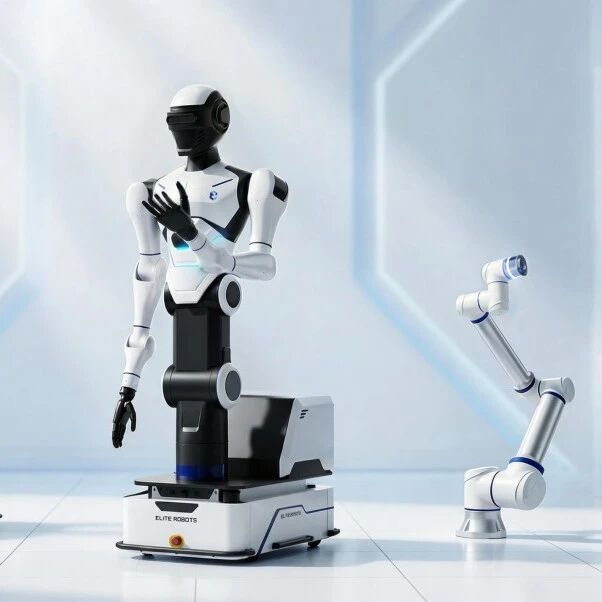
艾利特拿下6亿D+轮融资,凭什么?
机器人大讲堂· 2026-03-25 09:15
Core Viewpoint - The recent 600 million RMB D+ round financing for Elite Robot highlights the growing intersection between the robotics and AI industries, as traditional boundaries dissolve and capital flows into robotics from AI supply chain investors [1][3]. Group 1: Price War and Strategic Positioning - The Chinese robotics market has seen an intensifying price war over the past two years, yet Elite Robot has chosen to maintain a stable pricing strategy, focusing on value-based pricing [3]. - Elite Robot's customer base is strategically positioned in the AI supply chain, targeting high-reliability and intelligent manufacturing scenarios rather than competing in the low-cost general manufacturing market [5]. Group 2: One Brain, Multiple Forms Strategy - The core focus of the recent financing is Elite Robot's "one brain, multiple forms" strategy, which addresses the limitations of traditional industrial robots that require separate control systems for each type [6][8]. - The breakthrough in embodied intelligence technology allows for a unified brain to control various robot forms, enhancing flexibility and reducing development costs across different applications [8][11]. Group 3: Technical Innovations and Industrial Philosophy - Elite Robot's innovation lies in its proprietary "VLA+T" model architecture, which integrates real-time torque sensing into the visual-language-action framework, crucial for industrial applications [9][11]. - This approach emphasizes the importance of precise physical interactions in industrial settings, merging cognitive capabilities with execution to deliver industrial-grade embodied intelligence [11][12]. Group 4: Composite Robot Revolution - Composite robots serve as a key vehicle for the large-scale implementation of the "one brain, multiple forms" strategy, overcoming the challenges of integrating independent systems [13][15]. - The integration of control systems in composite robots has led to significant reductions in task response times and deployment cycles, enhancing market penetration [15][16]. Group 5: Data Flywheel and Competitive Moat - The ability to accumulate high-quality training data from operational robots is critical for advancing embodied intelligence models, creating a positive feedback loop that enhances model evolution [17][19]. - Elite Robot's deep involvement in the AI supply chain provides an optimal entry point for building this data flywheel, with diverse and high-density operational data from complex manufacturing scenarios [19][20]. Group 6: Globalization Strategy - Elite Robot's globalization strategy focuses on expanding alongside its global AI supply chain clients, entering key markets such as Europe, North America, and Southeast Asia [21][23]. - This approach not only reduces market entry costs but also aligns with the higher willingness to pay in high-end manufacturing markets compared to the domestic price-sensitive environment [23][24]. Conclusion and Future Outlook - The competitive landscape in robotics is shifting from hardware to intelligence, with companies that prioritize cognitive capabilities and data-driven strategies likely to gain long-term advantages [24][26]. - Elite Robot's comprehensive self-research capabilities and strategic focus on building a robust data-driven ecosystem position it favorably for future growth in the evolving robotics market [26][27].

广货行天下!深圳一条街链动全球智造,“科技年货”引爆新春
Nan Fang Du Shi Bao· 2026-01-26 09:11
Core Viewpoint - The "Guangdong Goods Going Global" spring action event for consumer electronics in Shenzhen's Huaqiangbei has successfully showcased the innovative achievements of local companies in the AI wave, attracting significant consumer interest and boosting the electronic information industry chain [1][6]. Group 1: Event Overview - The event gathered 50 leading consumer electronics companies, including Huawei and DJI, to present "Guangdong Intelligent Manufacturing" and "Shenzhen Creation" [1]. - Huaqiangbei experienced an increase of approximately 100,000 visitors on the event day, a 15% year-on-year growth, highlighting the area's popularity as a consumer electronics hub [1][2]. Group 2: Consumer Engagement - The event attracted a diverse crowd, including foreign buyers from the Middle East, Southeast Asia, and Europe, who actively engaged in product trials and purchases, demonstrating trust in "Guangdong Goods" [2][3]. - Over 75 million daily visitors were reported, indicating a vibrant atmosphere with continuous interactions among consumers and vendors [2]. Group 3: Product Highlights - More than 80% of the exhibited products featured AI capabilities, transforming traditional hardware into "smart life partners" [4]. - Local companies showcased innovative products such as AI glasses and collaborative robots, which received positive feedback from attendees [3][5]. Group 4: Market Dynamics - The event illustrated a shift from traditional goods to AI hardware and smart terminals, marking a significant evolution in consumer preferences [4]. - Huaqiangbei serves as a critical hub for global procurement, with over 7,000 foreign buyers visiting daily and facilitating over 300 million packages shipped annually [5]. Group 5: Industry Impact - The event not only energized Huaqiangbei but also stimulated the entire electronic information industry chain, enhancing connections from R&D to global distribution [6][7]. - The rapid response capabilities of Shenzhen's industry, characterized by quick design and production cycles, enable efficient market testing and product launches [7].
中国类人机器人调查:高接受意愿遭遇产品过早推出(英)
Morgan Stanley· 2026-01-26 08:40
Investment Rating - The report maintains a positive long-term outlook on humanoid robots, although it acknowledges that the industry is still in its early stages and that scaling production will take time [4]. Core Insights - The survey indicates a strong willingness to adopt humanoid robots, with 62% of respondents likely to deploy them in the next three years, suggesting significant potential [9][18]. - However, only 23% of respondents are satisfied with current humanoid robot offerings, highlighting a need for improvements in flexibility, functionality, and pricing [9][66]. - The report emphasizes that the adoption of humanoid robots is expected to accelerate in 2026 and beyond, supported by new models and government incentives [4][41]. Summary by Sections Adoption Intent - 62% of surveyed organizations plan to deploy humanoid robots or significant projects within the next three years, with initial deployments expected to be small [25][32]. - The most likely use cases for humanoid robots include logistics, warehousing, manufacturing, and customer service, aimed at improving productivity and reducing labor costs [25][54]. Product Readiness - Satisfaction with current humanoid robot performance is mixed, with only 23% expressing satisfaction, indicating substantial room for improvement [66][72]. - Key barriers to adoption include limited functionality, high upfront costs, and integration challenges with existing systems [72][79]. Market Dynamics - Unitree is identified as the most actively engaged brand among potential adopters, followed by Deep Robotics and UBTECH [85][87]. - The report notes that brand visibility and media exposure are likely to influence initial adoption decisions, with Unitree leading in brand recognition [97]. Employment Impact - The survey predicts that approximately 11% of jobs may be replaced by robots within the next five years, increasing to 28% over the next ten years [26][61]. Future Expectations - Respondents expect humanoid robots to perform specific tasks rather than general functions, with a strong emphasis on human-robot collaboration and IoT integration as desired future capabilities [71][81].
超八成展品搭载AI“科技年货”引爆新春
Nan Fang Du Shi Bao· 2026-01-25 23:12
Core Viewpoint - The "Guangdong Goods Going Global" spring action for consumer electronics in Shenzhen's Huaqiangbei has successfully showcased the innovation of local brands in the AI wave, attracting significant consumer interest and boosting the electronic information industry chain [3][6][10]. Group 1: Event Overview - The event gathered 50 leading consumer electronics companies, including Huawei and DJI, to display their products, emphasizing "Guangdong Manufacturing" and "Shenzhen Creation" [3][4]. - Huaqiangbei experienced an additional 100,000 visitors on the event day, a 15% increase year-on-year, highlighting the area's popularity as a consumer electronics hub [3][4]. Group 2: Consumer Engagement - The event attracted a diverse group of foreign buyers from regions such as the Middle East and Southeast Asia, indicating strong international interest in "Guangdong Goods" [4][5]. - Local enterprises showcased innovative products like AI glasses and collaborative robots, which resonated well with both domestic and international consumers [5][6]. Group 3: Product Innovation - Over 80% of the exhibited products featured AI capabilities, transforming traditional hardware into smart lifestyle companions [6][7]. - Shenzhen's consumer electronics have evolved from traditional goods to AI hardware and smart terminals, representing a significant upgrade in manufacturing [6][7]. Group 4: Market Dynamics - Huaqiangbei serves as a critical hub for global sourcing, with over 7,000 foreign buyers visiting daily and more than 300 million packages shipped annually [7][8]. - The event has stimulated the entire electronic information industry chain, enhancing the connection between local manufacturing and global markets [8][9]. Group 5: Internationalization Efforts - The event featured international volunteers providing translation and procurement assistance, reflecting a commitment to facilitating global trade [10]. - The initiative aims to promote Guangdong's manufacturing on a global scale, enhancing its reputation and driving consumer engagement [10].

方洪波:我们总有道路,前程崭新
Xin Lang Cai Jing· 2026-01-17 02:11
Core Insights - Midea Group's Chairman Paul Fang emphasized the company's resilience and strategic direction in his 2026 New Year address, highlighting the achievements of 2025 despite global challenges and expressing confidence in overcoming future obstacles [1][23][48] Group 1: Global Challenges and Company Progress - In 2025, Midea faced a turbulent global political and economic environment but continued to advance by adhering to a strategy of simplification for growth and self-disruption to meet challenges [2][27] - The company made significant strides in technology leadership, product innovation, and global impact across various business segments, including smart home, industrial technology, and healthcare [4][29][49] Group 2: Business Segments and Innovations - Midea's smart home segment introduced the first AI Butler and led the air conditioning industry with advanced AI interaction technologies, while also launching innovative products like a 45CM ultra-thin refrigerator [4][29] - In industrial technology, Midea focused on key components for HVAC and robotics, launching new products and establishing manufacturing bases in Mexico and Brazil [4][29][49] - The healthcare sector saw the establishment of a dedicated division, with significant innovations such as the world's first full-chain AI platform for MRI and the acquisition of Carestream International [5][30][49] Group 3: Strategic Focus for 2026 - Midea's strategy for 2026 centers on "Core-Focused Growth," emphasizing core businesses, markets, and capabilities to create a sustainable growth relay between ToC and ToB operations [31][50] - The company aims to solidify its leadership in white goods and HVAC, targeting top global positions through continuous innovation and enhanced user experience [6][31][50] - Secondary core businesses, including robotics, energy, and healthcare, will be strategically developed to ensure resilience across economic cycles [34][50] Group 4: Efficiency and Globalization - Midea plans to enhance efficiency across its value chain, focusing on cost leadership and digitalization to improve decision-making and operational efficiency [39][50] - The company will implement an OBM-first strategy to strengthen its global presence, emphasizing localization in R&D, manufacturing, and supply chains in key regions [39][50] Group 5: Embracing Change and Future Opportunities - Midea recognizes the necessity of continuous self-reinvention and the courage to disrupt existing patterns to foster growth amid fierce competition [40][51] - The company is committed to maintaining an enterprising spirit and adapting to changing market demands, ensuring that innovation and self-improvement remain central to its identity [44][51] - Midea believes that by focusing on core strengths and embracing change, every direction will lead to new opportunities for growth [45][51]


方洪波谈企业家精神:不被过往成绩束缚,不被路径依赖拖累
Shang Hai Zheng Quan Bao· 2026-01-16 15:47
Core Insights - The annual speech by Midea Group's Chairman and President, Fang Hongbo, emphasized the company's achievements over the past year and outlined the strategic direction for the upcoming year, focusing on core business and diversification strategies [2][5]. Business Performance - Midea Group has made significant progress in various business sectors, achieving notable results through a strategy of simplification and self-disruption, leading to breakthroughs in technology, product innovation, and global expansion [6]. - In the smart home sector, Midea introduced the industry's first AI butler and continued to lead in air conditioning technology with multi-model AI interaction, while also launching innovative products like the 45CM ultra-thin refrigerator [6]. - The industrial technology segment saw the introduction of new products such as wide-frequency rotary compressors and the establishment of manufacturing facilities in Mexico and Brazil, enhancing the company's capabilities in core components for electric vehicles and robotics [6]. - Midea's energy business is expanding rapidly, with significant growth in distributed photovoltaic installations and the launch of self-developed energy storage systems in multiple international markets [7]. Future Strategy - For 2026, Midea aims to focus on core businesses and markets, promoting synergy between ToC (business-to-consumer) and ToB (business-to-business) operations to create a sustainable growth model [9][10]. - The company plans to enhance its core capabilities in white goods and HVAC, targeting a leading position globally while improving its presence in key markets such as Southeast Asia, North America, and the Middle East [10][11]. - Midea is committed to innovation in its secondary core businesses, including robotics, energy, and healthcare, recognizing their potential for significant market opportunities [11]. Management Philosophy - Fang Hongbo highlighted the importance of self-revolution and breaking path dependence to adapt to increasing market competition, advocating for a culture of innovation and agility within the organization [12][13]. - The company emphasizes the need for decisive action and the elimination of redundant operations to maintain organizational efficiency and responsiveness [13]. Conclusion - The overarching message from Fang Hongbo's speech is one of resilience and adaptability, encouraging the organization to embrace change and pursue growth opportunities while remaining grounded in core competencies [14].
协作机器人企业越疆拟回A上市:上半年营收1.53亿元,全球累计出货10万台
Xin Lang Cai Jing· 2025-12-31 06:17
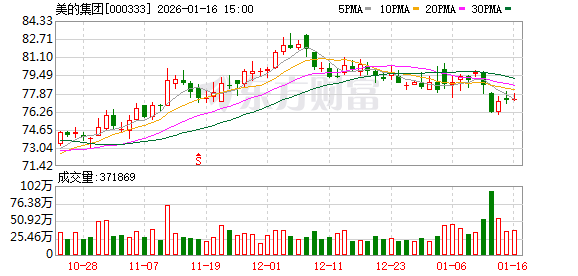
Core Viewpoint - Shenzhen Yujiang Technology Co., Ltd. ("Yujiang"), known as the "first stock of collaborative robots," has completed the IPO counseling filing with the Shenzhen Securities Regulatory Bureau, aiming to enhance business development and competitiveness through A-share listing [1] Financial Performance - For the first half of 2025, Yujiang reported revenue of 153 million RMB, a year-on-year increase of 27.1%, with a net loss of 40.87 million RMB, narrowing by 31.8% [1] - The gross profit reached 71.92 million RMB, up 36.1% year-on-year, with a gross margin of 49.4% after excluding inventory impairment [1] - The company's total liabilities to assets ratio stands at 26.5% [1] Product Performance - Revenue from six-axis collaborative robots was 93.65 million RMB, accounting for 61.2% of total revenue, with a year-on-year growth of 46.7% [2][3] - Four-axis collaborative robots generated 39.58 million RMB, a 7.7% increase, while composite robots brought in 16.65 million RMB, growing by 13.1% [3] - Other products saw a revenue decline of 37.6%, totaling 3.21 million RMB [3] Market Segmentation - Revenue from industrial applications reached 81.11 million RMB, up 22.4%, while education and commercial sectors saw revenues of 57.66 million RMB (18.3% growth) and 1.38 million RMB (165.5% growth) respectively [4] Strategic Developments - Yujiang has launched several new products, including the consumer-grade robotic dog Rover X1, priced at 7,499 RMB, and the industrial-grade humanoid robot Dobot Atom, priced from 199,000 RMB [4][5] - The company has entered into multiple strategic partnerships, including contracts with Redefeng for over 80.5 million RMB and with Lens Technology for the procurement of 1,000 humanoid robots [5] Stock Performance - Yujiang's stock price fluctuated between 18.42 HKD and 83.8 HKD in 2023, with a recent closing price of 37.88 HKD, reflecting an 8.08% drop following a share unlock event [7] - The company has raised a total of 1.793 billion HKD through discounted placements in July and November 2023, aimed at advancing research and product innovation in intelligent robotics [7]

摩根士丹利热点前瞻-机器人产业最新调研反馈
摩根· 2025-12-08 15:36
Investment Rating - The report maintains a long-term optimistic outlook on the intelligent robotics industry, despite short-term product bottlenecks [9]. Core Insights - Current satisfaction with humanoid robots is only 23%, with major bottlenecks in hardware, software development, and scene adaptation [1]. - It is expected that robots will replace 11% of jobs in the next five years and potentially 28% in the next ten years, with higher replacement rates in industrial and manufacturing sectors compared to service industries [5]. - 90% of respondents plan to increase spending on robots in the next three years, with 30% intending to significantly raise their procurement budgets [6]. - The main challenges in adopting humanoid robots include limited capabilities, high costs, complex integration, and high maintenance costs [7]. - The preferred brands for humanoid robots include Yusheng, Cloud Deep, and UBTECH, with key selection factors being reliability, safety, functionality, cost, and scene integration [8]. - The humanoid robot market is projected to significantly impact the semiconductor industry, with a market size expected to reach $305 billion by 2045 [12]. Summary by Sections Humanoid Robot Satisfaction and Challenges - Only 23% of enterprises are satisfied with existing humanoid robot products, indicating a strong need for improvements in hardware and software [3]. - The primary application scenarios for humanoid robots include warehousing (80%), production (79%), and customer service/retail (70%) [4]. Investment and Market Trends - The payback period for commercial robots is currently 3-5 years, expected to shorten to 2 years by 2030, making humanoid robots more competitive in labor costs [2][13]. - The report suggests focusing on investment opportunities within the components supply chain, highlighting companies like Inovance Technology and Hengli Hydraulic [11]. Semiconductor Industry Impact - The development of humanoid robots will significantly influence the semiconductor industry, with AI chips, visual chips, and analog chips expected to play crucial roles [12]. - Recommended semiconductor companies include NVIDIA, AMD, and Samsung Electronics, which are positioned to benefit from advancements in humanoid robotics [14]. Future Investment Opportunities - Key investment areas for the next decade include humanoid intelligence, brain vision, and perception, which are expected to generate significant value [15].
大摩闭门会-人形机器人AlphaWise调查反馈
2025-12-08 00:41
Summary of Human-Robot Interaction Conference Call Industry Overview - The conference focused on the human-robot interaction industry, specifically humanoid robots, highlighting their current applications and future potential [1][2]. Key Insights and Arguments - **Current Adoption**: 90% of surveyed companies have implemented various types of robots, with 10% currently testing humanoid robots. 62% are willing to try humanoid robots within the next three years [1][4]. - **Application Scenarios**: The primary application areas for humanoid robots include warehousing (80%), manufacturing (79%), and customer service/retail (70%) [1][4][5]. - **Work Replacement Potential**: It is estimated that humanoid robots could replace 11% of jobs in the next five years and 28% in the next ten years [1][5]. - **Investment in Robotics**: 90% of respondents plan to increase their robot spending in the next three years, but only 23% are satisfied with current products, indicating a significant demand for improvements [1][6]. - **Selection Criteria**: Key factors for choosing humanoid robots include reliability, safety, functionality, cost, and integration with existing workflows. Customization services are also important, while brand and supplier ecosystems are less critical [1][7]. Pricing and Market Dynamics - **Price Sensitivity**: 92% of respondents believe that humanoid robots need to be priced below 200,000 RMB for widespread adoption. Currently, most robots are priced above 500,000 RMB, which is a major barrier to market penetration [1][8][9]. - **Brand Preferences**: The most preferred brand is Yusu (60%), followed by Yun Shen Chu (28%) and UBTECH (23%). Brands need to improve product quality to capture market share [1][10]. Short-term and Long-term Projections - **Short-term Growth**: The industry is not expected to see explosive growth in the short term, with a conservative forecast of around 20,000 units to be applied next year [2][11]. - **Long-term Optimism**: Morgan Stanley maintains a long-term optimistic outlook for the humanoid robot industry, anticipating advancements in product iterations and technology [3][11]. Semiconductor Industry Impact - **Market Potential**: The development of humanoid robots is expected to significantly boost the semiconductor industry, with the related market projected to reach $305 billion by 2045. The cost of materials is expected to rise by 15% from 2025 to 2030 and by an additional 40% by 2045 [14]. - **Investment Opportunities**: Key investment areas in the semiconductor sector include AI processing, high-resolution sensing, and analog chips, with several companies identified as potential investment opportunities across different regions [16][17]. Return on Investment - **Payback Period**: The current payback period for commercial robots is approximately 3 to 5 years, expected to shorten to 2 years by 2030 due to decreasing costs and increasing efficiency [15]. Conclusion - The humanoid robot industry presents significant investment potential, particularly in AI processing, high-resolution sensing, and analog chip development. Companies establishing competitive advantages through innovation or acquisitions are likely to thrive in this evolving market [17].